






Überprüfung der CLP-konformen Verpackung für Kamin-farbige Kiefernzapfen macht vielen EU-Importeuren zu schaffen Verordnung (EG) Nr. 1272/2008 1. Ich habe gesehen, dass Sendungen wegen eines fehlenden Kennzeichnungselements am Zoll festgehalten wurden – und unsere Fabrik hat diese Lektionen früh gelernt.
Um die CLP-konforme Verpackung für gefärbte Kiefernzapfen für Kamine in der EU zu überprüfen, erhalten Sie das Sicherheitsdatenblatt, bestätigen Sie die Gefahrenklassifizierung der Farbstoffmischung, überprüfen Sie alle erforderlichen Kennzeichnungselemente und Sprachen, inspizieren Sie die Unversehrtheit der Verpackung und kindersicheren Merkmale und bewahren Sie Prüfberichte und Lieferantendokumentationen auf.
Das klingt nach viel. Aber es lässt sich in vier klare Prüfungen aufteilen. Ich werde Sie durch jede einzelne führen, in der Reihenfolge, in der ich sie mit unseren eigenen EU-Käufern verwende.
Welche CLP-Kennzeichnungselemente muss ich vor dem Import auf der Verpackung von gefärbten Kiefernzapfen prüfen?
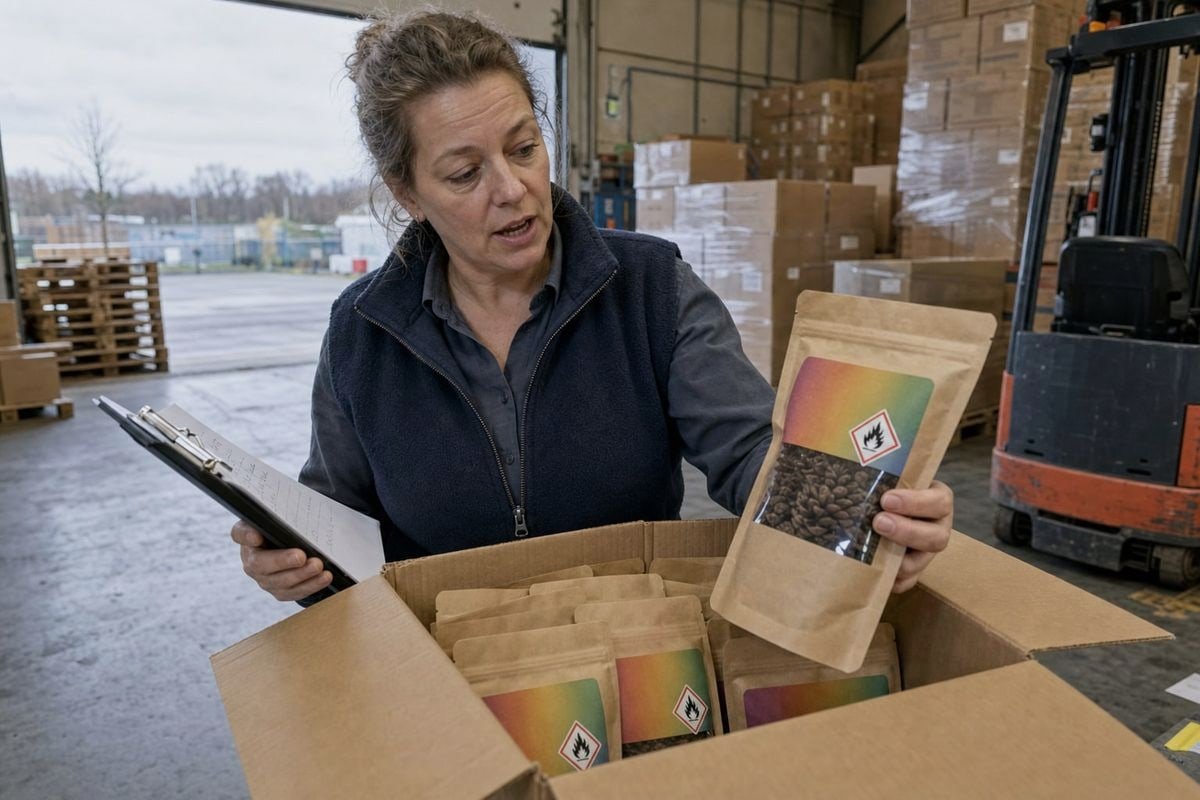
Ein deutscher Händler schickte mir einmal einen Beutel eines Konkurrenten zur Überprüfung, bevor er eine Probebestellung bei uns aufgab GHS-Piktogramme 2. Das Etikett sah poliert aus, aber drei obligatorische CLP-Elemente fehlten. Hübscher Druck ist keine Konformität.
Bevor Sie importieren, prüfen Sie, ob auf der Verpackung der Name, die Adresse und die Telefonnummer des EU-Lieferanten, die Produktkennung, die Nennmenge, die korrekten GHS-Piktogramme, das Signalwort, die Gefahrenhinweise, die Sicherheitshinweise in der Landessprache und jeder erforderliche UFI-Code angegeben sind – alles fest angebracht und leserlich.

Der entscheidende Punkt ist: "farbige Kamin-Kiefernzapfen" ist keine rechtliche Kategorie nach EU-Recht Chronische aquatische Kategorien 3. Was zählt, ist die chemische Behandlung der Zapfen. Die meisten Farbflammenprodukte verwenden Metallsalze – Kupferverbindungen 4 für Blau und Grün, Strontium für Rot und so weiter. Wenn diese Mischung die Kriterien für eine Gefahrenklassifizierung gemäß Verordnung (EG) Nr. 1272/2008 5, erfüllt, dann gilt die vollständige CLP-Kennzeichnung, egal wie dekorativ das Produkt aussieht.
An unserem Produktionsstandort in Ningbo entwerfen wir Verbraucherverpackungen für über 30 Exportmärkte, und die EU-Etikettenprüfung ist immer der längste Teil der Freigabe der Grafik. Hier ist, was ich Käufern zur Überprüfung empfehle, Element für Element.
Die obligatorischen Kennzeichnungselemente
| Kennzeichnungselement | Was zu überprüfen ist |
|---|---|
| Lieferantenidentität | Name, vollständige Anschrift und Telefonnummer des in der EU ansässigen Lieferanten oder Importeurs |
| Produktidentifikator | Name der Mischung und der gefährlichen Inhaltsstoffe, die zur Klassifizierung führen |
| Nennmenge | Nettogewicht auf Verbraucherverpackungen |
| Gefahrenpiktogramme | Korrekte GHS-Raute (z. B. Flamme, Umwelt), die der Klassifizierung entspricht |
| Signalwort | "Gefahr" oder "Achtung" – niemals beides, niemals keines von beiden, wenn klassifiziert |
| H-Sätze | Gefahrenhinweise, die jeder zugewiesenen Gefahrenklasse entsprechen |
| P-Sätze | Sicherheitshinweise, ausgewählt und auf die relevantesten beschränkt |
| UFI-Code | Eindeutiger Identifikationscode der Rezeptur, wo Giftnotrufzentrale 6 gilt |
| Sprache | Amtssprache(n) jedes Mitgliedstaates, in dem Sie verkaufen |
Gestaltungsregeln sind ebenfalls wichtig
Der Inhalt ist nur die halbe Miete. Das Etikett muss fest auf der Verpackung angebracht, horizontal lesbar sein, wenn die Packung normal im Regal steht, und haltbar genug, um während der Lagerung und Handhabung lesbar zu bleiben. Piktogramme müssen sich klar vom Hintergrund abheben – eine rote Raute, die über einem Regenbogen-Farbverlauf gedruckt ist, wie sie häufig auf Farbflammenbeuteln vorkommen, kann eine Sichtbarkeitsprüfung nicht bestehen. Wenn wir private Etiketten für EU-Kunden erstellen, platzieren wir Piktogramme aus genau diesem Grund immer auf einem schlichten Feld.
Eine weitere Falle: die Sprache. Ein Beutel, der nur auf Englisch gekennzeichnet ist, ist in Deutschland, Frankreich oder Polen nicht konform. Mehrfachmarktverkäufer benötigen mehrsprachige Felder oder marktspezifische Grafiken.
Welche Zertifizierungen und Testberichte sollte ich von meinem Hersteller anfordern, um die CLP-Konformität zu bestätigen?
Es gibt einen Kompromiss, den ich mit jedem neuen EU-Käufer bespreche: Günstigere Lieferanten bieten niedrigere Preise an, teilweise weil sie auf unabhängige Tests verzichten. Diese Einsparung löst sich auf, wenn eine Marktüberwachungsbehörde zum ersten Mal einen Bericht verlangt, den Sie nicht haben.
Fordern Sie das Sicherheitsdatenblatt gemäß REACH Anhang II, Prüfberichte von Drittanbietern von akkreditierten Laboren wie SGS oder Intertek an, die die Klassifizierung bestätigen, die Qualitätszertifizierungen des Lieferanten wie ISO 9001 und BSCI, die Bestätigung der Meldung an das Giftnotrufzentrum mit der UFI und die Ergebnisse von Integritätsprüfungen der Verpackung.

In über 17 Jahren Export von feuerbezogenen Produkten haben wir unser Dokumentationspaket so aufgebaut, dass es den Anforderungen entspricht, nach denen EU-Importeure bei Kontrollen tatsächlich gefragt werden. Nicht jedes Zertifikat hat das gleiche Gewicht, daher ist es hilfreich zu wissen, was jedes Dokument beweist – und was nicht.
Der Dokumentenstapel, nach Wichtigkeit geordnet
| Dokument | Was es beweist | Wer stellt es aus |
|---|---|---|
| Sicherheitsdatenblatt (SDB) | Zusammensetzung, Gefahrenklassifizierung, Handhabungs- und Sicherheitsdaten | Hersteller oder dessen regulatorischer Berater |
| Drittanbieter-Testbericht | Unabhängige Überprüfung der Zusammensetzung und Klassifizierung | Akkreditierte Labore (SGS, Intertek, Bureau Veritas, TÜV) |
| Nachweis der Meldung an die Giftnotrufzentrale | Rezeptur bei nationalen Giftnotrufzentralen mit gültiger UFI eingereicht | Eingereichtes Unternehmen über das ECHA-Portal |
| ISO 9001 7 Zertifikat | Konsistentes Qualitätsmanagement von der Probe bis zur Massenproduktion | Akkreditierte Zertifizierungsstelle |
| BSCI Auditbericht | Soziale Konformität des Produktionsstandorts | Auditstelle |
| Verpackungsprüfdaten | Closure integrity, leakage resistance, label durability | Manufacturer QC or third-party lab |
How to Read These Documents Critically
An SDS alone is a claim, not proof. I have reviewed SDS documents from other factories that listed "no hazardous ingredients" for products clearly coated in copper salts. That is why we pair our SDS with SGS- und Intertek-Berichte 8 — an independent lab confirms what is actually on the cones. When you receive a test report, check three things: the report references your exact product and formulation, the lab is accredited, and the tested batch date is recent. A five-year-old report on a "similar" product proves nothing about the pouch you are importing this season.
Also ask whether the manufacturer supports poison centre notification. If the mixture is classified for health or physical hazards, the UFI on the label must match a real submission. We prepare this data package for our EU clients as part of our OEM service, because a UFI printed on a bag with no notification behind it is a fast route to a compliance failure.
Wie überprüfe ich, ob die Gefahrenklassifizierung meines Lieferanten mit der tatsächlichen Produktformel übereinstimmt?
A Dutch buyer once asked me a sharp question during a factory visit to our Liuyang headquarters: "How do I know your SDS describes the cones in my container, not just the cones in your sample room?" It was the right question to ask.
Cross-check every colorant listed in the SDS against the ECHA C&L Inventory for harmonized classifications, verify concentration thresholds for mixture classification, request batch-specific composition data, and confirm environmental hazards like Aquatic Chronic categories are assessed — especially for copper-based colorants.
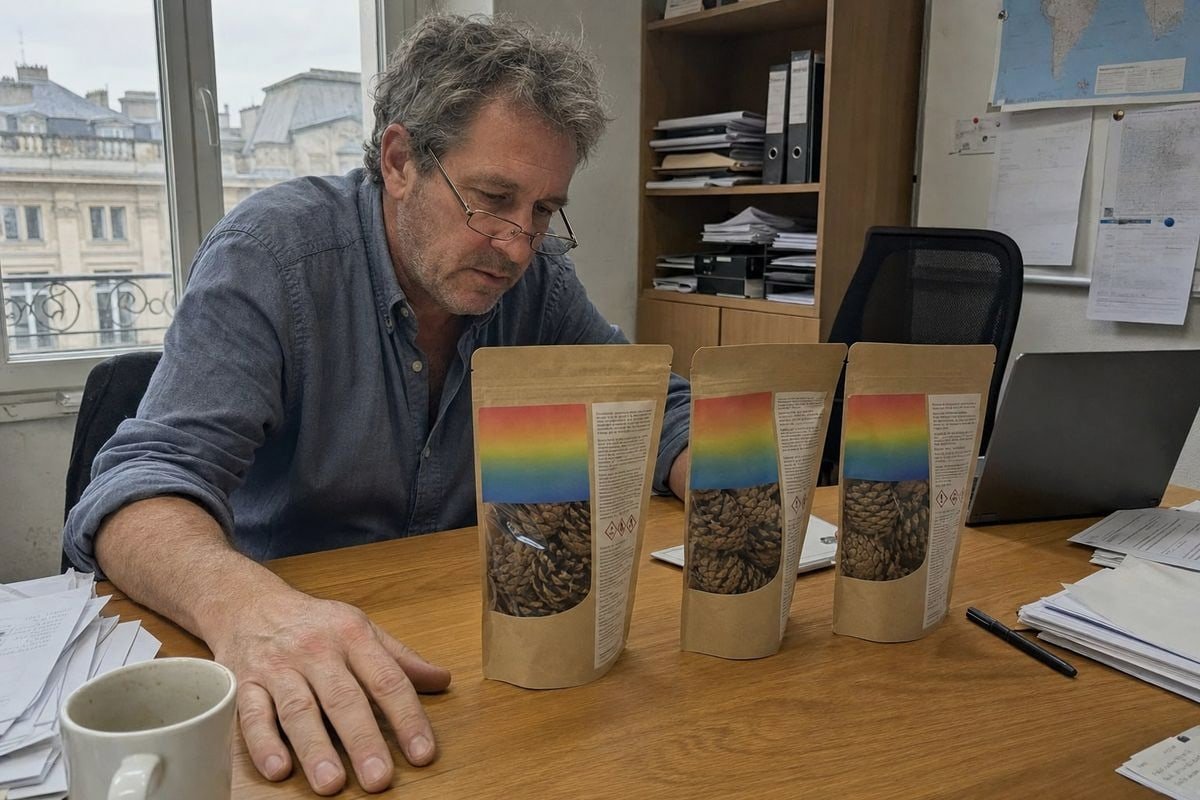
This is the step most importers skip, because it feels technical. But under EU rules, the importer is the responsible person. You cannot outsource that legal duty to your Chinese supplier's paperwork. The good news: the verification process is systematic, and you do not need a chemistry degree to run the basic checks.
Ein Fünf-Schritte-Verifizierungsprozess
- Holen Sie sich die vollständige Zutatenliste. Ask your supplier for the identity and concentration of every substance in the colorant treatment, with CAS numbers. A serious factory will provide this under NDA.
- Check each substance in the ECHA C&L Inventory. Search by CAS number. If a harmonized classification exists, the supplier must use it — self-classification cannot override it.
- Compare concentrations against thresholds. A mixture is classified as hazardous when hazardous ingredients exceed the applicable concentration limits. Verify the supplier's math, or have a regulatory consultant do it.
- Look specifically at environmental hazards. Copper compounds commonly used for blue and green flames can trigger Aquatic Chronic classification. This is the most frequently missed hazard class we see on competitor labels, and it changes the required pictograms.
- Match the result to the label. The classification you verified in steps 1–4 must produce exactly the pictograms, signal word, and statements printed on the pack. Any gap means either the SDS or the label is wrong.
Watch for Dual-Hazard Blind Spots
Many suppliers classify for flammability and stop there. In our experience developing color-flame pinecones and Magic Fire packets for EU distributors, the environmental classification of metal salts is where self-classified products most often go wrong. If your supplier's SDS shows no aquatic hazard for a copper-based formula, ask them to show their reasoning or their test data. A confident manufacturer will explain; an evasive one is telling you something important.
Batch consistency matters here too. A classification is only as valid as the formula behind it, so ask how the factory controls colorant loading between batches. Our production lines run batch-to-batch composition checks precisely so the SDS stays accurate across every shipment — the first sample must reflect the thousandth carton.
Welche Unterlagen sollte ich aufbewahren, um die CLP-Konformität bei EU-Zoll- oder Marktprüfungen nachzuweisen?
Early in our export history, a French client called us in a mild panic: a market surveillance authority had requested his compliance file, and he had only a commercial invoice and a photo of the label. We rebuilt his file together in a week. Since then, we ship a documentation pack with every EU order.
Behalten Sie das aktuelle SDB, die vollständige Klassifizierungsbegründung, Prüfberichte von Drittanbietern, Meldungen an die Giftnotrufzentrale und UFI-Aufzeichnungen, Genehmigungen von Etikettengestaltungen in jeder Marktsprache, Ergebnisse von Verpackungsintegritätsprüfungen, Lieferantenzertifikate, Chargenprotokolle und Einkaufsunterlagen bei – diese müssen mindestens zehn Jahre lang aufbewahrt und abrufbar sein.

Think of your compliance file as insurance you build before you need it. Customs officers and market surveillance authorities do not just look at the label text — they can question packaging safety, closure performance, child-safety features, and whether the pack design could mislead consumers or attract children. Your file needs to answer all of it.
The Complete Compliance File
| Kategorie | Documents to Retain | Why Authorities Ask |
|---|---|---|
| Classification | SDS, classification rationale, ECHA C&L cross-checks | Proves the hazard assessment behind the label |
| Testen | Accredited lab reports, batch test records | Independent evidence the formula matches claims |
| Kennzeichnung | Approved artwork per language, print proofs | Shows label content and legibility were verified |
| Notification | UFI records, poison centre submission confirmations | Confirms legally required notifications were made |
| Verpackung | Leakage and closure tests, child-resistance certification if applicable | Demonstrates physical packaging compliance |
| Lieferkette | Supplier certificates, purchase orders, batch traceability | Links each shipment to verified documentation |
Organize by Batch, Not by Year
The most practical tip I can give: file documents by production batch, not just by calendar date. When an authority questions a specific pouch pulled from a shelf, you need to trace it back to its batch, its test report, and its SDS version within hours, not weeks. We print batch codes on every carton and pouch we produce for exactly this purpose, and we archive matching documentation on our side as a backup for our clients.
Also keep records of your own verification work — emails asking your supplier for clarification, notes from your ECHA cross-checks, artwork revision history. As the EU importer, you must show you independently verified compliance rather than passively trusting manufacturer claims. A dated paper trail of your due diligence is often the difference between a quick check and a formal investigation.
Schlussfolgerung
Verify CLP compliant packaging by classification, label content, and packaging performance — never by appearance. Build the document file before customs asks, and partner with a factory that supplies proof, not promises.
Fußnoten
1. Official EU legal text defining CLP hazard classification criteria referenced in the article. ↩︎
2. Background on the globally harmonized hazard pictogram system mentioned as a mandatory label element. ↩︎
3. Background on GHS hazard categories including aquatic chronic classification for copper-based colorants. ↩︎
4. Reference database for chemical properties of copper compounds used as colorants in fireplace products. ↩︎
5. Background on the EU CLP Regulation referenced as the core legal framework. ↩︎
6. Official ECHA poison centre portal explaining UFI submission requirements mentioned repeatedly. ↩︎
7. Official ISO page describing the quality management standard cited as a supplier certification. ↩︎
8. Links to accredited testing body cited for independent verification of hazard classification claims. ↩︎



 English
  Spanish
  German
  French
  Arabic
  Portuguese
Diskutieren Sie mit