







Käufer fragen mich fast wöchentlich nach der Metallsalzkomponente von Magic Fire Powder. Eine schlechte Schlagzeile über einen Vergiftungsfall kann eine Kauforder einfrieren. An unserer Produktionslinie in Ningbo haben wir dies mit Formulierung und Dokumentation gelöst, nicht mit Marketing-Spin.
Das Metallsalzbestandteil von Magic Fire Powder ist bei bestimmungsgemäßer Verwendung sicher – versiegelte Päckchen, die in ein Außenfeuer geworfen werden. Es ist nicht lebensmittelecht und darf niemals verschluckt oder als Staub eingeatmet werden. Die Toxizität hängt vom spezifischen Salz, der Dosis und dem Expositionsweg ab, nicht vom Wort "Metall"."
Diese Antwort muss aufgeschlüsselt werden. Unterschiedliche Salze bergen unterschiedliche Risiken. Unterschiedliche Lieferanten verwenden unterschiedliche Chemie. Unten gehe ich auf Zertifizierungen, Inhaltsstoffe, Chargenkonsistenz und die Unterlagen ein, die Sie für den Zoll benötigen.
Welche Zertifizierungen beweisen, dass die Metallsalze von Magic Fire Powder für meinen Markt sicher sind?
Letztes Frühjahr lehnte ein deutscher Händler die Lieferung eines Konkurrenten am Hafen wegen fehlender Testberichte ab. Er stellte uns dann zuerst eine Frage: Welche Zertifizierungen besitzen Sie tatsächlich?
Suchen Sie nach ISO 9001 Qualitätsmanagement, BSCI Sozialkonformität, CE-Kennzeichnung für die EU und Testberichten von Drittanbietern wie SGS oder Intertek, die den Schwermetallgehalt und die chemische Zusammensetzung abdecken. Zusammen beweisen diese, dass der Farbstoff aus Metallsalzen die Erwartungen an die Sicherheit von Konsumgütern in den USA und Europa erfüllt.

Zertifizierungen sind wichtig, da pyrotechnische Farbstoffe in einer Grauzone liegen. Sie sind keine Feuerwerkskörper, aber auch keine gewöhnlichen Haushaltswaren. Zollbeamte, Compliance-Teams im Einzelhandel und Versicherungsprüfer wollen den Beweis, dass unabhängige Stellen das Produkt getestet haben. In unseren über siebzehn Jahren des Exports in die USA, nach Deutschland, Großbritannien, Frankreich und darüber hinaus haben wir nie einen Container versandt, der nicht auf Verlangen durch Unterlagen belegt werden konnte.
für Qualitätsmanagement und BSCI für soziale Compliance. Das sind Qualifikationen auf Fabrikebene, die Einzelhandelsbeschaffungskanäle beruhigen. Anforderungen auf Produktebene kommen noch hinzu.
Jedes Dokument beantwortet eine andere Frage. Ein CE-Zeichen allein sagt nichts über das Schwermetalltoxizitätsprofil aus. Ein Sicherheitsdatenblatt allein beweist nicht, dass Ihre Fabrik einen kontrollierten Prozess durchführt. Sie benötigen den gesamten Stapel.
| Zertifizierung | Was es beweist | Warum Käufer es brauchen |
|---|---|---|
| ISO 9001 | Die Fabrik betreibt ein dokumentiertes Qualitätssystem | Chargenkonsistenz ist prozessgesteuert, kein Glück |
| BSCI | Ethische und soziale Compliance in der Einrichtung | Erforderlich von vielen großen Einzelhandels-Sourcing-Kanälen |
| CE-Kennzeichnung | Konformität mit den EU-Richtlinien zur Produktsicherheit | Rechtlicher Marktzugang in der gesamten EU |
| SGS / Intertek-Berichte | Unabhängige Labortests von Zusammensetzung und Gefahren | Verifiziert Grenzwerte für Schwermetalle und die Genauigkeit von Sicherheitsdatenblättern |
Zertifikate versus Behauptungen
Seien Sie vorsichtig bei Lieferanten, die "ungiftig" ohne eine Berichtsnummer sagen. Sicherheitsrichtlinien für Sicherheitsdatenblätter 1 erlauben Formulierungen wie "praktisch ungiftig" basierend auf akuten Testdaten, aber diese Sprache beschreibt ein geringes Risiko bei normaler Verwendung – nicht Essbarkeit. Ein seriöser Lieferant übergibt Ihnen den zugrunde liegenden Laborbericht, datiert, mit der identifizierten getesteten Charge. Wir stellen Testberichte bei jeder ernsthaften Anfrage zur Verfügung, da unsere Käufer Compliance als harte Anforderung betrachten, nicht als nette Zusatzleistung. Wenn ein Lieferant zögert, wenn Sie nach Unterlagen fragen, ist dieses Zögern Ihre Antwort.
Welche Metallsalze verwendet Sunrich und sind diese frei von schädlichen Chemikalien?
Als wir unsere aktuelle Magic Fire-Formel entwickelten, testeten wir Dutzende von Salzgemischen in unserem Liuyang-Forschungs- und Entwicklungsraum, bevor wir die Chemie festlegten, die wir heute versenden.
Sunrich verwendet sorgfältig ausgewählte, umweltfreundliche Metallsalzfarbstoffe – wie kupferbasierte Salze für Blaugrün und Strontiumchlorid für Rot – die gegen schädliche chemische Grenzwerte geprüft werden. Die Formulierung schließt hochgiftige Optionen wie Bariumverbindungen aus und wird durch unabhängige Tests verifiziert, obwohl sie nicht zum Verzehr geeignet ist.

Der ehrliche Ausgangspunkt ist dieser: Jeder Flammenfarbstoff auf dem Markt verwendet Metallsalze, weil Metallionen das sind, was Farbe in einer Flamme erzeugt. Kupfer ergibt Blau und Grün. Strontiumchlorid 2 ergibt Rot. Kalium tendiert zu Violett. Die Sicherheitsfrage ist nie "Metall oder kein Metall". Es ist, welches Salz, in welcher Reinheit, in welcher Menge und in welcher Verpackung versiegelt.
Nicht alle Salze bergen das gleiche Risiko
Kupfersulfat 3 ist das Arbeitspferd der Branche. Es leistet gute Dienste, ist aber auch das Salz hinter den meisten Vergiftungsberichten, da das Verschlucken eines konzentrierten Päckchens ätzende Verletzungen 4 an Hals und Magen verursachen kann. Strontiumsalze haben im Allgemeinen ein besseres Sicherheitsprofil bei den für Flammenfarben verwendeten Dosen. Bariumsalze 5 erzeugen brillante Grüns in professionellen Pyrotechnikprodukten, aber wir vermeiden sie bewusst in Konsumgütern, da ihre Toxizitätsschwelle weitaus niedriger ist.
| Metallsalz | Flammenfarbe | Relatives Risiko im Konsumgebrauch | Unsere Position |
|---|---|---|---|
| Kupfersalze | Blau / Grün | Ätzend beim Verschlucken; geringes Risiko, wenn in Feuer versiegelt | Bei kontrollierter, minimaler Dosierung verwendet |
| Strontiumchlorid | Rot | Vergleichsweise günstiges Profil; immer noch nicht essbar | Verwendet für rote Effekte |
| Bariumverbindungen | Grün | Höhere systemische Toxizität | Aus unserer Formel ausgeschlossen |
| Natrium- / Kaliumsalze | Gelb / Violett | Geringeres akutes Risiko; nicht lebensmittelecht | Als unterstützende Farbstoffe verwendet |
Was "frei von schädlichen Chemikalien" wirklich bedeutet
Wir formulieren so, dass wir im regulatorischen Sinne frei von schädlichen Chemikalien sind: keine verbotenen Substanzen, Schwermetallgehalt 6 innerhalb der getesteten Grenzen und keine Barium- oder bleibasierten pyrotechnischen Farbstoffe. Das ist etwas anderes, als zu behaupten, das Pulver sei lebensmittelecht. Das ist es nicht. Unsere Päckchen sind hitzeversiegelt, damit der Benutzer niemals die Granulate berührt, niemals den Staub einatmet und niemals das Schimmern mit Süßigkeiten verwechselt. Gesundheitsbehörden haben davor gewarnt, dass Farbstoffpäckchen, die Snacks ähneln, zu versehentlicher Einnahme führen – genau deshalb sind unsere Warnetiketten auf einem gut sichtbaren gelben Band aufgedruckt und warum wir Private-Label-Käufern helfen, diese Kennzeichnung auf ihrer eigenen Verpackung zu replizieren.
Wie überprüfe ich die Chargen-zu-Chargen-Sicherheitskonsistenz, bevor ich eine Großbestellung aufgeben?
Ein kanadischer Importeur erzählte mir einmal, dass der Behälter seines früheren Lieferanten stumpfer und rauchiger brannte als die ersten beiden. Gleiches Etikett, andere Chemie. Diese Geschichte prägte unseren QC-Leitfaden.
Konsistenz prüfen, indem Chargencodes-Muster aus separaten Produktionsläufen angefordert, mit dem ursprünglichen SGS- oder Intertek-Prüfbericht verglichen, die ISO 9001-Prozessaufzeichnungen der Fabrik geprüft und die Rückverfolgbarkeit der Rohmaterialien bestätigt werden. Eine echte Fabrik kann identische Zusammensetzungsdaten über mehrere datierte Chargen hinweg vorweisen.
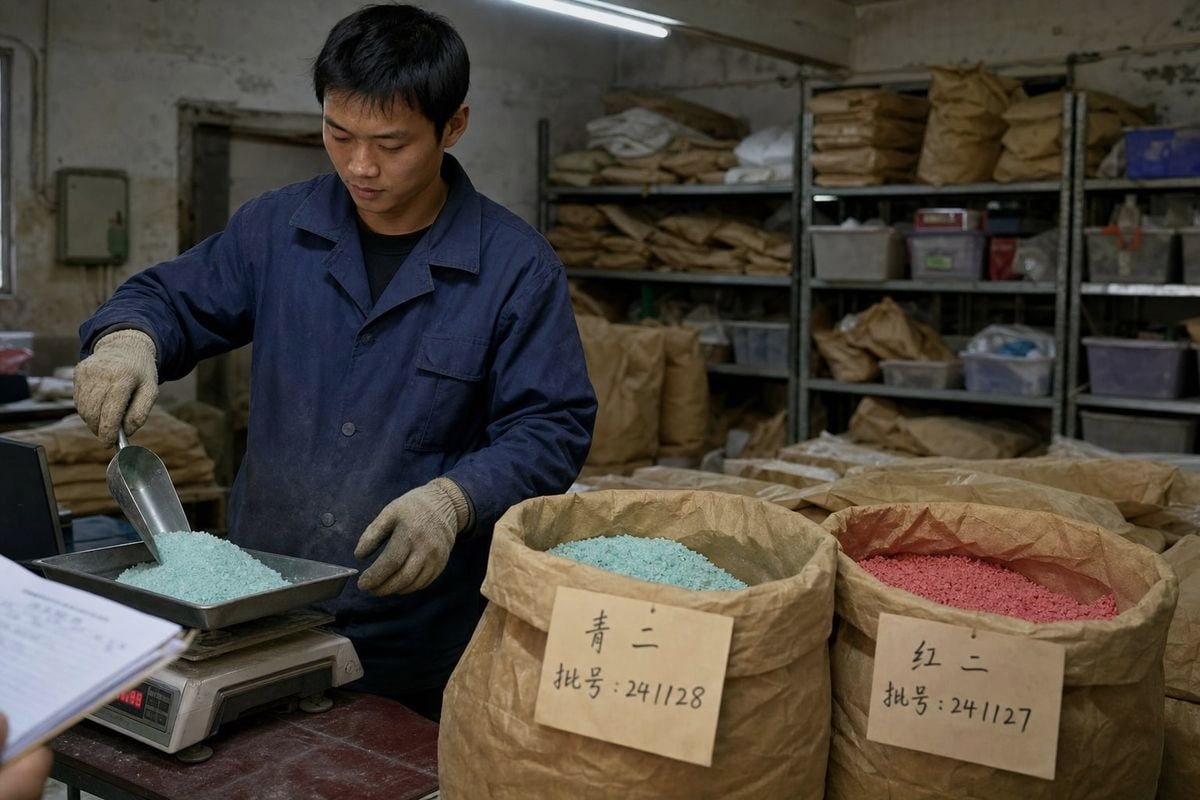
Chargenabweichung ist, wo Sicherheitsversprechen leise sterben. Ein Lieferant kann einen Labortest mit einer goldenen Probe bestehen und dann Kosten bei Rohsalzen für die Massenproduktion senken. Das Farbmittel brennt immer noch, aber die Reinheit sinkt, der Rauch steigt und Atemwegsreizung 7 Beschwerden beginnen, Ihren Kundenservice-Posteingang zu erreichen. Da wir unsere eigenen vollständigen Produktionslinien betreiben und nicht die Waren anderer handeln, kontrollieren wir die Variablen, die Abweichungen verursachen: Beschaffung von Rohmaterialien, Mischungsverhältnisse, Granulatgröße und Füllgewicht.
Ein praktischer Verifizierungsprozess
Hier ist die Reihenfolge, die ich jedem Einkaufsmanager empfehle, der einen Flammenfärbemittel-Lieferanten bewertet, einschließlich uns:
- Fordern Sie Proben von zwei oder mehr verschiedenen Produktionschargen an, nicht von einem handverlesenen Beutel.
- Gleichen Sie die Chargencodes auf diesen Proben mit datierten internen QC-Aufzeichnungen ab.
- Senden Sie eine Probe zur eigenen unabhängigen Laboruntersuchung, wenn Ihr Compliance-Team dies verlangt.
- Fragen Sie, wie Rohmetallsalze bei Ankunft inspiziert werden – es sollten Analysezertifikate für eingehende Materialien vorhanden sein.
- Bestätigen Sie die Füllgewichtstoleranz pro Beutel, da Dosierungskontrolle beeinflusst sowohl die Farbperformance als auch die Inhalationsgefahren durch übermäßigen Rauch.
- Geben Sie eine Testbestellung auf und verbrennen Sie zufällig aus der Lieferung gezogene Einheiten, nicht aus dem obersten Karton.
Warum Fertigungstiefe hier wichtig ist
Handelsunternehmen können Schritt vier nicht beantworten, da sie die Rohsalze nie sehen. Unsere Ningbo-Anlage protokolliert jede eingehende Charge, und unsere Linienaufsichtsbeamten führen Verbrennungstests für jede Produktionscharge durch, bevor sie versiegelt wird. Das Ergebnis, das unseren langjährigen Käufern am wichtigsten ist: Die erste Probe, die sie genehmigt haben, spiegelt zuverlässig die Massenproduktionsqualität wider, die sie ein Jahr später erhalten. Konsistenz ist kein Versprechen. Es ist ein Prozess, den Sie prüfen können, und wir laden zu Audits ein.
Welche Sicherheitsdokumentation sollte ich für die Zoll- und Einzelhandelskonformität anfordern?
Dokumentation ist, wo wir überraschend viel Zeit mit neuen Käufern verbringen. Wenn der Papierkram vor dem Versand stimmt, werden neunzig Prozent der von uns im Laufe der Jahre gesehenen Zollverzögerungen vermieden.
Fordern Sie das Sicherheitsdatenblatt, externe chemische Prüfberichte, Schwermetallanalysen, Transportklassifizierungsdokumente, die CE-Konformitätserklärung für EU-Märkte und marktgerechte Warnhinweise mit Gebrauchsanweisungen an. Einzelhändler benötigen möglicherweise zusätzlich BSCI-Auditberichte, Barcodes und kindersichere Kennzeichnungen auf verkaufsfertigen Verpackungen.
Zollbeamte und Einzelhandels-Compliance-Teams lesen Dokumente unterschiedlich. Der Zoll kümmert sich um Klassifizierung und Transportsicherheit. Einzelhändler kümmern sich um verbraucherorientierte Etiketten und Haftung. Ihr Dokumentenstapel muss beide zufriedenstellen und intern konsistent sein – eine Diskrepanz zwischen dem Zusammensetzungsabschnitt des Sicherheitsdatenblatts und dem Laborbericht ist ein Warnsignal, das zu Verzögerungen führt.
Die wichtigsten Checklisten für Dokumente
| Dokument | Wer verlangt es | Wichtige zu prüfende Inhalte |
|---|---|---|
| Sicherheitsdatenblatt (SDB) | Zoll, Einzelhändler, Versicherer | Zusammensetzung, Erste-Hilfe-Maßnahmen, Handhabung gemäß den Sicherheitsrichtlinien des Sicherheitsdatenblatts |
| Drittanbieter-Testbericht | Einzelhandelskonformität, Importeure | Grenzwerte für Schwermetalle, Chargenidentifikation, Laborakkreditierung |
| Transportklassifizierung | Rechtlicher See- und Straßentransport von brennbaren Feststoffen | Bestätigung, dass das Produkt nicht als Feuerwerk reguliert ist |
| CE-Erklärung | EU-Zoll und Händler | Richtlinienreferenzen und verantwortliche Partei |
| Warnetiketten-Grafiken | Einzelhandelskäufer | Warnhinweise zur Einnahme, Text „außer Reichweite von Kindern aufbewahren“, Hinweis „nicht kochen“ |
| BSCI Auditbericht | Große Einzelhandelsketten | Gültiger Auditzyklus und Fabrikidentität |
Etiketten sind auch Dokumente
Betrachten Sie den aufgedruckten Beutel nicht als nachträglichen Gedanken. Das Etikett muss die Lebensmittelsicherheitsvorkehrungen klar angeben: Kochen Sie niemals Marshmallows oder Hot Dogs über behandelten Flammen, da sich Metallsalze auf Lebensmitteloberflächen ablagern. Es sollte davor warnen, die Packung zu öffnen, da konzentrierter Staub Haut- und Atemwegsreizungen verursachen kann. Es sollte die Sicherheit von Innenkaminen behandeln – unsere Empfehlung sind gut belüftete Kamine oder Außenfeuer, niemals geschlossene oder schlecht belüftete Räume. Und es sollte die Umweltauswirkungen von Asche erwähnen: Rückstände von behandelten Bränden enthalten Metallverbindungen, daher sollten sie nicht auf Gärten verteilt oder dort gelassen werden, wo Haustiere graben. Wir liefern all dies als Teil unseres One-Stop-OEM-Services, einschließlich kundenspezifischer Warnbänder, Barcodes und Displayboxen, die den Regeln jedes Zielmarktes entsprechen.
Schlussfolgerung
Die Metallsalzkomponente von Magic Fire Powder ist wie angegeben sicher, niemals als Lebensmittel. Fordern Sie Zertifizierungen, Salztransparenz, Chargenverifizierung und vollständige Dokumentation an – und arbeiten Sie dann mit einer Fabrik zusammen, die alle vier beweist.
Fußnoten
Der Hazard Communication Standard der OSHA regelt, wie Sicherheitsdatenblätter Toxizitätsdaten klassifizieren und formulieren. ↩︎
Der Hintergrund zur Chemie dieser Verbindung unterstützt den Vergleich der Sicherheit von Rotflammenfärbemitteln im Artikel. ↩︎
Erklärt die chemischen Eigenschaften und das bekannte Toxizitätsprofil des Arbeitspferdes Blaugrün-Farbstoffsalzes. ↩︎
MedlinePlus erklärt Vergiftungs- und Verätzungsmechanismen, die für eingenommene Metallsalze relevant sind. ↩︎
Die Referenz zu den Eigenschaften von Barium unterstützt die Behauptung über dessen höhere Toxizitätsschwelle und den Ausschluss. ↩︎
ATSDR liefert maßgebliche toxikologische Profile für Schwermetalle, auf die in Formulierungsbeschränkungen Bezug genommen wird. ↩︎
Maßgebliche EPA-Quelle, die detailliert beschreibt, wie Feinstaub (Rauch/Staub) Atemwegsreizungen und andere gesundheitliche Auswirkungen verursacht. ↩︎


 English
  Spanish
  German
  French
  Arabic
  Portuguese
Diskutieren Sie mit