







Buyers ask us this constantly: will Magic Fire Powder be classified as fireworks? One wrong assumption here can strand a whole container at customs. On our production line, we design against exactly that risk.
Magic Fire Powder is not automatically classified as fireworks. It is a non-explosive flame colorant with no internal oxidizer, so it typically falls outside consumer fireworks rules. However, classification depends on chemical composition, DOT shipping codes, labeling, and how the product is marketed and packaged.
That short answer hides real complexity. The trade name means nothing to a regulator. What matters is what the powder does, how it ships, and how it sits on the shelf. Let me walk you through each piece, starting with the certifications that settle the question.
What certifications prove Magic Fire Powder is safe from fireworks regulations?
During a QC audit last year, a German distributor asked to see every test report before signing. That meeting taught me how much documentation now decides whether a color-flame product clears review.
SGS or Intertek chemical composition reports, MSDS sheets confirming non-explosive classification, DOT/UN transport classification documents, CE marking for the EU, and CPSC-aligned labeling reviews together prove Magic Fire Powder is a flame colorant, not a firework, and exempt it from pyrotechnic sales restrictions.

The legal logic is straightforward once you see it. ATF defines fireworks as compositions designed to produce a visible or audible effect by combustion, deflagration, or detonation. A genuine flame colorant does not deflagrate. It contains metal salts—typically Kupfersulfat 1 and cupric chloride—that tint an existing flame through metal-ion emission. It cannot sustain combustion on its own because it lacks an internal oxidizer. Your documentation must prove exactly that.
The document stack that matters
In our experience exporting to 30+ countries over 17 years, buyers who carry a complete document stack almost never face fireworks-style holds. Buyers who rely on the supplier's word often do.
| Dokument | Was es beweist | Wer verlangt es |
|---|---|---|
| SGS / Intertek Prüfbericht | Chemical composition, no flash powder, non-explosive | Importers, big-box retail |
| SDB / SDS | Hazardous materials classification and handling data | Carriers, customs, warehouses |
| DOT / UN transport classification | Not UN0336 (consumer fireworks) or UN0335 (display) | Freight forwarders, DOT |
| CE-Kennzeichnung | EU-Konformität für Konsumgüter | Hören Sie nicht auf, PDFs zu sammeln. Fragen Sie, wann jedes Zertifikat zuletzt erneuert wurde. Fragen Sie, welches Labor die Prüfberichte ausgestellt hat und ob Sie die Berichtsnummer direkt beim Labor überprüfen können. Fragen Sie, ob das Sicherheitsdatenblatt mit der exakten Formulierung übereinstimmt, die Sie erhalten werden, und nicht mit einer generischen Version. In Liuyang, wo sich unser Hauptsitz im Feuerwerkscluster Chinas befindet, sehen wir viele Lieferanten, die Dokumente von verwandten Unternehmen ausleihen. Ein fünfminütiges Verifizierungsgespräch mit dem Prüflabor schließt diese Lücke vollständig. |
| ISO 9001 / BSCI factory audits | Consistent production and ethical sourcing | Retail sourcing channels |
Why powder limits are your friend
Pyrotechnic safety standards set hard numeric lines. Consumer fireworks must stay under 50 mg of flash powder for ground devices and 130 mg for aerial devices to keep their ATF exemption. A proper color-flame packet contains zero flash powder. That single fact, verified in a lab report, places the product outside those thresholds entirely. This is why we send every new formulation batch to third-party testing 2 before it ships. The report is not a nice-to-have. It is the difference between a novelty product and a regulated pyrotechnic article in the eyes of a fire marshal or customs officer.
How can I confirm my supplier's compliance documentation before importing color-flame products?
A US importer once forwarded me a competitor's "SGS certificate" for verification. It was two years expired and covered a different formulation. That call reshaped how we present our own paperwork.
Verify certificates directly with the issuing lab using the report number, match the tested formulation to your actual shipment batch, confirm the factory holds ISO 9001 and BSCI audits, request the current MSDS, and check that the DOT classification letter names your exact product.

Trust, then verify. Trading companies sometimes recycle documents across products they do not manufacture. Because we run our own lines—headquartered in Liuyang with production in Ningbo—we can trace every report to a batch record. You should demand that traceability from any supplier, including us.
Ein Fünf-Schritte-Verifizierungsprozess
- Authentifizieren Sie den Bericht. SGS and Intertek both offer online verification portals. Enter the report number and confirm the applicant name matches the factory, not a middleman.
- Match the formulation. Ask whether the tested sample uses the same flame colorant chemicals as your order. A report for a copper sulfate blend does not cover a strontium-based red formulation.
- Überprüfen Sie die Daten. Retail sourcing channels like Home Depot-type buyers typically want reports issued within 12–24 months. Expired paperwork signals a supplier who stopped investing in compliance.
- Audit the factory, not the brochure. ISO 9001 and BSCI certificates prove there is a real production system behind the sample. This is what makes the first sample reflect mass-production quality.
- Request shipping history. A supplier who has cleared US, German, and UK customs repeatedly can show past bills of lading and HS-Code 3 declarations. Ask for redacted examples.
Red flags we tell buyers to watch for
Some warning signs come up again and again. Vague answers about chemical composition. Refusal to disclose whether the product contains chlorine donors 4 like PVC, which face emerging environmental scrutiny. No MSDS available in English. Certificates issued to a company name that differs from the factory. Any one of these should pause your purchase order. Compliance is a hard requirement for serious distributors, and a supplier who treats it casually will eventually cost you a shipment—or worse, a Consumer Product Safety Commission recall.
Will customs in my country classify color-flame powder differently than traditional fireworks?
Weighing shipping options for a Canadian client recently, we compared two HS code strategies side by side. The tariff difference was minor. The clearance-speed difference was enormous.
Yes. Customs authorities classify non-explosive color-flame powder separately from fireworks. It typically ships under HTSUS 3604.90 or as a non-hazardous chemical preparation, while consumer fireworks require UN0336 (1.4G) explosive classification, permits, and licensed carriers. Correct pre-classification prevents holds and misdeclaration penalties.
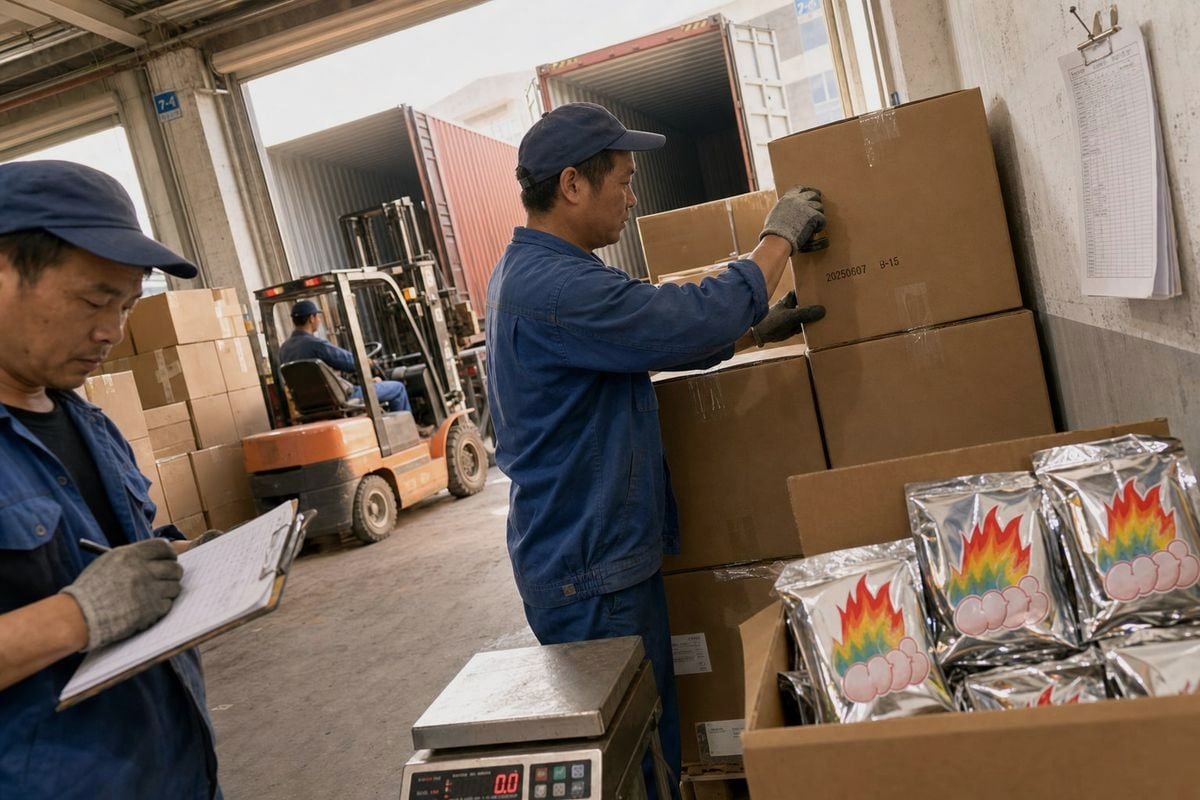
The distinction lives in the UN code system. DOT and international carriers 5 use these codes to decide how goods move, who can carry them, and what storage they need on arrival. Getting this right before the container leaves port is the single highest-leverage compliance step an importer can take.
How the classifications compare
| Attribut | Color-flame powder (typical) | Konsumfeuerwerk | Display fireworks |
|---|---|---|---|
| UN code | Often none, or 1.4S in edge cases | UN0336 (1.4G) | UN0335 (1.3G) |
| Explosive content | None; no internal oxidizer | Flash powder within CPSC limits | Higher energetic content |
| Carrier requirements | Standard freight | Hazmat-licensed carrier | Specialized explosive transport |
| Import permits | Generally none | ATF/state permits often required | Federal explosives license |
| Retail sales regulations | Minimal; general consumer goods | State-by-state fireworks laws | No consumer retail |
Where importers still stumble
Even with a clean product, misdeclaration happens. Some forwarders see the words "fire" and "powder" and default to a fireworks code out of caution. That triggers hazmat surcharges and, in some ports, a physical inspection. We solve this by supplying a classification letter and MSDS with every shipment so the broker can declare confidently. Note the nuance from CPSC: a product that is not UN0336 is not automatically excluded from consumer-fireworks treatment if its function and marketing suggest a pyrotechnic device. So packaging language matters too. A packet described as a "flame colorant additive" reads very differently to a customs officer than one promising "explosive rainbow effects." Local fire marshal guidelines can also affect downstream storage and retail display rules, even when federal transport classification is clean. And during high-risk wildfire seasons, some jurisdictions fold these products into Stage 1 and Stage 2 fire restrictions—an outdoor fire pit safety issue for end users, not an import barrier, but worth briefing your retail partners on.
What warning labels and safety packaging do I need to avoid regulatory issues?
One lesson we learned early: a compliant powder in a non-compliant pouch is still a liability. Our OEM packaging team now treats the label as part of the product itself.
You need clear warning labels stating not for cooking food over treated flames, keep away from children, do not ingest, and use in ventilated outdoor areas—plus child-resistant or sealed pouches, ingredient disclosure, first-aid instructions, batch codes, and market-specific hazard symbols such as EU CLP pictograms.
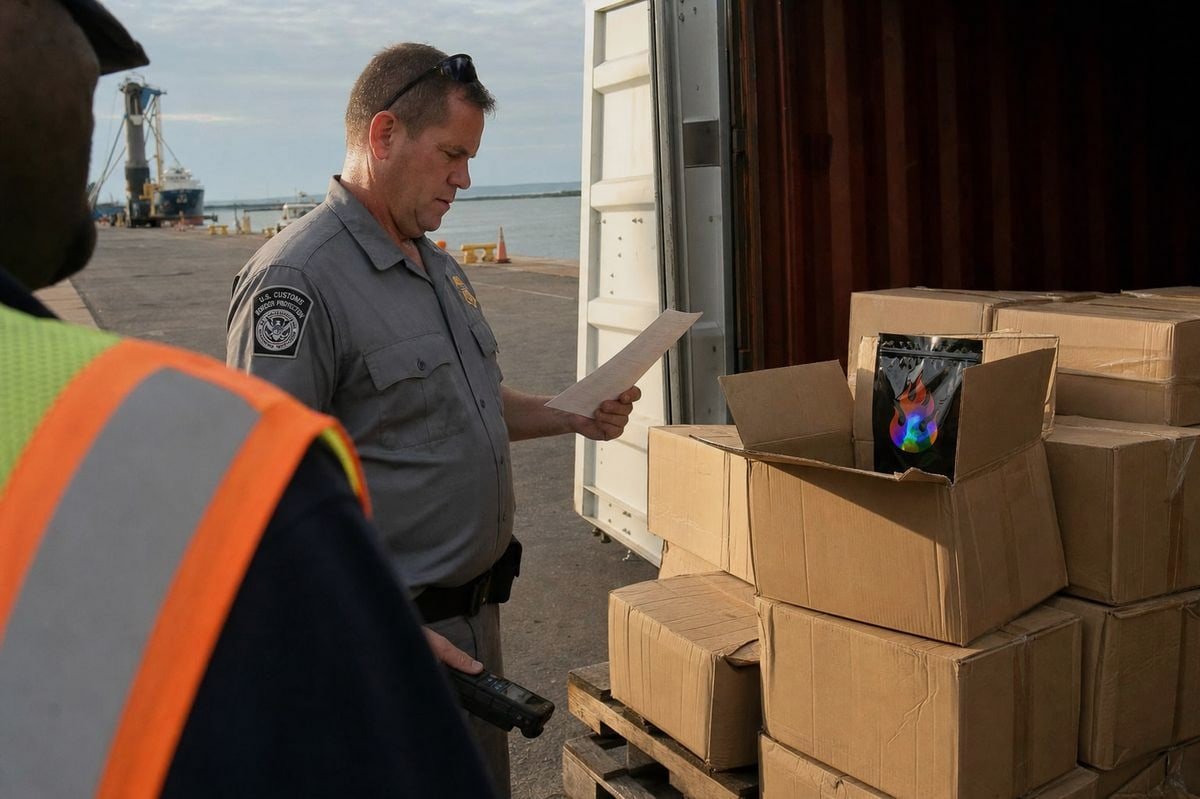
Labeling is where regulators are pushing hardest right now. The Consumer Product Safety Commission faces pressure over color-flame packets whose glossy, candy-like packaging appeals to children, raising accidental ingestion concerns. Copper sulfate toxicity makes ingestion a genuine medical issue, not a theoretical one. Future rules under the Poison Prevention Packaging Act 6 may mandate child-resistant closures. Building those features in now is cheaper than retrofitting after a recall.
The label elements that matter most
| Etikettenelement | Why it is required | Market driver |
|---|---|---|
| "Do not cook food over treated fire" | Chemical smoke carries heavy metal residues | Health authority guidance |
| "Außerhalb der Reichweite von Kindern aufbewahren" | Ingestion risk from copper-based salts | CPSC / poison prevention rules |
| Ventilation warning | Inhalation health risks from metal-salt smoke | Air quality and PM2.5 concerns |
| Ingredient / hazard disclosure | Transparency on chemical flame enhancers | EU CLP, REACH, retailer policies |
| Batch code and traceability mark | Enables targeted recalls | ISO 9001 Qualitätssystemen |
| First-aid and disposal instructions | Reduces liability exposure | Insurer and retailer requirements |
Packaging format choices
We produce packets in heat-sealed foil pouches, resealable kraft bags, and plastic jars, and each format carries different obligations. Single-use foil sachets should be fully sealed with no easy-tear access for small hands. Resealable formats increasingly need child-resistant zippers for cautious retail buyers. Because we run one-stop OEM/ODM, we print market-specific warning labels, barcodes, and Gefahrenpiktogramme 7 directly into the private-label design rather than stickering them on afterward. Also flag indoor use carefully: impending PM2.5 particulate standards may restrict metal-salt colorants in indoor fireplaces and dense urban zones, so an "outdoor recommended" line protects both users and your brand.
Schlussfolgerung
Magic Fire Powder is a flame colorant, not a firework—but only your documentation proves it. Misclassify it, and shipments stall. Verify composition reports, UN codes, and labeling, and you sell confidently. After 17 years supplying compliant color-flame products worldwide, we can say the paperwork is the product. Get it right before the container ships.
Fußnoten
1. Technical chemical data on copper sulfate, a primary ingredient in flame colorants. ↩︎
2. SGS is a global leader in third-party testing and certification for consumer products. ↩︎
3. Official US portal for determining the Harmonized Tariff Schedule codes for imports. ↩︎
4. EPA information on toxic chemicals and environmental scrutiny regarding chlorine-based compounds. ↩︎
5. IATA guidelines for international carriers transporting dangerous goods and chemicals. ↩︎
6. Federal law requiring child-resistant packaging for potentially hazardous household substances. ↩︎
7. Official ECHA guide to CLP hazard pictograms used for chemical labeling and safety. ↩︎



 English
  Spanish
  German
  French
  Arabic
  Portuguese
Diskutieren Sie mit