






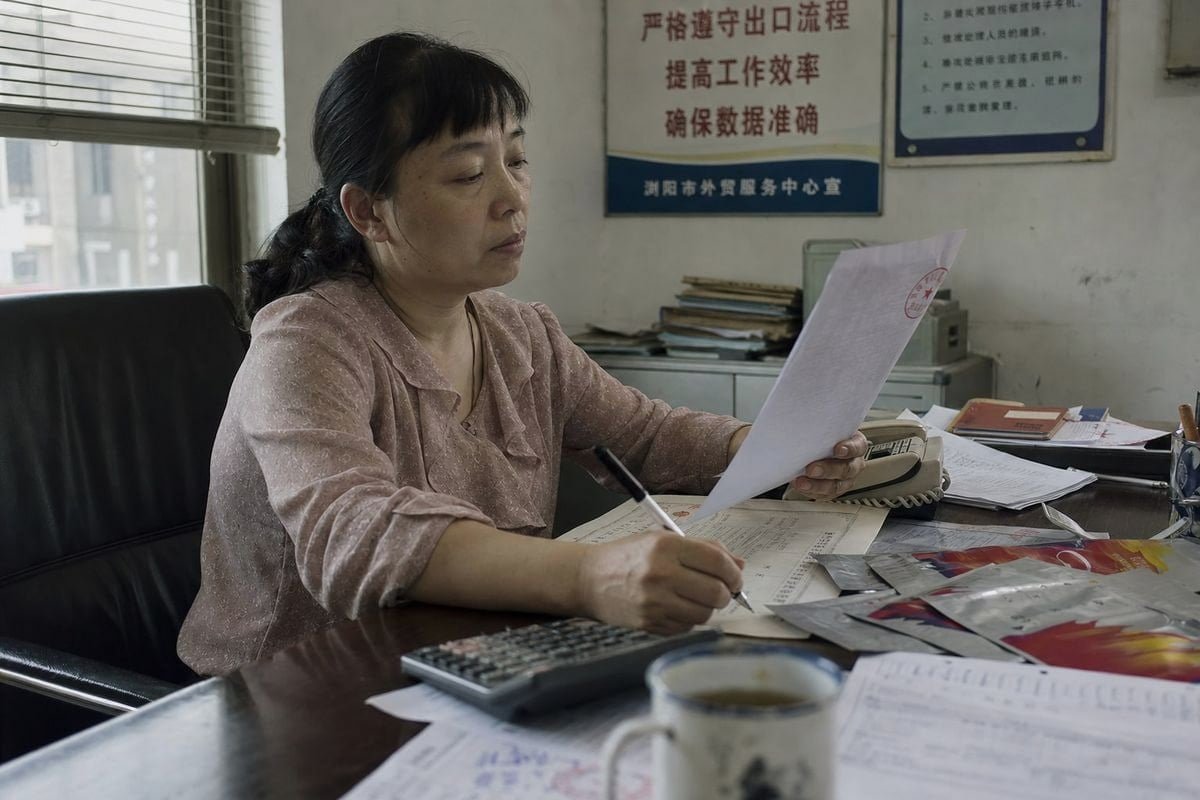
Buyers ask us weekly how to verify a supplier's payment account before ordering Magic Fire Powder. One wrong wire can vanish forever. Our export team has seen it happen to others.
To verify a supplier's payment account when buying Magic Fire Powder, request their business license and bank details in writing, confirm the beneficiary name matches the registered company, call back using independently sourced contact details, and send a small test payment before wiring the full balance.
That is the short answer. But each of those steps has details that matter. Below, I walk through the documents to request, how to check a Chinese factory's payment details, [safer payment methods](https://sunrichfire.com/which-payment-method-safest-buying-magic-fire-powder-china/), and the red flags that expose fake suppliers.
What documents should I request to confirm a supplier's bank account matches their registered company name?
A few years back, a German distributor asked our accounting office for four separate documents before his first wire. We sent all of them the same day. That request was smart, not rude.
Request the supplier's business license, a stamped proforma invoice showing full beneficiary bank details, a bank reference letter or account-opening certificate, and their tax registration. The account holder name on all documents must exactly match the registered legal company name.
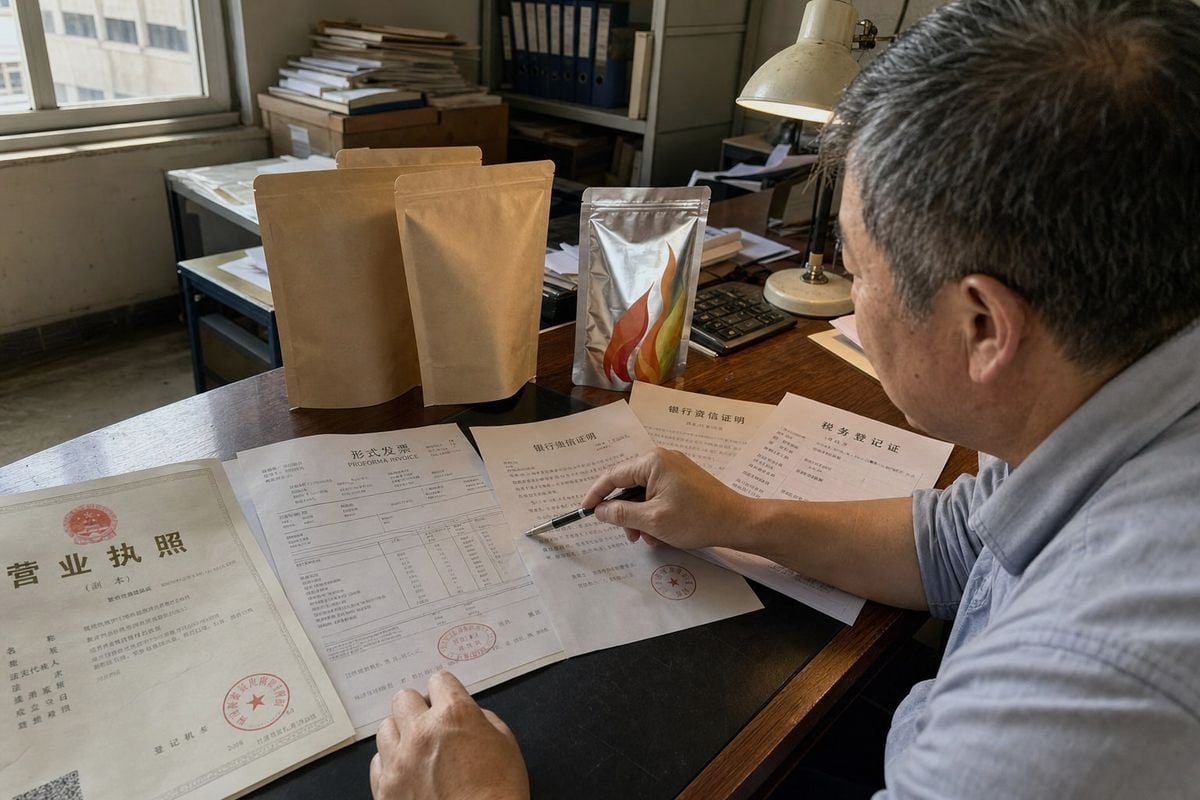
Documents are your first line of defense against B2B payment fraud. A real factory can produce every one of them quickly. A scammer usually cannot, or the papers will contradict each other. In our experience exporting color-flame products to 30+ countries, serious buyers always run this document check, and we respect them more for it.
The four core documents
| Dokument | Was es beweist | Was zu prüfen ist |
|---|---|---|
| Gewerbeanmeldung | The company legally exists in China | Registered name, registration number, business scope |
| Proforma-Rechnung | The official payment instruction | Beneficiary name, account number, SWIFT code 1, bank address |
| Bank reference letter | The bank account belongs to that entity | Bank stamp, account holder name, issue date |
| Tax registration / export record | The company can legally export | Name consistency with the license |
The single most important test is name matching. The beneficiary name on the proforma invoice must match the Chinese registered name on the business license, character for character where possible. Business license verification can be done through China's official National Enterprise Credit Information system 2, or through a sourcing agent who reads Chinese.
Watch the details, not just the names
Also compare the SWIFT code and bank branch location against the supplier's registered address. A factory in Hunan or Zhejiang paying into a bank branch in an unrelated offshore jurisdiction deserves a hard question. Because we handle safety-sensitive goods, buyers sometimes also cross-check the entity name on our Sicherheitsdatenblatt 3 against the beneficiary bank details. That extra match closes another loophole, since the MSDS ties the legal entity to the actual product being shipped.
If any document shows a different company name, do not accept a verbal explanation. Require a formal, stamped Letter of Authorization explaining the relationship before you pay.
How can I check if a Chinese manufacturer's payment details are legitimate before wiring funds?
Our Liuyang headquarters once got a call from a US buyer who had received an "updated bank account" email supposedly from us. It was not from us. His call-back saved his money.
Verify the company through official Chinese registries, then call the manufacturer using a phone number sourced independently from their website or a factory audit report — never the number in the payment email. Have their accounts department confirm the beneficiary bank details verbally, and record who confirmed and when.

The key principle is separation of channels. Email is where fraud lives. Invoice interception 4 is the most common attack: a criminal compromises an email thread, waits for the payment stage, then swaps in their own account. Everything else in the conversation stays authentic, which is exactly why it works. So you must confirm payment details through a channel the fraudster cannot control.
Eine praktische Verifizierungssequenz
- Confirm the company exists. Run business license verification through the official registry or a verification service.
- Find independent contact details. Use the phone number on the company's official website, a past shipping document, or a third-party factory audit report — not the payment email.
- Call back and confirm. Ask the accounts contact to state the beneficiary bank details to you. Do not read the details out first; a fraudster on the line would simply agree with whatever you say.
- Record the confirmation. Note the person's name, role, date, and time. Then request written confirmation restating the details.
- Re-verify any change. If bank details ever change, treat it as a brand-new verification cycle. No exceptions.
Cross-border complications
Chinese account names are often transliterated, so an imperfect English match is not automatically fraud — but it does require explanation and documentation. Video calls also help here. When buyers ask us for a live video walkthrough of our Ningbo production lines during due diligence, we happily do it. A real factory has nothing to hide; a trading company posing as one usually does. Larger buyers can add automated bank-account validation platforms that check ownership against financial databases, which adds a consistent audit trail on top of manual calls.
Should I use a payment method other than direct bank transfer to reduce fraud risk with a new supplier?
Trade-offs drive this decision more than fear does. When we quote a first-time trial order of color-flame packets, we expect the buyer to weigh speed, cost, and protection differently than a repeat customer would.
Yes, for a first order consider protected options: Alibaba Trade Assurance, escrow services, a letter of credit for larger volumes, or a split payment with a micro-deposit test. Direct wire transfer is fine for verified, established suppliers but offers almost no recourse if fraud occurs.
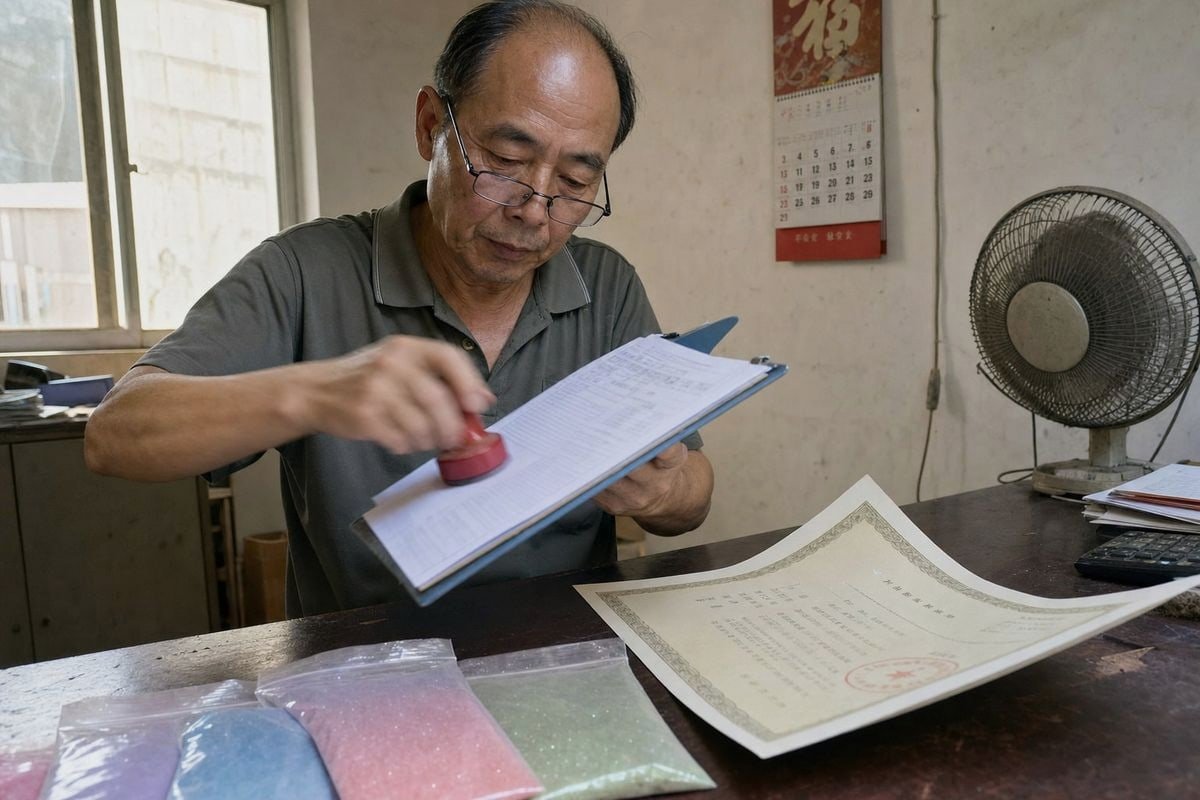
A telegraphic transfer 5 (T/T) is the standard in our industry, and most of our long-term partners use a 30/70 T/T structure without issue. But a wire is essentially irreversible. Once funds land in a fraudster's account, recovery is rare. So the real question is not "which method is best," but "how much protection does this specific relationship require right now."
Payment methods compared
| Methode | Fraud protection | Kosten | Am besten für |
|---|---|---|---|
| Direct wire (T/T) | Niedrig — nahezu unumkehrbar | Low fees | Verified, repeat suppliers |
| Handelssicherheit | High — platform holds recourse | Free on-platform | First orders via Alibaba |
| Escrow services | High — funds held until delivery | Moderate fees | Mid-size trial orders |
| Akkreditiv | High — bank-controlled release | Higher fees, paperwork | Large first orders |
| Split T/T with test payment | Medium — limits exposure | Niedrig | Trial orders with verified factories |
The micro-deposit test
One simple control works across almost every scenario: send a very small test payment first. Then ask the supplier to confirm the exact amount received before you release the balance. This proves the account is active and genuinely controlled by the supplier. It is especially valuable cross-border, where name matching is imperfect. We encourage new buyers to do exactly this with us; the small delay costs a day or two and removes the largest single risk in the transaction.
One caution: if a supplier pressures you to abandon a protected method and move off-platform "to save fees" before any trust is built, treat that as a warning, not a discount.
What red flags suggest I might be dealing with a fake factory or scam account when sourcing color-flame products?
A painful lesson from our market: a European importer once told me he had "bought Magic Fire packets" from a company using photos of products very similar to ours — at half our price. The goods never shipped. The seller never existed.
Major red flags include payment requests to personal or third-party accounts, sudden bank-detail changes before payment, urgency or secrecy pressure, refusal of call-backs or test payments, missing certifications and safety documents, and prices far below the realistic manufacturing cost of compliant color-flame products.

Color-flame powder is a specialty, safety-sensitive product. That makes it attractive to scammers, because buyers have fewer reference points for what "normal" looks like. After 17+ years in this niche, we can say the warning signs are remarkably consistent.
Payment-side red flags
| Rote Flagge | Warum es wichtig ist |
|---|---|
| Personal account requested | Legitimate factories receive payment as a corporate entity |
| Bank details change right before payment | Classic interception pattern; always re-verify |
| Offshore bank unrelated to factory location | Beneficiary bank should align with the registered business |
| Urgent "pay today or lose the price" pressure | Urgency is a manipulation tool, not a business norm |
| Refusal of call-back verification or test payment | A real accounts department accepts both without complaint |
Product-side red flags
The payment account is only half the story. A fake factory also fails on substance. Ask for a factory audit report, certifications like ISO 9001 6 and BSCI, and third-party test reports from labs such as SGS oder Intertek 7. For color-flame products sold into the US or EU, these are hard requirements for retail shelves, not decoration. A seller who cannot produce them either is not a factory or makes non-compliant goods — both are deal-breakers. Run a three-way match too: the company name on the invoice, the purchase order, and the shipping documents must all agree. And do a quick digital presence audit. Check whether the domain age, registered address, and shipping history hang together. A "factory" founded last month with stock photos and a personal payment account is not a factory.
Finally, trust the price signal. Compliant materials, eco-friendly chemistry, proper warning labels, and export documentation all cost money. A quote dramatically below every credible manufacturer's floor is not a bargain. It is bait.
Schlussfolgerung
Verify the company and the payment account through separate, independent channels before any wire. Match names, call back, test small, and treat every bank-detail change as high risk. Careful buyers keep both their money and their supply chain.
Fußnoten
1. Official SWIFT explanation of bank identifier codes used to validate beneficiary account details. ↩︎
2. Official Chinese government registry buyers use to verify a supplier's legal business license. ↩︎
3. Directs to the official OSHA Hazard Communication landing page to avoid 404 on sub-directories. ↩︎
4. Official FBI IC3 resource for Business Email Compromise (BEC), more accessible than the main FBI site. ↩︎
5. Background explanation of wire transfers, the standard payment method discussed in this section. ↩︎
6. Authoritative and stable Wikipedia entry used as an alternative to the 403-prone ISO.org site. ↩︎
7. Official site of Intertek, a testing lab cited for verifying supplier product compliance. ↩︎



 English
  Spanish
  German
  French
  Arabic
  Portuguese
Diskutieren Sie mit