







A GPSR-compliant traceability system for wood fire starters is now a hard gate to the EU market. On our production lines, we saw buyers lose listings overnight without one.
To set up a GPSR-compliant traceability system for wood fire starters, assign a unique batch code to every production run, link it to supplier lots and test reports, print manufacturer and EU Responsible Person details on packaging, keep records for ten years, and build a recall-ready workflow.
That sounds like a lot. It is not, once you break it into steps. Below, I walk through the exact requirements, the labels, the manufacturer's role, and the recall plan.
What GPSR Traceability Requirements Must My Wood Fire Starters Meet Before I Import Them?
A German distributor once asked us to re-label an entire container because his old firelighter supplier had no batch codes. We now build traceability into every Sunrich order from day one.
Before import, GPSR requires that each wood fire starter batch carries a unique batch or lot number, the manufacturer's name and contact details, an EU Responsible Person's details for non-EU makers, a documented risk assessment, and technical documentation retained for up to ten years.

Das Allgemeine Produktsicherheitsverordnung 1 treats wood fire starters as ordinary consumer goods. But "ordinary" does not mean "exempt." These products burn by design. They contain wax, wood fiber, and sometimes Paraffin 2. That triggers flammability 3, chemical, and misuse concerns. So market surveillance authorities expect a full paper trail behind every unit on the shelf.
Here is the practical point. GPSR compliance is not one certificate. There is no single approval you buy and frame on a wall. Instead, it is a documented chain that runs from raw materials to the retail unit and, if needed, back again during a recall. That is the mindset shift I push every buyer to make.
The Minimum Traceability Data Set
In our experience exporting fire-starting goods to Germany, France, the Netherlands, and Poland, the following data set is the workable minimum:
| Anforderung | Was es für Anzünder bedeutet | Who Holds It |
|---|---|---|
| Unique product identifier | Batch or lot number tied to a production run | Hersteller + Importeur |
| Manufacturer identification | Name, trademark, postal and email address on pack | Hersteller |
| EU-verantwortliche Person | Named EU contact printed on packaging | Importer or appointed AR |
| Risikobewertung | Ignition behavior, burn time, chemical emissions | Manufacturer, shared with importer |
| Technische Dokumentation | BOM, test reports, label mockups, instructions | Retained up to 10 years |
| Supply chain records | Upstream suppliers and downstream buyers per batch Lieferkettenmanagement 4 | All economic operators |
Why Batch-Level Beats Product-Level
A serial number on every puck is overkill for a low-cost consumable. A batch number per production run is the sweet spot. It lets authorities isolate one bad lot without pulling your whole product line off shelves. When we produce wax-dipped wood rolls, one batch code covers one shift, one wax lot, and one wood-wool lot. That granularity has saved our buyers real money during audits.
Which Product Labeling and Documentation Do I Need to Track My Fire Starters Through the Supply Chain?
Every retail box that leaves our Ningbo facility carries the same identifier that sits in our production database. We learned early that a label-database mismatch is what auditors catch first.
You need on-pack labeling showing the manufacturer's name and address, the EU Responsible Person's details, a batch or lot number, composition, and localized safety warnings, plus a technical file containing the bill of materials, risk assessment, test reports, and buyer-supplier records.
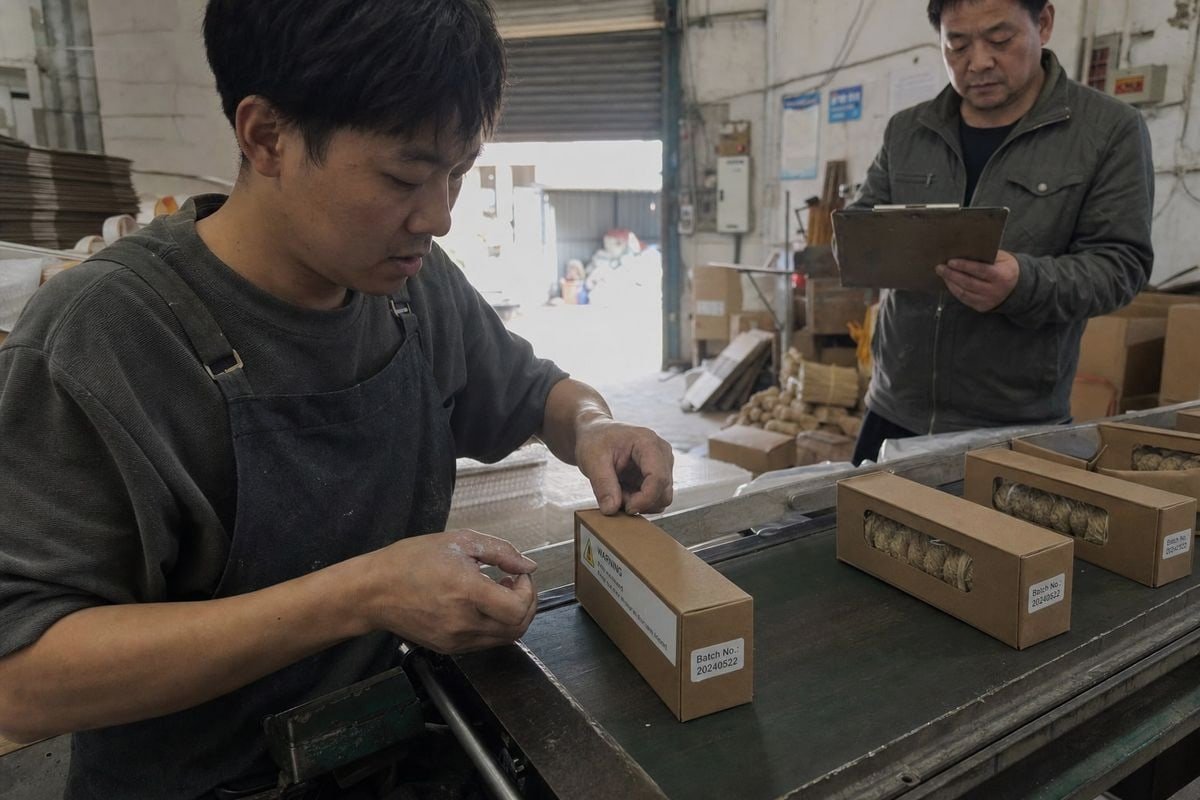
Labeling and documentation are two halves of one system. The label is what the consumer and inspector see. The technical file is what backs the label up. If either half is weak, the whole system fails an inspection.
What Goes On the Label
For a typical firelighter product like our wood-fiber and paraffin pucks, the packaging should carry:
- Product name and clear intended use.
- Manufacturer's name, registered trademark, postal address, and email.
- EU Responsible Person's name and contact details.
- Batch or lot number that matches your internal records exactly.
- Composition statement, for example 50% wood fiber, 50% paraffin.
- Safety warnings in the language of the sale country, covering ignition, storage away from children, and use near open flames.
- Barcode and, increasingly, a machine-readable code linked to batch data.
We print all of this during our OEM packaging runs, including custom warning labels and barcodes, so the retail box arrives shelf-ready. Warnings must come from your risk assessment, not from copying a competitor's box.
What Goes In the Technical File
| Dokument | Zweck | Aktualisierungsfrequenz |
|---|---|---|
| Product description and intended use | Defines what the product is and is not for | Per product version |
| Bill of materials with supplier lots | Links wood, wax, binders, packaging to sources | Pro Charge |
| Risikobewertung | Documents burn, chemical, and misuse hazards | Annually or on change |
| Testberichte | Third-party evidence such as SGS or Intertek reports | Per version or batch series |
| Label mockups and instructions | Proves what was communicated to consumers | Per artwork change |
| Distribution records | Shows which customers received which batches | Continuous |
One more tip from our export work. Extend traceability to sub-components. Recycled wax, paraffin, and cardboard are the inputs where contamination most often hides. If your file cannot name the wax lot behind a batch, close that gap first.
How Do I Choose a Manufacturer That Can Support My GPSR Traceability Records From the Start?
There is a trade-off I discuss with almost every new buyer: a cheaper quote from a factory with no batch discipline versus a slightly higher price with full documentation. The cheap option costs more the moment an authority asks questions.
Choose a manufacturer with verifiable certifications like ISO 9001 and BSCI, third-party test reports, batch-level production records, transparent raw-material sourcing, private-label labeling capability, and a track record of exporting to GPSR-regulated markets with responsive documentation support.
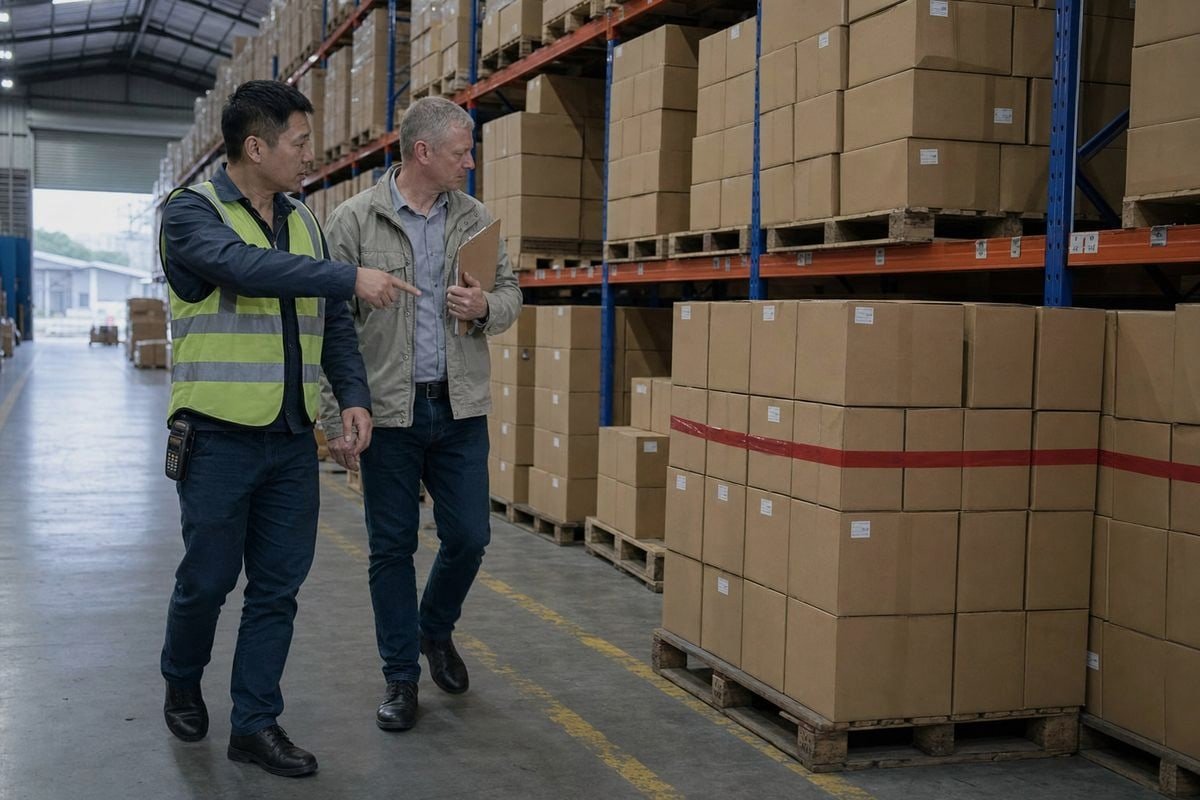
Your traceability system is only as strong as its weakest upstream link. If your factory cannot tell you which wax lot went into batch 2409-B, no software on your side will fix that. So supplier selection is where GPSR compliance actually begins.
Questions That Separate Real Factories From Traders
After 17-plus years running fire-product lines in Liuyang and Ningbo, I know exactly which questions expose a weak supplier. Ask these before you sign anything:
- Can you show me your batch coding logic and a sample production record?
- Do you keep supplier lot numbers for wood wool, wax, and packaging?
- Can you share current SGS or Intertek test reports for this exact product?
- Will you print my batch code, warnings, and EU Responsible Person details on the retail box?
- If I report a defect, how fast can you identify the affected production window?
A trading company usually stalls on question one. A real factory answers with documents.
Evaluation Scorecard
| Kriterium | Weak Supplier | Starker Lieferant |
|---|---|---|
| Zertifizierungen | Claims only, no documents | ISO 9001 5, BSCI, CE with shareable copies |
| Chargenprotokolle | None, or per shipment only | Per production run, linked to material lots |
| Testberichte | Old or generic | Current, product-specific, third-party |
| Kennzeichnungsunterstützung | Standard-Exportkarton | Custom warnings, barcodes, RP details, private label |
| Musterkonsistenz | First sample differs from mass production | Batch-to-batch QC keeps them identical |
| Kommunikation | Slow, vague answers | Responsive English documentation support |
One buyer interaction stays with me. A UK importer sent us his marketplace compliance checklist before ordering. We mapped every line to a document we already held. His listing went live without a single follow-up query from the platform. That is what "supporting traceability from the start" looks like in practice. Sample consistency matters too. If the first sample does not reflect mass-production quality, your risk assessment describes a product you will never actually receive.
What Steps Should I Take If a Compliance Issue or Recall Affects My Wood Fire Starter Shipment?
The hardest lesson we ever absorbed came from a mock recall drill. Our team could name the affected batch in minutes, but tracing which pallets went to which warehouse took hours. We rebuilt our distribution logs the same month.
If a compliance issue arises, quarantine the affected batch immediately, use your batch code to identify all impacted units and buyers, notify your EU Responsible Person, report serious risks via the EU Safety Business Gateway, and execute a documented recall or withdrawal with corrective action.

Speed decides everything in a recall. Authorities judge you on how fast you can isolate the problem, not just on whether a problem occurred. A well-built traceability system turns a crisis into a controlled exercise.
The Six-Step Response Sequence
- Log the complaint or test failure with date, batch code, and evidence.
- Quarantine all stock from that batch in your warehouse and ask distributors to hold theirs.
- Trace upstream to the material lots and production records behind the batch.
- Assess severity with your manufacturer, deciding between targeted testing, withdrawal, or full recall.
- Report serious incidents through the EU Safety Business Gateway 6 and, if required, publish via the Safety Gate portal 7.
- Document the root cause and corrective action, then update your risk assessment.
Deciding How Far to Escalate
Not every complaint means a recall. A single report of a puck that would not light is a quality issue. A report of unexpected flare-up or chemical odor is a safety issue. Your risk assessment gives you the baseline to judge each case. When our buyers face this decision, we pull the batch's production log and wax lot data within the same working day, because their escalation choice depends on whether the issue is isolated or systemic.
Two final points. First, marketplaces move faster than regulators. Amazon or eBay may suspend a combustible-product listing before any authority acts, so keep platform-specific documentation ready. Second, run a mock recall once a year. If you cannot identify affected units within minutes, fix the system before a real incident tests it for you.
Schlussfolgerung
Skipping traceability risks blocked shipments, suspended listings, and unmanageable recalls. Build batch codes, labels, technical files, and recall drills now — with a certified factory partner behind every record.
Fußnoten
1. Provides background on the EU regulation governing consumer product safety and traceability. ↩︎
2. Background on the material composition ingredient repeatedly referenced in product formulations. ↩︎
3. Explains the hazard concept central to fire starter risk assessments and safety warnings. ↩︎
4. Background concept underpinning the traceability and supplier record-keeping discussed throughout. ↩︎
5. Official ISO source explaining the quality management standard referenced for manufacturer selection.


 English
  Spanish
  German
  French
  Arabic
  Portuguese
Diskutieren Sie mit