







Lieferantenkooperation bei Haftpflichtversicherungen und Chargenrückverfolgbarkeit ist die Frage, die unsere Fabrik am häufigsten von Importeuren hört, die Kamin-farbige Kiefernzapfen kaufen, und wenn man es falsch macht, kann es teuer werden.
Verlangen Sie die Zusammenarbeit des Lieferanten bei der Haftpflichtversicherung und der Chargenrückverfolgbarkeit, indem Sie beides vertraglich festhalten: Fordern Sie eine Produkthaftpflichtversicherung mit dem Status eines zusätzlichen Versicherungsnehmers und einem verifizierten Versicherungsnachweis sowie chargencodierte Lieferungen, die mit Rohmaterial-, Beschichtungs- und Prüfprotokollen verknüpft sind – alles vor dem Versand der ersten Bestellung.
Das ist die kurze Antwort. Der Rest dieses Artikels gliedert ihn in vier praktische Schritte, die Sie auf jeden Kiefernzapfenlieferanten anwenden können, beginnend mit Zertifizierungen.
Welche Zertifizierungen sollte ich anfordern, um die Haftpflichtversicherung und die Einhaltung der Produktsicherheit zu bestätigen?
Vor ein paar Jahren fragte uns ein deutscher Händler nach unserer vollständigen Compliance-Datei, bevor wir überhaupt über den Preis sprachen. Diese Anfrage lehrte uns, wie ernsthaft Käufer Farbflammen-Kiefernzapfenlieferanten prüfen.
Fordern Sie eine aktuelle Versicherungsbescheinigung (COI) an, die eine Produkthaftpflichtversicherung zeigt, plus ISO 9001 für Qualitätsmanagement, BSCI für soziale Compliance, CE-Kennzeichnung, wo zutreffend, und Laborprüfberichte von Drittanbietern von SGS oder Intertek, die bestätigen, dass die Farbstoffe den Verbrauchersicherheitsstandards entsprechen.

Kamin-farbige Kiefernzapfen sind keine gewöhnliche Dekoration. Sie sind dafür bestimmt, im Haus eines Verbrauchers verbrannt zu werden. Das bedeutet, dass das von Ihnen angeforderte Zertifizierungspaket zwei separate Risiken abdecken muss: die finanzielle Fähigkeit des Lieferanten, Ansprüche zu begleichen, und die chemische Sicherheit des Produkts bei Erwärmung.
Die Versicherungsseite
Beginnen Sie mit der COI. Sie sollte den Versicherer, die Policennummer, die Deckungsarten und die Höchstgrenzen angeben. Ein gängiger Maßstab für Verbraucherprodukte ist 1 Mio. € pro Schadensfall und 2 Mio. € insgesamt für Produkthaftung 1 oder gewerbliche Haftpflichtversicherung. Bestätigen Sie, dass die Police Produkte/abgeschlossene Betriebsdeckung 2, enthält, da ein Anspruch Monate nach dem Verkauf eintreffen kann. Fordern Sie auch eine 30-tägige Kündigungsfrist, die in den meisten Lieferantenversicherungsprogrammen Standard ist. Denken Sie daran: Ein Zertifikat ist eine Momentaufnahme, nicht die Police selbst. Fordern Sie bei Großbestellungen die tatsächlichen Versicherungsausschlüsse an.
Die Produktseitige Sicherheit
Gehen Sie dann zur Sicherheitskonformität über. Für in die USA bestimmte Waren fragen Sie, wie das Produkt mit CPSC-Sicherheitsstandards 3 für brennbare Verbraucherprodukte übereinstimmt. Fragen Sie für Europa nach CE-relevanten Dokumenten und REACH-bezogenen chemischen Prüfungen. Fordern Sie Sicherheitsdatenblätter (MSDS) für jeden verwendeten Farbstoff und jede Beschichtung an und Berichte von Drittlaboren über Schwermetallgehalt und Verbrennungsverhalten.
| Zertifizierung / Dokument | Was es beweist | Priorität |
|---|---|---|
| Versicherungsbescheinigung (COI) | Lieferant kann Haftpflichtansprüche begleichen | Obligatorisch |
| ISO 9001 | Konsistentes Qualitätsmanagementsystem | Obligatorisch |
| SGS / Intertek Prüfberichte | Chemische und Verbrennungssicherheit überprüft | Obligatorisch |
| BSCI Auditbericht | Ethischer, geprüfter Produktionsstandort | Dringend empfohlen |
| MSDS für Farbstoffe | Chemische Zusammensetzung offengelegt | Obligatorisch |
| CE / marktspezifische Kennzeichnungen | Regionale Compliance-Bereitschaft | Marktabhängig |
In unseren eigenen Exportdateien für die USA, Deutschland und das Vereinigte Königreich ist dies genau der Stapel, der Container durch den Zoll und ohne Streitigkeiten in die Verkaufsregale bringt.
Wie kann ich die Chargenrückverfolgbarkeit eines Lieferanten überprüfen, bevor ich eine Großbestellung aufgeben?
Wenn Käufer unsere Produktionslinien in Ningbo besichtigen, führen wir sie vom Eingang der rohen Kiefernzapfen bis zum Kartonetikett. Dieser Rundgang ist der schnellste Rückverfolgbarkeitstest, den es gibt.
Überprüfen Sie die Chargenrückverfolgbarkeit, indem Sie eine simulierte Rückrufaktion anfordern: Geben Sie dem Lieferanten einen Fertigwaren-Chargencode und bitten Sie ihn, die Rohmaterialchargen, die Beschichtungscharge, das Produktionsdatum, die QA-Aufzeichnungen und die Versandziele innerhalb von 24 Stunden zu liefern. Ein fähiger Lieferant liefert dies schnell.
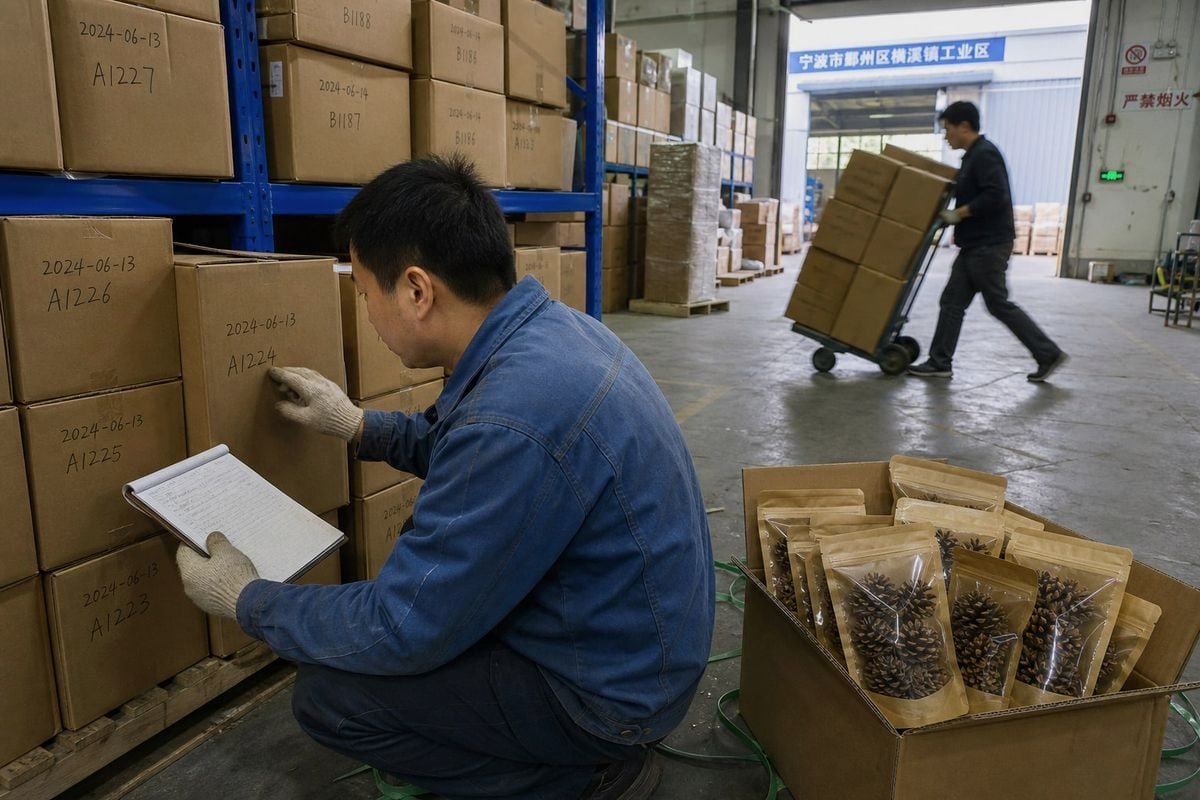
Rückverfolgbarkeitsansprüche sind leicht zu stellen und unter Druck schwer zu fälschen. Akzeptieren Sie daher keine Slide-Decks als Beweis. Testen Sie das System, bevor Ihr Geld gebunden ist. Hier ist der Prozess, den ich jedem Einkaufsmanager empfehle, mit dem wir zusammenarbeiten.
Ein Fünf-Schritte-Verifizierungsprozess
- Fordern Sie die Rückverfolgbarkeitskarte an. Der Lieferant sollte auf Papier zeigen, wie eine fertige Charge 4 mit der Kiefernzapfenquelle, der Farbstoff- oder Beschichtungscharge, der Produktionslinie und der Verpackungscharge verknüpft ist. Wenn die Karte nur im Kopf von jemandem lebt, ist das ein Warnsignal.
- Führen Sie einen Probe-Rückruf durch. Wählen Sie einen beliebigen Chargencode aus einer vergangenen Lieferung aus. Fordern Sie die vollständige Aufzeichnungskette innerhalb von 24 Stunden an. Geschwindigkeit zeigt, ob das Chargenverfolgungssystem echt ist oder nachträglich rekonstruiert wurde.
- Prüfen Sie die physische Kennzeichnung. Überprüfen Sie, ob Kartons, innere Beutel 5, und Paletten alle den Chargenidentifikator. tragen. Einige Käufer fordern jetzt GTIN-basierte Codierung 6 an, damit die Charge sauber durch ihre eigenen Lagersysteme läuft.
- Prüfen Sie die Aufzeichnungen vor Ort oder per Video. Vergleichen Sie die digitalen Aufzeichnungen mit den physischen Chargenetiketten auf dem Boden. Drittanbieter-Audits eignen sich hier gut, wenn Sie nicht reisen können. Die digitalen und physischen Aufzeichnungen müssen übereinstimmen.
- Überprüfen Sie zurückgehaltene Muster. Bei einem beschichteten brennbaren Produkt ermöglicht eine zurückgehaltene Probe pro Charge beiden Seiten, bei einer Beschwerde Monate später erneut zu testen.
Ein Lieferant, der diese Schritte ablehnt, mag immer noch ehrlich sein. Aber Ihr Risiko steigt, da ein zukünftiger Anspruch unmöglich zu isolieren wird. Nach unserer Erfahrung im Export in über 30 Länder erleben Käufer, die vor der Bestellung einen Probe-Rückruf durchführen, fast nie einen vollständigen Rückruf später – Transparenz in der Lieferkette am Anfang verringert Probleme am Ende.
Welche Dokumentation sollte ich für jede Produktionscharge anfordern, um mich vor Haftungsansprüchen zu schützen?
Es gibt einen Kompromiss, den wir bei jeder Produktionscharge abwägen: Mehr Papierkram pro Charge verlangsamt das Band leicht, aber er verwandelt jede zukünftige Beschwerde in ein Ein-Chargen-Problem statt in eine Markenkrisis.
Erfordern Sie für jede Charge: Identität und Chargennummern des Rohstofflieferanten, mit der verwendeten chemischen Charge verknüpfte Farbstoff-MSDS, Produktionsdatum und -standort, QA-Testaufzeichnungen, Chargencode des Fertigprodukts, Chargenkennungen der Verpackung und Versandaufzeichnungen, aus denen hervorgeht, welche Kunden welche Charge erhalten haben.

Betrachten Sie die Chargendatei als den Beweis, den Sie sich an dem Tag wünschen, an dem ein Kunde eine E-Mail über seltsamen Rauch oder eine Flammenbildung sendet. Die Versicherung bezahlt Ansprüche. Dokumentation verteidigt sie, grenzt sie ein und verhindert oft, dass sie überhaupt zu Ansprüchen werden.
Das vollständige Chargendokumentationspaket
| Dokument | Was es aufzeichnet | Warum es Sie schützt |
|---|---|---|
| Rohmaterialeingangsprotokoll | Kiefernzapfenquelle und Eingangscharge | Isoliert Probleme mit natürlichen Materialien wie Feuchtigkeit oder Harzgehalt |
| Chemikalien-Chargenprotokoll + MSDS | Genaue Farbstoffcharge, die in dieser Charge verwendet wurde | Verknüpft jede Verbrennungsbeschwerde mit einer bestimmten Formelcharge |
| Produktionsprotokoll | Datum, Uhrzeit, Werk, Linie, Bediener | Grenzt die Exposition auf eine Charge ein, nicht auf die gesamte Produktlinie |
| QS-Testblatt | Brenntest, Haftung der Beschichtung, Sichtprüfungen | Beweist, dass Ihre Qualitätssicherungs- (QS) Protokolle befolgt wurden |
| Fertigwaren-Chargencode | Die Kennung, die auf die Verpackung gedruckt ist | Der Anker, der alles oben Genannte verbindet |
| Verpackungs-Chargenprotokoll | Beutel-, Karton- und Etikettencharge | Erfasst Verpackungskontaminationen oder Etikettierungsfehler |
| Versandprotokoll | Welcher Kunde welche Charge erhalten hat | Ermöglicht einen gezielten Rückruf statt eines pauschalen |
| Änderungskontrollprotokoll | Jede Farb-, Beschichtungs- oder Subunternehmeränderung | Erklärt plötzliche Unterschiede von Charge zu Charge |
Zwei zusätzliche Ebenen, die es wert sind, verhandelt zu werden
Erstens verlangen Sie vom Lieferanten, dass er jede Chargennummer direkt mit dem spezifischen Sicherheitsdatenblatt der in dieser Charge verwendeten Chemikalienchargen verknüpft – nicht mit einem generischen Blatt. Zweitens fordern für Premium-Einzelhandelsprogramme einige Käufer eine Laborzertifizierung der Asche nach der Verbrennung an, um zu bestätigen Schwermetallrückstände 7 sind sicher für die Entsorgung im Wohnbereich. Auf unseren Bändern in Ningbo führen wir Chargenprotokolle genau deshalb, weil unsere erste Probe mit der Massenproduktion übereinstimmen muss; die gleiche Disziplin macht diese Aufzeichnungen im Streitfall glaubwürdig. Wenn ein Lieferant diese Dokumentation als übermäßig bezeichnet, weisen Sie darauf hin, dass seine eigenen Freistellungsverpflichtungen ohne sie fast unmöglich durchzusetzen sind – was ihm genauso schadet wie Ihnen.
Wie baue ich Rückverfolgbarkeits- und Versicherungsanforderungen in meine Lieferantenvertragsbedingungen ein?
Ein britischer Kamin-Distributor erzählte mir einmal, dass ihr alter Vertrag die Versicherung in einem vagen Satz erwähnte – und es sie einen sechsstelligen Streit kostete. Ihre neu verfasste Vereinbarung prägte, wie wir Käufer jetzt beraten.
Schreiben Sie Versicherung und Rückverfolgbarkeit in die Master-Liefervereinbarung selbst: Geben Sie die Arten von Policen, Mindestgrenzen, den Status zusätzlicher Versicherter, die Einreichung von COIs vor dem Versand, eine Kündigungsfrist von 30 Tagen, Verpflichtungen zur Loskennzeichnung, Aufbewahrungsfristen, Prüfungsrechte und Freistellungsklauseln für Mängel, Kontaminationen und Fehlkennzeichnungen an.

Anforderungen, die nur in einer Onboarding-E-Mail leben, sind nicht durchsetzbar. Anforderungen, die in die Master-Service-Vereinbarung oder Einkaufsbestellbedingungen geschrieben sind, sind es. Behandeln Sie dies als Beschaffungskontrolle, nicht als rechtliche Formalität.
Die wesentlichen Vertragsklauseln
| Klausel | Was zu spezifizieren ist | Gemeinsamer Benchmark |
|---|---|---|
| Versicherungsarten | CGL / Produkthaftpflicht mit abgeschlossenen Operationen | Explizit im Vertrag genannt |
| Mindestgrenzen | Pro Schadenfall und gesamt | 1 Mio. € / 2 Mio. € Basiswert, höher für großes Volumen |
| Zusätzlich versicherte Partei | Ihr Unternehmen ist auf der Police aufgeführt | Kopie der Bestätigung erforderlich |
| Einreichung der COI | Aktuelle COI vor dem Versand jeder PO oder Freigabe der Zahlung | Keine COI, kein Versand |
| Kündigungshinweis | Schriftliche Vorabmitteilung über Auslaufen oder Kündigung | 30 Tage |
| Rückverfolgbarkeitsverpflichtungen | Chargenkennzeichnung, Inhalt der Aufzeichnungen, Aufbewahrungsfrist | 3–5 Jahre Aufbewahrung üblich |
| Prüfungsrechte | Zugang zu Chargenprotokollen, QS-Dateien und Standort | Jährlich oder aus wichtigem Grund |
| Änderungsmitteilung | Änderungen der Formel, des Unterauftragnehmers oder der Anlage vorab genehmigt | Vor Produktionsbeginn |
| Freistellungsklauseln | Mängel, Verunreinigung, falsche Kennzeichnung, Nichterfüllung von Spezifikationen | Überdauert die Vertragsbeendigung |
| Kooperation bei Rückrufen | Lieferant unterstützt bei Produktrückrufverfahren zu definierten Kostenaufteilungen | Antwort innerhalb von 24–48 Stunden |
Umgang mit Lieferantenwiderstand, ohne Ihren Lieferantenpool zu verkleinern
Kleine Lieferanten werden sich widersetzen. Hohe Limits und detaillierte Aufzeichnungen kosten sie Geld. Die praktische Antwort sind gestaffelte Anforderungen: volle Anforderungen für SKUs mit hohem Volumen oder Brandrisiko und ein dokumentierter Ausnahmeworkflow mit kompensierenden Kontrollen für risikogeringe Testbestellungen. Einige Käufer veröffentlichen auch ein Handbuch zur Lieferantenkonformität, damit jeder Lieferant den gleichen Standard sieht, was das Gefühl, einzeln herausgegriffen zu werden, beseitigt. Einige große Einzelhandelsprogramme gehen weiter und nutzen gemeinsame Datenplattformen, die fehlende COIs oder Rückverfolgbarkeitslücken automatisch kennzeichnen. Von unserer Seite bevorzugen wir Käufer mit klaren schriftlichen Anforderungen – 17 Jahre Exporte haben uns gezeigt, dass Unklarheit, nicht Strenge, das ist, was Lieferantenbeziehungen ruiniert. Und halten Sie die Verknüpfung im Vertrag explizit: Versicherung schützt Ihre Bilanz nach einem Ausfall, während Rückverfolgbarkeit den Ausfall selbst verringert. Sie brauchen beide Klauseln, die zusammenarbeiten.
Schlussfolgerung
Kaminfarbene Tannenzapfen bergen ein echtes Brandrisiko. Verlangen Sie eine überprüfte Versicherung, getestete Rückverfolgbarkeit, vollständige Chargenunterlagen und durchsetzbare Vertragsbedingungen – und arbeiten Sie dann mit Lieferanten zusammen, die diese Prüfung begrüßen.
Fußnoten
Wikipedia-Übersicht über Produkthaftungsgesetze und Herstellerverantwortlichkeiten für fehlerhafte Waren. ↩︎
Investopedia-Erklärung der Versicherungsdeckung für Ansprüche, die nach Abschluss eines Projekts oder Produkts entstehen. ↩︎
Offizielle CPSC-Gesetze und -Standards für die Sicherheit von Verbraucherprodukten in den Vereinigten Staaten. ↩︎
Wikipedia-Eintrag, der das Konzept von Chargennummern in der Fertigung und Bestandsverwaltung erklärt. ↩︎
Wikipedia-Artikel, der das Design und die Verwendung von Beuteln in der kommerziellen Produktverpackung erklärt. ↩︎
GS1



 English
  Spanish
  German
  French
  Arabic
  Portuguese
Diskutieren Sie mit