






Choosing between OEM vs ODM for wood fire starters can quietly drain your budget or wreck your launch calendar. I have watched it happen from our own factory floor more than once.
ODM cuts R&D investment and time-to-market for wood fire starters because the manufacturer already owns the formulation, tooling, and testing, enabling launches in one to four months. OEM demands brand-funded development and validation, raising upfront costs and stretching timelines to six months or longer.
That is the short answer. But the real decision depends on your budget, your deadline, and how different your product needs to be. Let me walk you through each factor, using what we see every week on our production lines.
How much can I save on R&D costs by choosing ODM over OEM for wood fire starters?
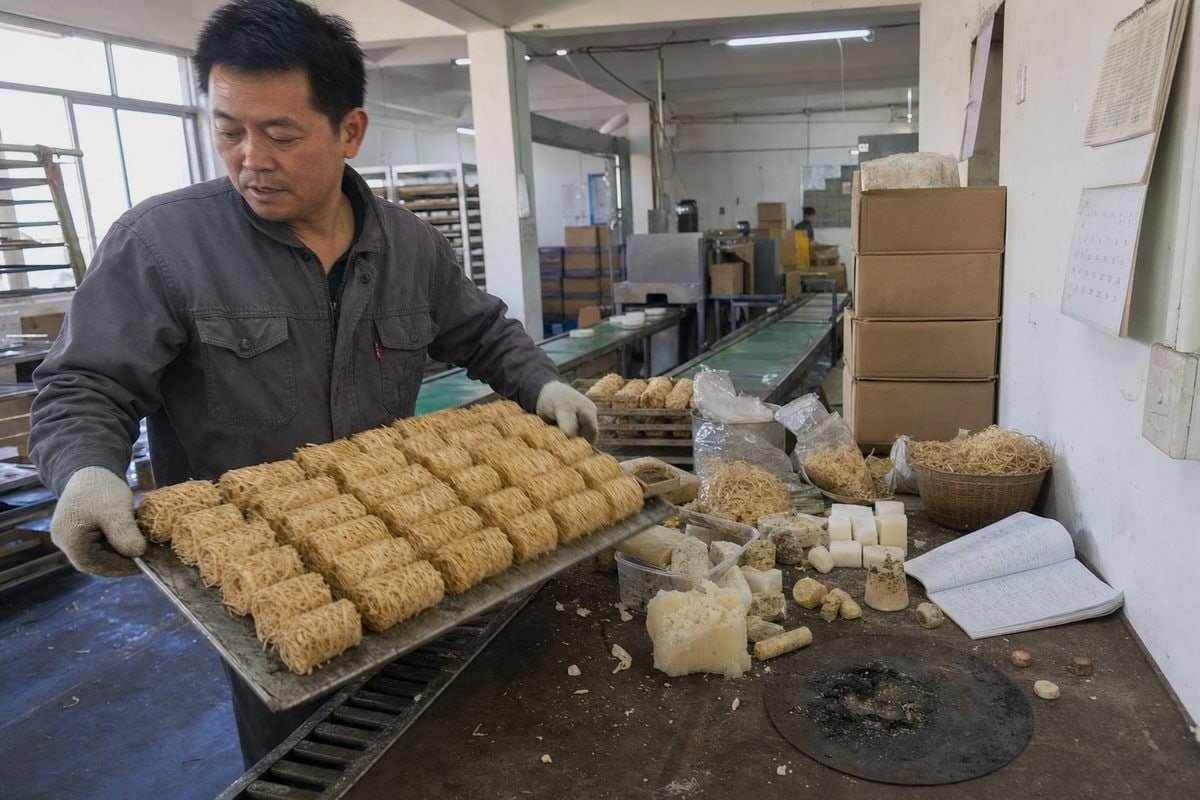
A buyer from Germany once asked me why two nearly identical Wachsgetauchten Holzrollen 1 had wildly different development quotes. The answer was simple: one used our existing formulation, and one did not.
Choosing ODM over OEM for wood fire starters typically saves 60–90% of upfront R&D costs, because the manufacturer has already paid for formulation development, burn testing, tooling, and certification. Brands avoid spending an estimated $15,000–$60,000 on custom development and pay mainly for branding and packaging.

People assume a wood fire starter is too simple to need real R&D. It is not. Our Wachsgetauchten Holzrollen 2 took years of iteration to get right. The wood-to-wax ratio controls ignition speed. The winding density of the Holzwolle 3 controls burn duration. The wax type controls moisture resistance and shelf life. Every one of those variables was tested, adjusted, and re-tested on our lines in Ningbo before we ever offered the product to buyers.
When you go ODM, you inherit all of that finished work for free. You are essentially licensing a proven platform and putting your brand on it.
Where the money actually goes in OEM development
With OEM, your brand funds each development stage. Here is how the cost picture typically breaks down:
| Kostenpunkt | ODM (Existing Design) | OEM (Custom Design) |
|---|---|---|
| Formulation development | Included in unit price | Brand-funded, multiple iterations |
| Burn and ignition testing | Already validated | New test cycles required |
| Tooling, molds, fixtures | Amortized by factory | $2,000–$50,000+ depending on complexity |
| Safety testing and reports | Often pre-cleared | Fresh testing per new formulation |
| Packaging engineering | Template-based, low cost | Custom structural design |
| Total upfront exposure | Low (mostly packaging) | High ($15,000–$60,000+ in many cases) |
These figures are general manufacturing benchmarks, not fixed quotes. A lightly customized fire starter sits at the low end. A fully proprietary fuel blend with unique geometry sits at the high end.
The hidden savings most buyers miss
ODM also saves costs you never see on an invoice. Failed prototype rounds. Wasted raw material batches. Internal engineering hours spent writing specifications. In our experience exporting to 30+ countries, first-time buyers consistently underestimate these soft costs by half. With a mature ODM product, our first sample reliably reflects mass-production quality, so you skip the expensive trial-and-error phase entirely.
Which sourcing model gets my wood fire starters to market faster, OEM or ODM?
Every autumn, our Liuyang office fields urgent emails from distributors who want fire starters on shelves before the fireplace season peaks. The ones who chose ODM usually make it. The OEM latecomers often do not.
ODM gets wood fire starters to market fastest, typically within 1–4 months, because designs, tooling, and production lines already exist. OEM projects usually require 6–12 months, sometimes longer, due to custom formulation, prototyping, burn validation, tooling setup, and fresh compliance testing.
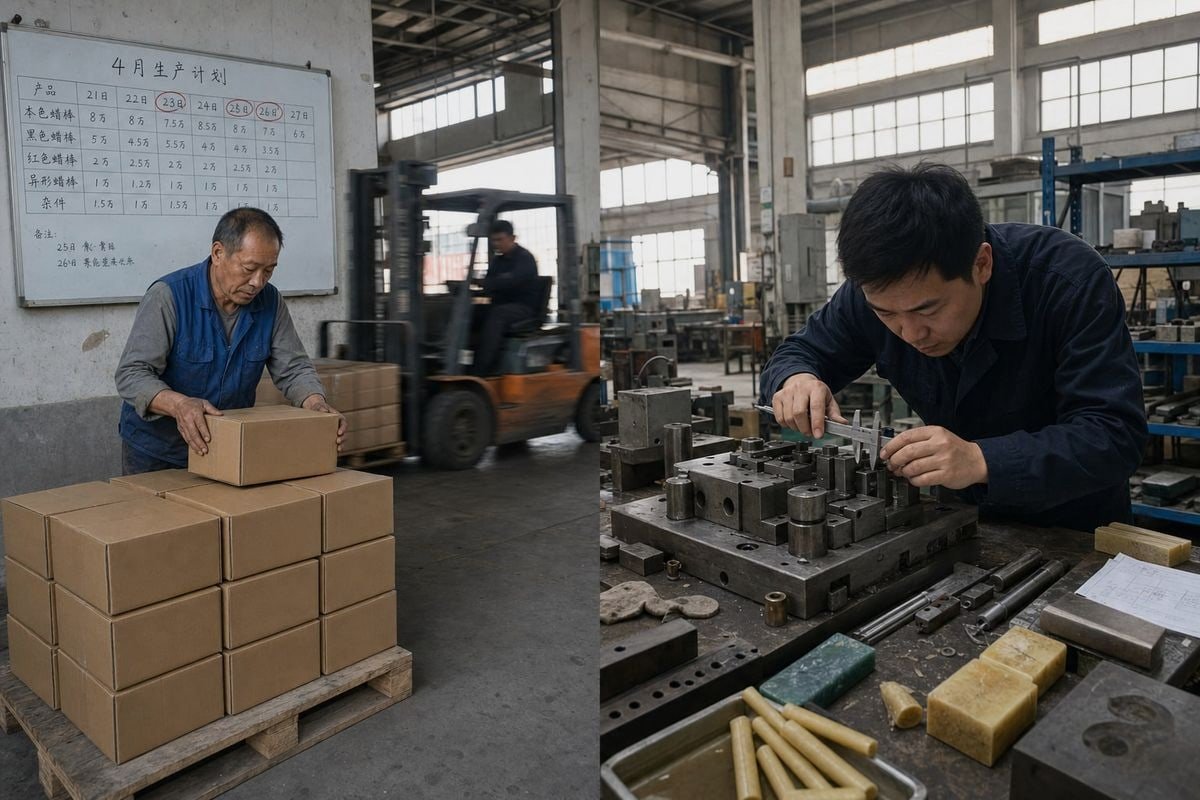
Speed matters more in this category than most buyers realize. Fire starters sell in compressed seasonal windows. Camping and grilling demand peaks in late spring and summer. Fireplace and wood-stove demand peaks in autumn and early winter. Miss the window, and your inventory sits for months.
A realistic timeline comparison
Here is how the two paths typically unfold, based on what we see with our own OEM and ODM projects:
| Phase | ODM Path | OEM Path |
|---|---|---|
| Concept and specification | 1–2 weeks (pick from catalog) | 4–8 weeks (define from scratch) |
| Sampling and prototyping | 1–2 Wochen | 6–12 weeks with iterations |
| Testing and validation | Already complete | 4–10 weeks (burn, moisture, safety) |
| Tooling and line setup | None needed | 4–12 weeks |
| Verpackung und Kennzeichnung | 2–4 Wochen | 4–8 Wochen |
| First mass production | 3–5 Wochen | 4–8 Wochen |
| Typical total | 1–4 Monate | 6–12+ months |
Why compliance is the silent schedule killer
Certifications deserve special attention. Our existing wood fire starters ship with SGS and Intertek 4 test reports already in hand, and our factory holds ISO 9001 and BSCI-Audits 5. For an ODM order, you piggyback on that documentation. For an OEM order with a new formulation, testing starts fresh. Lab queues alone can add six to ten weeks. If your product touches EU or US retail channels, buyers will not accept goods without these reports. In other words, ODM does not just save engineering time. It saves compliance time, which is often the longest and least controllable part of the schedule.
How do I decide between OEM and ODM based on my brand's customization needs?
One trade-off we discuss with almost every new buyer is this: how much of your competitive edge lives inside the product, and how much lives on the package? Your honest answer decides the model.
Choose ODM when your differentiation comes from branding, packaging, price, or distribution, and a proven fire starter design meets your needs. Choose OEM when you need proprietary formulations, unique burn performance, exclusive shapes, or defensible IP that competitors cannot easily copy.
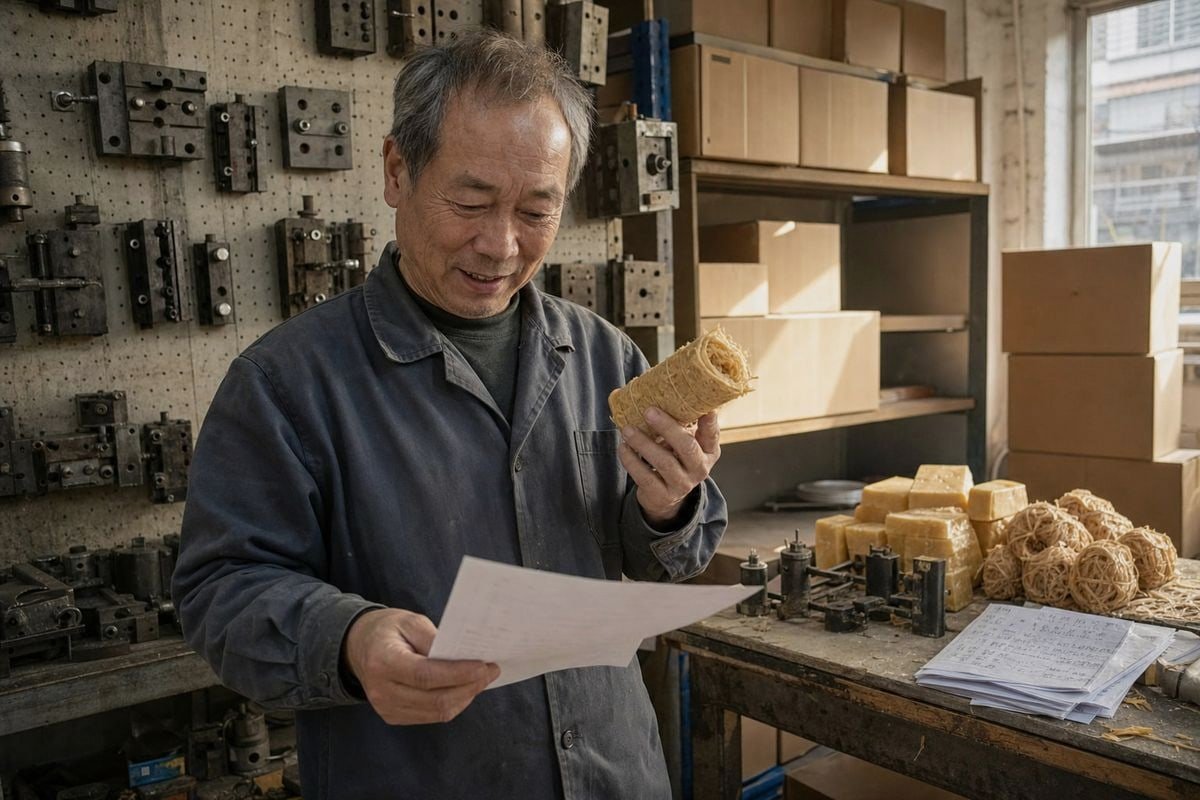
Most buyers frame this as a binary choice. In practice, it is a spectrum. At our factory, the majority of successful launches sit somewhere in the middle, which we handle through what the industry now calls an ODM+ approach: a core proven formulation, customized around the edges.
Ein praktischer Entscheidungsrahmen
Ask yourself these four questions, in order:
- Does my customer buy on performance or on brand? If shoppers pick fire starters by trusted brand and shelf appeal, ODM with strong private-label packaging wins. If your positioning promises longer burn or faster ignition, you need OEM-level control.
- Can I describe my required difference in a specification? If you can only say "make it better," you are not ready for OEM. If you can say "10-minute burn, single-match ignition, no synthetic accelerants," OEM becomes actionable.
- What is my order volume trajectory? OEM tooling and MOQs only make economic sense at sustained volume. Trial orders and seasonal tests belong in ODM territory.
- Do I need exclusivity? ODM products can be sold to your competitors too. If exclusivity is essential, negotiate OEM terms or an exclusive customization.
The middle ground: customization without full OEM
Many of our clients customize burn time, roll size, wax coating level, and complete retail packaging on our existing wood fire starter platform. They get custom boxes, display packaging, warning labels, and barcodes, all shelf-ready, without paying for ground-up development. That covers perhaps 80% of what most private-label brands 6 actually need. Full OEM only becomes necessary when the fuel composition or physical format itself must change.
What risks should I consider before committing R&D budget to an OEM production run?
A lesson we learned early in our 17+ years: the most expensive OEM projects are the ones that get abandoned halfway. The buyer pays for development, then market conditions shift, and the tooling gathers dust.
Before committing an OEM budget, assess five risks: unrecoverable tooling and development costs, missed seasonal windows, certification failures on new formulations, patent conflicts around accelerants and eco-wax blends, and demand uncertainty. Validate the market with ODM first whenever demand is unproven.

OEM is not wrong. It is simply a bet, and you should size the bet honestly. Here are the risks I raise with every buyer who requests full custom development from us.
The five risks that sink OEM projects
| Risiko | 5–6 Monate | How to Mitigate |
|---|---|---|
| Sunk development cost | Formulation and tooling money cannot be recovered if the project stalls | Stage-gate the budget; approve each phase separately |
| Missed season | A 9-month timeline overshoots the autumn or summer sales peak | Start development at least 12 months before target launch |
| Certification failure | A new formulation fails lab testing, forcing costly rework | Pre-screen materials against known compliance limits before tooling |
| Patent exposure | Ignition accelerants and eco-wax alternatives carry crowded patents | Commission a freedom-to-operate review 7 before finalizing the formula |
| Demand miss | The market rejects the finished custom product | Run an ODM pilot first to validate real sell-through |
Why a two-stage strategy usually wins
The pattern we recommend, and the one our most successful long-term partners follow, is staged. Launch first with an ODM or lightly customized product. Use one or two seasons of real sales data to learn what customers value: burn time, scent, pack count, sustainability claims. Then invest OEM money only in the differences that data proves customers will pay for. This converts OEM from a blind bet into an informed investment. It also protects your cash during the riskiest phase, which is always the first market entry. In a category where a wax-dipped wood roll can look identical on the shelf but perform very differently in the fireplace, knowing what your buyer actually rewards is worth more than any patent.
Schlussfolgerung
OEM buys control and differentiation at the cost of time and capital. ODM buys speed and low risk at the cost of uniqueness. Match the model to your launch goal, and let real sales data justify every R&D dollar.
Fußnoten
1. Gives background on the fire starter product category being discussed and compared. ↩︎
2. General background on firelighter products similar to the wax-dipped wood rolls discussed. ↩︎
3. Background on the wood wool material whose density affects fire starter burn duration. ↩︎
4. Official site of the testing lab named as issuing compliance reports for fire starters. ↩


 English
  Spanish
  German
  French
  Arabic
  Portuguese
Diskutieren Sie mit