






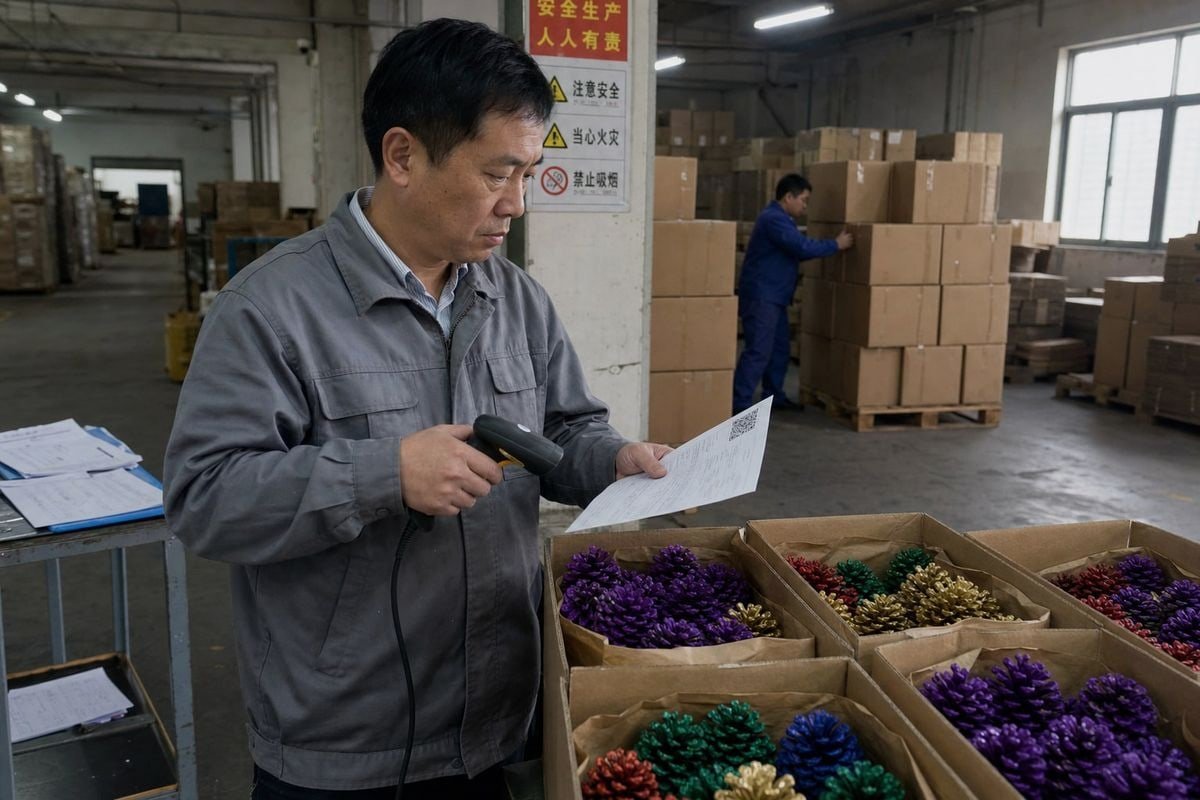
Kostenkategorie Pflanzengesundheitszeugnis 1s für farbige Kiefernzapfen stolpern viele Importeure. Ich habe Käufer ganze Lieferungen – und Spitzenverkäufe der Saison – wegen eines einzigen, nicht verifizierten Papiers verlieren sehen. Unsere Fabrik hat diese Regeln in 17 Jahren des Exports von Feuerprodukten auf die harte Tour gelernt.
Um ein EU-Pflanzengesundheitszeugnis für gefärbte Kiefernzapfen aus China zu bestätigen, überprüfen Sie, ob es von der GACC (Chinas NPPO) ausgestellt wurde, scannen Sie den QR-Code im Single Window Portal Chinas, gleichen Sie den botanischen Namen und die Mengen mit Ihrer Rechnung ab und bestätigen Sie, dass die zusätzliche Erklärung zum Kiefern-Nematoden vorhanden ist.
Das ist die kurze Antwort. Aber jeder dieser Schritte verbirgt Details, die entscheiden, ob Ihr Container die Grenze passiert oder in einem Zolllager steht. Ich führe Sie Schritt für Schritt durch den gesamten Prozess.
Welche Dokumente sollte ich anfordern, um die Echtheit des EU-Pflanzengesundheitszeugnisses eines Lieferanten zu überprüfen?
Ein deutscher Händler leitete mir einmal ein "Pflanzengesundheitszeugnis" weiter, das von einem Frachtführer ausgestellt wurde. Es sah offiziell aus. Es war wertlos. Unser Compliance-Team sieht solche Dokumente häufiger, als Sie erwarten würden.
Fordern Sie das Original-Pflanzengesundheitszeugnis der Allgemeinen Zollverwaltung Chinas (GACC) sowie das Begasungszeugnis, die Handelsrechnung, die Packliste und den Frachtbrief an. Überprüfen Sie den QR-Code im Single-Window-Portal der GACC und stellen Sie sicher, dass alle Dokumente identische Sendungsdetails aufweisen.

Nur die NPPO Chinas – die über die GACC operiert – kann ein gültiges Pflanzengesundheitszeugnis ausstellen. Nicht der Verkäufer. Nicht eine Handelsfirma. Nicht ein Logistikagent. Gemäß ISPM 12 2, ist ein Zeugnis nicht gültig, bis es vollständig, datiert, unterschrieben und gestempelt oder elektronisch über ein genehmigtes System ausgestellt ist. Daher sage ich Käufern als Erstes etwas Einfaches: Prüfen Sie, wer es unterschrieben hat, bevor Sie etwas anderes prüfen.
Das Kern-Dokumentenset zum Anfordern
Hier ist das Dokumentenpaket, das wir für jede Lieferung von farbigen Kiefernzapfen vorbereiten von unserem Produktionsstandort Ningbo:
| Dokument | Ausgestellt von | Was Sie überprüfen |
|---|---|---|
| Pflanzengesundheitszeugnis | GACC (NPPO Chinas) | Offizieller Stempel, Unterschrift, QR-Code, zusätzliche Erklärungen |
| Begasungsbehandlungszeugnis | Genehmigter Behandlungsanbieter | Behandlungsart, Dosierung, Datum, Chargennummer |
| Handelsrechnung | Lieferant | Mengen, Produktbeschreibung, Parteien |
| Packliste | Lieferant | Kartonanzahl, Nettogewicht/Bruttogewicht |
| Konnossement | Spediteur | Routen-, Schiff-, Empfängerübereinstimmung |
Kreuzprüfung ist, wo Fälschungen scheitern
Moderne chinesische Pflanzengesundheitszeugnisse tragen einen sicheren QR-Code. Scannen Sie ihn und vergleichen Sie den Bildschirmdatensatz mit der Papierversion. Sie müssen exakt übereinstimmen – Ware, Menge, Herkunft, Bestimmungsort. Dann führen Sie eine Dokumenten-Triage für das gesamte Set durch. Die Überprüfung des botanischen Namens ist hier wichtig: Kiefernzapfen gehören zur Kiefer Gattung, und das Zeugnis sollte dies angeben, nicht eine vage Formulierung wie "Dekorationsartikel". Achten Sie auf geänderte Mengen, nicht übereinstimmende Empfänger-Namen oder ein Zeugnisdatum, das nicht zum Versandzeitplan passt. Jede einzelne Inkonsistenz ist ein Warnsignal, das auch EU-Grenzbeamte erkennen werden. Bewahren Sie schließlich eine gescannte Kopie von allem auf, bevor die Ware verladen wird. Wenn das Original auf dem Transportweg verloren geht, rettet dieser Scan Ihre Verhandlung mit der Grenzbehörde.
Wie kann ich bestätigen, dass die Begasungs- und Wärmebehandlung den EU-Importanforderungen entspricht?
Behandlungsaufzeichnungen sind, womit ich die meiste Zeit mit neuen Käufern verbringe. An unserer Produktionslinie erhält jede Charge von farbigen Flammen-Kiefernzapfen ein Behandlungslogbuch, bevor jegliche Beschichtung aufgetragen wird – denn Farbe verbirgt nichts vor einem Pflanzengesundheitsinspektor.
Bestätigen Sie, dass das Begasungsbehandlungszertifikat die Methode, die Chemikalie oder die Temperatur, die Expositionszeit und das Behandlungsdatum angibt und dass diese Details im Behandlungsabschnitt des Pflanzengesundheitszeugnisses aufgeführt sind. Überprüfen Sie für Kiefernprodukte die zusätzliche Erklärung, die die Freiheit von Kiefernholznematoden (Bursaphelenchus xylophilus) bestätigt.
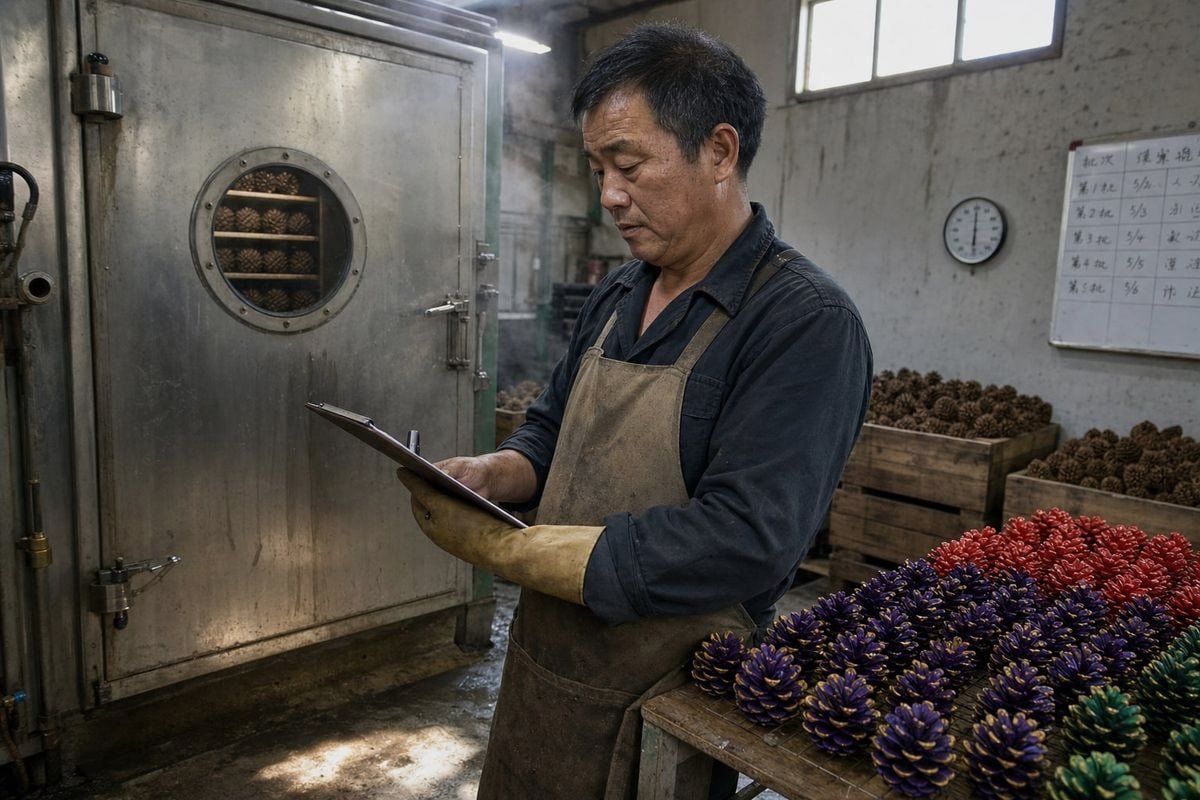
Die EU behandelt alles aus der Kiefer Gattung mit besonderer Vorsicht. Der Grund ist die Verhinderung invasiver gebietsfremder Arten – insbesondere des Kiefern-Nematoden 3, der Kiefernwälder in Portugal verwüstet hat und Wälder in der gesamten EU bedroht. Deshalb muss das Pflanzengesundheitszeugnis für Kiefernzapfen eine zusätzliche Erklärung enthalten, die besagt, dass die Sendung frei von Bursaphelenchus xylophilus. ist. Wenn diese Erklärung fehlt, rechnen Sie mit Problemen an der Grenze, egal wie gut der Rest Ihrer Unterlagen aussieht.
Wie eine konforme Behandlungsaufzeichnung aussieht
Hier erkläre ich die zwei gängigen Behandlungswege für Käufer, zusammen mit dem, was jede Aufzeichnung zeigen sollte:
| Behandlungsroute | Typische Parameter | Zeugnis muss angeben |
|---|---|---|
| Wärmebehandlung | Kerntemperatur und Mindestdauer gemäß offizieller Zeitplan | Temperatur, Dauer, Behandlungsdatum, Einrichtung |
| Begasung | Zugelassenes Begasungsmittel, Dosierung, Einwirkzeit | Chemischer Name, Konzentration, Einwirkstunden, Datum |
Ein häufiger Einwand von Käufern, den ich höre: "Die
Fußnoten
Offizielle Anforderungen der Europäischen Kommission für die Einfuhr von Pflanzenprodukten aus Nicht-EU-Ländern. ↩︎
Offizielle Landingpage für die Internationale Phytosanitäre Maßnahme Nr. 12 der zuständigen Behörde (IPPC). ↩︎
Maßgebliche Datenbank für Schädlinge für den Nematoden, der spezifische Einfuhrerklärungen erfordert. ↩︎
 English
  Spanish
  German
  French
  Arabic
  Portuguese
Diskutieren Sie mit