






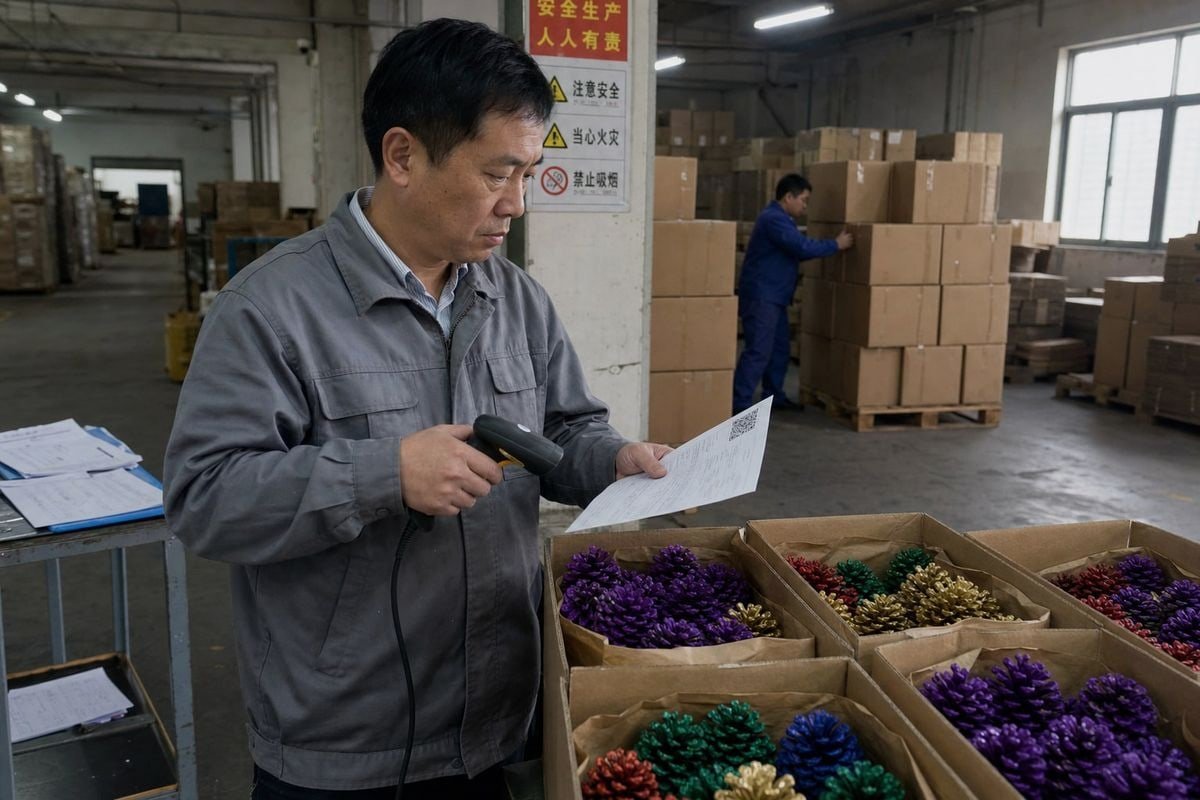
UE certificat phytosanitaire 1s for colored pine cones trip up many importers. I have watched buyers lose entire shipments — and peak-season sales — over one unverified paper. Our factory learned these rules the hard way over 17 years of exporting fire products.
To confirm an EU phytosanitary certificate for colored pine cones from China, verify it was issued by GACC (China's NPPO), scan the QR code on China's Single Window portal, match the botanical name and quantities against your invoice, and confirm the Pine Wood Nematode additional declaration is present.
That is the short answer. But each of those steps hides details that decide whether your container clears the border or sits in a bonded warehouse. Let me walk you through the full process, step by step.
What documents should I request to verify a supplier's EU phytosanitary certificate is genuine?
A German distributor once forwarded me a "phytosanitary certificate" issued by a freight forwarder. It looked official. It was worthless. Our compliance team sees documents like that more often than you would expect.
Request the original phytosanitary certificate issued by the General Administration of Customs of China (GACC), plus the fumigation treatment certificate, commercial invoice, packing list, and bill of lading. Verify the QR code on GACC's Single Window portal and confirm all documents show identical consignment details.

Only the NPPO of China — which operates through GACC — can issue a valid phytosanitary certificate. Not the seller. Not a trading company. Not a logistics agent. Under ISPM 12 2, a certificate is not valid until it is complete, dated, signed, and stamped or issued electronically through an approved system. So the first thing I tell buyers is simple: check who signed it before you check anything else.
L'ensemble de documents de base à demander
Voici la document package we prepare for every colored pinecone shipment leaving our Ningbo production site:
| Document | Délivré par | What you verify |
|---|---|---|
| Certificat phytosanitaire | GACC (NPPO of China) | Official stamp, signature, QR code, additional declarations |
| Fumigation treatment certificate | Approved treatment provider | Treatment type, dosage, date, batch reference |
| Facture commerciale | Fournisseur | Quantities, product description, parties |
| Liste de colisage | Fournisseur | Carton count, net/gross weight |
| Connaissement | Transporteur | Route, vessel, consignee consistency |
Cross-checking is where fakes fall apart
Modern Chinese phytosanitary certificates carry a secure QR code. Scan it and compare the on-screen record with the paper version. They must match exactly — commodity, quantity, origin, destination. Then do documentary triage across the whole set. The botanical name verification matters here: pine cones belong to the Pinus genus, and the certificate should state this, not a vague phrase like "decorative items." Watch for altered quantities, mismatched consignee names, or a certificate date that does not fit the shipping timeline. Any single inconsistency is a red flag that EU border officers will also catch. Finally, keep a scanned copy of everything before the goods load. If the original goes missing in transit, that scan will save your negotiation with the border authority.
How can I confirm the fumigation and heat treatment process meets EU import requirements?
Treatment records are where I spend the most time with new buyers. On our production line, every batch of color-flame pinecones gets a treatment log before any coating goes on — because paint hides nothing from a plant health inspector.
Confirm the fumigation treatment certificate specifies the method, chemical or temperature, exposure time, and treatment date, and that these details appear in the phytosanitary certificate's treatment section. For pine products, verify the additional declaration confirming freedom from Pine Wood Nematode (Bursaphelenchus xylophilus).
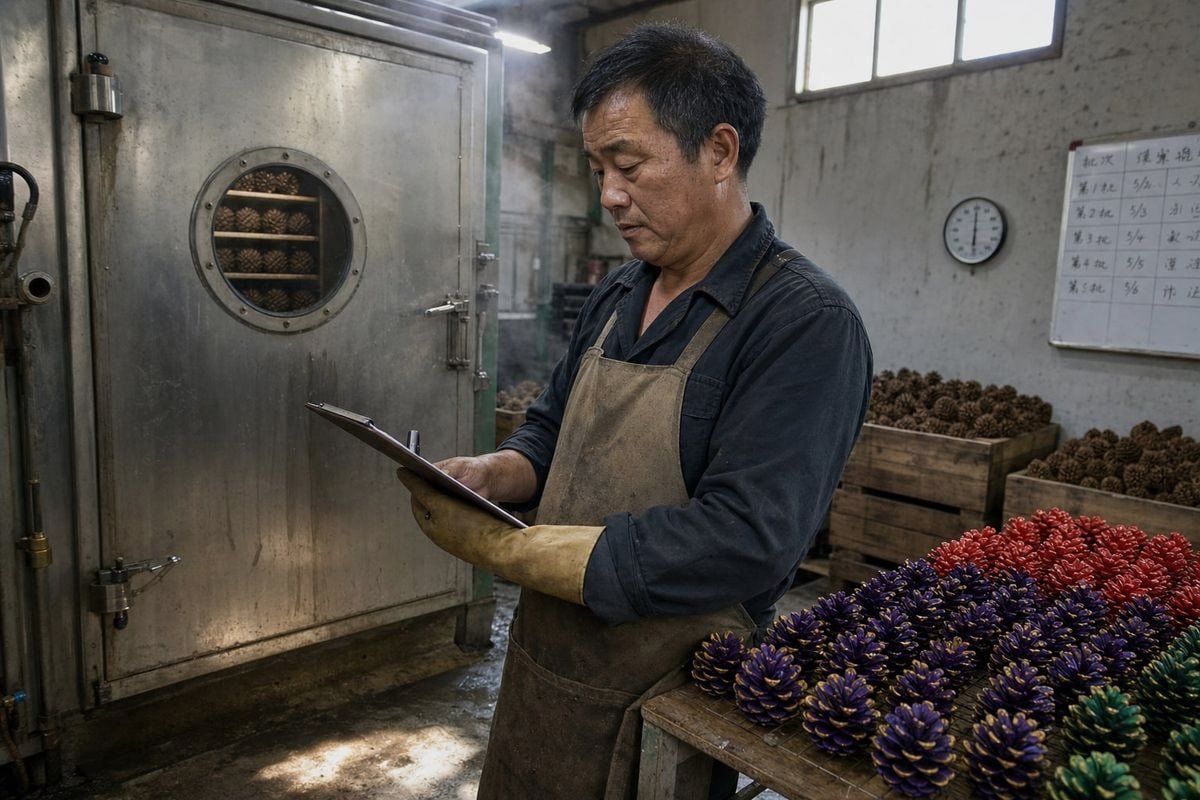
The EU treats anything from the Pinus genus with extra caution. The reason is invasive alien species prevention — specifically the Nématode du pin 3, which has devastated pine forests in Portugal and threatens forests across the EU. That is why the phytosanitary certificate for pine cones must carry an additional declaration stating the consignment is free from Bursaphelenchus xylophilus. If that declaration is missing, expect trouble at the border, no matter how good the rest of your paperwork looks.
What a compliant treatment record looks like
Here is how I explain the two common treatment routes to buyers, along with what each record should show:
| Treatment route | Typical parameters | Certificate must state |
|---|---|---|
| Traitement thermique | Core temperature and minimum duration per official schedule | Temperature, duration, treatment date, facility |
| Fumigation | Approved fumigant, dosage, exposure time | Chemical name, concentration, exposure hours, date |
A common buyer objection I hear: "The
Notes de bas de page
1. Official European Commission requirements for importing plant products from non-EU countries. ↩︎
2. Official landing page for International Standard for Phytosanitary Measures No. 12 from the governing body (IPPC). ↩︎
3. Authoritative pest database entry for the nematode requiring specific import declarations. ↩︎
 English
  Spanish
  German
  French
  Arabic
  Portuguese
Rejoignez la conversation