






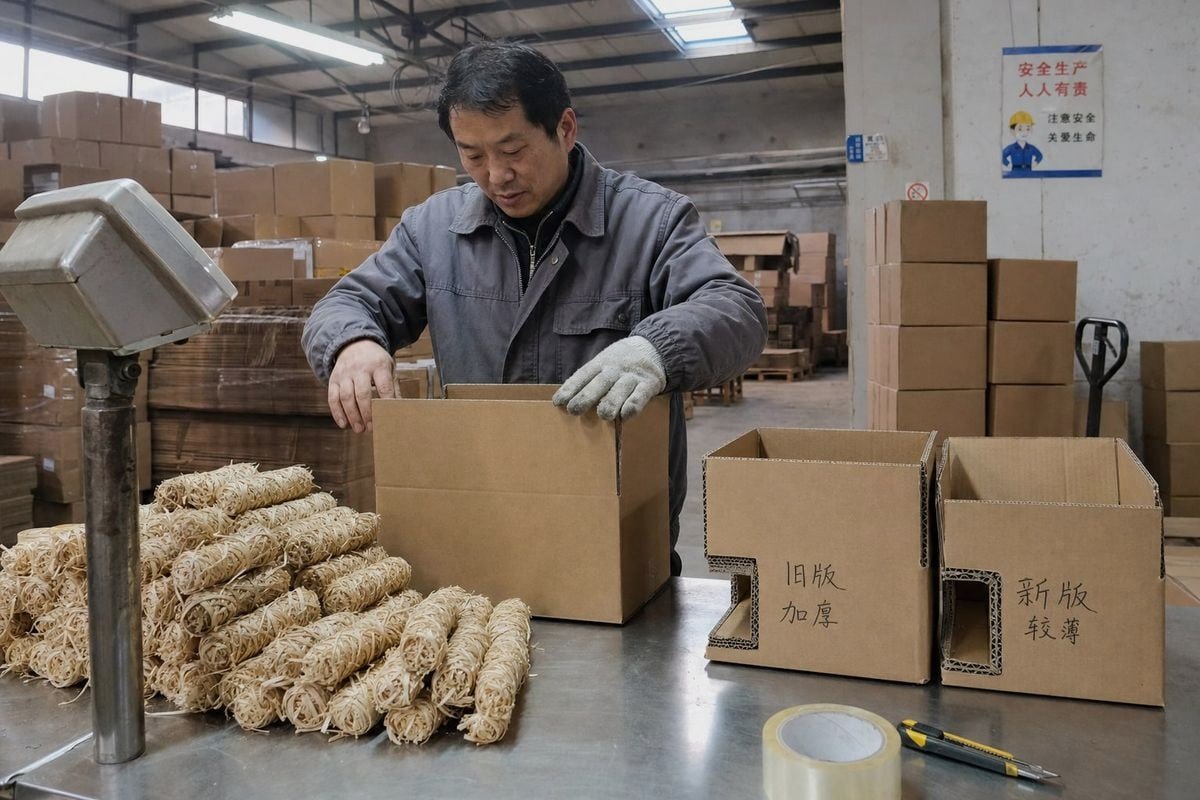
Every quarter, buyers ask our packing team the same thing: reduce packaging weight when sourcing wood fire starters from China. Freight bills keep climbing. Heavy cartons eat margins. But cut too much, and crushed cases and moisture-damaged wax rolls arrive at your warehouse instead of sellable stock. The fix is asking the right way.
To ask suppliers to reduce packaging weight safely, define the protection standard first, then request the lightest packaging that still passes drop, compression, and moisture tests. Ask for a packaging specification sheet, revised samples, carton dimensions, gross weight, and transit test evidence before approving any change.
That is the short version. Below, I break down what to certify, how to sample, which materials to specify, and how to verify protection through customs and transit.
What certifications should I request to confirm lightweight packaging still meets safety standards?
A German distributor once told me his previous supplier "lightened" cartons by simply dropping a corrugate grade — with no test report. Half a container arrived crushed. That conversation shaped how we document every packaging change at our Ningbo facility.
Request ISTA transit test reports, GB 23350-2021 compliance confirmation, corrugated box strength certificates (ECT or bursting strength), SGS or Intertek third-party test results, and FSC certification if you want sustainable sourcing claims. These documents prove lighter packaging still protects wax-based fire starters in export conditions.

Certifications turn a vague promise into verifiable evidence. When a supplier says "the lighter carton is fine," your only protection is paperwork that proves it. In our own export process, we treat packaging documentation the same way we treat product compliance — as a hard requirement, not a nice-to-have. Our buyers in the US and EU expect ISO 9001 process control behind every spec change, and packaging is no exception.
Die wichtigsten Dokumente, die Sie anfordern sollten
Ask for each of these before signing off on any weight reduction:
| Dokument | Was es beweist | Warum es für Feueranzünder wichtig ist |
|---|---|---|
| ISTA transit test report | Cartons survive drop, vibration, and compression | Wax-dipped wood rolls deform under crushing loads |
| ECT / bursting strength certificate | Corrugated box strength 1 at the new board grade | Thinner walls must still stack safely in containers |
| GB 23350-2021 compliance | Packaging layers and void space meet China's excessive-packaging limits | Gives you legal leverage to request layer reduction |
| SGS / Intertek-Bericht | Unabhängige Überprüfung von Materialien und Leistung | Removes reliance on supplier self-declaration |
| FSC-Zertifizierung 2 | Paper and board come from responsible forestry | Supports retail sustainability claims in the US and EU |
Why GB 23350-2021 is your negotiation lever
China's mandatory standard limits packaging layers and empty space for many consumer goods. Referencing it signals you know the regulatory landscape. It also reframes your request: you are not asking for a favor. You are asking the supplier to align with a standard they should already follow. In my experience, suppliers respond faster when a buyer cites a Chinese national standard than when they hear a generic "make it lighter."
One more point. Product integrity testing and packaging testing are different documents. A burn-time test says nothing about carton survival. Ask for both, and ask that the packaging report reference the exact revised specification — board grade, dimensions, and gross weight — so there is no ambiguity at pre-shipment inspection.
How do I ask suppliers for packaging samples before approving a weight reduction?
Before we ship any revised pack-out from our production line, we send buyers a full sample set — inner box, master carton, and photos of the pallet build. Seventeen years of exporting taught us that a fifty-dollar sample prevents a five-thousand-dollar claim.
Ask for a complete revised pack-out sample: the retail box, inner packs, and master carton at the new specification. Request exact carton dimensions, gross weight per carton, board grade, and pack-out photos. Approve nothing until you physically inspect and stress-test the sample yourself.
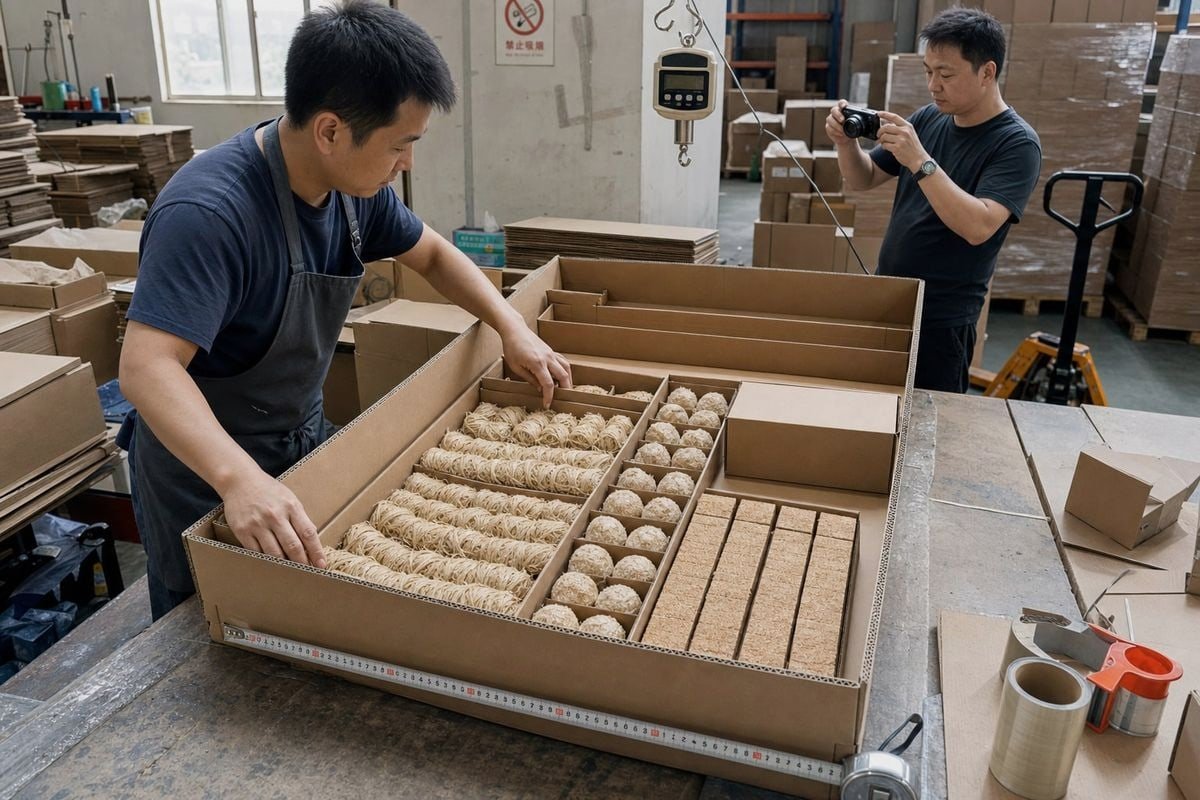
The sample request is where most buyers go wrong. They ask for "a sample of the new box" and receive a single empty carton. That tells you almost nothing. You need the full pack-out — product inside, inner trays in place, tape applied, exactly as it will ship. Only then can you judge whether the lighter spec protects wax-coated wood rolls the way the old one did.
A step-by-step sample request process
- Request the current packaging specification sheet first. You cannot evaluate a reduction without a baseline. Get carton dimensions, gross weight, inner pack count, and material breakdown by layer.
- Ask the supplier to propose the change, not just execute yours. Good factories know their materials. Say: "Please propose the lightest packaging that still protects the product during sea freight, and share estimated carton weight and dimensions."
- Order a full pack-out sample with product inside. Insist on the actual fire starters, not filler. Wax rolls behave differently from empty space under compression.
- Request photos and a video of the pack-out process. This confirms the sample matches what mass production will do.
- Run your own rough tests. Drop the carton from waist height. Stack weight on it. Leave it in a humid room for a week. Check the wax surface and the wood fiber for damage or moisture uptake.
- Approve in writing with the spec attached. Reference the exact sample in your purchase order so the pre-shipment inspection has a golden sample to compare against.
What to compare between old and new samples
Weigh both. Measure both. Check corner rigidity by pressing each corner firmly. Note the print quality on the retail box, since thinner board sometimes prints worse. If the new master carton saves 200 grams but the corners buckle, the freight cost reduction will be wiped out by damage claims. In our factory, a revised pack only goes to mass production after the buyer signs the sample approval — that discipline is why our first sample reliably reflects bulk quality.
What packaging materials can I request to cut weight without risking damage during shipping?
Weighing trade-offs is a daily job for our packing engineers. A thinner corrugate saves grams but loses stacking strength. A lighter film saves cost but weakens the moisture-resistant barrier that wax-dipped wood rolls need on a six-week ocean voyage. The right answer is always material-by-material.
Request high-GSM kraft board at reduced thickness, mono-material corrugated structures, right-sized cartons with minimal void space, point-load corner reinforcement instead of thicker walls, and desiccant liners for moisture control. These changes cut weight while preserving corrugated box strength and transit protection.
Weight lives in specific places: the master carton walls, redundant inner layers, void fill, and decorative elements. Attack each one separately, and you can usually cut meaningful weight per case without touching protection. Attack them blindly, and you gamble with a combustible, moisture-sensitive product.
Material swaps that work for fire starters
| Current Component | Lighter Alternative | Weight Impact | Risikostufe |
|---|---|---|---|
| Standard double-wall master carton | High-GSM kraft single-wall with corner reinforcement | Moderate saving | Low, if compression-tested |
| Foam or plastic inserts | Nesting product geometry with die-cut board dividers | High saving | Niedrig |
| Multi-layer laminated retail box | Mono-material corrugated retail box | Moderate saving | Niedrig |
| Oversized carton with void fill | Right-sized carton, zero void space | High saving | Sehr niedrig |
| Heavy PE moisture wrap | Thin film plus desiccant-infused liner | Moderate saving | Low, if humidity-tested |
| Decorative outer sleeve | Printed directly on the box | Moderate saving | Keine |
Right-sizing beats thinning
The safest weight cut is not thinner material — it is a smaller box. Ask your supplier for a volumetric right-sizing audit 3. Empty space inside a carton adds weight, adds dimensional weight charges 4, and actually weakens the pack, because unsupported walls buckle. Removing void space improves bulk density 5, which means more units per master carton and better container loadability. For our wood firestarters, tightening the inner arrangement so the cylindrical rolls nest against each other lets the product itself become part of the structure. That self-supporting geometry reduces the need for external bracing.
Wo man nicht sparen sollte
Do not thin the moisture barrier without a compensating desiccant strategy. Wood fiber absorbs humidity in ocean containers, and damp fire starters light poorly and generate returns. Do not remove corner protection on pallets carrying stacked master cartons. And do not accept "recycled" as an automatic substitute for "tested" — recycled and FSC-certified materials are excellent for your sustainability story, but they still must match the required corrugated box strength on paper and in testing.
How can I confirm my supplier's lighter packaging still protects wood fire starters through customs and transit?
A buyer in the Netherlands once asked me a sharp question: "Your new carton is 18% lighter — how do I know it survives the bottom of a container stack in August humidity?" Fair challenge. We answered with data, not assurances, and that is exactly what you should demand.
Confirm protection by requiring ISTA-certified compression and drop testing on the revised pack, a pre-shipment inspection against the approved sample, a paid trial shipment before full conversion, and inspection of arrived goods for crushing, moisture damage, and wax deformation before scaling up.
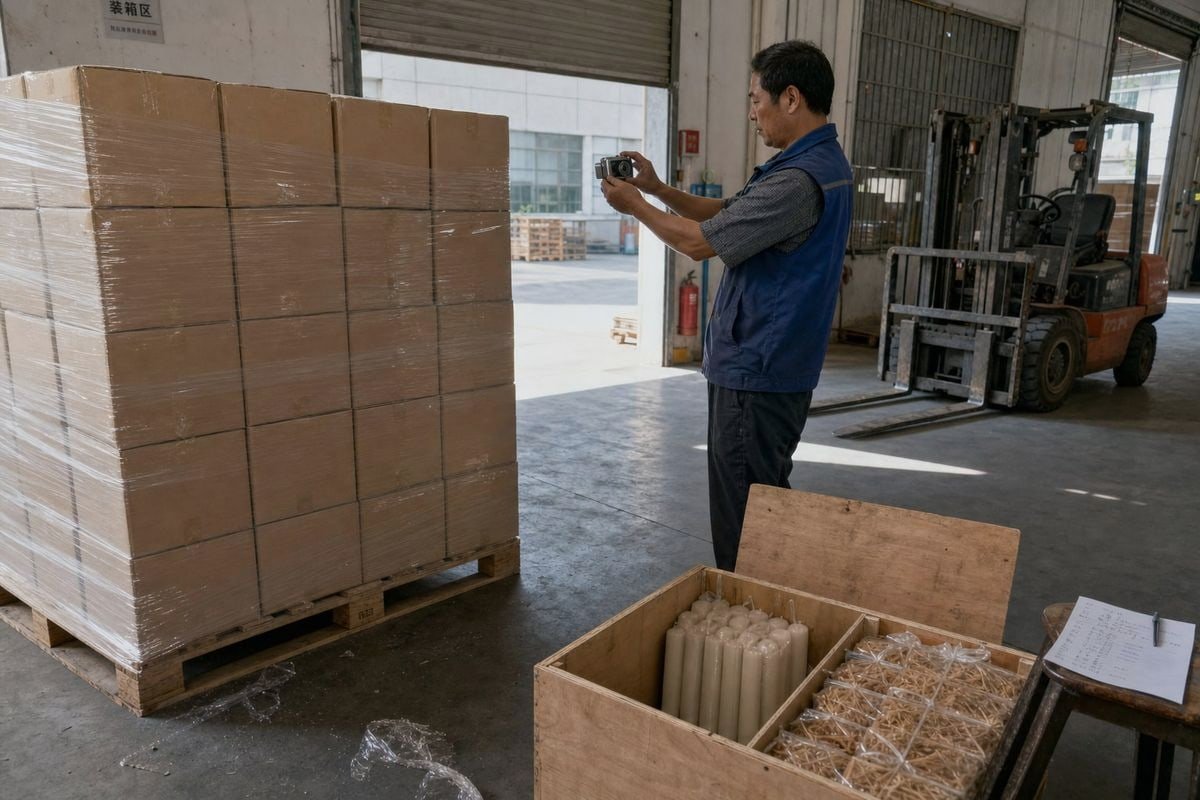
Verification is a staged process, not a single checkbox. Lighter packaging fails in slow, boring ways — a bottom-row carton compressing over five weeks at sea, humidity creeping through a thinner liner, a pallet shifting during a rough port transfer. Your confirmation plan needs to catch all of these before you convert your whole order book.
The three-stage verification approach
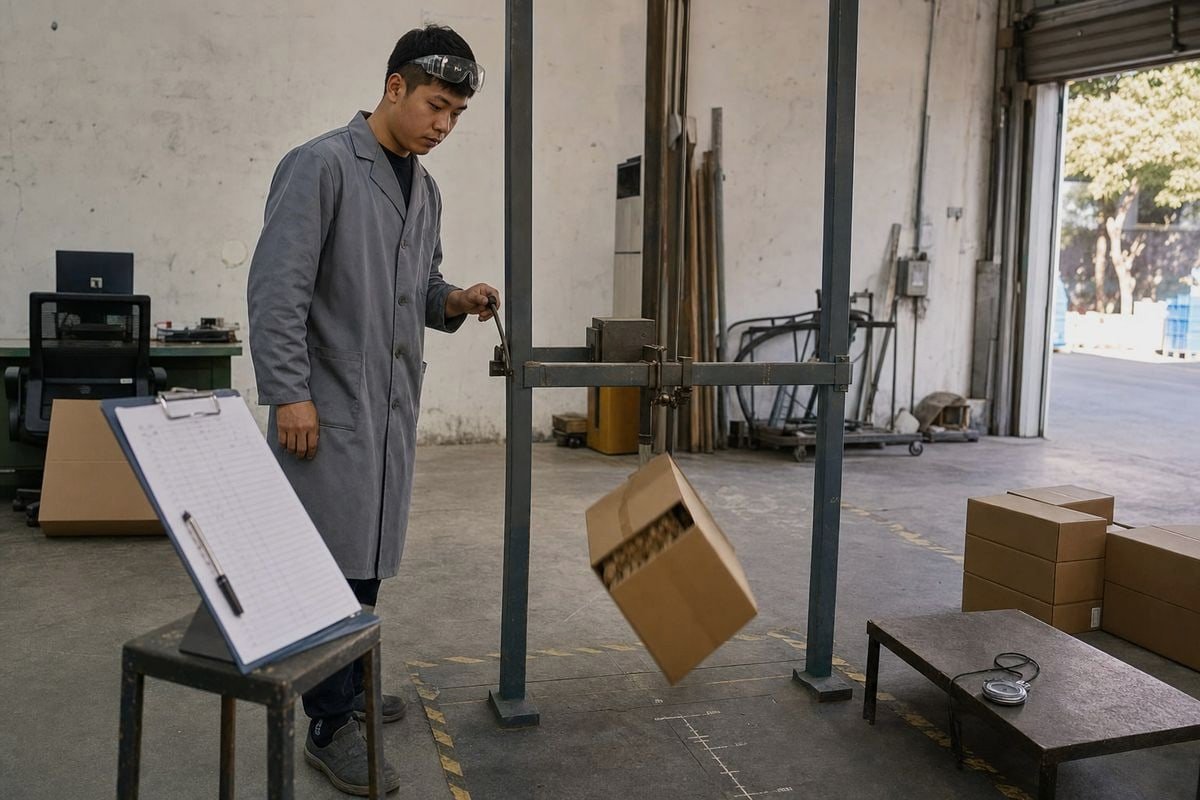
Stage one: laboratory evidence. Require ISTA-style compression testing 6 that simulates the full container stack height, plus drop testing that mimics warehouse handling. If your supplier has engineering capability, ask whether they can run digital twin stress modeling 7 to predict long-term sea freight compression on the new board grade. Ask for humidity cycling on the moisture-resistant barrier, since paraffin-coated wood rolls can bloom or soften if the liner underperforms.
Stage two: pre-shipment inspection. Book a externe Inspektion vor dem Versand 8 with the approved golden sample as the reference. The inspector should verify board grade, carton dimensions, gross weight, and pack-out method — not just count units. In our experience shipping to 30-plus countries, most packaging failures trace back to an unverified material substitution, and an inspection catches that before the container seals.
Stage three: staged rollout. Ship one trial container or a partial order in the new packaging. Compare damage rates against your historical baseline.
| Kontrollpunkt | Was zu messen ist | Bestandskriterien |
|---|---|---|
| Container unloading | Crushed or bulging cartons | Equal or fewer than old packaging |
| Lagerannahme | Moisture staining, soft wax, musty odor | Zero moisture-related defects |
| Retail unit check | Retail box print and structure intact | Shelf-ready without rework |
| Claims over 90 days | Customer damage complaints | No increase versus baseline |
Only after the trial passes should you convert all SKUs. This staged path protects you, and honestly, it protects the supplier relationship too — nobody argues over a spec that has already proven itself in a real shipment.
Schlussfolgerung
Heavy packaging drains freight budgets, but blind cuts destroy inventory. Define the protection standard, demand certified tests and samples, verify through inspection and trial shipments — then scale confidently.
Fußnoten
1. Background reference on corrugated fiberboard explains the strength ratings suppliers must certify. ↩︎
2. Forest Stewardship Council issues the certification standard referenced for responsibly sourced packaging materials. ↩︎
3. EPA's sustainable packaging guidance supports right-sizing practices that reduce material weight and waste. ↩︎
4. WTO trade facilitation resources relate to shipping costs and cargo weight considerations in trade. ↩︎
5. Bulk density is a technical measurement concept underlying packaging efficiency and container loadability. ↩︎
6. ISTA sets the transit testing protocols referenced for validating lightweight packaging performance. ↩︎
7. Background concept explaining how digital twin simulation predicts material stress and performance. ↩︎
8. Official WTO resource for the Agreement on Pre-shipment Inspection, providing the global regulatory framework and standards. ↩︎



 English
  Spanish
  German
  French
  Arabic
  Portuguese
Diskutieren Sie mit