






Jedes Jahr im Herbst rufen Käufer unsere Fabrik an und fragen, warum ihre gefärbten Kiefernzapfen am Hafen feststecken Lieferkettenunterbrechungen 1. Die Antwort ist schmerzhaft: Sie haben nach dem Einzelhandelskalender bestellt, nicht nach dem Frachtkalender.
Um Ihren Bestellplan für gefärbte Kiefernzapfen für den Kamin mit dem Versand in der Hauptsaison abzustimmen, arbeiten Sie rückwärts von Ihrem Zieldatum für die Lagerverfügbarkeit, platzieren Sie Kaufaufträge im 2. Quartal oder Anfang des 3. Quartals, buchen Sie Seefracht 3–4 Wochen vor dem versandbereiten Datum und fügen Sie einen Puffer von 1–2 Wochen für Staus und Zoll hinzu.
Dieser eine Satz verbirgt viele bewegliche Teile. Lassen Sie mich jeden einzelnen aufschlüsseln, indem ich das verwende, was wir von unserer Produktionsfläche und den Versandwegen, die wir jede Saison nutzen, sehen.
Wie weit im Voraus sollte ich meine Bestellung aufgeben, um Lieferverzögerungen in der Hauptsaison zu vermeiden?
Ein deutscher Händler schickte uns Mitte September eine E-Mail mit der Bitte um einen vollen Container farbiger Kiefernzapfen bis Halloween. Wir mussten Nein sagen, und es kostete ihn seine Saison.
Bestellen Sie gefärbte Kiefernzapfen für den Kamin mindestens 90–105 Tage vor Ihrem erforderlichen Lagerdatum. Für den Weihnachtsverkauf im 4. Quartal bedeutet dies, Kaufaufträge im Juni oder Juli zu bestätigen, damit die Ware bis Ende September eintrifft und der Versandengpass im November–Dezember vollständig umgangen wird.
Der Versand in der Hauptsaison ist kein festes Datum. Es ist ein sich bewegendes Fenster, das früher beginnt, als die meisten Käufer erwarten. Die Kapazität für Seefracht 2 beginnt sich Ende Juli oder August zu verknüpfen. Der Druck auf Weihnachtspakete steigt von Oktober bis Januar. Spitzenzuschläge laufen typischerweise von Oktober bis Januar, wobei die höchsten Preise Mitte November bis Dezember anfallen. Wenn Ihre Zapfen im November noch auf dem Wasser sind, zahlen Sie mehr und warten gleichzeitig länger.
Die Rückwärtsplanungsmethode
Wir raten unseren Stammkunden, zuerst das Verkaufsdatum festzulegen und dann rückwärts zu zählen. Hier ist eine realistische Aufschlüsselung für eine Seefrachtsendung von unserer Produktionsstätte in Ningbo zu einem Lager an der US-Ostküste:
| Phase | Typische Dauer | Anmerkungen |
|---|---|---|
| Bemusterung und Freigabe | 2–3 Wochen | Tun Sie dies 1–2 Quartale, bevor der Lagerbestand benötigt wird |
| Produktion | 3–5 Wochen | Länger, wenn eine kundenspezifische Eigenmarkenverpackung hinzugefügt wird |
| Seefrachtbuchung | 3–4 Wochen vor Versandbereitschaft | LCL dauert 7–10 Tage länger als FCL |
| Seefracht | 4–6 Wochen | Staus verlängern die Zeit ab August |
| Zoll und DC-Wareneingang Zollabfertigung 3 | 1–2 Wochen | Die Hauptsaison verlangsamt beides |
| Puffer | 1–2 Wochen | Wetter, ausgefallene Abfahrten, Verzögerungen beim Spediteur |
Addieren Sie dies und Sie landen bei fast 105 Tagen für eine Spitzenbestellung zur Weihnachtszeit. Das entspricht der SERP-Anleitung, Bestellungen spätestens Ende September aufzugeben und die Frühbucherpreise im Sommer im Juli und August zu nutzen. Frühbestellungen erhalten auch die erste Wahl des Inventars, was wichtig ist, wenn jeder die gleichen roten, grünen und goldenen Zapfen möchte.
Einige Käufer wehren sich: Frühere Bestellungen binden Bargeld. Das ist ein fairer Einwand, und ich gehe darauf im Abschnitt MOQ unten ein. Aber in unseren 17 Jahren Exporterfahrung haben wir noch nie einen Käufer bereut, der früh angekommen ist. Wir haben viele bereut, die spät angekommen sind.
Welche Vorlaufzeiten sollte ich für Kamin-farbige Kiefernzapfen im 3. und 4. Quartal erwarten?
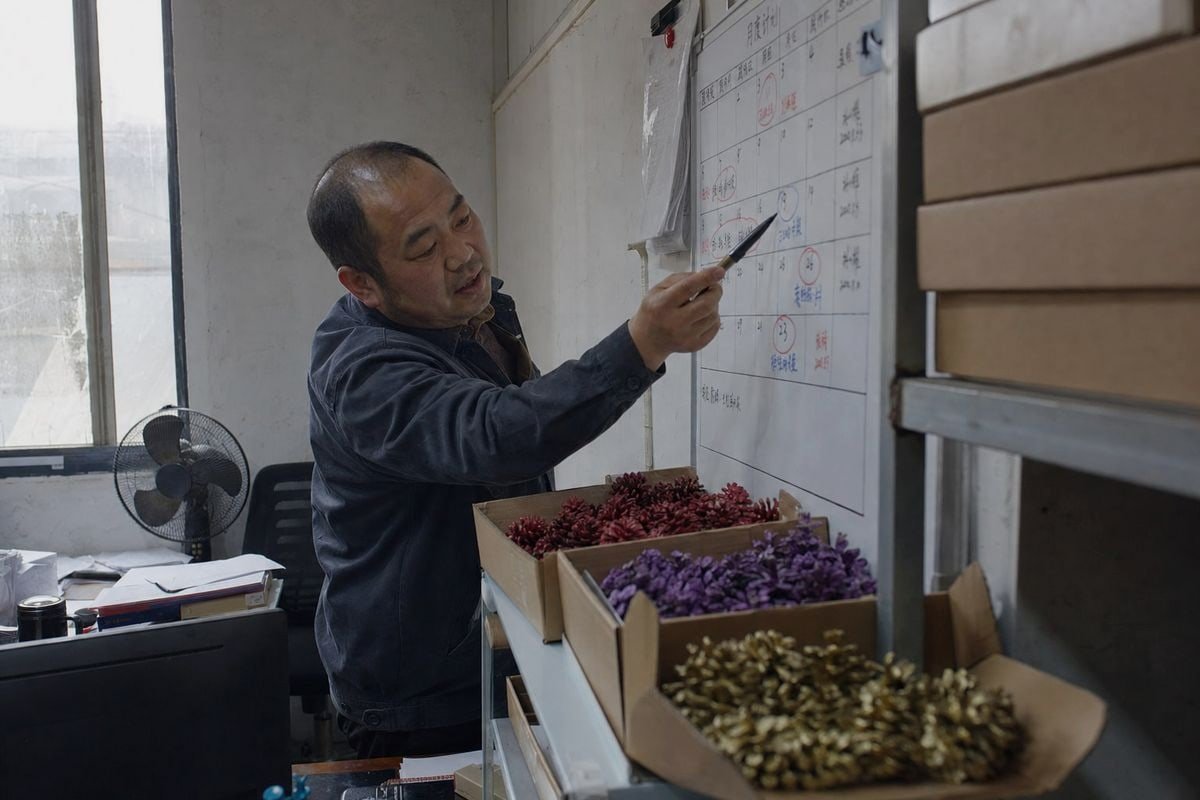
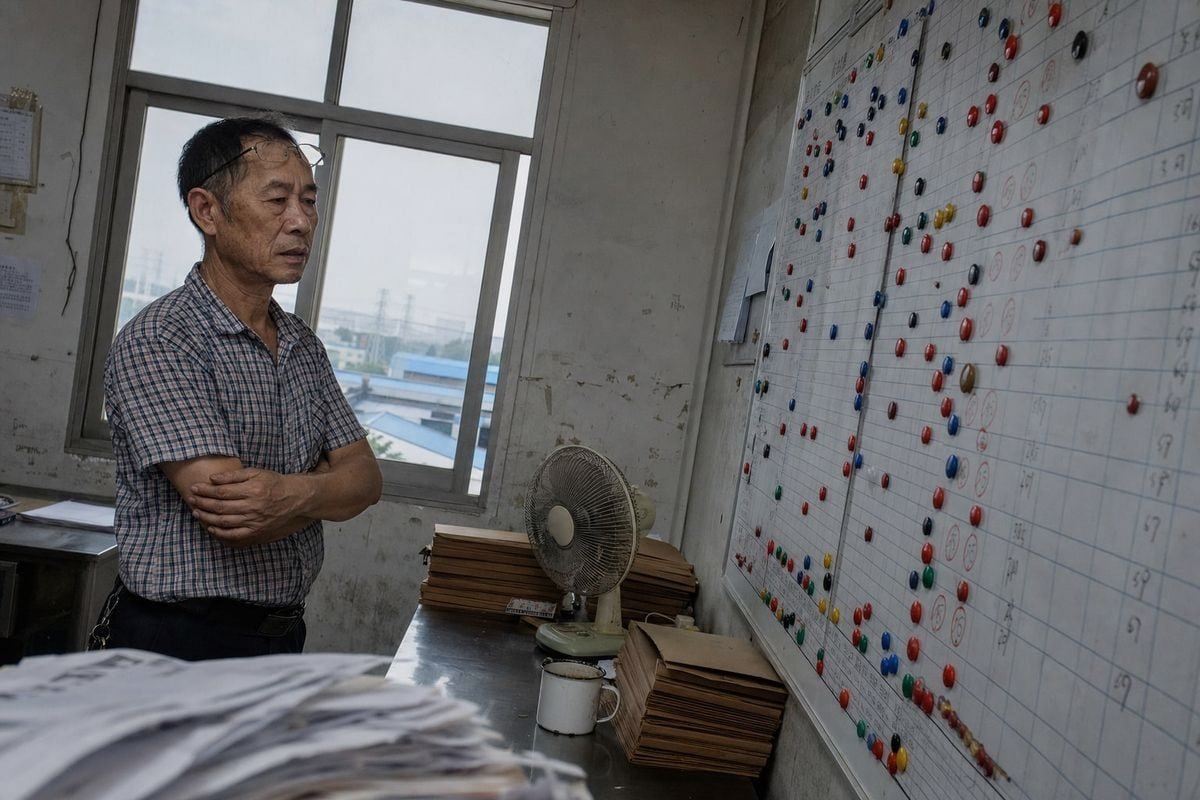
Unser Produktionsplaner hat eine Wandtafel, die sich jeden August rot färbt. Dann stapeln sich die Q4-Bestellungen und die Lieferzeiten für alle, die noch keinen Platz gebucht haben, verlängern sich.
Erwarten Sie in Q3 und Q4 eine gesamte Lieferzeit von 10–15 Wochen: 3–5 Wochen für die Produktion, 4–6 Wochen für den Seetransport, zuzüglich Zoll, Wareneingang und Verzögerungspuffer. In Q1 und Q2 ist die gleiche Bestellung oft in 8–10 Wochen abgeschlossen.
Lieferzeiten sind keine einzelne Zahl. Sie sind ein Stapel von Komponenten, und jede einzelne dehnt sich unter dem Druck der Hauptsaison. Zu verstehen, welche Komponente sich wie stark dehnt, ermöglicht es Ihnen, mit Zuversicht statt mit Hoffnung zu planen.
Wo die Zeit tatsächlich vergeht
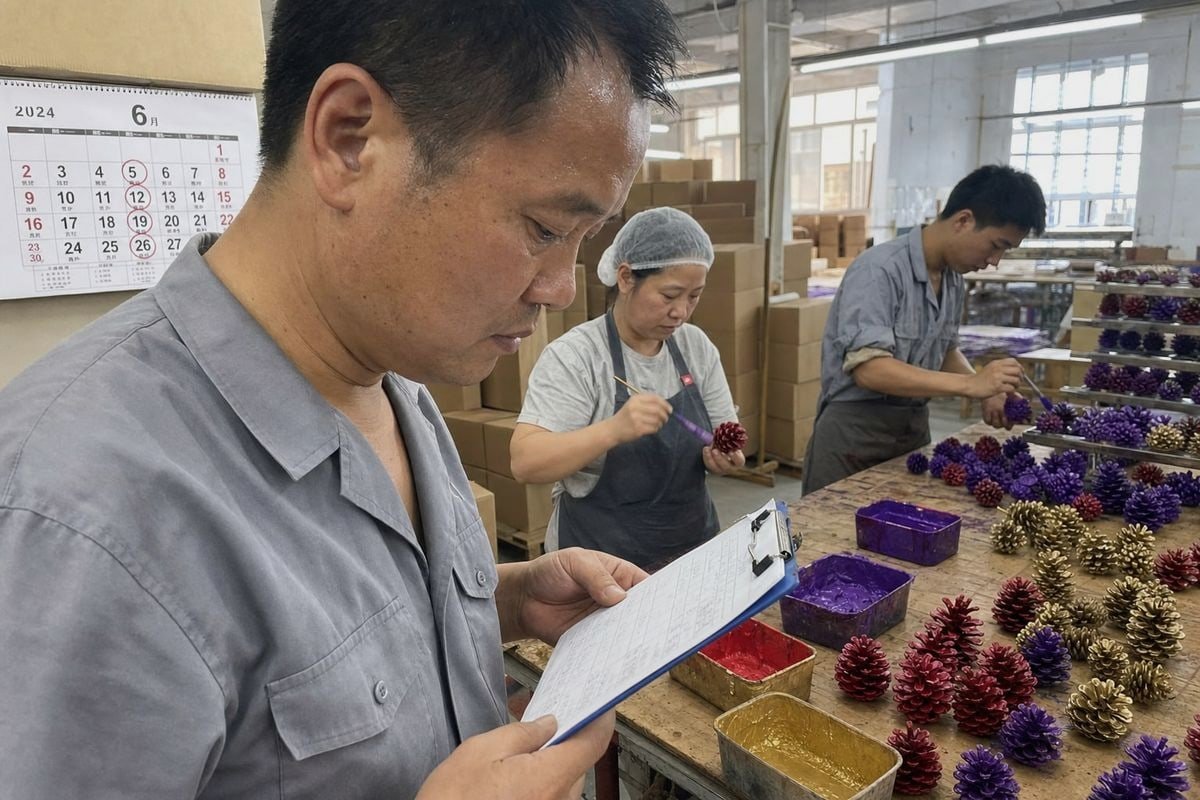
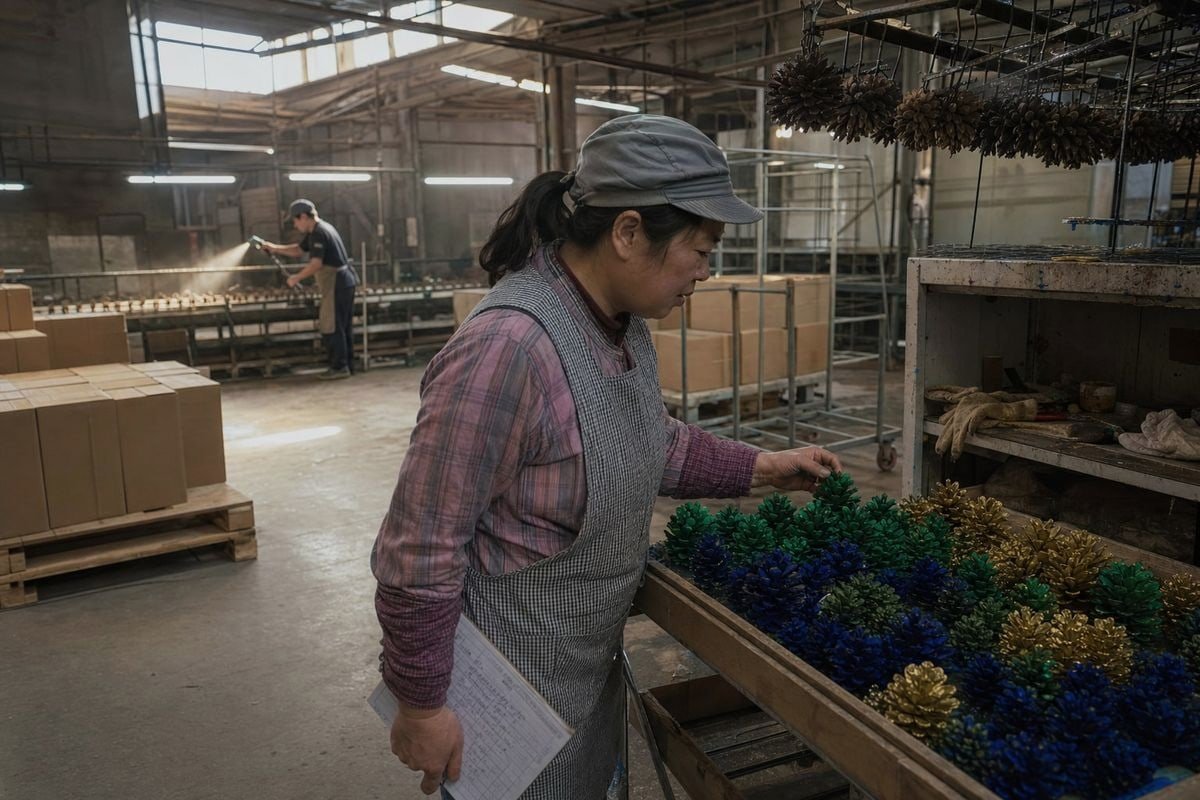
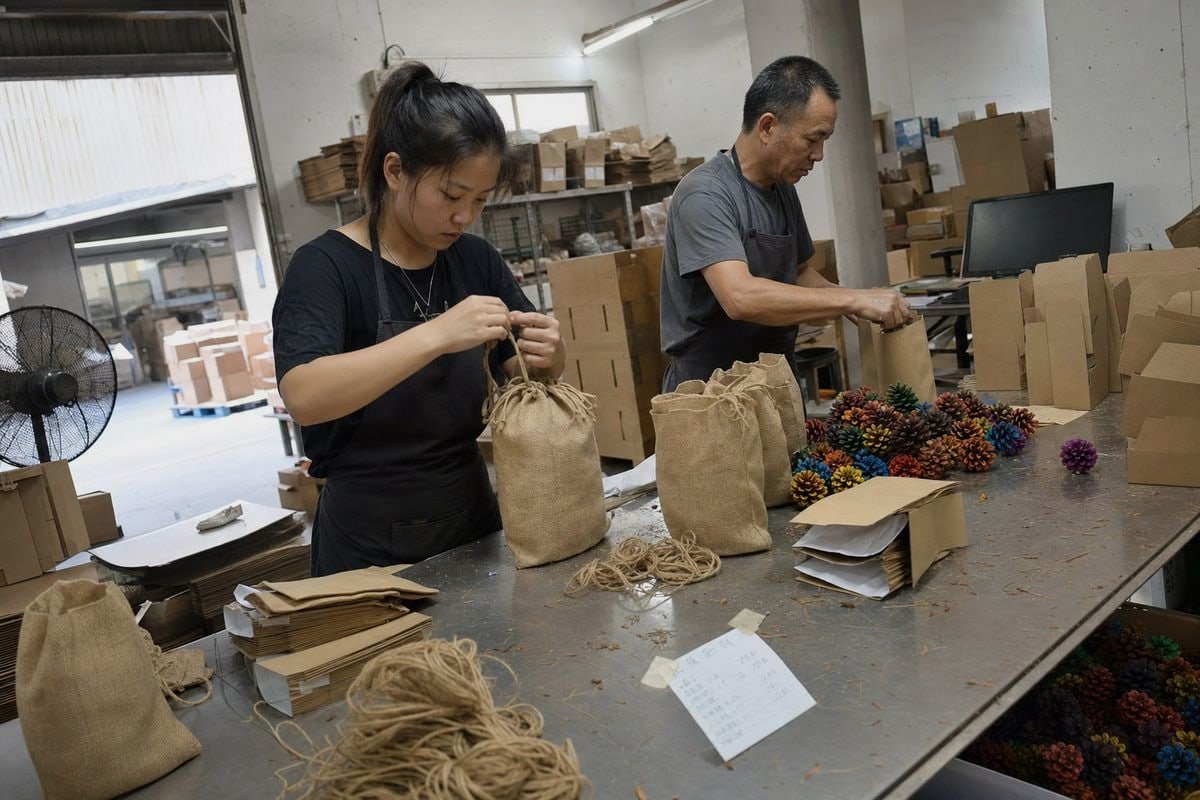
Die Produktion ist die am besten kontrollierbare Phase. An unseren Bändern durchlaufen farbige Kiefernzapfen die Auswahl der Zapfen, die chemische Behandlung mit Flammenfarbstoffen, das Trocknen, das Bemalen oder Beschichten, Qualitätskontrollen und das Verpacken. Standardmäßige Großverpackungen sind schnell. Kundenspezifische Kraft-Beutel, Kordelzug-Leinensacke, Display-Boxen, Barcodes und Warnetiketten verlängern die Zeit um ein bis zwei Wochen, da bedruckte Verpackungsmaterialien ihre eigenen Lieferanten und ihre eigenen Lieferzeiten haben.
Der Transit ist die am wenigsten kontrollierbare Phase. Von August bis Oktober sind ausgefallene Abfahrten, gestrichene Buchungen und Hafenstaus 4 werden üblich. Störungen der Lieferkette, die Sie im März zwei Tage kosten würden, können Sie im Oktober zwei Wochen kosten.
| Quartal | Produktion | Seetransport | Gesamte realistische Lieferzeit |
|---|---|---|---|
| Q1–Q2 | 3–4 Wochen | 4–5 Wochen | 8–10 Wochen |
| Anfang Q3 | 3–5 Wochen | 4–6 Wochen | 10–12 Wochen |
| Spätes Q3–Q4 | 4–6 Wochen | 5–7 Wochen | 12–15 Wochen |
Zwei praktische Hinweise aus unserer Exporterfahrung. Erstens sind Kiefernzapfen geringe Dichte, aber hohes Volumen, daher berechnen Spediteure nach Volumengewicht 5, nicht nach tatsächlichem Gewicht. Dies macht Luftfracht als Notfallplan unverhältnismäßig teuer. Zweitens kann Feuchtigkeit während des langen Seetransports natürliche Zapfen schließen. Wir verwenden auf Wunsch Schutzverpackungen mit Trockenmittel-Einsätzen und hitz behandeln die Zapfen, damit sie in warmen Innenräumen offen und schädlingsfrei bleiben. Fragen Sie jeden Lieferanten nach dem Gleichen und bitten Sie um die Viele DIY-Artikel verwischen die Grenze zwischen bemalten Dekorationszapfen und farbwechselnden Feuerstartern. In einer kommerziellen Geschenkbox ist diese Mehrdeutigkeit ein echtes Risiko. Ein Empfänger könnte einen rein dekorativen lackierten Zapfen ins Feuer werfen oder einen behandelten Feuerstarter-Zapfen jahrelang im Regal ausstellen. Kennzeichnen Sie daher den Verwendungszweck deutlich. Wir drucken "Feuerstarter – nur einen auf einmal verbrennen" oder "Nur zur Dekoration" direkt auf den Beutel. Einige Bastler argumentieren, dass Feuerstarter-Zapfen überhaupt nicht in Dekorationsgeschenke gemischt werden sollten. Wir widersprechen – aber nur, wenn die Kennzeichnung eindeutig ist. Klare Etiketten lösen den Einwand. 6 , die es beweisen. Konformitätsdokumente brauchen ebenfalls Zeit, also fordern Sie sie im Angebotsstadium an, nicht am Hafen.
Wie kann ich Produktionspläne mit Buchungsfenstern für Seefracht koordinieren?
Einen Kompromiss, den wir in unserer Anlage in Ningbo ständig abwägen, ist, ob wir eine Bestellung frühzeitig abschließen und sie liegen lassen oder die Fertigstellung auf eine bestätigte Abfahrt abstimmen sollen. Fracht, die ihr Schiff verpasst, wartet; frühzeitig fertiggestellte Fracht bindet Lagerplatz.
Buchen Sie Seefracht FCL 3–4 Wochen vor Ihrem Versandbereitschaftsdatum und Luftfracht 6–7 Tage vorher. Bestätigen Sie zuerst die Produktionsstarttermine mit Ihrem Lieferanten und reservieren Sie dann das Schiff gegen das zugesagte Fertigstellungsdatum, wobei Sie einige Tage Pufferzeit zwischen beiden einplanen.
Die Kernkompetenz hier ist Synchronisation. Produktion und Fracht laufen nach getrennten Kalendern, und der Käufer, der sie verbindet, gewinnt. Hier ist die Reihenfolge, die wir neuen Händlern durchlaufen:
- Sperren Sie das Einzelhandelsdatum im Geschäft und zählen Sie rückwärts bis zu einem erforderlichen Ankunftsdatum im Hafen.
- Bestätigen Sie das Produktionsfertigstellungsdatum schriftlich mit Ihrer Fabrik, einschließlich Verpackung.
- Book FCL 3–4 weeks ahead of that cargo-ready date; earlier in August–October.
- Build 3–5 days of slack between production completion and the container loading date.
- Track production milestones weekly so a delay triggers a rebooking early, not at the last minute.
FCL, LCL, or Air: Which Fits a Seasonal Pine Cone Launch?
| Verkehrsträger | Booking Window | Relative Speed | Risiko während der Spitzenzeit |
|---|---|---|---|
| Seefracht FCL | 3–4 weeks ahead | Basislinie | Moderate; rates rise but schedules hold better |
| Seefracht LCL | 3–4 weeks ahead | 7–10 days slower than FCL | High; consolidation absorbs delays first |
| Luftfracht | 6–7 days ahead | Fastest | Costly; volumetric weight punishes bulky cones |
Für a seasonal launch, FCL is usually the safest bet if your volume supports it. LCL works for trial orders, but add extra buffer, because LCL absorbs more delay risk during congestion. Air freight should be your emergency valve, not your plan, because peak season surcharges and volumetric pricing can erase the margin on a low-ticket decor item.
One more coordination tip from our side of the table. Tell your factory your booked vessel date. When we know a buyer's sailing, we sequence their order on our lines to hit it, and we flag risks two weeks out instead of two days out. Suppliers cannot protect a deadline they have never seen. Good last-mile delivery logistics start with good first-mile communication.
Welche MOQ- und Nachbestellstrategie hilft mir, Fehlbestände während der Hauptsaison zu vermeiden?
A UK fireplace distributor taught me a lesson years ago. He split his season into two orders instead of one big gamble, and he has never had a stockout or a January overstock since.
Verwenden Sie eine Zwei-Bestell-Strategie: Geben Sie eine primäre Großbestellung im zweiten Quartal auf, die etwa 70–80 % der prognostizierten Nachfrage abdeckt, und dann eine kleinere Nachbestellung im frühen dritten Quartal, sobald erste Verkaufsdaten vorliegen. Verhandeln Sie im Voraus flexible Mindestbestellmengen und Mengenrabattstufen, um die Aufteilung erschwinglich zu machen.
The honest tension in seasonal buying is this: ordering early cuts stockout risk but raises carrying cost and overbuy risk if demand softens after the holidays. Ordering late protects cash but exposes you to carrier capacity constraints and expedited rates exactly when consumers are buying most. Neither extreme wins. A structured split does.
Structuring the Two-Order Approach
Your first order is the foundation. It travels by ocean during the cheap, calm window and covers the demand you are confident about. Base that confidence on seasonal Nachfrageprognose 7 from last year's sell-through, not on optimism. Your second order is the correction. By early September, early fall sales tell you whether the season is running hot or cold. If hot, the reorder tops you up before holiday shipping deadlines close in. If cold, you simply skip it, and your exposure was never more than the base order.
Bulk wholesale procurement tiers make this workable. Larger primary orders typically unlock better unit pricing and better freight economics per case, and bulk-buy tiers help mitigate the impact of rising carrier surcharges during the Q4 peak window. At our factory, we deliberately keep trial MOQs flexible for new buyers, then scale tiers as the relationship grows, because a distributor who tests properly in year one reorders confidently in year two.
Two more tactics round out a solid retail fulfillment strategy. First, watch long-range weather. A forecast cold snap reliably triggers a demand spike about ten days out, so a fast domestic reorder from your own warehouse can capture it. Second, plan a secondary-peak restock for early January. Fireplace usage stays high between New Year's Eve and the late-winter freeze, and most competitors are empty by then. Batch-to-batch consistency matters enormously here; your January stock must match your November stock in color, flame effect, and packaging, which is exactly why we run strict batch QC on every production run.
Schlussfolgerung
Order fireplace colored pine cones months before you sell them. Reverse-plan from your in-store date, book freight early, split orders wisely, and peak season becomes profit, not panic.
Fußnoten
1. Wikipedia page detailing the management of disruptions and risks in supply chains. ↩︎
2. Background on container shipping capacity dynamics referenced in the peak-season discussion. ↩︎
3. US government trade resource explaining customs clearance procedures affecting import timelines. ↩︎
4. Authoritative Wikipedia overview of supply chain logistics and common bottlenecks. ↩︎
5. Defines the freight pricing concept used to explain pine cone shipping costs. ↩︎
6. SGS is a recognized third-party testing authority mentioned for compliance verification. ↩︎
7. Authoritative Wikipedia entry defining demand forecasting and its methodologies. ↩︎



 English
  Spanish
  German
  French
  Arabic
  Portuguese
Diskutieren Sie mit