






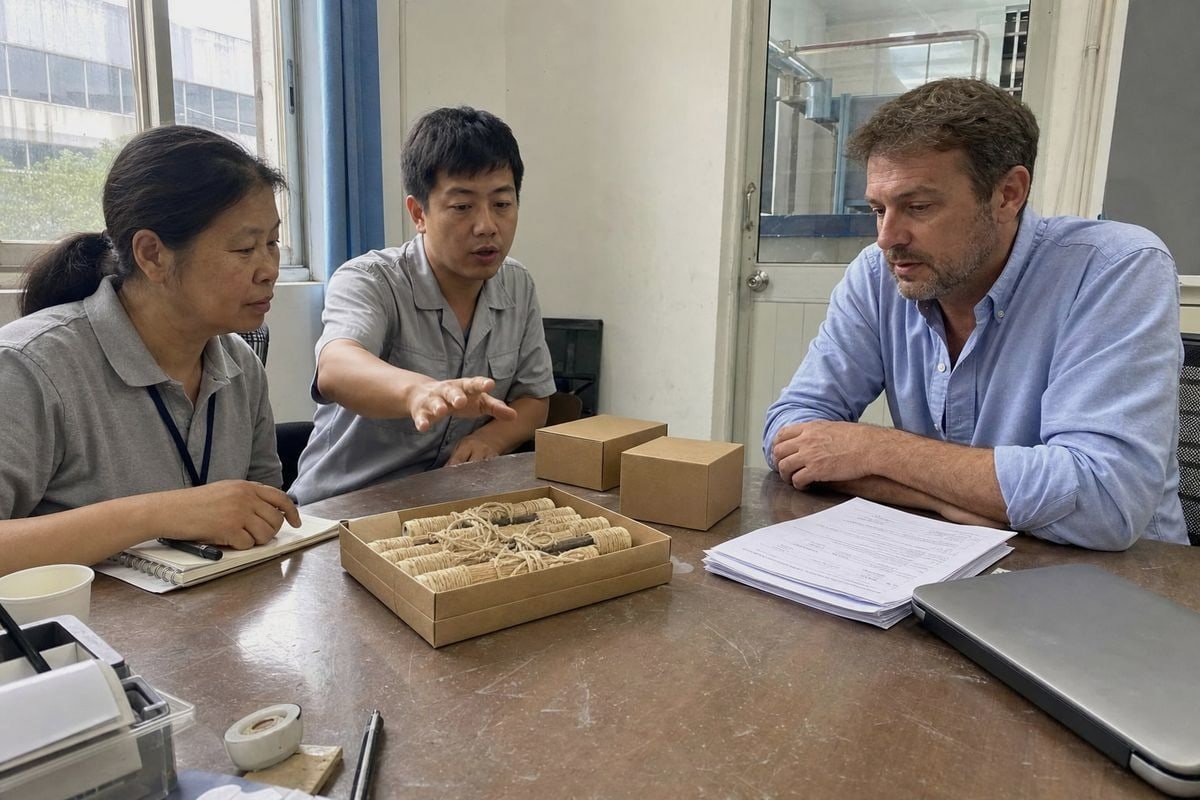
Negotiating small-batch custom packaging on wood fire starters can feel impossible CE-Kennzeichnung 1. Our factory hears this worry weekly: buyers want branded boxes but fear a 10,000-unit MOQ will bury them.
To negotiate small-batch custom packaging on wood fire starters, verify supplier certifications first, simplify your packaging spec, request tiered quotes at multiple quantities, offer a fair tradeoff such as a small premium or phased commitment, and confirm sample-to-production consistency in writing before paying your deposit.
That is the short version. The rest of this article walks through each step in detail, using real lessons from our own production lines and export deals.
What certifications should I confirm before negotiating small-batch packaging with a wood fire starter supplier?
A German distributor once told me his previous shipment sat in customs for six weeks over missing test reports 2. That story shaped how we handle compliance at our Ningbo facility.
Before negotiating packaging, confirm the supplier holds ISO 9001 for quality management, BSCI for social compliance, CE marking where applicable, and third-party test reports from labs like SGS or Intertek. Also verify they can print compliant fire-warning labels and barcodes on your packaging.
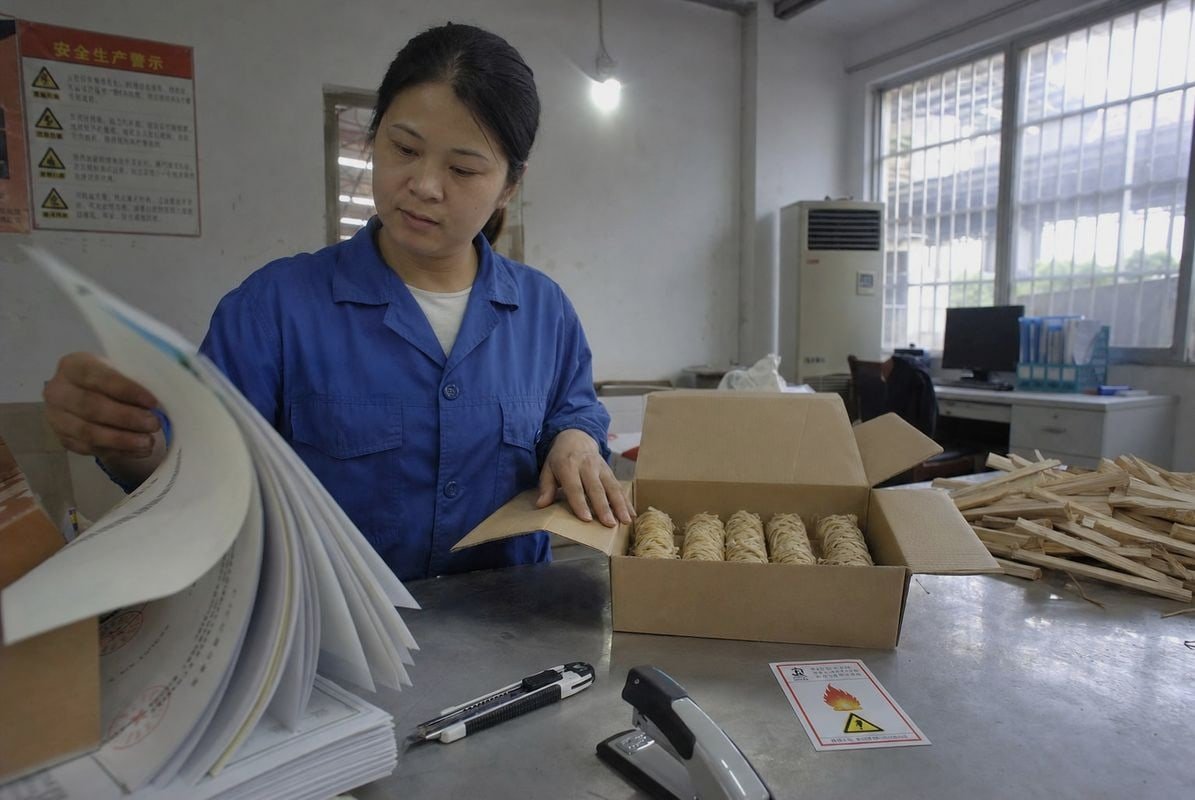
Certifications are not paperwork decoration. They decide whether your goods clear customs, pass retailer audits, and stay on shelves. In our seventeen-plus years exporting wax-dipped wood firestarters to the US, Germany, the UK, and beyond, we have seen buyers lose entire seasons because a supplier could not produce a valid test report on request. So check compliance before you discuss price. It also strengthens your negotiating position Lieferkettenmanagement 3. A supplier who invests in audits has real costs to protect. That supplier will value a serious, organized buyer and will bend further on MOQ to keep you.
Die wichtigsten Dokumente, die Sie anfordern sollten
Ask for these before your first pricing call:
| Dokument | Was es beweist | Why it matters for packaging talks |
|---|---|---|
| ISO 9001 Zertifikat | Qualitätsmanagementsystem | Batch-to-batch packaging consistency |
| BSCI Auditbericht | Ethische Fabrikbedingungen | Required by many US/EU retailers |
| CE-Dokumentation | Konformität mit dem EU-Markt | Needed for European shelf placement |
| SGS/Intertek-Testberichte | Produktsicherheit und Zusammensetzung | Supports claims printed on your box |
| Label compliance samples | Correct warnings and barcodes | Avoids costly reprints and recalls |
Why compliance gives you leverage
Here is the practical angle. When we quote a trial order, a buyer who already knows our certifications skips weeks of back-and-forth. That saved time is worth money to us, and to any factory. Suppliers reward buyers who reduce friction. If you show up with a compliance checklist, a clean artwork file, and knowledge of your destination market's labeling rules, you look like a long-term partner. Long-term partners get flexible MOQs. One-off bargain hunters do not. Also confirm the supplier is a real factory, not a trading company, because only the factory controls print quality on your cartons.
How do I negotiate a low MOQ without sacrificing custom packaging quality?
The trade-off we weigh most often on our lines is changeover time versus run length. Understanding that tension is exactly how smart buyers unlock smaller runs from us.
Negotiate a low MOQ by simplifying artwork, using stock box sizes with custom labels or sleeves, requesting digital printing, consolidating SKUs onto shared packaging, and offering the supplier a tradeoff — a modest per-unit premium, a larger deposit, or a blanket purchase order with phased deliveries.
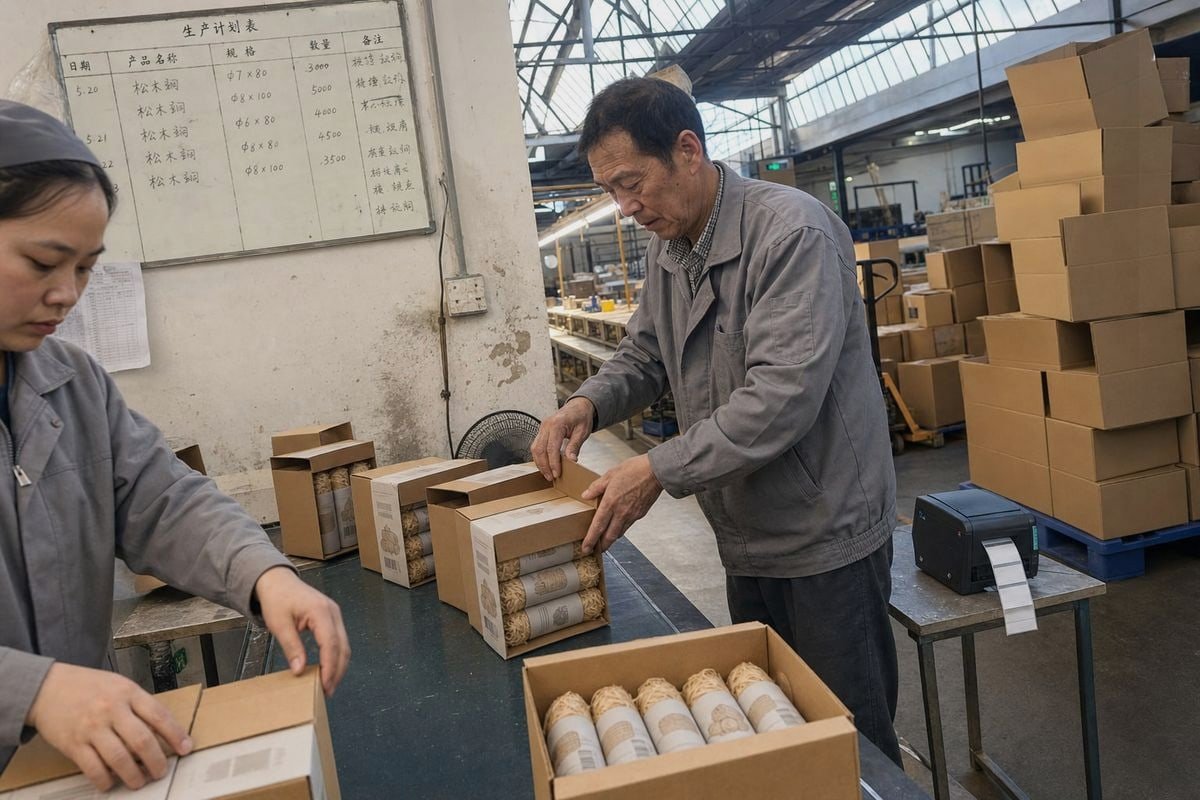
MOQ is not a wall. It is a risk calculation. When our factory sets a minimum for a custom-printed fire starter box, we are covering plate setup, machine changeover, material purchasing, and a production slot. Reduce any of those burdens, and the minimum drops naturally. That is why the best negotiation is structural, not confrontational. Do not simply ask for an exception. Change the order so the exception is unnecessary.
Levers that actually move MOQ
- Simplify the spec. Fewer colors, no foil, no embossing, standard coating. Every finishing step you remove cuts setup cost.
- Use stock formats. A standard carton with a custom sleeve or label often carries a fraction of the MOQ of a fully bespoke box. We have launched many private-label trial runs this way.
- Bitten Sie um Digitaldruck. Digital runs skip plate charges, which makes 500–1,000 units realistic digital printing 4. Offset only wins at higher volumes.
- Consolidate SKUs. If you sell three variants, share one base box and change only the label. Your combined volume then meets one MOQ.
- Offer a tradeoff. A slightly higher unit price, a bigger deposit, or a blanket PO with staggered shipments gives the supplier certainty without forcing you to warehouse a year of stock.
- Show a credible reorder plan. When a buyer shares a realistic twelve-month forecast, we treat the small first order as the start of a relationship, and we price it that way.
There are two schools of thought here. One says push hard for the lower MOQ directly. The other says restructure the order instead. In practice, the hybrid works best: simplify first, then negotiate terms around the smaller run. Quality does not suffer, because you are removing complexity, not cutting corners.
What pricing and cost breakdowns should I expect when requesting custom packaging on a small trial order?
Last winter, a Canadian buyer asked me why two quotes for the same box differed by forty percent. The answer was hidden in the cost stack, not the box.
Expect a quote covering materials, printing, setup or plate fees, finishing, sample charges, and freight. On small trial orders, setup costs dominate, so unit prices run higher. Always request tiered quotes at three quantities — for example 500, 1,500, and 3,000 — to see the real cost curve.
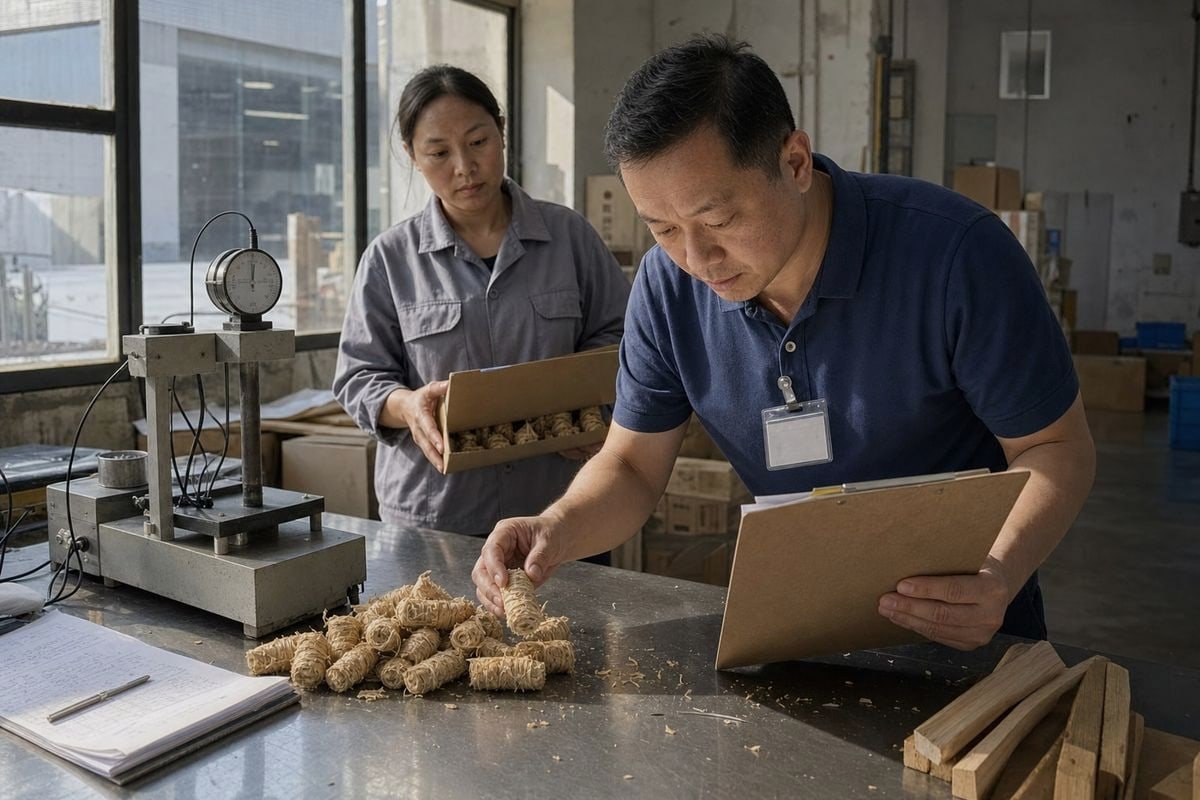
Never accept a single lump-sum number. When we quote packaging for our wood firestarters, we can itemize every line, and a good supplier should do the same for you. An itemized quote lets you negotiate the cost stack instead of arguing over one opaque total. It also makes competing quotes comparable, because two suppliers quoting different assumptions are not really competing.
A typical small-run cost stack
| Kostenbestandteil | Small run impact | How to negotiate it |
|---|---|---|
| Materials (board, paper, ink) | Moderat | Choose standard stock, recycled board |
| Printing | High per unit | Request digital instead of offset |
| Setup / plates / dies | Very high per unit | Share dies, use stock dielines, digital print |
| Finishing (lamination, foil) | Hoch | Drop or defer to later reorders |
| Samples and proofs | Fixed fee | Ask for credit against first order |
| Fracht und Zölle | Often underestimated | Quote total angekommene Kosten 6, optimize carton fill |
Why tiered quotes change everything
Asking for quotes at multiple breakpoints reveals where the curve flattens. Sometimes 1,500 units costs barely more in total than 800, because setup dominates below a threshold. Seeing that curve, buyers often choose a slightly larger run voluntarily — which suppliers love, and which earns you goodwill on future terms. Also negotiate beyond unit price. Payment terms, revision limits, lead time, sample credits, and price protection for reorders all carry real value. In our export deals, buyers who negotiate the full package usually pay less over a year than buyers who squeezed only the box price. Finally, always compare quotes on total landed cost, including freight to your warehouse, not the ex-factory price alone.
How can I ensure my supplier's sample matches future mass-production packaging quality?
Early in our factory's history, we learned a hard lesson: a beautiful hand-finished sample means nothing unless the production line can replicate it a hundred thousand times.
Ensure sample-to-production consistency by requesting a pre-production sample made on actual production equipment, approving a signed golden sample with documented specs, writing tolerances into your purchase order, and choosing a certified factory with batch-to-batch quality control rather than a trading company.
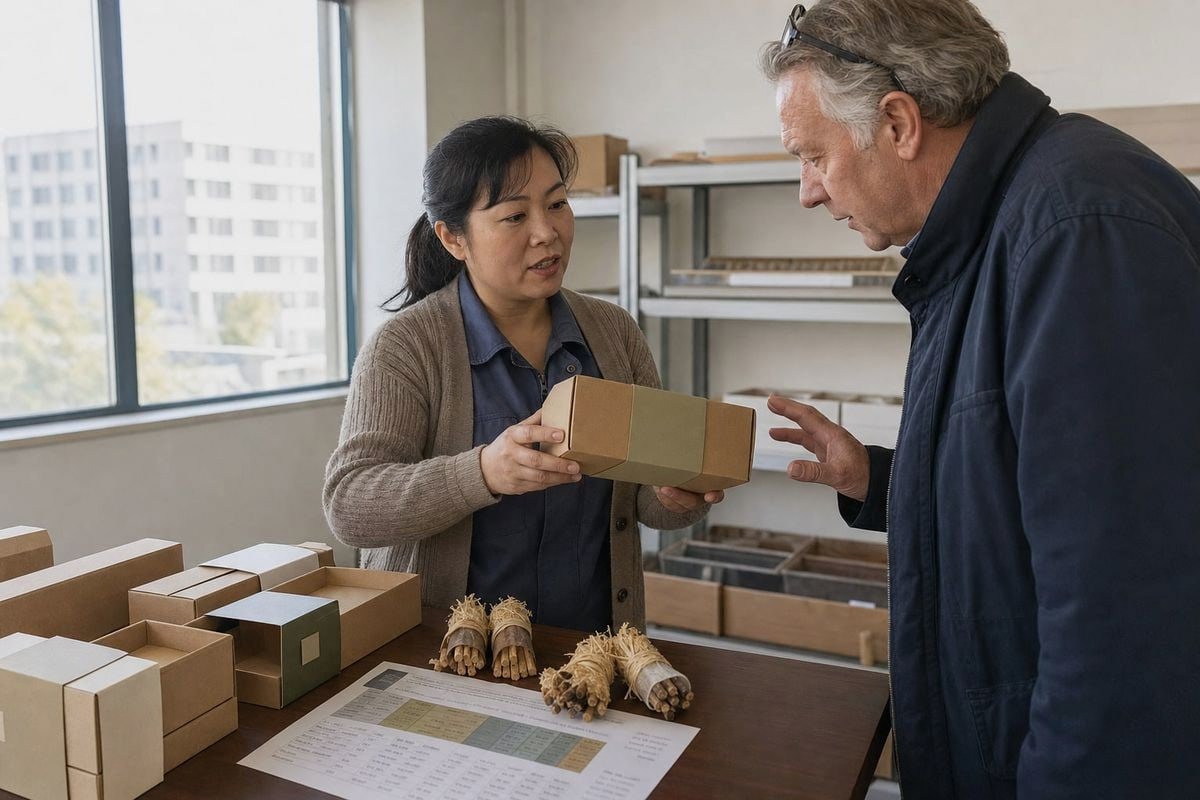
The gap between sample and mass production is where most small-batch buyers get burned. Trading companies often source samples from one workshop and production from another. A real factory, by contrast, controls both. At our Ningbo production site, the same lines that make your approved sample make your bulk order, and our ISO 9001 process requires batch checks against the retained golden sample. That is the standard you should demand from any supplier.
The sample approval process that protects you
- Digital proof. Approve artwork, dielines, and Pantone codes on screen first. Cheap and fast.
- Physical pre-production sample. Insist it comes off production equipment, not a hand-made mockup. Ask which press and materials were used.
- Golden sample sign-off. Both sides sign and retain identical samples. This becomes the legal quality benchmark.
- Written tolerances. Define acceptable color variation, board weight, print registration, and structural strength in the PO.
- Inspektion vor dem Versand. Compare random production units against the golden sample before the balance payment.
Rote Flaggen versus grüne Flaggen
| Rote Flagge | Grüne Flagge |
|---|---|
| Sample looks hand-finished or outsourced | Sample made on the actual production line |
| Vague answers about print method | Clear specs: press type, ink, board grade |
| No retained reference sample | Signed golden samples held by both parties |
| Refuses third-party inspection | Welcomes SGS/Intertek pre-shipment checks |
| No documented QC process | ISO 9001 procedures with batch records |
One more practical tip: photograph your golden sample under neutral light and attach the photos to your purchase order. If a dispute ever arises, that documentation resolves it in days instead of weeks. In our experience, suppliers who resist this level of documentation are exactly the suppliers whose production drifts.
Schlussfolgerung
Small-batch custom packaging on wood fire starters stalls many launches. The fix is structural: verify certifications, simplify specs, request tiered quotes, offer fair tradeoffs, and lock in golden-sample consistency.
Fußnoten
1. Background on the EU conformity marking mentioned as a required certification ↩︎
2. Third-party test reports like SGS are required to avoid customs delays on shipments. ↩︎
3. Broad background concept relevant to supplier negotiation and sourcing strategy ↩︎
4. Technical background on the printing method recommended to reduce setup costs and MOQ ↩︎
5. Explains the procurement mechanism used as a tradeoff to lower MOQ requirements ↩︎
6. Government trade resource clarifying total landed cost calculations mentioned in pricing section ↩︎
7. Defines the quality verification process suppliers should welcome


 English
  Spanish
  German
  French
  Arabic
  Portuguese
Diskutieren Sie mit