






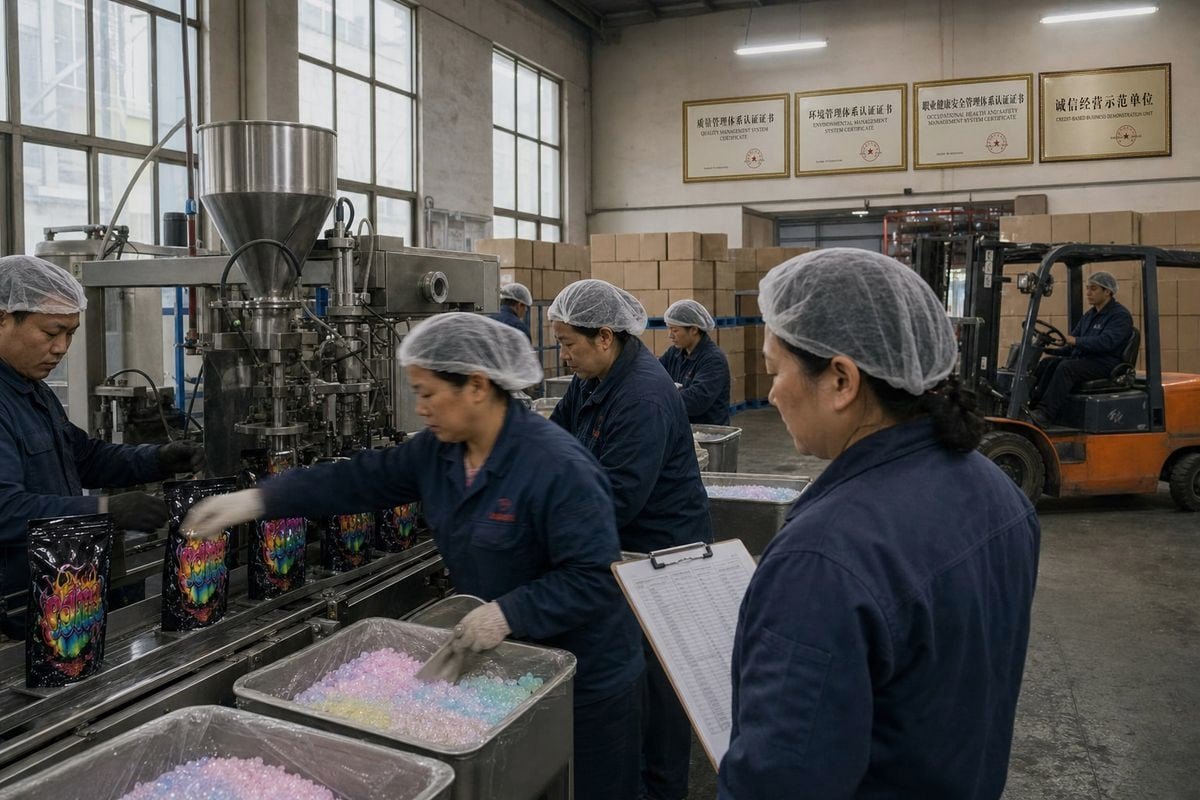
Choosing between magic fire powder suppliers in China, Southeast Asia, and India is harder than it looks. I hear this from buyers weekly at our Liuyang headquarters. Pick wrong, and you inherit failed shipments, missing test reports, and customs holds that stall your whole season. Our production team has spent 17+ years solving exactly these problems for importers in 30+ countries.
Chinese magic fire powder suppliers lead on scale, certification depth, and OEM/ODM flexibility, with mature export logistics and 15–30 day lead times. Southeast Asian and Indian suppliers offer diversification and regional proximity, but public supplier depth, documentation consistency, and private-label capability in this niche remain far thinner outside China.
Let me break this down region by region. I will cover compliance, quality consistency, lead times, and customization. By the end, you will know which sourcing route fits your business.
How do certification and compliance standards differ between Chinese and Southeast Asian or Indian suppliers?
A German distributor once asked me for our full SGS reports 1 before he would even discuss pricing. That conversation taught me something: for serious buyers, compliance is the real product.
**Established Chinese suppliers more consistently hold ISO 9001, BSCI, CE, SGS/Intertek certifications, and provide MSDS/SDS documentation on request. Southeast Asian and Indian suppliers in this niche often lack these credentials publicly, though some Indian firms are improving export documentation and chemical composition transparency to attract Western buyers.

Compliance is where the gap between regions is widest, and it is the first thing I tell purchasing managers to verify. Magic fire powder sits in a tricky category. Depending on your market, customs may classify it as a consumer novelty, a pyrotechnic accessory 2, or a regulated chemical. Your supplier's paperwork decides whether your container clears or sits in a bonded warehouse.
What documentation actually matters
In our export work to the US, Germany, the UK, and France, buyers consistently request four things: an MSDS/SDS 3, third-party lab reports, factory system certifications, and correct warning labels. We hold ISO 9001, BSCI, CE, and SGS/Intertek 4 reports because our retail-channel buyers treat them as a hard gate, not a bonus. A supplier who hesitates on any of these is a supplier who will create problems at your border.
How the regions compare on paper
| Compliance factor | China (established factories) | Southeast Asia | India |
|---|---|---|---|
| ISO 9001 / BSCI audits | Common among export factories | Rare in this niche | Emerging |
| MSDS/SDS availability | Standard practice | Inconsistent | Improving |
| Third-party testing (SGS/Intertek) | Widely available | Limited | Limited but growing |
| Pyrotechnic export licensing experience | Deep (Liuyang cluster) | Thin | Moderate |
| Ingredient disclosure | Varies; strong factories disclose fully | Often unclear | Increasingly transparent |
One honest caveat: not every Chinese supplier is compliant. Marketplace listings mix real factories with traders reselling unverified powder. The advantage of China is not that every supplier is certified. It is that certified, audited suppliers are far easier to find and verify here than in regions where the supplier base for this product is barely visible. Indian suppliers deserve credit for a growing focus on composition transparency. But for shelf-ready compliance today, the depth sits in China.
Can I count on consistent quality and batch-to-batch reliability across these regions?
Our QC team once rejected an entire batch of color-flame granules because the green burn shifted slightly toward yellow. That strictness is expensive, but it is the only way repeat orders stay repeat orders.
**Batch-to-batch reliability depends on manufacturing depth, not geography alone. Established Chinese factories with complete production lines and in-house QC deliver the most consistent flame color and burn performance. Smaller regional producers in Southeast Asia and India show more variability due to limited formulation control and raw material sourcing.

Quality in this product category comes down to chemistry control. Flame color depends on precise ratios of metal salts, and small deviations show up instantly as dull or wrong-colored flames. Your end customer notices immediately. There is no hiding a weak blue flame in a dark campfire.
Why raw material access matters
China's domestic chemical supply chain is the quiet advantage here. Copper compounds, strontium salts 5, and other colorants are produced domestically at scale. That means Chinese factories buy consistent-grade inputs from stable sources. Suppliers in Southeast Asia and India often import these same compounds, sometimes from China itself, which adds cost, lead time, and grade variability before production even starts.
What consistent QC actually looks like
From our own lines in Ningbo, real batch control involves a repeatable sequence, and I encourage buyers to ask any supplier to walk through theirs:
- Incoming raw material verification against a fixed specification.
- Controlled blending with documented ratios per batch.
- Burn testing of samples from each production run, checking color accuracy and burn duration.
- Moisture and granule-size checks before sealing, since damp powder underperforms.
- Retained samples from every batch, so a customer complaint can be traced back.
The practical test for any supplier, in any region, is simple: does the mass-production shipment match the first sample? In our experience, that promise holds only when a factory owns its full production line. Traders cannot guarantee it, because they do not control the blend. When you evaluate suppliers outside China, apply the same test. Some will pass. But with fewer visible producers in this niche across Southeast Asia and India, you will spend more effort finding the ones that do.
Which sourcing region offers better lead times and supply chain stability for my orders?
Every autumn, our Ningbo facility runs at full tilt because Western buyers all want stock landed before the camping and holiday seasons. Timing a fire-product order badly is one of the costliest mistakes I see importers make.
**Chinese suppliers typically offer the shortest and most predictable lead times, around 15–30 days for production, backed by pyrotechnic-savvy freight forwarders and dense port infrastructure. Southeast Asia can shorten delivery into ASEAN markets, while India suits regional demand, but both carry thinner supplier redundancy in this niche.
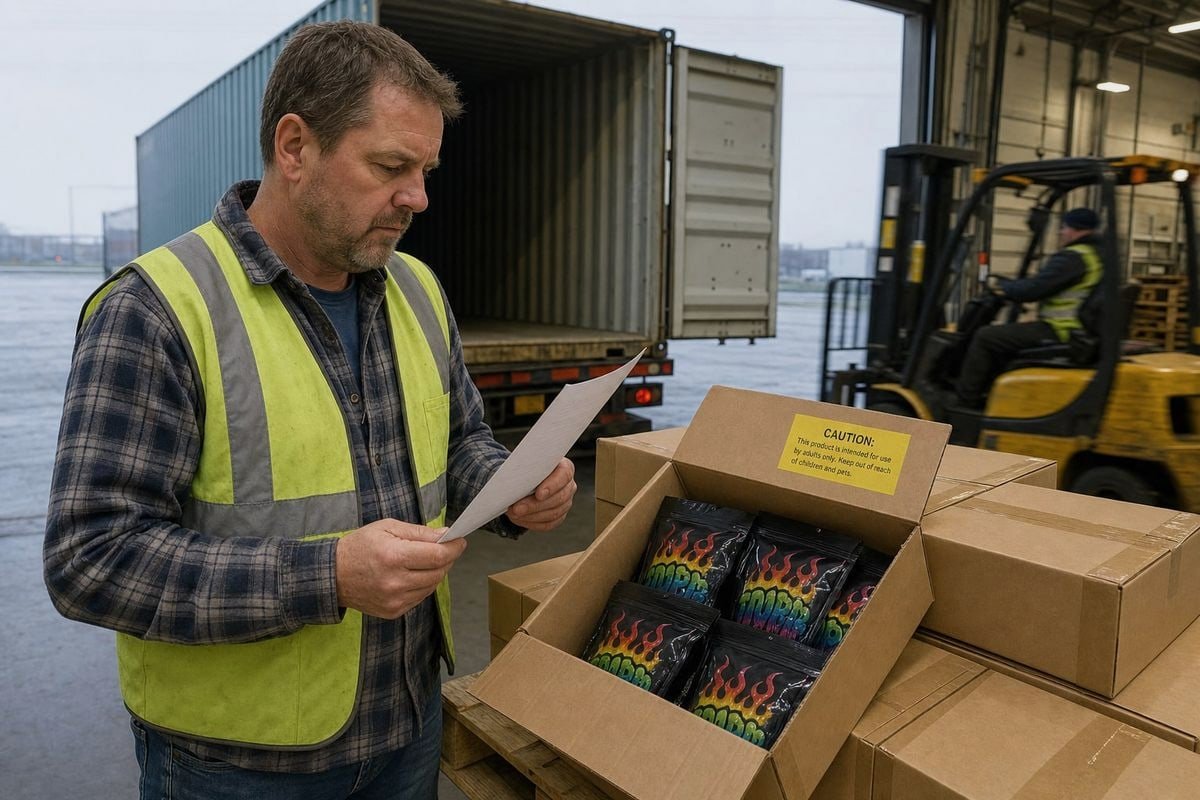
Lead time is not just production speed. It is the full chain: raw materials, production slots, export documentation, booking freight, and clearing customs on both ends. A region can be geographically closer to you and still be slower overall if any link in that chain is weak.
The full lead-time picture
| Factor | China | Southeast Asia | India |
|---|---|---|---|
| Typical production lead time | 15–30 days | Variable, often longer | Variable |
| Raw material availability | Domestic, stable | Often imported | Partially imported |
| Export paperwork experience for flame products | Deep and routine | Limited | Moderate |
| Port and freight density | Very high | High for ASEAN routes | High for Middle East/EU routes |
| Supplier redundancy if one factory fails | Many alternatives | Few in this niche | Few in this niche |
That last row matters more than buyers expect. Supply chain stability is really a question of what happens when something goes wrong. If your single Vietnamese or Indian source has a production problem, your options are limited. In China, especially around the Liuyang fireworks cluster and coastal production zones like Zhejiang, alternatives exist within driving distance.
I will raise the honest counterargument here, because sophisticated buyers raise it with me: concentration in one country is itself a risk. Tariff shifts and China+1 strategies 6 are real, and I respect buyers who dual-source. My advice from years of shipping to the US, Europe, Australia, and the Middle East is this: diversify at the distribution level first. Keep a proven, compliant primary manufacturer, then test a second-region supplier with small orders before depending on them. Diversification only reduces risk if the alternate source actually delivers. An unproven backup is not a backup.
Will I get the same level of OEM/ODM flexibility and private-label support from suppliers outside China?
A UK outdoor brand recently asked us to redesign their entire pouch line — custom burn time, kraft-bag packaging, their own artwork, EAN barcodes, and a retail display box. We handled all of it in-house. That request would stall many suppliers.
**China offers the deepest OEM/ODM support for magic fire powder, including custom formulations, burn times, pouch and jar packaging, private-label artwork, warning labels, barcodes, and display boxes, often at trial-friendly MOQs. Southeast Asian and Indian suppliers rarely match this full-stack customization in this product niche today.
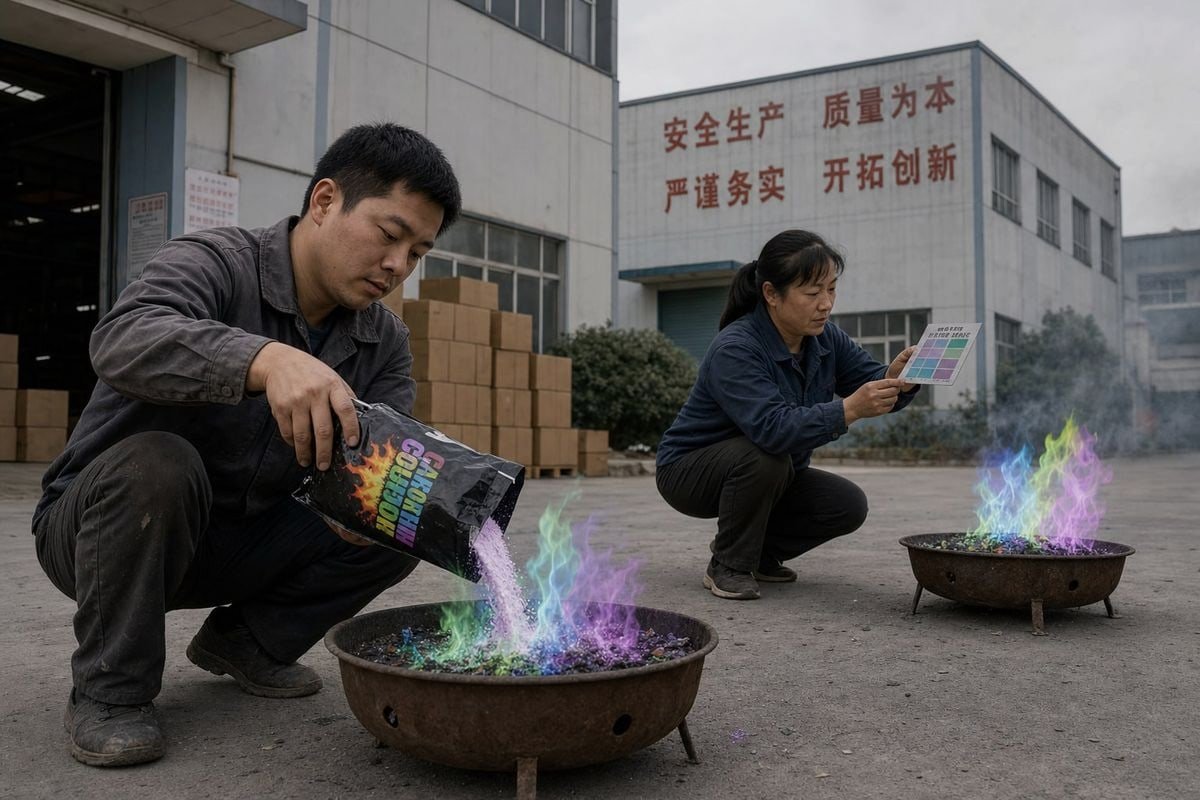
Private-label capability 7 is where manufacturing depth becomes visible. Printing your logo on a pouch is easy. Building a complete shelf-ready product is not. In our OEM/ODM work, a single project can span formulation, packaging engineering, regulatory labeling, and logistics planning, and the buyer needs one partner accountable for all of it.
What full customization actually includes
When I say one-stop OEM/ODM, here is what our buyers typically customize with us, and what you should benchmark any supplier against:
| Customization layer | What buyers adjust | Why it matters commercially |
|---|---|---|
| Product | Burn time, granule size, pack weight (10g–50g range common in the market) | Fits campfire vs fireplace vs event use cases |
| Primary packaging | Foil pouch, kraft stand-up bag, or plastic jar | Matches brand aesthetic and retail channel |
| Branding | Full private-label artwork, bubble-letter or premium designs | Owns the customer relationship |
| Compliance elements | Warning labels, usage instructions, barcodes per market | Required for major retail channels |
| Retail packaging | Flip-top display boxes, counter displays | Wins placement at Home Depot–type channels |
| Logistics | Carton configuration, consolidated shipping | Cuts landed cost per unit |
The MOQ question for trial orders
Market listings show Chinese suppliers accepting trial quantities from roughly 100–200 pieces up to 500 bags. This matters for buyers who want to test an e-commerce listing or a seasonal retail SKU before committing to container volume. We structure trial MOQs deliberately for this reason: an importer who tests small and succeeds becomes a long-term partner. Digital sourcing platforms suggest some SEA and Indian suppliers are beginning to offer small-batch customization too, and I expect that to improve. But for a fully branded, compliant, display-ready product today, the honest answer is that the complete capability stack is concentrated in Chinese factories with in-house production and packaging lines.
Conclusion
Choosing magic fire powder suppliers badly costs seasons, not just money. Compare regions on compliance, batch consistency, lead times, and OEM depth — China leads today; diversify only with proven partners.
Footnotes
1. SGS is a globally recognized third-party inspection and certification body referenced for compliance verification. ↩︎
2. Provides background on the pyrotechnics category customs may use to classify this product. ↩︎
3. OSHA explains safety data sheet requirements, the core documentation buyers request from suppliers. ↩︎
4. SGS is the named third-party testing body buyers rely on for verification. ↩︎
5. Background reference explaining the chemical compound behind flame-color performance discussed in the article. ↩︎
6. Provides background on the supply chain diversification strategy mentioned for reducing single-country sourcing risk. ↩︎
7. Explains the private-label manufacturing concept central to the OEM/ODM comparison discussed. ↩︎


 English
  Spanish
  German
  French
  Arabic
  Portuguese
Join the Conversation