






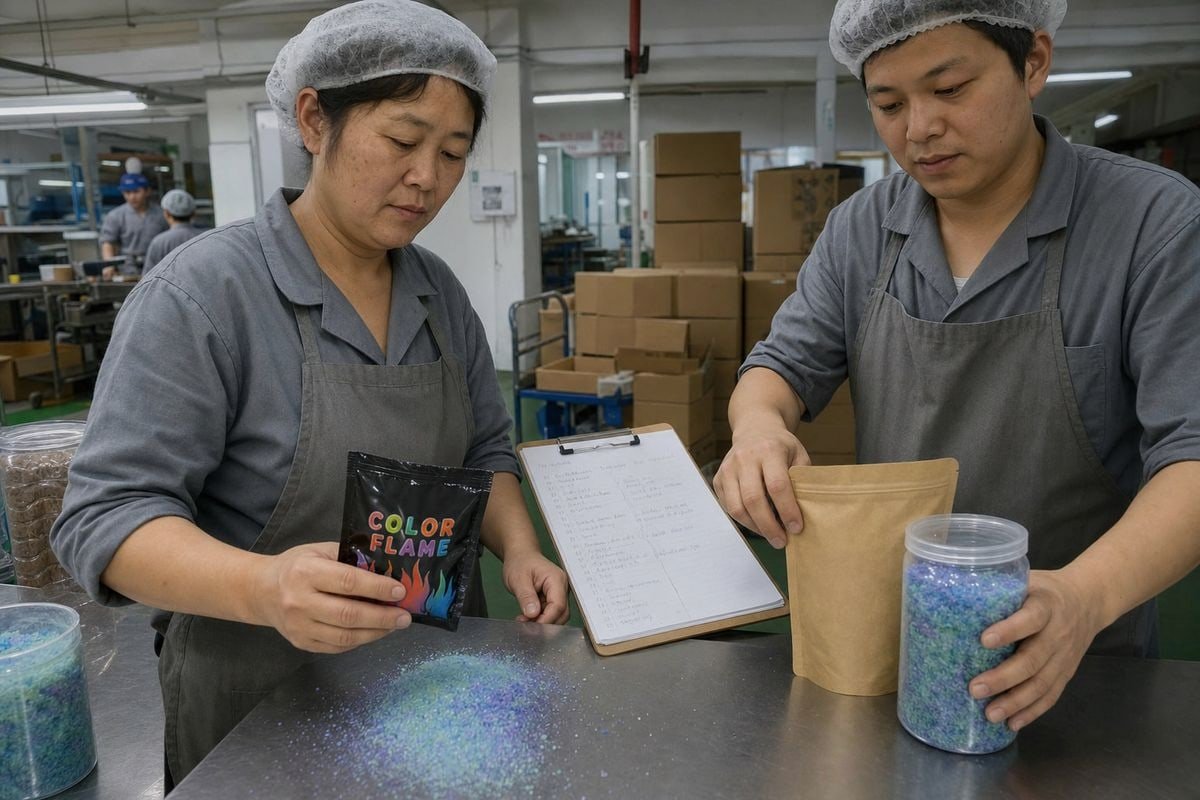
Magic Fire Powder looks simple on a shelf, but buyers keep getting it wrong العلامات التجارية الخاصة 1. On our production line, I have seen the same base product fail in one channel and fly off shelves in another. Guess the wrong spec, and you sit on unsold inventory. Get the color mix, sachet size, and labeling right for the channel, and reorders come fast.
Supermarket Magic Fire Powder favors small 10–25g single-use sachets, 3–5 core flame colors, simplified consumer labeling, and lower price points. Specialty store versions offer larger 50–500g formats, 8–12+ vivid color options, richer effect specs, detailed safety data, and premium private-label packaging.
Those differenسي 2s are not accidental. They come from how each channel sells, who buys there, and what regulators expect. Let me walk you through each factor, one by one.
What Packaging Specs Should I Choose for Supermarket vs Specialty Store Distribution Channels?
Last year, a Dutch importer asked us to run the exact same sachet for both a grocery chain and a fireplace shop. We talked him out of it — and his sell-through proved us right.
Choose compact 10–25g heat-sealed foil sachets in checkout-friendly display boxes for supermarkets, and larger 50–500g resealable kraft pouches or plastic jars for specialty stores. Supermarkets need impulse-buy sizing and low unit prices; specialty shops need bulk value, reseal features, and longer shelf life.
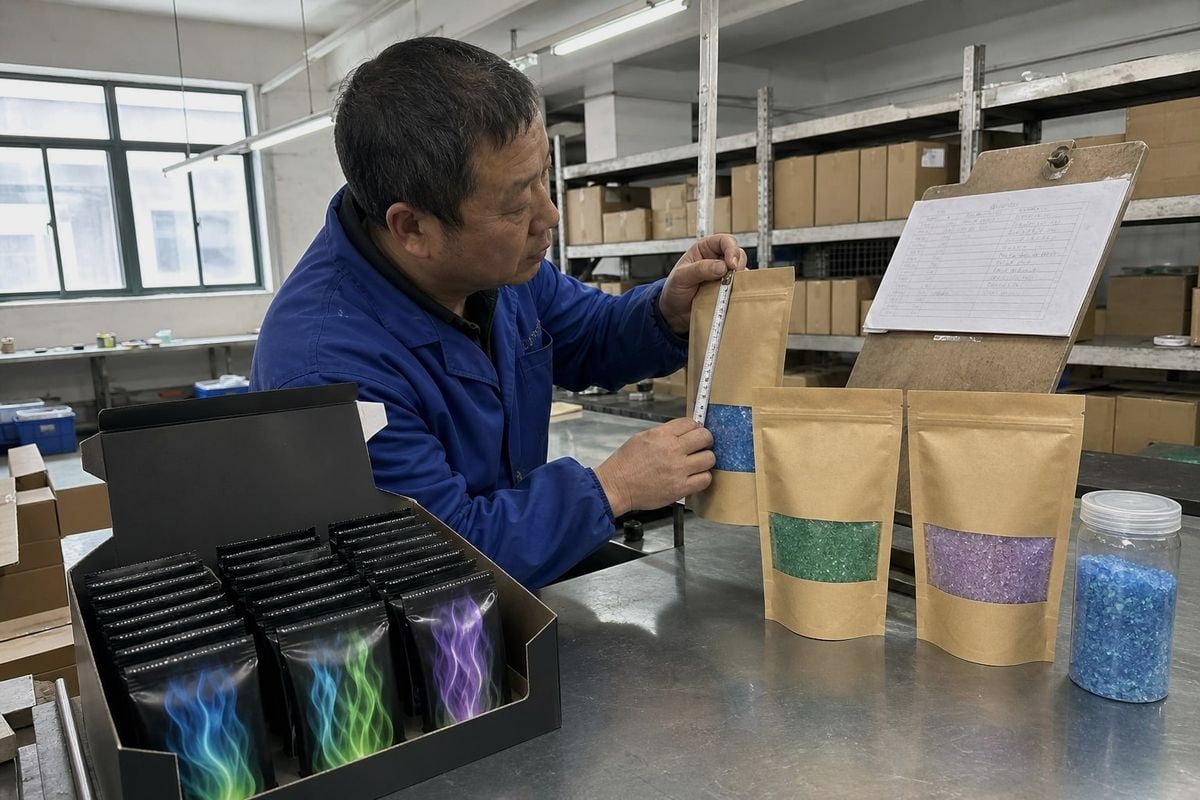
Packaging is the first thing a channel buyer judges. In our 17+ years shipping color-flame products to the US, Germany, the UK, and beyond, we have learned that packaging spec decisions drive more rejections than formulation ever does. Here is the practical breakdown.
Core Packaging Formats by Channel
| مواصفات | Supermarket Version | Specialty Store Version |
|---|---|---|
| حجم الوحدة | 10–25g single-use sachet | 50g, 100g, 250g, 500g pouches or jars |
| مادة | Glossy foil, heat-sealed | Kraft stand-up pouch with zipper, or PET jar |
| Display format | Flip-top counter display box, 24–50 sachets | Individual shelf-ready units or small cases |
| Reseal option | Not needed | موصى به بشدة |
| Typical shelf life target | 12 months minimum | 24–36 months, moisture-barrier 3 التعبئة والتغليف |
| Price positioning | Impulse buy, low unit price | Premium, value per gram |
Why the Difference Matters
Supermarkets sell on impulse. A camper or family sees a colorful sachet near the checkout or in the seasonal aisle, and they buy one or two. So the packet must be small, cheap, and instantly understandable. Our flip-top display boxes exist exactly for this — the retailer drops the box on a counter, and it merchandises itself.
Specialty fireplace and outdoor shops sell to repeat users. Their customers burn fires weekly, sometimes nightly, all winter. A single-use sachet feels like a gimmick to them. They want a resealable kraft pouch or a jar they can scoop from. Moisture resistance also matters more here, because a jar may sit open near a hearth for months. We vacuum-seal inner liners and use moisture-barrier films for these formats.
One more point from experience: freight efficiency differs too. Sachet display boxes cube out well for container loading, while jars need protective cartons. We optimize both, but you should budget logistics differently per channel.
Which Color-Flame Effects Sell Better in Mass Retail Compared to Specialty Fireplace Shops?
There is a trade-off we weigh on every new order: broad rainbow appeal versus precise single-color performance. The right answer depends entirely on where the product will sit.
Mass retail sells best with a single multi-color rainbow blend producing blue, green, and purple flames in one sachet. Specialty fireplace shops sell better with distinct single-color options — deep blue, emerald green, violet, and gold — plus premium effects like extended burn time or added crackle.

Color strategy is where I see the biggest sales gap between channels. Our color-flame packets, pinecones, and jars all follow the same logic, so let me explain it plainly.
The Rainbow Blend Rules Mass Retail
A supermarket shopper does not want choices. They want one packet that says "magic rainbow fire" and delivers it. That is why our mass-retail formulations blend mineral salts so a campfire cycles through blue, green, and purple in a single burn. One SKU, one facing, one decision. Retail buyers love this because it simplifies planogram space 4.
Adding five separate color SKUs to a grocery shelf usually backfires. Shoppers hesitate, and the slowest color drags down the whole line's velocity.
Specialty Shops Want Precision and Range
Fireplace and outdoor specialty retailers serve enthusiasts. These customers ask specific questions: How saturated is the blue? How long does the color last per gram? Does it work on gas logs or only wood? For this channel, we produce distinct single-color formulations and disclose burn characteristics openly.
| Effect Attribute | Mass Retail Priority | Specialty Shop Priority |
|---|---|---|
| Color range | One rainbow blend | 8–12+ individual colors |
| Color saturation | Good enough to wow kids | Deep, vivid, consistent |
| مدة الاحتراق | 20–40 minutes typical | Up to 60+ minutes, clearly stated |
| Added effects | Rarely requested | Crackle, sparkle, extended glow |
| Effect consistency | Batch-level acceptable | Tight batch-to-batch tolerance |
Our strict batch QC matters most for the specialty channel. An enthusiast who buys a violet flame jar twice expects the same violet both times. That is why the first sample we send you reliably reflects mass-production quality — the process controls are the same.
How Do Compliance and Labeling Requirements Differ Between Supermarket Chains and Specialty Retailers?
A German distributor once told me his previous supplier's shipment cleared the factory but died at the retailer's compliance desk. The product was fine. The label was not. That lesson shaped how we run documentation today.
Supermarket chains demand full third-party certification, standardized hazard pictograms, multilingual warnings, barcodes, and vendor compliance audits like BSCI before listing. Specialty retailers accept simpler labels but expect deeper technical disclosure — ingredient transparency, safety data sheets, and clear usage and burn-performance details.

Compliance is not one checklist. It is two different checklists, and mixing them up is the most expensive mistake I see importers make.
What Supermarket Chains Require
Large retail sourcing channels — think Home Depot–type accounts — treat compliance as a gate, not a preference. In our experience exporting to 30+ countries, the mass-retail package must include:
- Recognized certification and test reports (we hold ISO 9001 5, BSCI 6, CE, and SGS/Intertek reports, because our buyers treat these as hard requirements).
- Standardized warning language, often in multiple languages for EU distribution.
- A yellow-band caution label with simple, icon-supported instructions.
- Retail barcodes, batch codes, and traceability marks.
- Vendor social-compliance audits before the purchase order is even confirmed.
The label text itself is deliberately simple. A supermarket shopper gets short, direct instructions: add unopened packet to established fire, keep away from children, do not cook over colored flames.
What Specialty Retailers Expect
Specialty shops are lighter on formal audits but heavier on substance. Their staff answer customer questions, so they want ingredient transparency, صحائف بيانات السلامة 7 on request, and honest performance claims. We supply SDS documentation and plain-language technical sheets with every specialty-channel order. Because our formulations use eco-friendly materials with no harmful chemicals, this transparency works in our buyers' favor — it becomes a selling point rather than a liability.
One practical tip: build the stricter supermarket-grade documentation into every SKU from day one. It costs little upfront and lets you pivot a specialty product into mass retail later without a relabeling project.
Can I Get Custom Formulations and Private-Label Options for Both Retail Channels From One Supplier?
Not long ago, a UK camping brand came to us running two suppliers — one for grocery sachets, one for specialty jars. Consolidating both lines under our roof cut their coordination headaches in half.
Yes. A capable OEM/ODM factory can produce channel-specific formulations, packaging, and private-label branding for both supermarkets and specialty stores under one roof — including custom sachet sizes, color blends, burn times, display boxes, warning labels, barcodes, and consolidated shipping for both product lines.
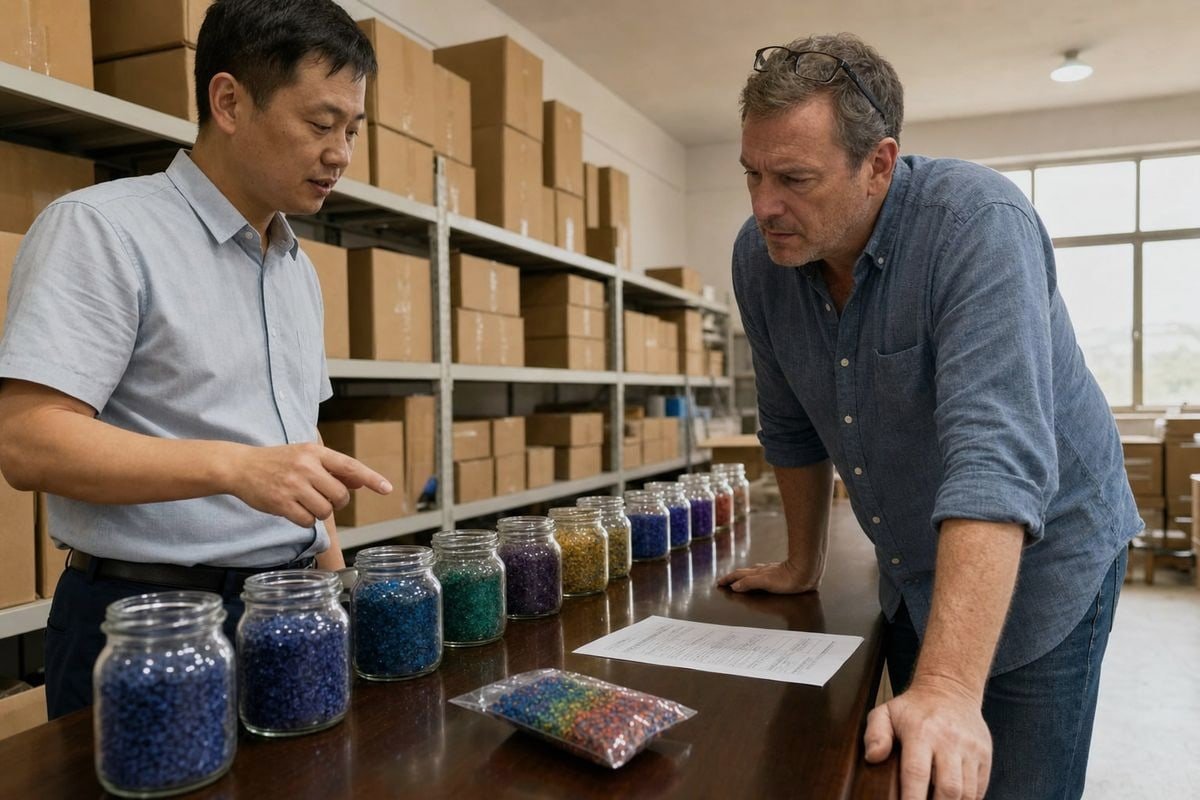
Running both channels through one supplier is not just convenient. It changes your economics and your quality risk. Here is how we structure dual-channel programs at our factory in Ningbo, with headquarters in Liuyang — China's fireworks cluster.
What Can Be Customized per Channel
| منطقة التخصيص | Supermarket Line | Specialty Line |
|---|---|---|
| التركيبة | Rainbow blend, standard burn | Single colors, extended burn, crackle |
| Sachet/pouch size | 10–25g | 50–500g |
| نوع التعبئة والتغليف | Foil sachet + display box | Kraft pouch, jar, gift box |
| العلامة التجارية | Your brand, bold retail design | Your brand, premium or rustic design |
| ملصقات | Multilingual warnings, barcodes | Technical sheets, SDS support |
| Companion SKUs | Single-item focus | Color pinecones, wood firestarters, wax torches |
Why One Supplier Beats Two
First, consistency. When one factory runs both lines, the base formulation and QC standards stay aligned. Your supermarket sachet and your specialty jar deliver the same color chemistry, just packaged and dosed differently. With two suppliers, you carry two quality risks and two audit trails.
Second, MOQ flexibility. We regularly structure trial orders so a distributor can test both channels without committing to huge volumes on either. That matters when you are pitching a new retail account and need samples plus a small first run.
Third, logistics. We consolidate both product lines into shared container loads and handle export documentation once. For buyers in the US, Germany, France, or Australia, that alone can justify consolidation.
Finally, expansion. Specialty buyers often add our color-flame pinecones or wax torches as companion SKUs later. One partner, one compliance file, one growing product family.
خاتمة
Same name, different products. Match sachet size, color strategy, and labeling to each channel — or watch inventory stall. One compliant OEM partner covering both channels solves the problem cleanly.
ملاحظات ختامية
1. Wikipedia background on the private-label business model discussed for OEM/ODM programs. ↩︎
2. Official EU source explaining the CE marking certification referenced for supermarket compliance. ↩︎
3. Background concept on packaging films used to extend shelf life in specialty formats. ↩︎
4. Reference to retail shelf space allocation standards influencing supermarket SKU decisions. ↩︎
5. Official standards body reference for the certification held by the manufacturer. ↩︎
6. Explains the vendor social-compliance audit standard mentioned for supermarket sourcing. ↩︎
7. Background on the technical documentation specialty retailers require for chemical products. ↩︎



 English
  Spanish
  German
  French
  Arabic
  Portuguese
انضم إلى المحادثة