







Safety precautions for magic fire powder differ sharply between indoor and outdoor use, and I learned this firsthand on our production line. One wrong assumption can turn a fun product into a hazard, and buyers pay the price. That is exactly why we built strict handling rules into every packet we make.
Indoors, magic fire powder requires dust control, an open flue, strong ventilation, and strict ignition-source discipline. Outdoors, priorities shift to wind awareness, safe distance from bystanders, clearing dry vegetation, and preventing airborne dispersion. In both settings, follow the exact product label and never open sealed packets.
Let me break this down setting by setting. I will cover indoor fireplace use, outdoor fire pits, ventilation rules, and the compliance side that retail buyers care about most.
How Do I Safely Use Magic Fire Powder Indoors in a Fireplace?
During a factory audit a few years back, an inspector asked our team one simple question: what happens if a customer tears the sachet open indoors? That question reshaped how we write every warning label today.
To use magic fire powder safely indoors, toss the sealed packet unopened into an established wood fire in a fireplace with a fully open, working flue. Never open the sachet, never add packets to a gas fireplace or wood stove, and keep children and pets away.
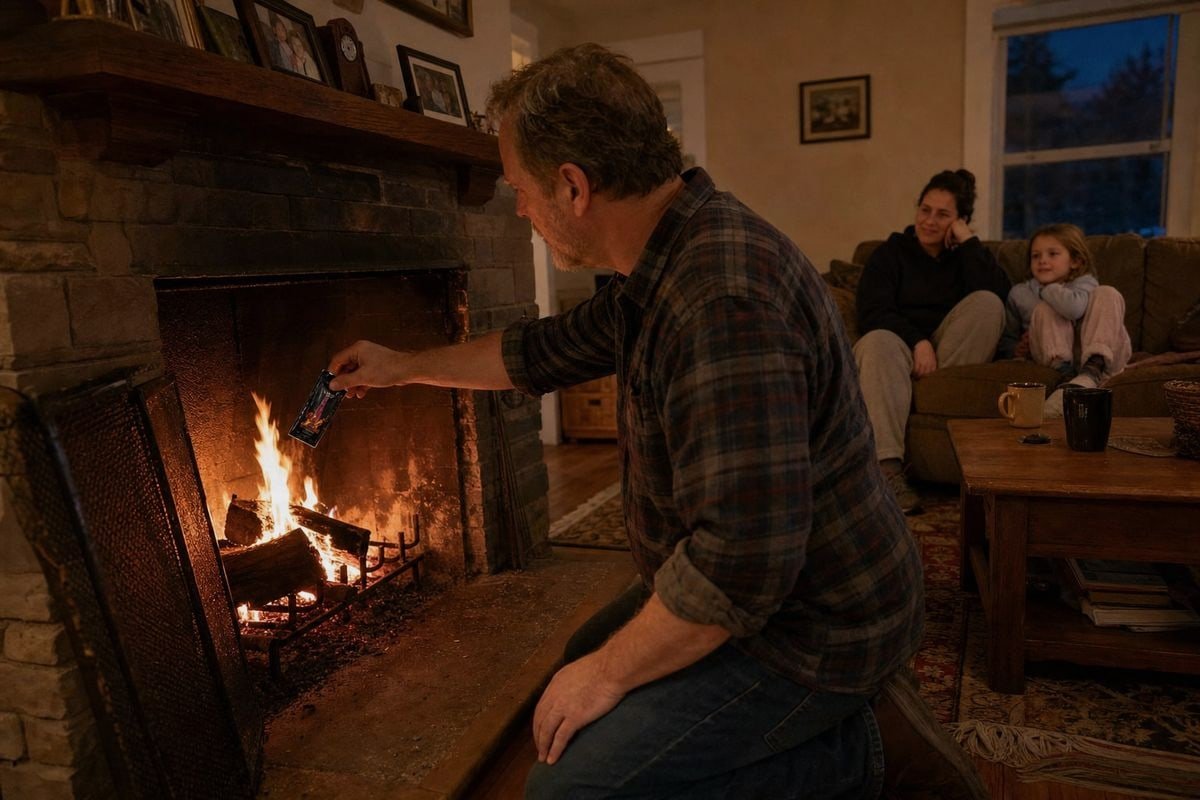
The single biggest indoor risk is not the flame color. It is the powder itself. Fine combustible powder can form a dust cloud if you open the packet and pour it. combustible dust 1 That cloud can be inhaled, and in the worst case, it can ignite. This is why our Magic Fire packets are designed to go into the fire sealed. The heat-sealed foil sachet keeps the powder contained until the fire consumes it in a controlled way.
The Indoor Checklist We Recommend
- Confirm your fireplace is wood-burning. Never use color-flame packets in gas fireplaces, wood stoves, pellet stoves, or candles.
- Open the flue fully and confirm a strong draft before lighting.
- Build a normal wood fire and let it establish first.
- Toss one sealed packet into the flames. Do not throw a second packet onto an already-burning colored flame, as this can cause flare-ups or a burst of concentrated fumes.
- Close the fireplace screen and keep a two-meter clear zone for children and pets.
Ignition Sources and Static Indoors
Indoor spaces are full of hidden ignition sources: appliance switches, space heaters, static from carpets. If loose powder ever spills, clean it up gently with a damp cloth. Do not sweep aggressively or vacuum with a standard household vacuum, because both actions push fine particles into the air. Reseal any opened storage container immediately and store it away from heat and moisture.
| Indoor Do | Indoor Don't |
|---|---|
| Use sealed packets in wood-burning fireplaces only | Open sachets and pour loose powder onto flames |
| Verify the flue is fully open with active draft | Use in gas fireplaces, wood stoves, or candles |
| Clean spills with a damp cloth, gently | Sweep or vacuum dry powder into the air |
| Use one packet at a time per label instructions | Toss extra powder onto an already-burning fire |
| Store sealed product in a cool, dry place | Store near heaters, stoves, or humid areas |
What Precautions Should I Take When Burning Magic Fire Powder Outdoors in a Fire Pit?
One of our German distributors once sent us a photo of a customer's campfire setup — beautiful rainbow flames, but dry leaves scattered less than a meter from the pit. We used that image in our internal training the very next week.
Outdoors, check wind direction first and position everyone upwind. Clear dry leaves and vegetation within a three-meter radius, keep the fire pit away from structures and overhanging branches, use sealed packets only, and keep water or an extinguisher within reach.
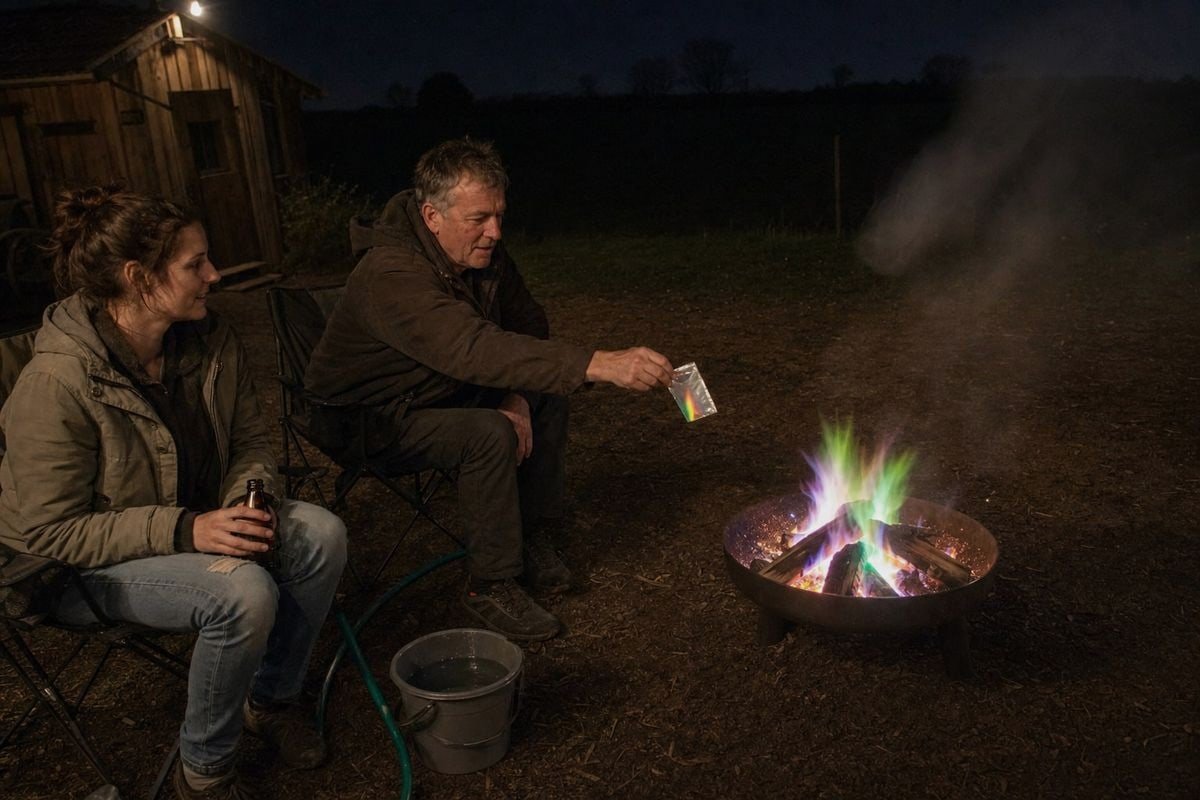
Many people assume outdoor use is automatically safe. It is not. It simply trades one set of risks for another. Indoors, the enemy is trapped air. Outdoors, the enemies are wind, dry fuel, and people standing too close.
Wind Is Your First Check
Wind carries three things you do not want moving toward people: smoke, fine particles, and embers. Before you toss a packet into the fire pit, note the wind direction 2. Stand upwind. Seat guests upwind. If conditions are gusty, wait. A colored flame is not worth an ember landing on a tent or a dry lawn. Fire-safety guidance also warns strongly against broadcasting or spraying colored powders through the air, especially with powered devices, because an airborne powder cloud can itself become combustible. Our packets are sealed specifically so the powder never needs to travel through open air.
Distance, Spectators, and Site Prep
Outdoor gatherings mean more people, more pets, and more distractions. Set a clear no-go radius around the fire pit — we suggest at least two to three meters for children and pets. Clear dry leaves, pine needles, and grass from around the pit before lighting. Check for overhanging branches. Use a proper metal or stone fire pit, not a shallow hole in dry ground.
Fire Response Readiness
Keep a bucket of water, a hose, or a portable extinguisher 3 within arm's reach. Small outdoor fires are usually easy to control with a portable extinguisher. Large ones are not, and smoke from any significant fire should be avoided — move people downwind exposure out of the path entirely. When the evening ends, extinguish fully. Do not spread the ash on garden soil, because color-flame residue can contain metal salts that do not belong near plants or water sources.
Do I Need Different Ventilation Rules for Indoor vs Outdoor Color-Flame Use?
The trade-off we weigh most often when writing usage instructions is this: indoor air is controllable but confined, while outdoor air is unlimited but unpredictable. Both facts shape the ventilation rules on our packaging.
Yes. Indoors, ventilation is critical: you need a fully open flue with active draft, sealed HVAC return vents near the fireplace, and working CO detectors. Outdoors, natural airflow helps, but you must manage wind direction and keep people out of the smoke path.

Here is a side-by-side view of how the ventilation logic changes between the two settings:
| Ventilation Factor | Indoors | Outdoors |
|---|---|---|
| Primary goal | Move all fumes up the chimney and out | Keep smoke moving away from people |
| Key control | Fully open flue with a confirmed draft | Wind direction and upwind positioning |
| Hidden risk | Shared HVAC ducts circulating fumes to other rooms | Sudden wind shifts pushing smoke at spectators |
| Monitoring | Test CO detectors before and after use | Watch smoke behavior continuously |
| Frequency concern | Repeated use can build up metal particulates 4 in indoor air | Occasional exposure disperses quickly |
Why the Indoor Rules Are Stricter
Inside a home, any fume that escapes the fireplace stays in the room. Color-flame products slightly alter flame chemistry, which can affect combustion efficiency. That is why we advise testing carbon monoxide detectors before and after indoor sessions. It costs thirty seconds and removes the biggest unknown.
There is also a duct issue most people miss. If your fireplace room shares HVAC return vents 5 with the rest of the house, fumes can circulate into bedrooms and other rooms. Close or seal those shared vents before lighting the fire. And remember the cumulative angle: burning color-flame products indoors every night is very different from doing it once a month. Repeated heavy indoor use can build up copper and other metal particulates in indoor air over time, so we recommend moderation and airing out the room after each session.
The Outdoor Ventilation Reality
Outdoors, you cannot control the air, so you control positioning instead. Stand and seat people upwind. If smoke shifts toward the group, move the group, not the fire. Pause use entirely in gusty weather. Nature ventilates for free, but only if you respect the wind.
How Can I Ensure Magic Fire Powder Meets Safety Standards for Both Indoor and Outdoor Retail Sale?
A purchasing manager from a US camping brand once opened our first call with a single sentence: "Send me your test reports before you send me a price." That conversation is typical, and honestly, it is how it should be.
To sell magic fire powder at retail, source from a certified factory with ISO 9001, BSCI, CE, and third-party SGS or Intertek test reports. Require compliant warning labels, clear indoor/outdoor usage instructions, sealed child-resistant packaging, and batch-to-batch quality documentation.
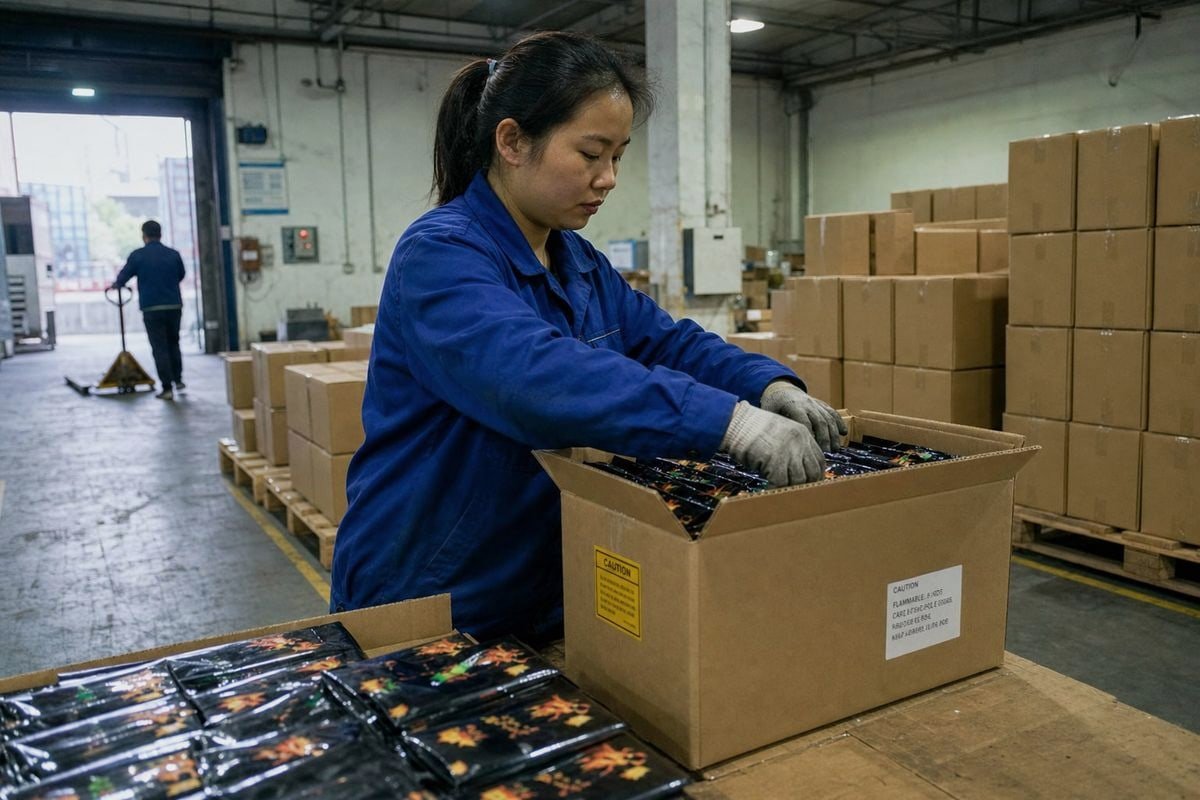
Compliance is where indoor and outdoor safety stop being a consumer question and become a sourcing question. Across our 17-plus years exporting color-flame packets to more than 30 countries, we have seen one pattern repeat: products fail at retail not because the chemistry is wrong, but because the documentation and labeling are.
What Retail Buyers Should Demand From a Supplier
| المتطلب | لماذا هو مهم | ما يجب أن تطلبه |
|---|---|---|
| Third-party testing | Proves the formula matches safety claims | Current SGS or Intertek test reports |
| نظام الجودة | Ensures batch consistency at scale | شهادة ISO 9001 |
| Ethical audit | Required by major retail channels | تقرير تدقيق BSCI |
| Market conformity | Legal requirement for EU sale | وثائق CE |
| الملصقات | Prevents misuse indoors and outdoors | Warning text, usage instructions, barcodes |
| رموز محددة، SDS مشار إليها، لا تردد | First sample must match mass production | Batch QC records and retained samples |
Labeling for Two Use Environments
A compliant label must do double duty. It has to tell the indoor user about flue requirements, gas-fireplace prohibitions, and CO awareness. It also has to tell the outdoor user about wind, distance, and vegetation clearing. When we run OEM and ODM 6 projects for camping brands and fireplace distributors, we adapt warning language, pictograms, and packaging format — plastic bag, kraft pouch, or jar — to the target market's regulations. US and EU expectations differ, and a label that clears one market can fail another.
Consistency Is the Hidden Safety Standard
Certifications prove a product was safe once. Batch-to-batch quality control proves it stays safe. Our lines in Ningbo run strict per-batch checks 7 so the sachet a customer buys in month twelve behaves exactly like the sample tested in month one. For a distributor, that consistency is the real safety precaution, because a formula that drifts can burn hotter, smoke more, or color unpredictably.
خاتمة
Magic fire powder is safe when the setting is respected: control the air indoors, control the wind and people outdoors, and always demand certified, well-labeled products from a proven factory.
ملاحظات ختامية
1. OSHA explains combustible dust hazards, supporting the inhalation and ignition risk described. ↩︎
2. General background on wind behavior supports outdoor fire safety positioning advice. ↩︎
3. Background reference on extinguisher types relevant to outdoor fire response readiness. ↩︎
4. WHO fact sheet on household air pollution supports concerns about indoor particulate buildup. ↩︎
5. EPA indoor air quality resource explains ventilation risks from shared ductwork. ↩︎
6. Explains manufacturing model referenced when discussing custom retail packaging projects. ↩︎
7. ISO 9001 defines the quality management practices behind consistent batch production. ↩︎



 English
  Spanish
  German
  French
  Arabic
  Portuguese
انضم إلى المحادثة