






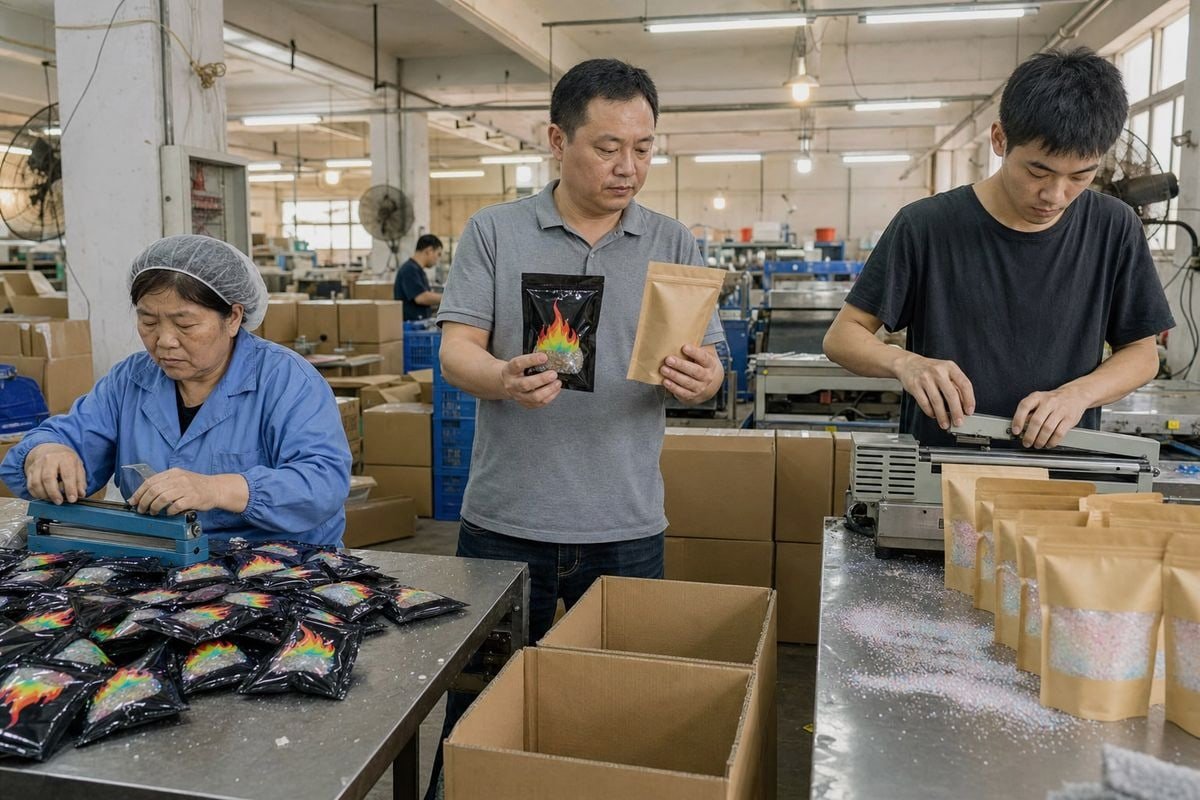
Choosing magic fire powder gets tricky fast. On our production line in Ningbo, I see buyers order one SKU for two very different fires — and regret it.
Distributors choosing magic fire powder should prioritize use-case fit first: verified indoor certifications and low-smoke formulas for fireplace SKUs, and longer burn time with high color visibility for bonfire SKUs. Confirm compliance documents, packet-based dosing, correct labeling, and batch consistency before committing to volume.
Fireplace buyers and bonfire buyers want different things محتوى المعادن الثقيلة 1. In this article, I will break down the priorities for each, based on what we see in real export orders.
What Certifications Should I Verify Before Sourcing Magic Fire Powder for Indoor Fireplace Use?
A German importer once told me his retail chain rejected an entire container from another supplier — no SGS report. That lesson cost him a full season, and it shaped how we document every batch.
Before sourcing magic fire powder for indoor fireplace use, verify SGS or Intertek test reports covering heavy metals and emissions, CE marking for the EU, an up-to-date SDS, and factory-level credentials like ISO 9001 and BSCI. Indoor use demands stricter proof because ventilation is limited.

Indoor fireplace products face the toughest scrutiny in this category, and for good reason. A fireplace sits inside a living room. Smoke and combustion byproducts 2 stay in the home. Retailers know this, and their compliance teams check paperwork before they check price.
In our 17+ years exporting to the US, Germany, the UK, and beyond, we have learned that certifications are not a nice-to-have. They are the entry ticket. If your supplier cannot show current test reports, walk away.
المستندات الأساسية المطلوب طلبها
Here is what I recommend every distributor collect before signing a purchase order:
| وثيقة | ما يثبته | Why It Matters for Fireplace SKUs |
|---|---|---|
| تقرير اختبار SGS أو Intertek 3 | Heavy metal content, composition safety | Indoor air exposure is direct; retailers demand third-party proof |
| علامة CE 4 (EU markets) | الامتثال لمتطلبات السلامة في الاتحاد الأوروبي | مطلوب للبيع القانوني في معظم القنوات الأوروبية |
| SDS (صحيفة بيانات السلامة) | Handling, storage, and hazard data | Needed for shipping classification and retail liability |
| ISO 9001 5 | نظام إدارة الجودة | Signals batch-to-batch consistency, not one lucky sample |
| تدقيق BSCI | ظروف المصنع الأخلاقية | Many large retail chains require it for onboarding |
Watch for Vague Safety Claims
Many online listings use broad "safe for indoor and outdoor use" language with no documentation behind it. That wording protects the seller, not you. When we develop a formula, we run it through third-party labs precisely because our buyers resell into regulated markets. Ask your supplier: which lab, which standard, which date? A real factory answers in one email. A trading company usually stalls.
Also confirm the SDS matches the actual formula shipped. Formulas drift when suppliers chase cheaper raw materials. We lock our raw material sources and QC every batch so the report and the product stay aligned.
How Do I Choose the Right Flame Duration and Color Intensity for Bonfire vs Fireplace Applications?
Burn time is the trade-off I discuss most with buyers. Longer duration means more granules per sachet, which raises cost — but a short flash disappoints bonfire crowds every time.
Match duration and intensity to the venue: fireplace SKUs work best with shorter, repeatable 15–30 minute effects and subtle ambiance colors, while bonfire SKUs should deliver 30–60 minutes of vivid, high-visibility color. Request product-specific burn data, since claimed durations vary widely across listings.
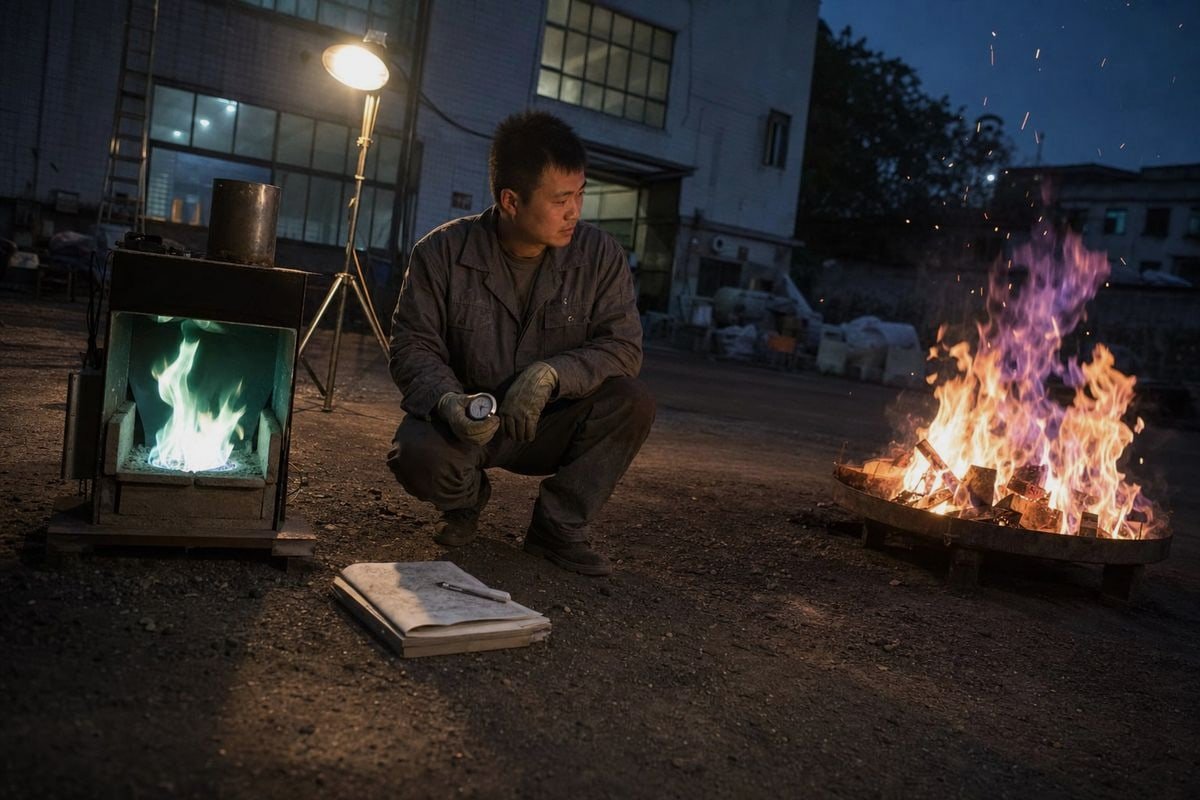
Claimed burn times across the market range from 10–20 minutes, to around 30 minutes, to up to an hour. That spread is not random. It reflects packet weight, granule size 6, and formula concentration — and it means you cannot assume a "standard" duration exists. When we run OEM projects, we adjust fill weight and granule blend to hit the burn time the buyer's channel actually needs.
Fireplace vs Bonfire: A Side-by-Side View
| عامل | Fireplace Application | Bonfire Application |
|---|---|---|
| Flame size | Small, contained | Large, open, wind-exposed |
| Ideal effect duration | 15–30 minutes, repeatable | 30–60 minutes, sustained spectacle |
| Color character | Subdued, ambient, cozy | Vivid, dramatic, visible from a distance |
| Buyer motivation | Ambiance and reliability | Wow factor and social entertainment |
| Typical shopper | Homeowner, gift buyer | Camper, event host, festival crowd |
Why the Same Powder Behaves Differently
Flame size and airflow change everything. A big bonfire pulls in more oxygen and burns hotter, so colors flare brighter but the packet can burn through faster. An indoor fireplace has controlled airflow and smaller flames, so the same sachet produces a gentler, more subdued color wash. One source in our research notes exactly this: indoor use tends to look more muted than outdoor displays.
For distributors, the practical takeaway is simple. Do not sell "one hour of rainbow flames" to fireplace customers if your test burns show 20 minutes of soft blue-green in a small firebox. Set expectations by venue. We supply burn-test data with samples so our buyers can write honest product-page copy — honest copy means fewer returns and better reviews.
Color palette matters too. Blue, green, purple, and teal read clearly in both settings. Red and yellow can get lost against natural flame color, especially indoors. For bonfire SKUs, we usually recommend the full multi-color blend for maximum crowd effect.
What Packaging and Labeling Requirements Should I Confirm for Indoor vs Outdoor Fire Products?
Last year, a Dutch buyer asked us to redo his warning labels three weeks before shipment — his retailer's legal team flagged the original wording. We turned the artwork around in days because label work is part of our standard OEM process, but it reminded me how often packaging gets treated as an afterthought.
Confirm moisture-proof heat-sealed sachets, clear "throw the unopened packet into the fire" instructions, visible warning text, "not for cooking" language, market-specific compliance wording, and barcodes. Indoor SKUs need ventilation and clearance warnings; outdoor SKUs need weather-resistant packaging and multi-pack formats.

Packaging does three jobs in this category: it protects the product, it controls the dose, and it carries your legal language. Miss any one of them and you inherit the liability.
The Sachet Is Part of the Safety System
Nearly every listing in this category instructs users to toss the unopened packet into the fire. This is not just convenience. The sealed sachet controls dosing, keeps hands away from the granules, and prevents spills. Our heat-sealed foil pouches 7 are moisture-resistant, which matters for both channels — humid garages, camping trips, and long retail shelf life all punish weak seals. Verify this instruction is printed clearly, because it is the single most important operational detail on the pack.
Labeling Essentials by Channel
- Warning text. Keep-away-from-children language, no-ingestion warnings, and "wood-burning fires only" statements should be legible, not buried in tiny print.
- "Not for cooking" disclaimer. This is a decorative flame enhancer, not a cooking accessory. At least one product demo we reviewed explicitly warns against cooking over treated flames. Put it on the pack.
- Indoor-specific wording. For fireplace SKUs, include ventilation guidance and firebox suitability notes.
- Market compliance marks. CE for the EU, plus local-language warning text where required. We print market-specific labels routinely for buyers in Germany, France, Poland, and the Netherlands.
- Barcodes and retail-ready formats. Single sachets suit impulse racks near fireplace accessories; flip-top display boxes and multi-packs suit seasonal bonfire and camping sets.
Also budget for shipping classification early. Some flame-coloring chemistries trigger freight surcharges. We help buyers optimize logistics upfront so surprise costs do not erode thin margins after the deal is priced.
Can I Get a Custom Formula That Works Safely for Both Fireplace and Bonfire Markets?
Dual-use requests land on my desk almost weekly now. Buyers want one certified formula, two packaging lines — and honestly, it is often the smartest way to structure a trial order.
Yes. A properly engineered formula can be certified for both indoor and outdoor use, then differentiated by packet weight, granule blend, packaging, and labeling. Dual-certification reduces SKU complexity, simplifies catalogs, and lets distributors serve fireplace and bonfire channels from one compliant base product.

The base chemistry can stay the same if it is clean enough to pass indoor-use testing. What changes is the delivery: how much powder per packet, how coarse the granules are, and how the pack is positioned. This is the heart of our OEM/ODM work in Liuyang and Ningbo, and it is where 17+ years of production depth actually pays off — the first sample you approve reliably matches mass production, because we control the full line ourselves.
How We Structure a Dual-Market Program
| Customization Lever | Fireplace Version | Bonfire Version |
|---|---|---|
| Packet fill weight | Lighter, tuned for small fireboxes | Heavier, for longer open-fire display |
| Burn time target | 15-30 دقيقة | 30–60 دقيقة |
| تنسيق العبوة | Single sachets, jar, or countertop display | Multi-pack pouches, kraft bags, event kits |
| Label emphasis | Ambiance, ventilation notes, indoor safety | Spectacle, weather resistance, group use |
| العلامة التجارية | Cozy, home-décor aesthetic | Adventurous, outdoor-lifestyle aesthetic |
What a Trial Order Should Look Like
Start smaller than you think. We support flexible MOQs for trial runs precisely because distributors need to validate sell-through by channel before committing. A sensible first program: one certified base formula, two label designs, two pack weights, and burn-test documentation for both configurations. Then read your sell-through data. Fireplace buyers reorder on reliability; bonfire buyers reorder on spectacle and seasonal timing — holiday season for fireplaces, summer camping and bonfire nights for outdoor.
One caution from experience: dual-certification only works if the supplier maintains batch-to-batch consistency. Inconsistent color vibrancy across production runs is a leading cause of returns in this category. Our QC checks every batch against the approved sample, because a distributor's brand rides on flame number two hundred looking like flame number one.
خاتمة
Guessing wrong on use-case fit wastes a season. Match certifications, burn time, packaging, and claims to fireplace or bonfire buyers — and partner with a documented factory, not a listing.
ملاحظات ختامية
1. WHO fact sheet on heavy metal exposure risk relevant to indoor emissions testing concerns. ↩︎
2. EPA guidance on indoor air quality risks from combustion, supporting the indoor safety argument. ↩︎
3. Explains the third-party testing body cited as the compliance benchmark for indoor products. ↩︎
4. Wikipedia background on the EU conformity mark required for legal sale in Europe. ↩︎
5. Official ISO page detailing the quality management standard referenced for factory credentials. ↩︎
6. Background on how granule size and composition affect burn rate and flame color. ↩︎
7. Explains the heat-sealing process used to create moisture-resistant packaging. ↩︎


 English
  Spanish
  German
  French
  Arabic
  Portuguese
انضم إلى المحادثة