






Preparing customs clearance documents for Magic Fire Powder is where most first-time importers stumble ISO 9001 1. I have watched buyers lose weeks — and our factory has seen shipments held over one mismatched line on an invoice.
To clear customs when sourcing Magic Fire Powder from China, prepare a Commercial Invoice, packing list, Bill of Lading, sales contract, customs declaration, Certificate of Origin, MSDS/SDS, a safe-transport certification, and confirm the HS Code classification before shipping. All documents must match exactly in description, quantity, and value.
That is the short answer. Below, I will walk you through each document, the compliance checks that matter, the delays to avoid, and how to verify labeling and classification before your cargo leaves China.
What documents do I need to clear customs when importing Magic Fire Powder from China?
During my 17 years shipping color-flame products from Liuyang and Ningbo, I have built the same core clearance pack hundreds of times. It rarely changes — but skipping one piece always hurts.
You need a Commercial Invoice, packing list, Bill of Lading or air waybill, sales contract, customs declaration form, power of attorney for your Customs Broker, Certificate of Origin, an MSDS/SDS with composition details, a safe-transport certification, and any import permit your destination country requires.
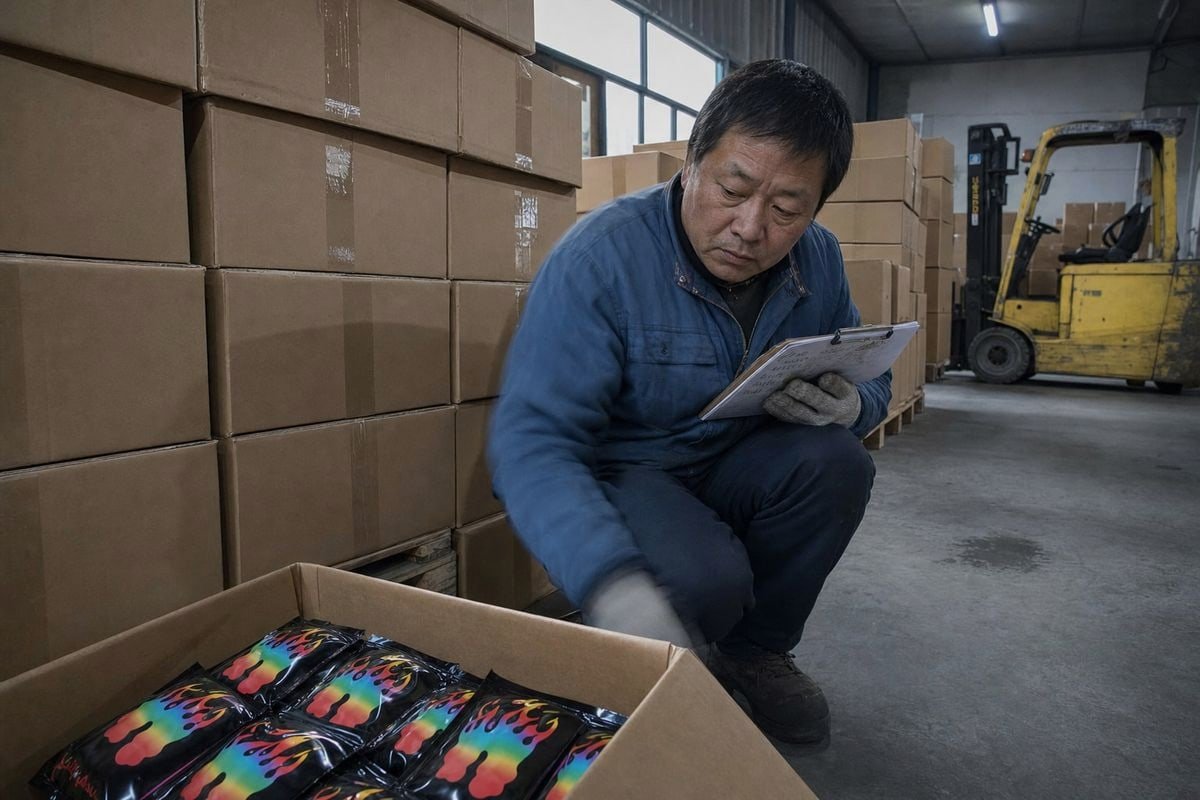
The document set splits into three groups: transaction documents, transport documents, and product-safety documents. Customs officers cross-check all three. If any group is weak, your shipment sits.
قائمة مرجعية للمستندات الأساسية
| وثيقة | من يقوم بإعداده | Why Customs Wants It |
|---|---|---|
| Commercial Invoice | Supplier (verified by you) | Confirms value for Import Duty and Taxes |
| Packing List | المورد | Verifies cartons, net/gross weights, dimensions |
| Bill of Lading / Air Waybill | Freight forwarder | Ties the cargo to the shipment record |
| Sales Contract | كلا الطرفين | Proves transaction terms in China's declaration set |
| Customs Declaration Form | Importer or broker | The formal legal import declaration |
| Power of Attorney | المستورد | Authorizes your Customs Broker to act for you |
| شهادة المنشأ 2 | Supplier / chamber of commerce | May unlock preferential tariff rates |
| صحيفة بيانات السلامة / SDS | الشركة المصنعة | States composition, hazard class, handling data |
| Safe-Transport Certification | Chinese testing institute | Confirms DG or Non-DG status for freight |
Why powders get extra attention
A flame-coloring powder sits in a gray zone. Customs may treat it as a normal consumer good, a chemical product, or a dangerous good depending on composition. Our Magic Fire packets use eco-friendly, non-harmful formulations, so we routinely supply the صحيفة بيانات سلامة المواد 3 و safe-transport report that prove Non-DG status. Without those two documents, an officer will assume the worst and route your container to inspection. My advice: treat the shipment as a regulated chemical item until your paperwork proves otherwise. That mindset alone prevents most holds.
Also confirm early who assembles the pack. Suppliers provide source documents. But you, the importer, remain legally responsible for the declaration. We give buyers a full document folder before the goods sail, so their broker can pre-file with nothing missing.
How do I make sure my supplier's compliance certificates meet my country's import regulations?
A German distributor once asked me for our full test-report file before signing anything. Smart move — his customs authority checks flame-additive imports closely, and generic certificates would not have survived review.
Ask your supplier for current ISO 9001, BSCI, CE, and third-party test reports such as SGS or Intertek, then verify each certificate number directly with the issuing body. Cross-check the tested product name and composition against your actual order and destination-country chemical regulations.

Certificates are only useful if they match your market, your product, and the current date. I have seen buyers accept a beautiful PDF that covered a different formulation entirely. Customs noticed. The buyer paid for the delay.
عملية تحقق من أربع خطوات
- Confirm the certificate covers your exact product. A CE mark or SGS report for one formulation does not automatically cover a different powder blend, packaging format, or scent variant. Match the product name, model number, and composition line by line.
- Verify authenticity with the issuer. SGS, Intertek, and BSCI all allow verification of report numbers. It takes ten minutes. We encourage buyers to do this with our reports because it builds trust fast.
- Map the certificate to your destination rules. The US, EU, UK, and Australia regulate consumer chemical products differently. An EU-focused test report may not answer a US labeling question. Ask your Customs Broker which standards your border authority actually checks.
- تحقق من التواريخ. Compliance certificates expire. An audit report from four years ago tells customs nothing about today's production line.
What a real factory should hand over without hesitation
At our plants, the compliance folder is standard onboarding material, not a negotiation. If a supplier stalls when you request the Material Safety Data Sheet in English, or cannot explain their own تصنيف المخاطر, that is your answer. Trading companies often resell goods they cannot document. A factory with genuine manufacturing depth can trace every batch back to raw-material intake records, which is exactly what a customs query demands.
Finally, ask whether the supplier has exported to your specific market before. Prior clearance history in the US or Germany means the document format has already survived real border scrutiny.
What are the biggest customs delays I should avoid when sourcing color-flame products from China?
The costliest hold I ever helped untangle came down to three words. The invoice said "magic powder," the Bill of Lading said "fire additive," and customs said "inspection."
The biggest delays come from documentation mismatch, vague product descriptions, wrong HS Code classification, under-declared values, missing Dangerous Goods paperwork, and seasonal export slowdowns in Chinese pyrotechnic hubs. Aligning every document before departure prevents nearly all of them.
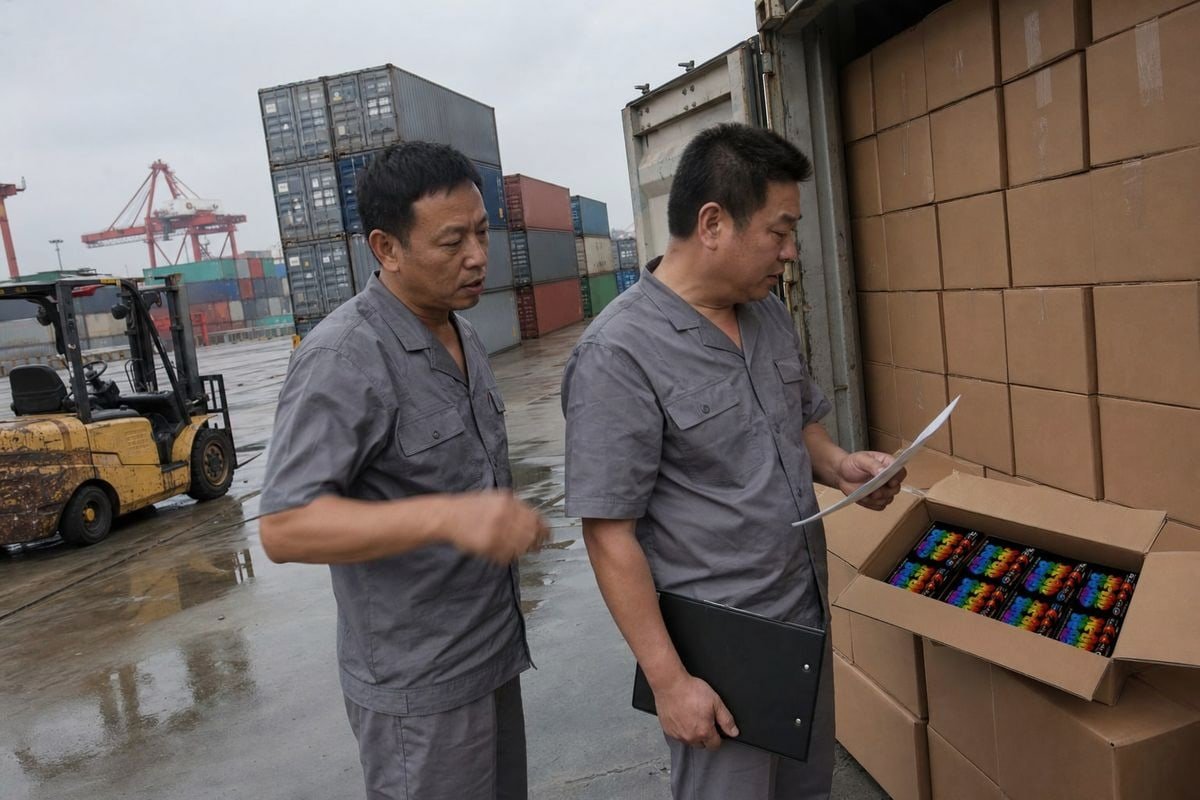
Here is a truth that took me years of export experience to fully accept: customs rarely stops a shipment because one form is missing. It stops shipments because the forms disagree with each other. An officer's job is consistency-checking. Give them one contradiction, and they must dig deeper.
The five delay traps, ranked by frequency
| Delay Trap | What Triggers It | How to Prevent It |
|---|---|---|
| Document mismatch | Different names, quantities, or values across invoice, packing list, and B/L | One person cross-checks all documents before sailing |
| Vague description | "Magic fire powder" with no technical detail | State what it is, its composition, and its use |
| Wrong HS code | Guessing the tariff heading | Confirm with your broker and forwarder in writing |
| Missing DG paperwork | No safe-transport report or إعلان البضائع الخطرة 4 حيثما كان مطلوبًا | Test the formulation and classify before booking freight |
| Under-declared value | Invoice value below market norms | Declare truthfully; low values invite audit, not savings |
The seasonal factor most buyers miss
Production hubs like Liuyang face periodic environmental crackdowns and fire-safety bans, especially before major holidays. Export document processing can freeze with little warning. Because our headquarters sits in Liuyang with production in Ningbo, we plan buffer time into every peak-season order and tell buyers honestly when a regional slowdown is coming. Build two to three extra weeks into Q4 orders. It is cheaper than air-freighting replacements.
One more point on transport mode. Sea freight under the قانون IMDG 5 and air freight under IATA rules apply different thresholds. A powder that ships easily by sea may face rejection at an air cargo terminal. Decide the mode first, then build the document pack around it.
How can I verify my Magic Fire Powder shipment is properly labeled and classified for customs?
Before any container leaves our Ningbo line, our QC team photographs the shipping marks, warning labels, and barcodes on every carton style. That habit started after a buyer's relabeling bill taught us both a lesson.
Verify classification by confirming the HS Code with your Customs Broker, checking the MSDS lists the correct UN Number and hazard status, and matching carton labels — origin marking, warning text, barcodes — against the declaration. A third-party pre-shipment inspection confirms everything physically matches the paperwork.

Classification and labeling are two sides of the same coin. The تصنيف رمز النظام المنسق 6 tells customs what duty applies. The physical labels tell the inspecting officer whether the cargo matches that claim. Both must agree.
Classification: get it in writing
Color-flame additives can fall under different tariff headings depending on formulation — some buyers assume Chapter 36 pyrotechnics, while non-pyrotechnic mineral-salt blends classify elsewhere. The difference changes your Import Duty and Taxes, your permit requirements, and even whether a Dangerous Goods Declaration applies. Ask your broker for a written classification opinion, and share the SDS and composition sheet so the opinion rests on facts, not the marketing name. If the powder is Non-DG, obtain the safe-transport certification from a recognized Chinese institute so the carrier and customs both see independent proof.
Labeling: the physical checklist
| عنصر الملصق | ما يجب التحقق منه |
|---|---|
| Origin marking | "Made in China" present and legible on retail and export cartons |
| نص التحذير | Irritant or caution wording in the destination-market language |
| الرموز الشريطية | Match your retail listing and the packing list item codes |
| Hazard labels | Present only if DG-classified; absent if certified Non-DG |
| Shipping marks | Carton numbers align with the packing list sequence |
The final safeguard
A فحص طرف ثالث قبل الشحن closes the loop. The inspector confirms the physical goods, the labels, and the declared composition all agree — which prevents seizure over misdeclaration. For private-label orders, we also pre-approve the artwork file with the buyer's compliance team, so warning labels and barcodes are correct before printing, not after arrival. Shelf-ready means customs-ready.
خاتمة
Customs clearance documents fail through inconsistency, not absence. Confirm the HS code, secure the SDS and certificates, align every document, and partner with a factory whose paperwork has already crossed borders.
ملاحظات ختامية
1. Authoritative NIST government resource explaining ISO 9001 and quality management systems. ↩︎
2. Explains the trade document that establishes product origin for tariff purposes. ↩︎
3. CDC/NIOSH resource explaining the purpose and content of safety data sheets. ↩︎
4. Explains dangerous goods classification relevant to shipping documentation requirements. ↩︎
5. Background on the international code governing dangerous goods shipped by sea freight. ↩︎
6. WTO resource explaining the Harmonized System used for tariff classification. ↩︎
7. Background on the UN numbering system used to identify hazardous materials in transport. ↩︎



 English
  Spanish
  German
  French
  Arabic
  Portuguese
انضم إلى المحادثة