






La préparation des documents de dédouanement pour la poudre Magic Fire est là où la plupart des importateurs pour la première fois trébuchent ISO 9001 1. J'ai vu des acheteurs perdre des semaines — et notre usine a vu des expéditions retenues pour une seule ligne incorrecte sur une facture.
Pour passer la douane lors de l'approvisionnement en poudre de feu magique de Chine, préparez une facture commerciale, une liste de colisage, un connaissement, un contrat de vente, une déclaration en douane, un certificat d'origine, une FDS/SDS, une certification de transport sécurisé, et confirmez la classification du code SH avant l'expédition. Tous les documents doivent correspondre exactement en description, quantité et valeur.
C'est la réponse courte. Ci-dessous, je vais vous guider à travers chaque document, les contrôles de conformité qui comptent, les retards à éviter, et comment vérifier l'étiquetage et la classification avant que votre cargaison ne quitte la Chine.
Quels documents dois-je fournir pour le dédouanement lors de l'importation de Poudre Magique de Feu de Chine ?
Au cours de mes 17 années d'expédition de produits à flamme colorée depuis Liuyang et Ningbo, j'ai constitué le même dossier de dédouanement de base des centaines de fois. Il change rarement — mais sauter une pièce fait toujours mal.
Vous avez besoin d'une facture commerciale, d'une liste de colisage, d'un connaissement ou d'une lettre de transport aérien, d'un contrat de vente, d'un formulaire de déclaration en douane, d'une procuration pour votre transitaire en douane, d'un certificat d'origine, d'une FDS/FDS avec détails de composition, d'une certification de transport sécurisé et de tout permis d'importation requis par votre pays de destination.
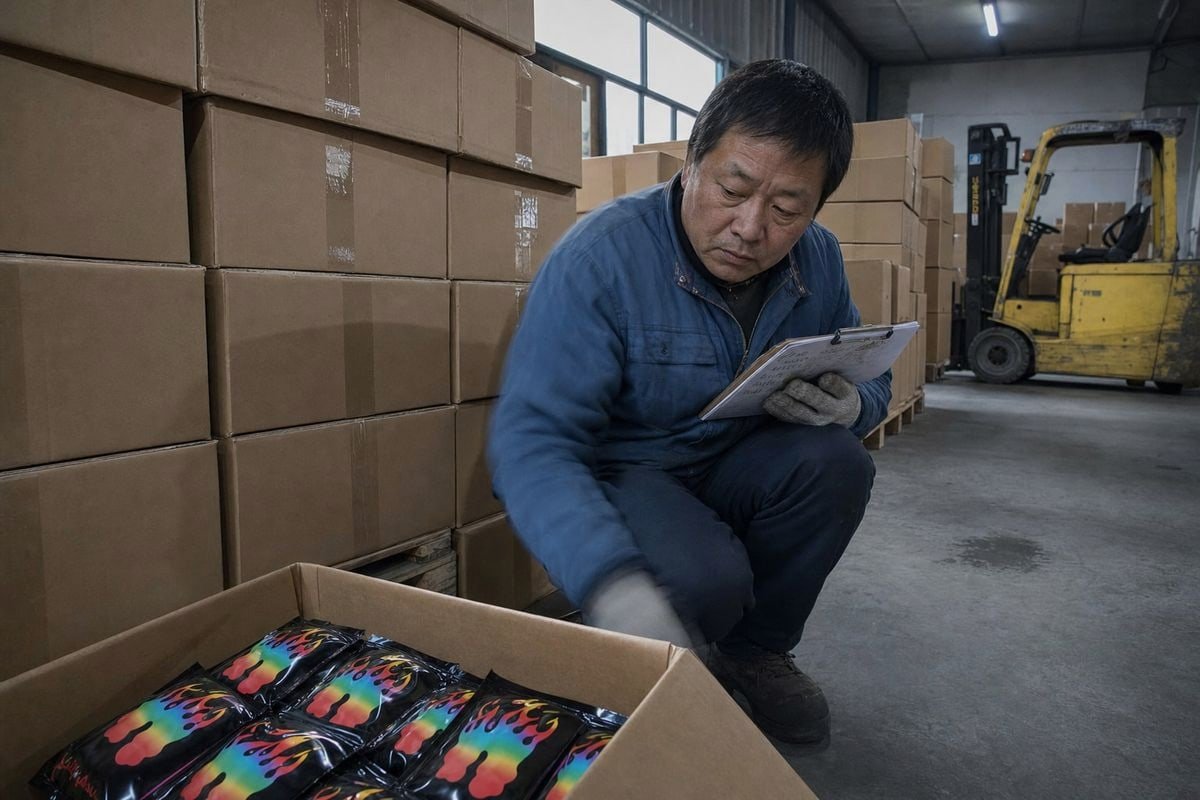
L'ensemble des documents se divise en trois groupes : documents de transaction, documents de transport et documents de sécurité des produits. Les agents des douanes vérifient les trois. Si un groupe est faible, votre expédition est bloquée.
La liste de contrôle des documents de base
| Document | Qui la prépare | Pourquoi les douanes le veulent |
|---|---|---|
| Facture commerciale | Fournisseur (vérifié par vous) | Confirme la valeur pour les droits de douane et les taxes d'importation |
| Liste de colisage | Fournisseur | Vérifie les cartons, les poids nets/bruts, les dimensions |
| Connaissement / Lettre de transport aérien | Transitaire | Lie la cargaison au dossier d'expédition |
| Contrat de vente | Les deux parties | Prouve les termes de la transaction dans le dossier de déclaration de la Chine |
| Formulaire de déclaration en douane | Importateur ou courtier | La déclaration d'importation légale formelle |
| Procuration | Importateur | Autorise votre courtier en douane à agir en votre nom |
| Certificat d’origine 2 | Fournisseur / chambre de commerce | Peut débloquer des taux tarifaires préférentiels |
| FDS / SDS | Fabricant | Indique la composition, la classe de danger, les données de manipulation |
| Certification de transport sécurisé | Institut de test chinois | Confirme le statut DG ou Non-DG pour le fret |
Pourquoi les poudres retiennent une attention particulière
Une poudre colorante à flamme se situe dans une zone grise. Les douanes peuvent la traiter comme un bien de consommation normal, un produit chimique ou un produit dangereux en fonction de sa composition. Nos sachets Magic Fire utilisent des formulations écologiques et non nocives, nous fournissons donc régulièrement le Fiche de données de sécurité des matériaux 3 et rapport de transport sécurisé qui prouve le statut Non-DG. Sans ces deux documents, un agent supposera le pire et dirigera votre conteneur vers l'inspection. Mon conseil : traitez l'expédition comme un article chimique réglementé jusqu'à ce que votre paperasse prouve le contraire. Cette mentalité seule empêche la plupart des blocages.
Confirmez également tôt qui assemble le dossier. Les fournisseurs fournissent les documents sources. Mais vous, l'importateur, restez légalement responsable de la déclaration. Nous donnons aux acheteurs un dossier complet avant que les marchandises ne partent, afin que leur courtier puisse pré-déclarer sans rien manquer.
Comment m'assurer que les certificats de conformité de mon fournisseur respectent la réglementation d'importation de mon pays ?
Un distributeur allemand m'a un jour demandé notre dossier complet de rapports de test avant de signer quoi que ce soit. Sage décision — son autorité douanière vérifie de près les importations d'additifs de flamme, et les certificats génériques n'auraient pas survécu à l'examen.
Demandez à votre fournisseur les rapports de test actuels ISO 9001, BSCI, CE et de tiers tels que SGS ou Intertek, puis vérifiez chaque numéro de certificat directement auprès de l'organisme émetteur. Croisez le nom et la composition du produit testé avec votre commande réelle et la réglementation chimique du pays de destination.

Les certificats ne sont utiles que s'ils correspondent à votre marché, à votre produit et à la date actuelle. J'ai vu des acheteurs accepter un beau PDF qui couvrait une formulation entièrement différente. Les douanes l'ont remarqué. L'acheteur a payé pour le retard.
Un processus de vérification en quatre étapes
- Confirmez que le certificat couvre votre produit exact. Une marque CE ou un rapport SGS pour une formulation ne couvre pas automatiquement un mélange de poudres différent, un format d'emballage ou une variante de parfum. Faites correspondre le nom du produit, le numéro de modèle et la composition ligne par ligne.
- Vérifiez l'authenticité auprès de l'émetteur. SGS, Intertek et BSCI permettent tous de vérifier les numéros de rapport. Cela prend dix minutes. Nous encourageons les acheteurs à le faire avec nos rapports car cela renforce rapidement la confiance.
- Mappez le certificat à vos règles de destination. Les États-Unis, l'UE, le Royaume-Uni et l'Australie réglementent différemment les produits chimiques de consommation. Un rapport de test axé sur l'UE peut ne pas répondre à une question d'étiquetage américaine. Demandez à votre courtier en douane quelles normes votre autorité frontalière vérifie réellement.
- Vérifiez les dates. Les certificats de conformité expirent. Un rapport d'audit d'il y a quatre ans ne dit rien aux douanes sur la ligne de production actuelle.
Ce qu'une vraie usine devrait remettre sans hésitation
Dans nos usines, le dossier de conformité est un matériel d'intégration standard, pas une négociation. Si un fournisseur hésite lorsque vous demandez la Fiche de Données de Sécurité des Matières en anglais, ou ne peut pas expliquer sa propre classification des dangers, c'est votre réponse. Les sociétés commerciales revendiquent souvent des biens qu'elles ne peuvent pas documenter. Une usine avec une profondeur de fabrication authentique peut retracer chaque lot jusqu'aux enregistrements d'entrée des matières premières, ce qui est exactement ce qu'une requête douanière exige.
Enfin, demandez si le fournisseur a déjà exporté sur votre marché spécifique. Un historique de dédouanement antérieur aux États-Unis ou en Allemagne signifie que le format du document a déjà survécu à un véritable examen frontalier.
Quels sont les plus grands retards douaniers à éviter lors de l'approvisionnement en produits color-flame depuis la Chine ?
La retenue la plus coûteuse que j'aie jamais aidé à démêler se résumait à trois mots. La facture disait "poudre magique", le connaissement disait "additif de feu", et la douane disait "inspection"."
Les retards les plus importants proviennent d'une inadéquation de la documentation, de descriptions de produits vagues, d'une classification erronée des codes SH, de sous-déclarations de valeurs, de l'absence de documents sur les marchandises dangereuses et des ralentissements saisonniers des exportations dans les centres pyrotechniques chinois. L'alignement de chaque document avant le départ en évite la quasi-totalité.
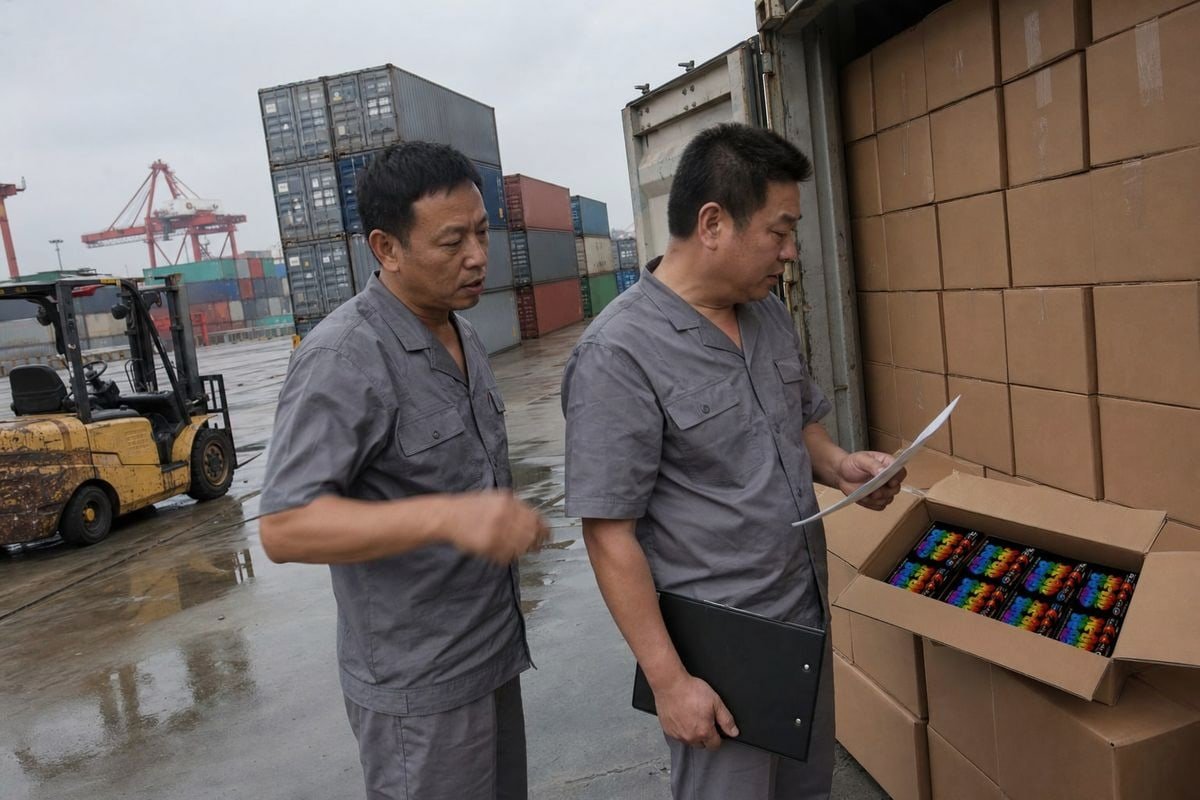
Voici une vérité que j'ai mis des années d'expérience à l'exportation à accepter pleinement : la douane n'arrête rarement une expédition parce qu'un formulaire manque. Elle arrête les expéditions parce que les formulaires ne concordent pas entre eux. Le travail d'un agent est de vérifier la cohérence. Donnez-leur une contradiction, et ils doivent creuser plus profondément.
Les cinq pièges à retards, classés par fréquence
| Piège à retard | Qu'est-ce qui le déclenche | Comment le prévenir |
|---|---|---|
| Incohérence des documents | Noms, quantités ou valeurs différents sur la facture, la liste de colisage et le connaissement | Une personne vérifie tous les documents avant l'expédition |
| Description vague | "Poudre magique de feu" sans détails techniques | Indiquez ce que c'est, sa composition et son utilisation |
| Code SH incorrect | Deviner la position tarifaire | Confirmez par écrit avec votre courtier et votre transitaire |
| Manque de documentation DG | Pas de rapport de transport sécurisé ou Déclaration de marchandises dangereuses 4 lorsque requis | Testez la formulation et classez avant de réserver le fret |
| Valeur sous-déclarée | Valeur de la facture inférieure aux normes du marché | Déclarez honnêtement ; les faibles valeurs invitent à l'audit, pas aux économies |
Le facteur saisonnier que la plupart des acheteurs manquent
Les centres de production comme Liuyang sont confrontés à des mesures de répression environnementales périodiques et à des interdictions de sécurité incendie, surtout avant les grandes fêtes. Le traitement des documents d'exportation peut être gelé sans préavis. Parce que notre siège social est à Liuyang avec une production à Ningbo, nous prévoyons un temps tampon dans chaque commande de pointe et disons honnêtement aux acheteurs quand un ralentissement régional arrive. Prévoyez deux à trois semaines supplémentaires pour les commandes du quatrième trimestre. C'est moins cher que d'expédier des remplacements par avion.
Un autre point sur le mode de transport. Le fret maritime selon les Code IMDG 5 et le fret aérien selon les règles de l'IATA appliquent des seuils différents. Une poudre qui s'expédie facilement par mer peut être rejetée à un terminal de fret aérien. Décidez d'abord du mode, puis construisez le dossier documentaire autour.
Comment puis-je vérifier que mon envoi de poudre magique de feu est correctement étiqueté et classé pour les douanes ?
Avant que tout conteneur ne quitte notre chaîne de Ningbo, notre équipe de contrôle qualité photographie les marques d'expédition, les étiquettes d'avertissement et les codes-barres sur chaque style de carton. Cette habitude a commencé après qu'une facture de re-étiquetage d'un acheteur nous ait donné une leçon à tous les deux.
Vérifiez la classification en confirmant le code SH auprès de votre courtier en douane, en vérifiant que la FDS indique le bon numéro UN et le bon état de danger, et en comparant les étiquettes des cartons — marquage d'origine, texte d'avertissement, codes-barres — à la déclaration. Une inspection avant expédition par un tiers confirme que tout correspond physiquement aux documents.

La classification et l'étiquetage sont deux faces d'une même médaille. La classification du code SH 6 indique à la douane quel droit s'applique. Les étiquettes physiques indiquent à l'agent d'inspection si la cargaison correspond à cette déclaration. Les deux doivent concorder.
Classification : obtenez-la par écrit
Les additifs colorés à flamme peuvent relever de différentes positions tarifaires selon la formulation — certains acheteurs supposent les pyrotechniques du Chapitre 36, tandis que les mélanges de sels minéraux non pyrotechniques se classent ailleurs. La différence modifie vos droits et taxes à l'importation, vos exigences en matière de permis, et même si une déclaration de marchandises dangereuses s'applique. Demandez à votre courtier un avis de classification écrit, et partagez la FDS et la fiche de composition afin que l'avis repose sur des faits, et non sur le nom marketing. Si la poudre est Non-DG, obtenez la certification de transport sécurisé d'un institut chinois reconnu afin que le transporteur et la douane voient une preuve indépendante.
Étiquetage : la liste de contrôle physique
| Élément d'étiquette | Ce qu'il faut vérifier |
|---|---|
| Symboles de danger et texte prescrit de Santé Canada | "Fabriqué en Chine" présent et lisible sur les cartons de détail et d'exportation |
| Texte d'avertissement | Mention irritante ou d'avertissement dans la langue du marché de destination |
| Codes-barres | Correspondre à votre liste de vente au détail et aux codes des articles de la liste de colisage |
| Étiquettes de danger | Présentes uniquement si classées DG ; absentes si certifiées Non-DG |
| Marques d'expédition | Les numéros de carton correspondent à la séquence de la liste de colisage |
La sauvegarde finale
A inspection pré-expédition par un tiers boucle la boucle. L'inspecteur confirme que les marchandises physiques, les étiquettes et la composition déclarée concordent tous — ce qui évite la saisie pour fausse déclaration. Pour les commandes sous marque privée, nous pré-approuvons également le fichier artistique avec l'équipe de conformité de l'acheteur, de sorte que les étiquettes d'avertissement et les codes-barres soient corrects avant l'impression, et non après l'arrivée. Prêt pour l'étalage signifie prêt pour la douane.
Conclusion
Les documents de dédouanement échouent par incohérence, pas par absence. Confirmez le code SH, sécurisez la FDS et les certificats, alignez chaque document et collaborez avec une usine dont la paperasse a déjà traversé les frontières.
Notes de bas de page
Ressource gouvernementale faisant autorité du NIST expliquant l'ISO 9001 et les systèmes de gestion de la qualité. ↩︎
Explique le document commercial qui établit l'origine du produit à des fins tarifaires. ↩︎
Ressource du CDC/NIOSH expliquant le but et le contenu des fiches de données de sécurité. ↩︎
Explique la classification des marchandises dangereuses pertinente pour les exigences de documentation d'expédition. ↩︎
Contexte sur le code international régissant les marchandises dangereuses expédiées par voie maritime. ↩︎
Ressource de l'OMC expliquant le Système Harmonisé utilisé pour la classification tarifaire. ↩︎
Contexte sur le système de numérotation de l'ONU utilisé pour identifier les matières dangereuses dans le transport. ↩︎

 English
  Spanish
  German
  French
  Arabic
  Portuguese
Rejoignez la conversation