







GPSR manufacturer duties catch many private-label brands off guard. On our color-flame pinecone lines, we watched buyers lose whole EU launches because nobody owned compliance early enough.
To meet GPSR manufacturer duties for private-label fireplace pine cones, the brand owner must act as the legal manufacturer: perform a documented risk assessment, keep a technical file for 10 years, label traceability details, and appoint an EU Responsible Person if the brand is based outside the EU.
Below, I break down each duty, explain how to appoint your Responsible Person, and show which documents your factory must hand you. Let's start with the legal basics.
What GPSR manufacturer duties should I understand before importing private-label fireplace pine cones into the EU?
A German distributor once told me his customs broker held a container because the pinecone bags carried no manufacturer address. That single missing line cost him six weeks of shelf time.
Under GPSR, a private-label seller is the manufacturer if the product carries its brand. Duties include ensuring general product safety, running an internal risk assessment, preparing technical documentation, labeling name, postal and electronic addresses, providing batch traceability, and adding clear safety instructions in local languages.
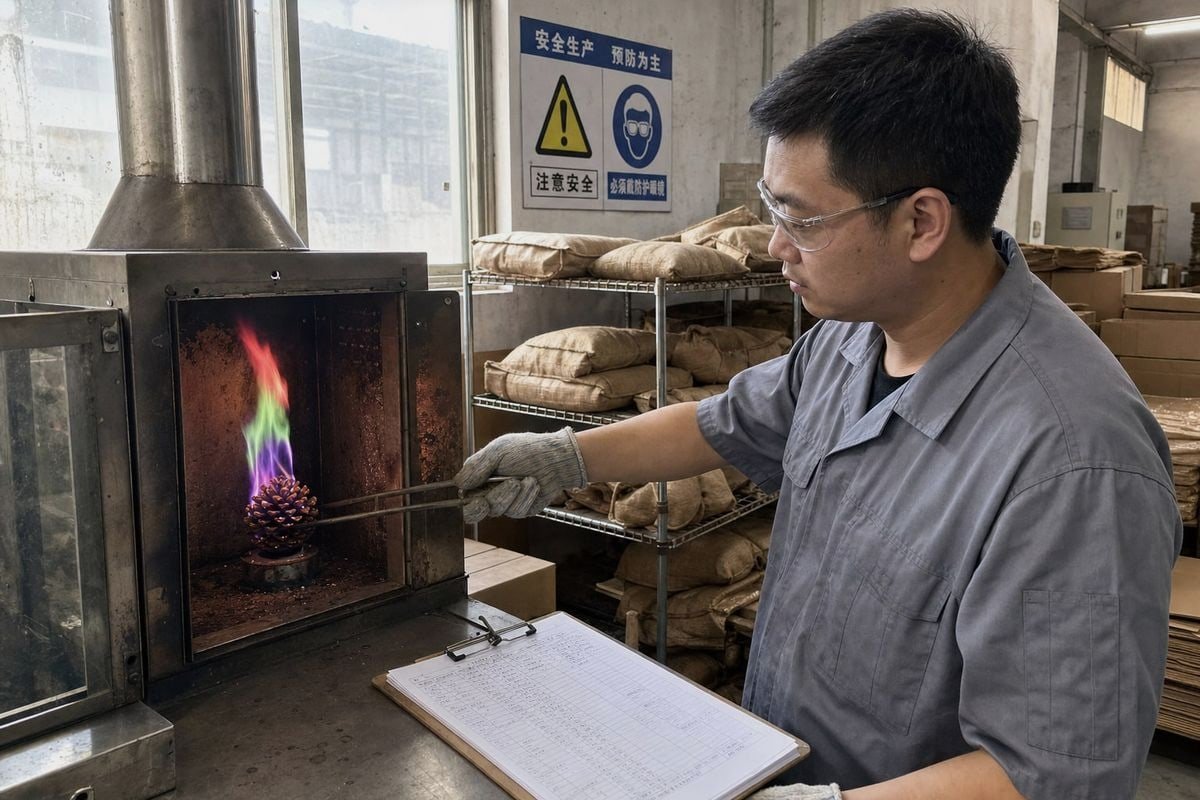
GPSR is EU Regulation 2023/988 1. It took effect on December 13, 2024, replacing the old General Product Safety Directive 2. It covers all consumer products placed on the EU market, and yes, that includes decorative and color-flame fireplace pine cones. There is no exemption for "simple" products.
Here is the point that surprises most of our buyers: private label does not mean compliance-light. If the pinecones sell under your name or trademark, you are the manufacturer for GPSR purposes. The factory that physically made them — even a certified one like ours — does not carry your legal duties. We supply the test reports and production data, but the brand owner signs off on the market.
The core duties at a glance
| GPSR Duty | What It Means for Fireplace Pine Cones |
|---|---|
| General safety requirement | The product must be safe under normal and foreseeable use, including misuse near open flame |
| Internal risk assessment | Documented analysis of ignition, سلوك الاحتراق 3, chemical residues, and choking risks |
| الوثائق الفنية | A file describing the product and its safety-relevant characteristics, kept for 10 years |
| التتبع | Batch, lot, or type number visible to consumers |
| Contact details | Manufacturer name or trademark, postal address, and electronic address on the product or packaging |
| Safety information | Warnings and instructions in the language of each member state where you sell |
| Corrective action readiness | A plan to withdraw, recall, notify authorities, and inform consumers if a risk emerges |
One nuance matters for fire products. Because our pinecones create colored flames, EU authorities look closely at combustion behavior and consumer instructions. A candle holder can get away with thin documentation. A fireplace product cannot. In our seventeen-plus years exporting to Germany, France, and the Netherlands, we have learned that fire-category goods draw more surveillance attention, not less. Build your file accordingly.
How do I appoint an EU Responsible Person for my fireplace pine cone product line?
When we help US and Canadian brands prepare EU launches from our Ningbo facility, the Responsible Person question comes up in almost every kickoff call — usually far too late.
Appoint an EU Responsible Person by contracting an EU-established economic operator — an importer, authorised representative, distributor, or fulfilment provider — who can access your technical file, verify it, and cooperate with authorities. Then print their name, postal address, and email on the product, packaging, or accompanying documents.

If your business is established inside the EU, you may serve as your own Responsible Person. If you sell from the US, UK, China, or anywhere outside the EU, you must appoint one before your pinecones can legally reach EU consumers. Marketplaces enforce this too — Amazon will block listings without valid Responsible Person details.
You have several legal options, and the right choice depends on your supply chain shape.
Who can act as your Responsible Person?
| خيار | الأفضل لـ | احذر من |
|---|---|---|
| Your EU importer | Brands with one strong distribution partner per market | The importer controls your compliance status; changing partners gets messy |
| Authorised representative (service provider) | Non-EU brands selling direct or via marketplaces | Annual retainer fees plus document review costs; check liability caps |
| EU-based distributor | Simple single-country setups | May lack processes for authority requests |
| مزود خدمة التنفيذ | FBA-style logistics models | Verify they actually accept the role in writing |
Three practical points from our export work. First, the Responsible Person does not replace your manufacturer duties. They are a contact point and verifier, not a shield. Second, before signing with a third-party service provider, clarify their incident-response SLA and liability terms — a Responsible Person can be involved in market withdrawal decisions, so a slow one is a real business risk. Third, ask whether your factory can fill the role. Ours cannot, and neither can most: the Responsible Person must be established in the EU. A China-based or US-based entity simply does not qualify, no matter how well certified.
Once appointed, update everything: packaging artwork, parcel labels, product listings, and marketplace backend fields. Mismatched details trigger delisting on Pan-EU fulfillment programs.
What documentation and test reports do I need from my manufacturer to prove GPSR compliance?
Every trial order we ship — even small MOQ runs of color-flame pinecones — leaves with the same document pack, because we learned years ago that missing paperwork kills reorders faster than any quality issue.
You need a written risk assessment, third-party test reports covering combustion and chemical safety, material and colorant declarations, batch traceability records, label artwork with warnings, and product specifications. Together these form the technical file GPSR requires you to keep for 10 years.
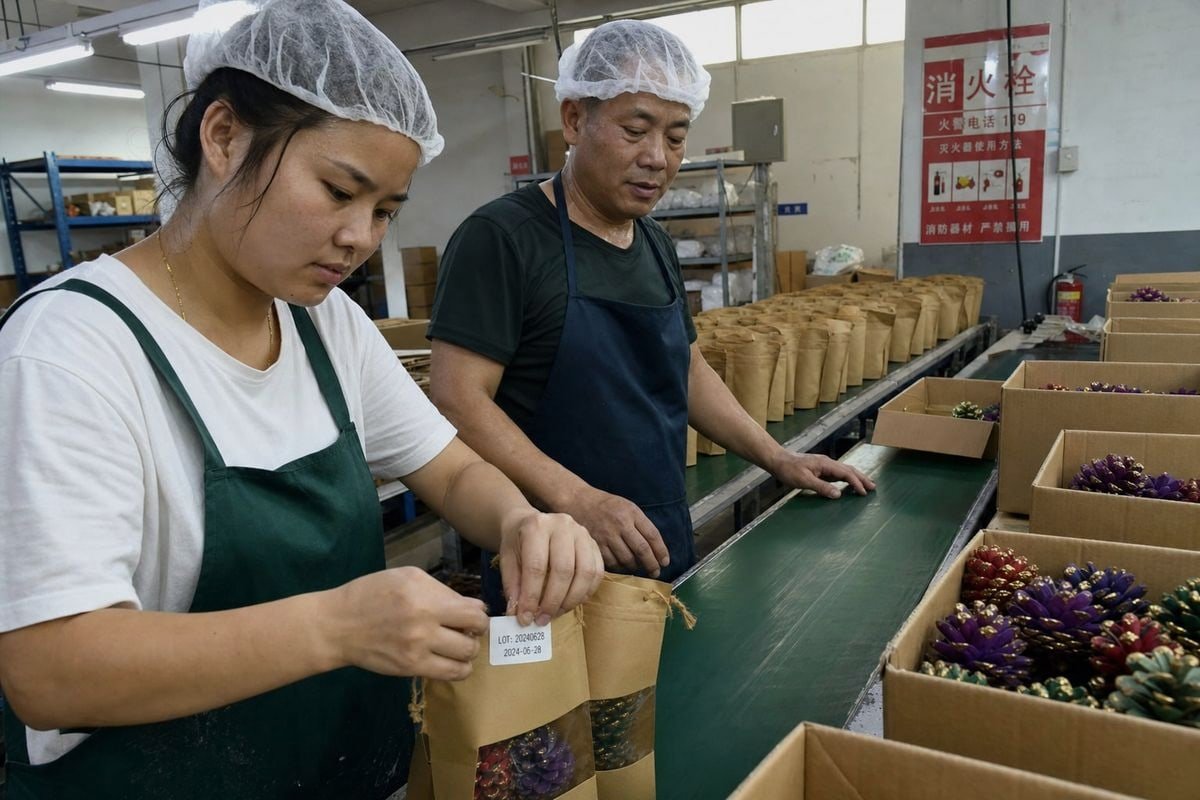
Your factory cannot do your GPSR homework for you, but a serious one should hand you most of the raw material. Here is the pack we prepare for our B2B buyers, and what each piece does inside your technical file.
The document checklist to demand before wiring your deposit
| وثيقة | Why GPSR Needs It | من يقدمها |
|---|---|---|
| Risk assessment inputs | Foundation of your internal risk analysis | Factory data plus your own assessment |
| أكواز زخرفية مقابل أكواز وظيفية - قرر أولاً | Independent proof of combustion and chemical safety | Factory (verify report dates and scope) |
| Material and colorant declarations | Flame-color additives may trigger REACH chemical checks | المصنع |
| Batch/lot traceability records | Links each shipped carton to a production run | المصنع |
| أعمال فنية للملصقات والتعبئة | Shows warnings, addresses, and identifiers as sold | Joint — you approve, factory prints |
| Instructions and warnings text | Proof of safety information in local languages | You draft, factory applies |
| Factory certifications (ISO 9001, BSCI, CE) | Supports due diligence and quality consistency | المصنع |
Two hidden triggers deserve attention. First, the colorants and wax used for flame-color effects can fall under REACH restrictions 4. This sits beyond standard GPSR checks, so ask your supplier directly for chemical safety documentation 5 on the flame-coloring compounds. Our formulations use eco-friendly materials with no harmful chemicals, and we back that with third-party reports — but you should demand the same evidence from any supplier, including us. Second, verify that the test report matches your exact product configuration. A report for a kraft-bag packet does not automatically cover painted decorative cones or a resealable pouch format.
Finally, confirm your Responsible Person can access this file quickly. GPSR expects them to verify it exists and produce documentation when a market surveillance authority 6 asks.
How can I ensure my private-label fireplace pine cones stay compliant across multiple EU markets?
A Dutch buyer of ours once expanded from the Netherlands into Poland and France within one quarter — and discovered his single-language warning label instantly became a three-market problem.
Stay compliant across EU markets by translating safety warnings into every local language, aligning labels and listings with one master technical file, prioritizing your highest-volume country's enforcement rules, keeping batch traceability consistent, and maintaining a recall procedure your Responsible Person can execute in any member state.
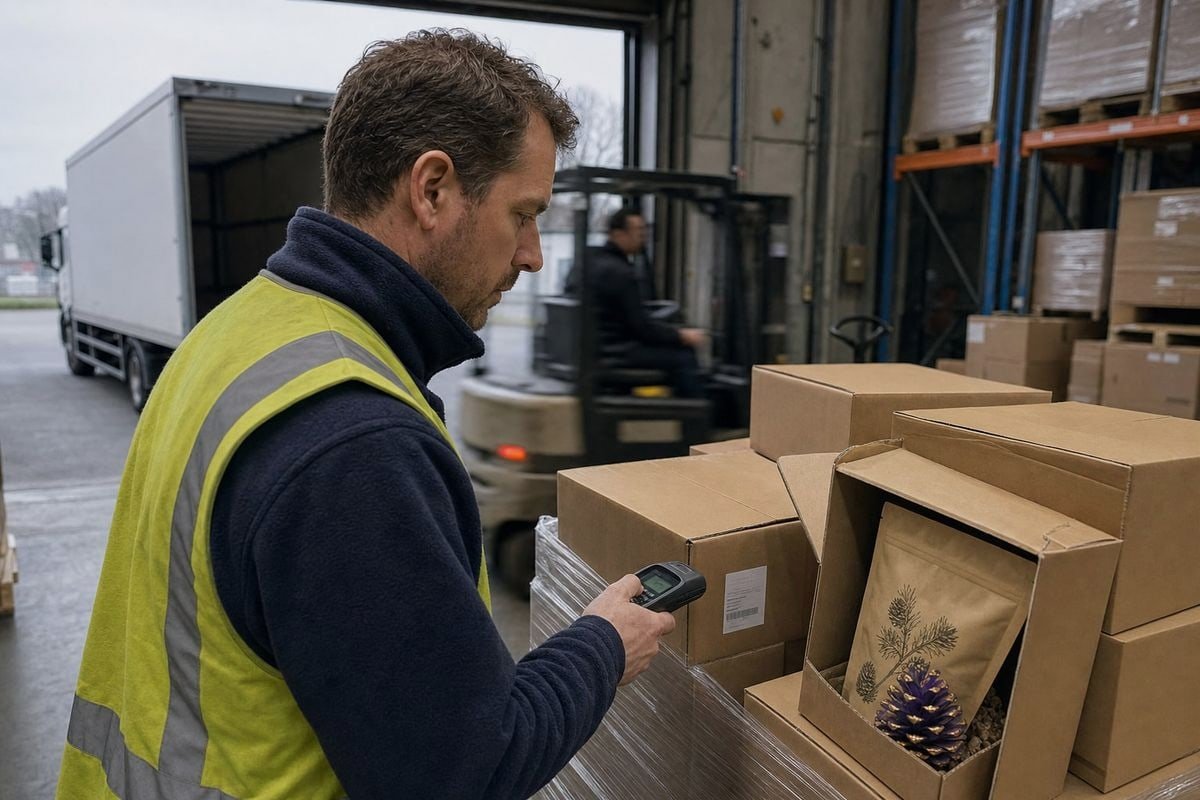
GPSR is one regulation, but enforcement is national. Penalties vary widely by member state — some impose turnover-based fines reaching up to 4% of annual EU revenue. That is why we advise buyers to identify their primary sales-volume country first and align tightly with that country's surveillance authority before scaling outward. Germany's approach differs from Poland's in practice, even under the same regulation.
A practical multi-market workflow
- Build one master technical file. Never create separate files per country. One file, one risk assessment, one set of test reports — with language annexes added per market.
- Localize the safety text. "Fireplace and fire pit use only," "ensure ventilation," and "keep away from children" must appear in the language of each member state where you sell. We print multilingual warning panels for our EU clients for exactly this reason.
- Lock batch traceability across warehouses. If inventory moves between fulfillment centers in Germany, France, and Poland, the lot number on each pouch must trace back to a single production record. Our lines assign batch codes at filling, so a cone pulled from any EU warehouse maps back to raw-material data.
- Keep listings synchronized. Responsible Person and manufacturer details must match across packaging, parcels, and every marketplace backend. Mismatches trigger automated delisting on Pan-EU programs.
- Rehearse the recall path. Decide in advance who notifies authorities through the Safety Business Gateway 7, who contacts consumers, and who pulls stock. Doing this before launch costs an afternoon. Doing it during an incident costs your brand.
Consistency is the whole game. When your first sample, your mass-production batch, and your documentation all tell the same story, multi-market compliance stops being a scramble and becomes routine. That batch-to-batch discipline is exactly why we run strict QC between sample and production — the paperwork only holds if the product behind it never drifts.
خاتمة
Private label makes you the GPSR manufacturer. Build one technical file, appoint an EU Responsible Person, demand real test reports, and partner with a factory that ships compliance alongside product.
ملاحظات ختامية
1. Official EU legal text defining the General Product Safety Regulation referenced throughout the article. ↩︎
2. Prior EU directive that GPSR replaced, giving readers legal background context. ↩︎
3. Background on the combustion process relevant to fire-safety testing discussion. ↩︎
4. ECHA's official explanation of REACH chemical regulation relevant to flame-color additives. ↩︎
5. ECHA guidance on chemical safety documentation required under REACH for additives. ↩︎
6. EU resource explaining national market surveillance enforcement mentioned in the article. ↩︎
7. Official EU portal businesses use to notify authorities of unsafe product incidents. ↩︎



 English
  Spanish
  German
  French
  Arabic
  Portuguese
انضم إلى المحادثة