







Asking suppliers for usage instructions for fireplace colored pine cones seems simple, until a vague answer arrives. On our production line, we see how often buyers get burned by missing documentation.
To ask suppliers for usage instructions for fireplace colored pine cones, request the SDS, fireplace compatibility statement, cones-per-use limit, burn duration, placement guidance, ventilation requirements, and restricted-use warnings in writing. Then verify these against sample packaging and third-party test reports before ordering.
That is the short version. Below, I break down each request into exact questions, documents, and checkpoints. Use them in your next supplier email and you will avoid most sourcing mistakes.
What certifications should I request to confirm the pinecones are safe for indoor fireplace use?
Last spring, a German distributor emailed our factory asking one blunt question before anything else: "Show me the test reports." That instinct was correct, and I respect it.
Request an SGS or Intertek test report, a Material Safety Data Sheet listing all chemical flame colorants, ISO 9001 factory certification, CE marking where applicable, and a Certificate of Analysis for batch consistency. Together, these confirm the pinecones are safe for indoor fireplace use.

Certifications are the foundation of every other instruction. If a supplier cannot document what is inside the product, their usage directions are guesses, not guidance. In our 17+ years exporting fire-themed products to more than 30 countries, buyers who skip this step almost always circle back with compliance problems later.
المستندات الأساسية وما يثبته كل منها
| وثيقة | ما تثبته | Why it matters for indoor use |
|---|---|---|
| SDS (صحيفة بيانات السلامة) | Identifies chemical flame colorants, such as كبريتات النحاس 1 additives | Confirms no toxic fume emission risk indoors |
| تقرير SGS / Intertek | Independent lab verification of product safety specifications | دليل من طرف ثالث، وليس ادعاءات المورد |
| ISO 9001 | نظام إدارة جودة المصنع | Batch-to-batch consistency in coating levels |
| BSCI | Ethical audit of the production site | Required by many US and EU retail channels |
| CoA (Certificate of Analysis) | Colorant-to-cone weight ratio per batch | Prevents over-treated batches reaching shelves |
How to phrase the request
Do not ask "Is it safe?" Every supplier says yes. Instead, ask: "Please send your current SDS and your most recent third-party test report 2 for this exact SKU." Specific requests filter serious factories from trading companies quickly. Our compliance file — ISO 9001, BSCI, CE, and SGS/Intertek reports — sits ready for buyers precisely because this is a hard requirement in our markets, not a nice-to-have.
Also ask whether the reports match the batch you will receive. A report from three years ago on a different formula tells you nothing about today's bulk chemical treatment process. Insist on current documentation tied to the product you are actually buying.
How do I get clear burn time and usage instructions I can pass on to my customers?
One trade-off we weigh constantly at our Ningbo facility is coating thickness: heavier treatment extends the color effect but changes burn behavior. Your customers need numbers that reflect that exact balance.
Ask the supplier for a Technical Data Sheet stating color-burn duration per cone, the recommended number of cones per use, placement timing on established coals, and restricted fire types. Request this in customer-ready language you can print directly on retail packaging.

Generic online advice varies wildly, so supplier-specific instructions must override it. Some products burn with color for 10–12 minutes when 2–3 cones are used; others behave differently because the formula differs. Never copy instructions from a competitor's listing onto your own product. The chemistry may not match, and the liability lands on you.
The exact questions to send
- How many cones should be used at one time, and what is the color-burn duration per unit?
- Should cones be placed on kindling, hot coals, or open flames? Most color products are designed for established hot coals, not the ignition phase.
- Is this a decorative effect only, or does it also function as a fire starter? These are separate product categories, and mixing them up confuses customers.
- Are there ventilation requirements 4 for indoor use?
- Can different colors be burned together, or should each color burn separately?
- What are the wood stove compatibility limits, if any?
Turn answers into shelf-ready copy
A serious factory should hand you usage text you can adapt for عبوات العلامة الخاصة بك 5. When we develop OEM instructions with buyers, we test the stated burn time against actual production batches, because a TDS number that fails in a customer's living room becomes a one-star review. Ask your supplier how they verified their burn duration claim. If the answer is vague, request a video of an actual burn test using cones from a recent batch. Also confirm timing guidance: many products show their brightest colors when added to a fire that has burned down to coals or low flame, and your instructions should say so plainly.
What packaging and warning label details should I ask suppliers to include for compliance?
A US buyer once returned our first packaging proof with a single note: "Where is the gas fireplace exclusion?" That correction taught our design team how carefully retail channels audit warning labels.
Ask suppliers to include wood-burning-only warnings, exclusions for gas logs and cooking fires, cones-per-use limits, child-safety and storage notices, ingredient disclosure, ash disposal guidance, and market-specific hazard symbols. Confirm the label meets your destination country's retail compliance rules before printing.

Packaging is where compliance becomes visible to regulators, retailers, and customers. In our experience supplying wholesale hearth products to Home Depot-type sourcing channels, incomplete labels are the single most common reason shipments get rejected at the retail audit stage, not product quality itself.
Warning label checklist to send your supplier
| عنصر الملصق | What it must state | Why retailers check it |
|---|---|---|
| Fire type restriction | Wood-burning fireplaces and fire pits only; not for gas logs, ethanol, or electric inserts | Prevents equipment damage claims |
| Cooking exclusion | Never use on BBQ grills or cooking fires | Chemical residue is not food-safe |
| Quantity limit | Maximum cones per burn session | Controls flame size and toxic fume emission risk |
| Ventilation note | Use in properly vented fireplaces | Protects indoor air quality |
| إرشادات التخزين | Keep dry, sealed, away from children | Chemical coatings are hygroscopic and degrade in humidity |
| التخلص من الرماد | Whether residual ash needs special handling | Some colorant residues affect disposal rules |
Regional differences matter
US, EU, and UK labeling expectations differ. Ask your supplier directly: "Have you produced compliant labels for my market before?" As part of our one-stop OEM service, we prepare custom warning labels, barcodes, and display packaging for each destination, because a label that passes in Poland may fail in California. Also request that the label warn against repeated heavy use in one fireplace, since some buyers worry about تراكم الكريوزوت 6 and residue on mortar over time. Addressing that concern on-pack builds trust and reduces support emails.
How can I request sample usage guides before placing a bulk order?
Trial orders teach lessons that spec sheets cannot. When buyers evaluate our color-flame pinecones, the sample stage is where usage documentation gets stress-tested, and I encourage them to push hard here.
Request a physical sample pack with its printed usage guide, the draft retail insert, the SDS, and burn-test instructions. Test the sample yourself, compare real burn time against the stated figures, and confirm the supplier will match this documentation in mass production.
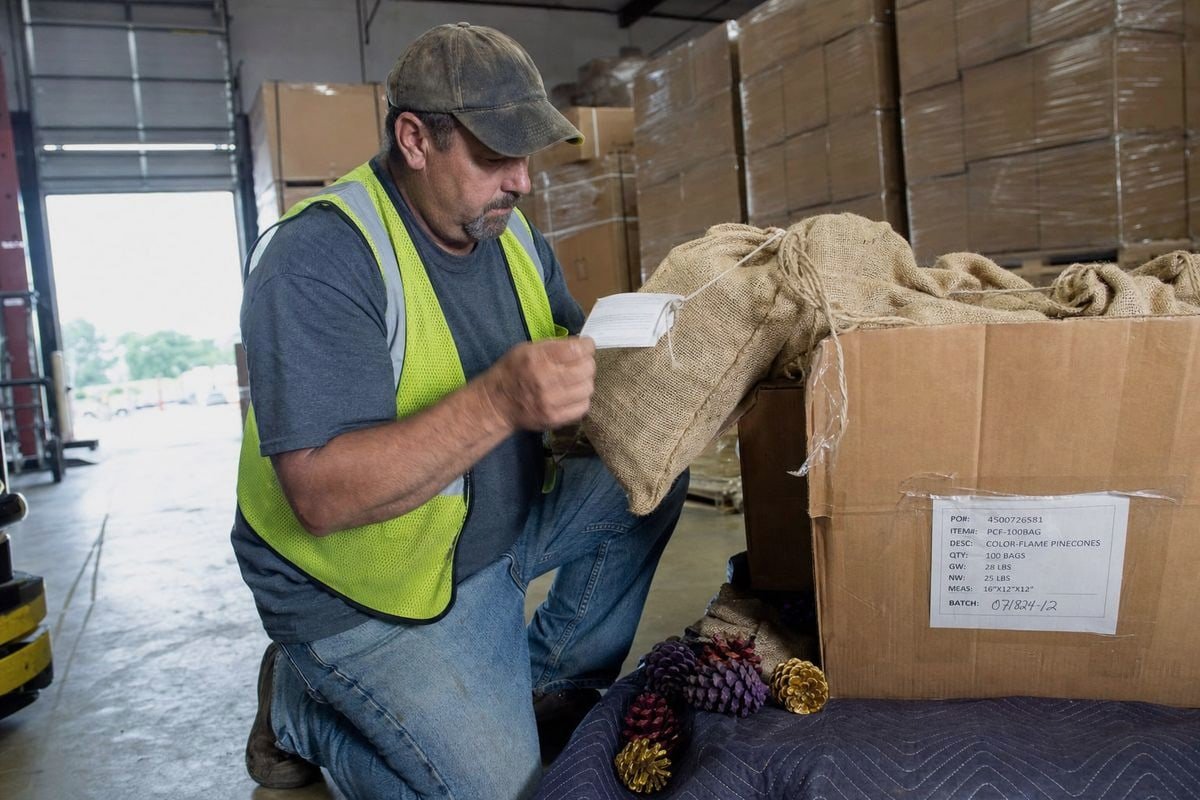
A sample without documentation is only half a sample. The paperwork traveling with those cones tells you how the supplier will support your brand after you commit to a container. This is also your best chance to catch red flags before money moves.
A step-by-step sample request process
- Ask for a retail-ready sample, not loose cones in a plain bag. You want the drawstring pouch, resealable stand-up bag, or jar exactly as it would ship.
- Request the draft usage insert in English. Check it for the fire-type restriction, quantity limit, placement timing, and ventilation requirements.
- Run your own burn test. Use the stated number of cones on established coals in a wood-burning unit. Time the color effect and compare it to the TDS.
- Check storage behavior. Leave a few cones in a humid room for a week; a hygroscopic coating stored badly can lose flame color intensity, and the guide should warn about this.
- Confirm production consistency in writing. Ask: "Will bulk production match this sample and this documentation exactly?"
What a strong supplier response looks like
| إشارة | Weak supplier | Strong supplier |
|---|---|---|
| Sample documentation | Cones only, no papers | Full usage guide, SDS, and label proof |
| Burn time claim | "About 10 minutes, roughly" | Stated duration with test method |
| التخصيص | "We only have this version" | Adjustable burn time, packaging, and private-label options |
| مرونة الحد الأدنى للطلب | Rigid container quantities | Trial-order quantities for market testing |
Because our factory runs complete production lines with strict batch-to-batch مراقبة الجودة 7, we tell buyers plainly: the first sample reflects mass-production quality, and the usage guide shipped with it is the one your customers will read. Any supplier in fireplace accessory sourcing should be willing to make the same commitment in writing. If they hesitate, keep looking.
خاتمة
Vague instructions create real risk: rejected shipments, returns, and liability. Demand the SDS, TDS, compliant warning labels, and documented samples upfront, and your fireplace colored pine cones will reach shelves safe, compliant, and ready to sell.
ملاحظات ختامية
1. Authoritative chemical data source for the flame colorant compound mentioned in safety documentation. ↩︎
2. Explains independent verification processes referenced when requesting supplier test documentation. ↩︎
3. EPA resource on indoor air quality relevant to fireplace emissions and ventilation safety concerns. ↩︎
4. OSHA guidance on ventilation standards supports the article's indoor safety questions for suppliers. ↩︎
5. Background concept on private-label products relevant to OEM packaging instructions discussed here. ↩︎
6. EPA Burn Wise program addresses creosote and safe wood-burning practices mentioned in the article. ↩︎
7. Explains the quality control concept referenced for batch-to-batch production consistency claims. ↩︎



 English
  Spanish
  German
  French
  Arabic
  Portuguese
انضم إلى المحادثة