







Demander aux fournisseurs des instructions d'utilisation pour des pommes de pin colorées pour cheminée semble simple, jusqu'à ce qu'une réponse vague arrive. Sur notre chaîne de production, nous constatons à quelle fréquence les acheteurs se brûlent les doigts à cause de la documentation manquante.
Pour demander aux fournisseurs des instructions d'utilisation pour des pommes de pin colorées pour cheminée, demandez par écrit la FDS, la déclaration de compatibilité avec la cheminée, la limite de pommes de pin par utilisation, la durée de combustion, les conseils de placement, les exigences de ventilation et les avertissements d'utilisation restreinte. Vérifiez ensuite ceux-ci par rapport à un échantillon d'emballage et aux rapports de test de tiers avant de commander.
C'est la version courte. Ci-dessous, je décompose chaque demande en questions exactes, documents et points de contrôle. Utilisez-les dans votre prochain e-mail à votre fournisseur et vous éviterez la plupart des erreurs d'approvisionnement.
Quelles certifications devrais-je demander pour confirmer que les pommes de pin sont sûres pour une utilisation en intérieur dans une cheminée ?
Au printemps dernier, un distributeur allemand a envoyé un e-mail à notre usine en posant une question directe avant toute autre chose : " Montrez-moi les rapports de test. " Cet instinct était correct, et je le respecte.
Demandez un rapport de test SGS ou Intertek, une Fiche de Données de Sécurité des Substances (FDS) répertoriant tous les colorants ignifuges chimiques, la certification d'usine ISO 9001, le marquage CE le cas échéant, et un Certificat d'Analyse pour la cohérence des lots. Ensemble, ceux-ci confirment que les pommes de pin sont sûres pour une utilisation dans les cheminées intérieures.

Les certifications sont le fondement de toutes les autres instructions. Si un fournisseur ne peut pas documenter ce qu'il y a dans le produit, ses instructions d'utilisation sont des suppositions, pas des conseils. Au cours de nos 17 années d'exportation de produits sur le thème du feu vers plus de 30 pays, les acheteurs qui sautent cette étape reviennent presque toujours avec des problèmes de conformité plus tard.
Les documents clés et ce que chacun prouve
| Document | Ce qu'elle prouve | Pourquoi c'est important pour une utilisation en intérieur |
|---|---|---|
| FDS (Fiche de Données de Sécurité) | Identifie les colorants chimiques pour flammes, tels que sulfate de cuivre 1 additifs | Confirme l'absence de risque d'émission de fumées toxiques en intérieur |
| Rapport SGS / Intertek | Vérification indépendante par laboratoire des spécifications de sécurité du produit | Preuve par des tiers, pas des affirmations du fournisseur |
| ISO 9001 | Système de gestion de la qualité de l'usine | Cohérence lot par lot dans les niveaux de revêtement |
| BSCI | Audit éthique du site de production | Requis par de nombreux canaux de vente au détail américains et européens |
| CoA (Certificat d'Analyse) | Rapport poids colorant/pomme de pin par lot | Empêche les lots sur-traités d'atteindre les étagères |
Comment formuler la demande
Ne demandez pas " Est-ce sûr ? " Tous les fournisseurs disent oui. Demandez plutôt : " Veuillez envoyer votre FDS actuelle et votre rapport de test le plus récent par un tiers 2 pour ce SKU exact. " Les demandes spécifiques filtrent rapidement les usines sérieuses des sociétés commerciales. Notre dossier de conformité — rapports ISO 9001, BSCI, CE et SGS/Intertek — est prêt pour les acheteurs précisément parce que c'est une exigence stricte sur nos marchés, pas un « plus » apprécié.
Demandez également si les rapports correspondent au lot que vous recevrez. Un rapport datant de trois ans sur une formule différente ne vous dit rien sur le processus de traitement chimique en vrac d'aujourd'hui. Insistez sur une documentation actuelle liée au produit que vous achetez réellement.
Comment obtenir des instructions claires sur le temps de combustion et l'utilisation que je peux transmettre à mes clients ?
Un compromis que nous évaluons constamment dans notre usine de Ningbo est l'épaisseur du revêtement : un traitement plus lourd prolonge l'effet de couleur mais modifie le comportement de combustion. Vos clients ont besoin de chiffres qui reflètent cet équilibre exact.
Demandez au fournisseur une fiche technique indiquant la durée de combustion par cône pour la couleur, le nombre recommandé de cônes par utilisation, le moment du placement sur les charbons établis et les types de feu restreints. Demandez cela dans un langage prêt à l'emploi que vous pouvez imprimer directement sur l'emballage de détail.

Les conseils génériques en ligne varient considérablement, les instructions spécifiques au fournisseur doivent donc les remplacer. Certains produits brûlent avec de la couleur pendant 10 à 12 minutes lorsque 2 à 3 cônes sont utilisés ; d'autres se comportent différemment car la formule diffère. Ne copiez jamais les instructions d'une fiche produit d'un concurrent sur votre propre produit. La chimie peut ne pas correspondre, et la responsabilité vous incombe.
Les questions exactes à envoyer
- Combien de cônes doivent être utilisés à la fois, et quelle est la durée de combustion colorée par unité ?
- Les cônes doivent-ils être placés sur du petit bois, des braises chaudes ou des flammes nues ? La plupart des produits colorés sont conçus pour des braises chaudes établies, pas pour la phase d'allumage.
- Est-ce un effet décoratif uniquement, ou fonctionne-t-il également comme allume-feu ? Ce sont des catégories de produits distinctes, et les mélanger confond les clients.
- Existe-t-il des exigences de ventilation 4 pour une utilisation en intérieur ?
- Peut-on brûler différentes couleurs ensemble, ou chaque couleur doit-elle brûler séparément ?
- Quelles sont les limites de compatibilité avec les poêles à bois, le cas échéant ?
Transformez les réponses en contenu prêt pour l'étagère
Une usine sérieuse devrait vous fournir un texte d'utilisation que vous pouvez adapter pour des emballages de marque privée 5. Lorsque nous développons des instructions OEM avec des acheteurs, nous testons le temps de combustion indiqué par rapport aux lots de production réels, car un chiffre de TDS qui échoue dans le salon d'un client devient un avis une étoile. Demandez à votre fournisseur comment ils ont vérifié leur revendication de durée de combustion. Si la réponse est vague, demandez une vidéo d'un test de combustion réel à l'aide de cônes d'un lot récent. Confirmez également les instructions de chronométrage : de nombreux produits montrent leurs couleurs les plus vives lorsqu'ils sont ajoutés à un feu qui s'est réduit à des braises ou à une flamme basse, et vos instructions devraient le dire clairement.
Quels détails d'emballage et d'étiquetage d'avertissement dois-je demander aux fournisseurs d'inclure pour la conformité ?
Un acheteur américain a un jour retourné notre première épreuve d'emballage avec une seule note : " Où est l'exclusion pour les foyers au gaz ? " Cette correction a appris à notre équipe de conception à quel point les canaux de vente au détail auditionnent les étiquettes d'avertissement.
Demandez aux fournisseurs d'inclure des avertissements « bois uniquement », des exclusions pour les bûches de gaz et les feux de cuisson, des limites de cônes par utilisation, des avis de sécurité pour les enfants et de stockage, la divulgation des ingrédients, des conseils d'élimination des cendres et des symboles de danger spécifiques au marché. Confirmez que l'étiquette respecte les règles de conformité de détail de votre pays de destination avant l'impression.
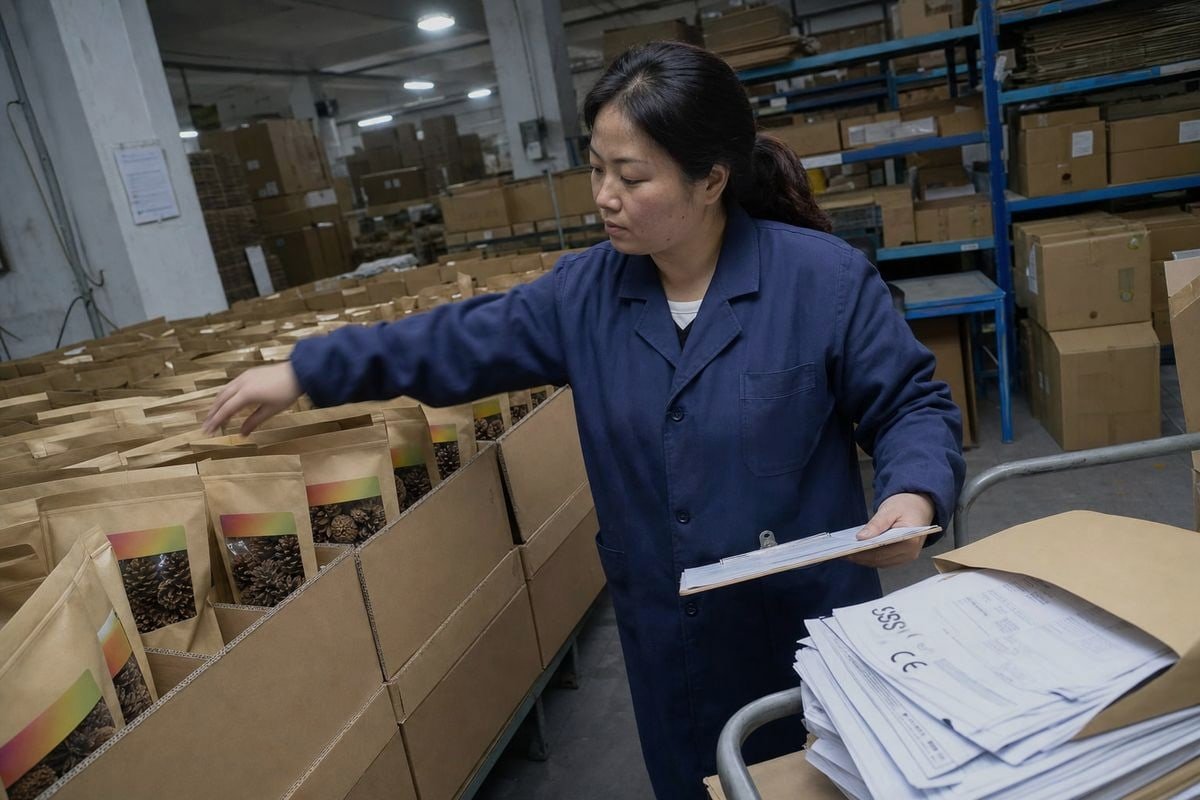
L'emballage est l'endroit où la conformité devient visible pour les régulateurs, les détaillants et les clients. D'après notre expérience de fourniture de produits de foyer en gros à des canaux d'approvisionnement de type Home Depot, les étiquettes incomplètes sont la raison la plus fréquente pour laquelle les expéditions sont rejetées au stade de l'audit de détail, et non la qualité du produit elle-même.
Liste de contrôle des étiquettes d'avertissement à envoyer à votre fournisseur
| Élément d'étiquette | Ce qu'il doit indiquer | Pourquoi les détaillants le vérifient |
|---|---|---|
| Restriction du type de feu | Uniquement pour les foyers et braseros à combustion de bois ; pas pour les bûches de gaz, l'éthanol ou les inserts électriques | Empêche les réclamations pour dommages matériels |
| Exclusion de la cuisson | Ne jamais utiliser sur des barbecues ou des feux de cuisson | Les résidus chimiques ne sont pas sans danger pour les aliments |
| Limite de quantité | Cône maximum par session de combustion | Contrôle la taille de la flamme et le risque d'émission de fumées toxiques |
| Note sur la ventilation | Utiliser dans des foyers correctement ventilés | Protège la qualité de l'air intérieur |
| Instructions de stockage | Conserver au sec, scellé, hors de portée des enfants | Les revêtements chimiques sont hygroscopiques et se dégradent avec l'humidité |
| Élimination des cendres | Si les cendres résiduelles nécessitent une manipulation spéciale | Certains résidus de colorant affectent les règles d'élimination |
Les différences régionales comptent
Les attentes en matière d'étiquetage aux États-Unis, dans l'UE et au Royaume-Uni diffèrent. Demandez directement à votre fournisseur : "Avez-vous déjà produit des étiquettes conformes pour mon marché ?" Dans le cadre de notre service OEM tout-en-un, nous préparons des étiquettes d'avertissement personnalisées, des codes-barres et des emballages d'exposition pour chaque destination, car une étiquette qui passe en Pologne peut échouer en Californie. Demandez également que l'étiquette avertisse contre une utilisation répétée et intensive dans un seul foyer, car certains acheteurs s'inquiètent de l'accumulation de créosote 6 et des résidus sur le mortier au fil du temps. Aborder cette préoccupation sur l'emballage renforce la confiance et réduit les e-mails de support.
Comment puis-je demander des guides d'utilisation d'échantillons avant de passer une commande en gros ?
Les commandes d'essai enseignent des leçons que les fiches techniques ne peuvent pas. Lorsque les acheteurs évaluent nos pommes de pin colorées pour flammes, l'étape de l'échantillon est l'endroit où la documentation d'utilisation est mise à l'épreuve, et je les encourage à pousser fort ici.
Demandez un kit d'échantillons physiques avec son guide d'utilisation imprimé, l'insert de vente au détail provisoire, la FDS et les instructions de test de combustion. Testez vous-même l'échantillon, comparez le temps de combustion réel aux chiffres indiqués et confirmez que le fournisseur correspondra à cette documentation lors de la production de masse.
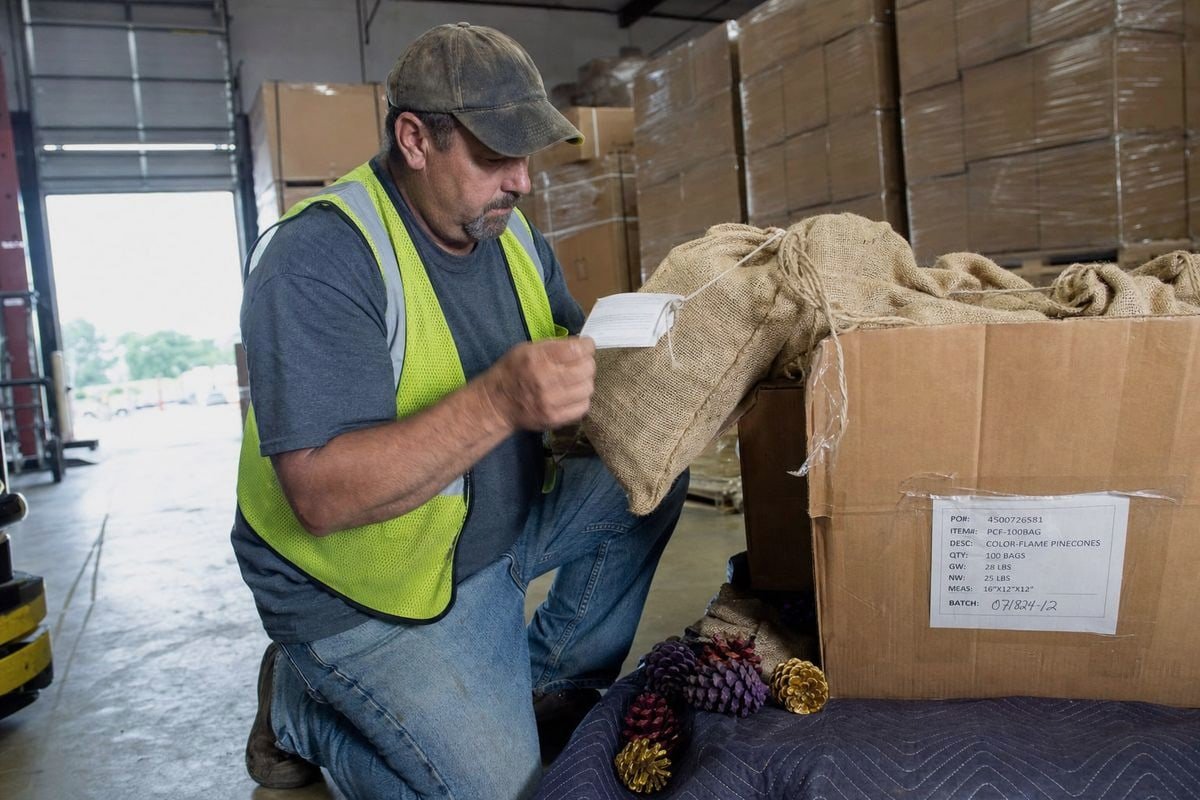
Un échantillon sans documentation n'est qu'un demi-échantillon. La documentation qui accompagne ces pommes de pin vous indique comment le fournisseur soutiendra votre marque une fois que vous vous engagerez pour un conteneur. C'est aussi votre meilleure chance de repérer les signaux d'alarme avant que l'argent ne bouge.
Un processus de demande d'échantillon étape par étape
- Demandez un échantillon prêt pour la vente au détail, pas des pommes de pin en vrac dans un sac ordinaire. Vous voulez la pochette à cordon de serrage, le sac refermable à fond plat ou le bocal exactement comme il serait expédié.
- Demandez l'insert d'utilisation provisoire en anglais. Vérifiez-y la restriction du type de feu, la limite de quantité, le moment du placement et les exigences de ventilation.
- Effectuez votre propre test de combustion. Utilisez le nombre de cônes indiqué sur des braises établies dans une unité à combustion de bois. Chronométrez l'effet de couleur et comparez-le au TDS.
- Vérifiez le comportement de stockage. Laissez quelques cônes dans une pièce humide pendant une semaine ; un revêtement hygroscopique mal stocké peut perdre de son intensité de couleur de flamme, et le guide devrait en avertir.
- Confirmer la cohérence de la production par écrit. Demandez : "La production en vrac correspondra-t-elle exactement à cet échantillon et à cette documentation ?"
Ce à quoi ressemble une réponse solide du fournisseur
| Signal | Fournisseur faible | Fournisseur solide |
|---|---|---|
| Documentation de l'échantillon | Pommes de pin uniquement, pas de papiers | Guide d'utilisation complet, FDS et preuve d'étiquette |
| Affirmation de la durée de combustion | "Environ 10 minutes, à peu près" | Durée indiquée avec méthode de test |
| Personnalisation | "Nous n'avons que cette version" | Durée de combustion réglable, options d'emballage et de marque privée |
| Flexibilité du MOQ | Quantités de conteneurs rigides | Quantités de commandes d'essai pour les tests de marché |
Parce que notre usine gère des lignes de production complètes avec un contrôle strict lot par lot — peut vous montrer où leurs coûts diminuent réellement en volume. Si une usine offre une remise importante sans expliquer la source des économies, considérez cela comme un signe d'avertissement. 7, nous disons clairement aux acheteurs : le premier échantillon reflète la qualité de la production de masse, et le guide d'utilisation expédié avec celui-ci est celui que vos clients liront. Tout fournisseur dans le domaine de l'approvisionnement en accessoires de cheminée devrait être disposé à prendre le même engagement par écrit. S'ils hésitent, continuez à chercher.
Conclusion
Des instructions vagues créent un risque réel : expéditions rejetées, retours et responsabilité. Exigez la FDS, le TDS, les étiquettes d'avertissement conformes et les échantillons documentés à l'avance, et vos pommes de pin colorées pour cheminée arriveront sur les étagères, sûres, conformes et prêtes à être vendues.
Notes de bas de page
Source chimique faisant autorité pour le composé colorant de flamme mentionné dans la documentation de sécurité. ↩︎
Explique les processus de vérification indépendants référencés lors de la demande de documentation de test du fournisseur. ↩︎
Ressource de l'EPA sur la qualité de l'air intérieur pertinente pour les émissions des foyers et les préoccupations de sécurité de ventilation. ↩︎
Les directives de l'OSHA sur les normes de ventilation soutiennent les questions de sécurité intérieure de l'article pour les fournisseurs. ↩︎
Concept de base sur les produits de marque de distributeur pertinents pour les instructions d'emballage OEM discutées ici. ↩︎
Le programme EPA Burn Wise aborde le créosote et les pratiques de combustion du bois en toute sécurité mentionnées dans l'article. ↩︎
Explique le concept de contrôle qualité référencé pour les affirmations de cohérence de la production lot par lot. ↩︎



 English
  Spanish
  German
  French
  Arabic
  Portuguese
Rejoignez la conversation