






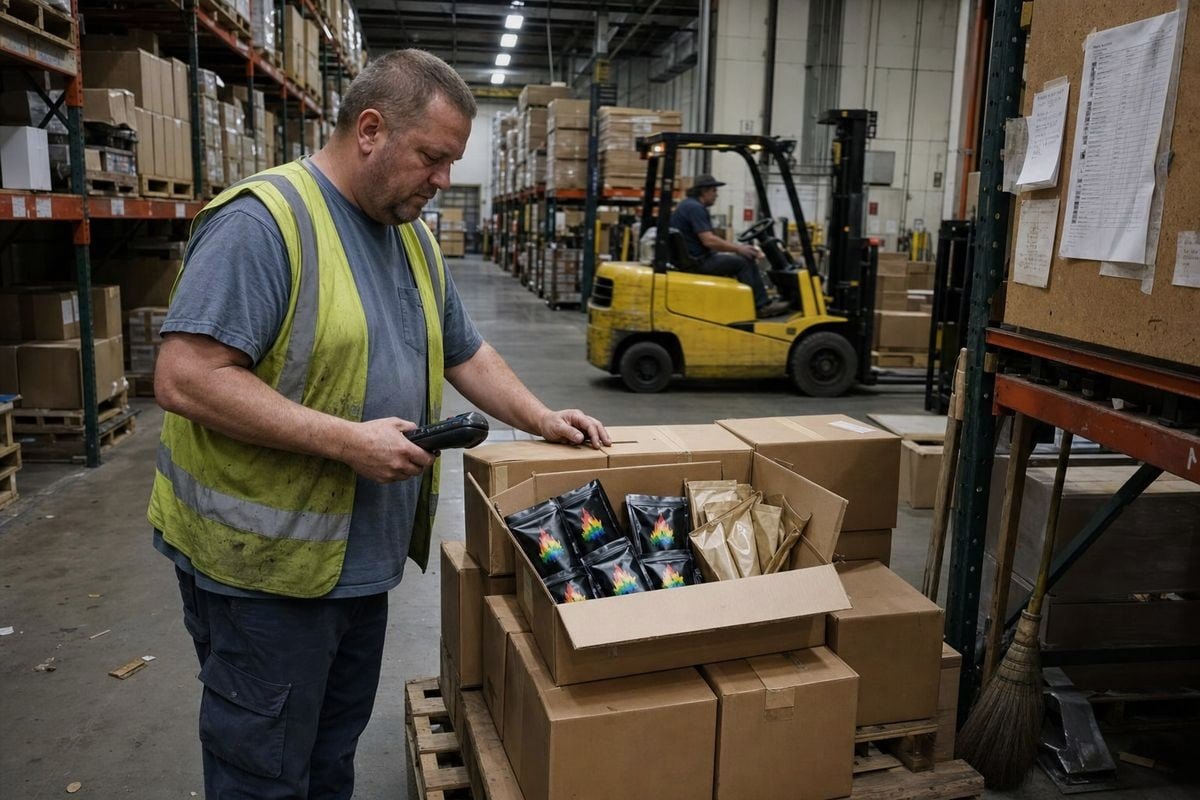
المعالجة المسبقة لمسحوق نار السحر في مستودع خارجي تابع لجهة خارجية 1 قبل أن تصل إلى مستودع أمازون اللوجستي (FBA) هو المكان الذي أرى فيه معظم البائعين يتعثرون. كيس واحد من الرقائق المعدنية يحمل علامة خاطئة من ...
لترتيب المعالجة المسبقة في مستودع خارجي تابع لجهة خارجية قبل FBA، قم بشحن مسحوق Magic Fire من المصنع إلى 3PL، واطلب منهم فحص الأكياس، ووضع ملصقات FNSKU، وتغليف الأكياس ووضعها في صناديق وفقًا لمواصفات أمازون، والتحقق من الموافقة على SDS، ثم إرسال الصناديق المتوافقة إلى مراكز تلبية أمازون.
هذا هو الإصدار المختصر. أدناه، سأشرح كل مرحلة بالتفصيل، بدءًا من خطوات التحضير والمستندات التنظيمية وصولًا إلى اختيار المستودع والتنسيق مع المصنع.
ما هي خطوات المعالجة المسبقة التي تحتاجها بودرة Magic Fire الخاصة بي قبل أن تتمكن من الدخول إلى FBA؟
سألني مشترٍ في تكساس ذات مرة لماذا بقيت عبوات اللهب الملون الخاصة به في "مشاكل استقبال" لمدة ثلاثة أسابيع صحيفة بيانات السلامة 2. كانت الإجابة بسيطة: لم يقم أحد بإعداد الوحدات قبل وصولها إلى مستودع أمازون.
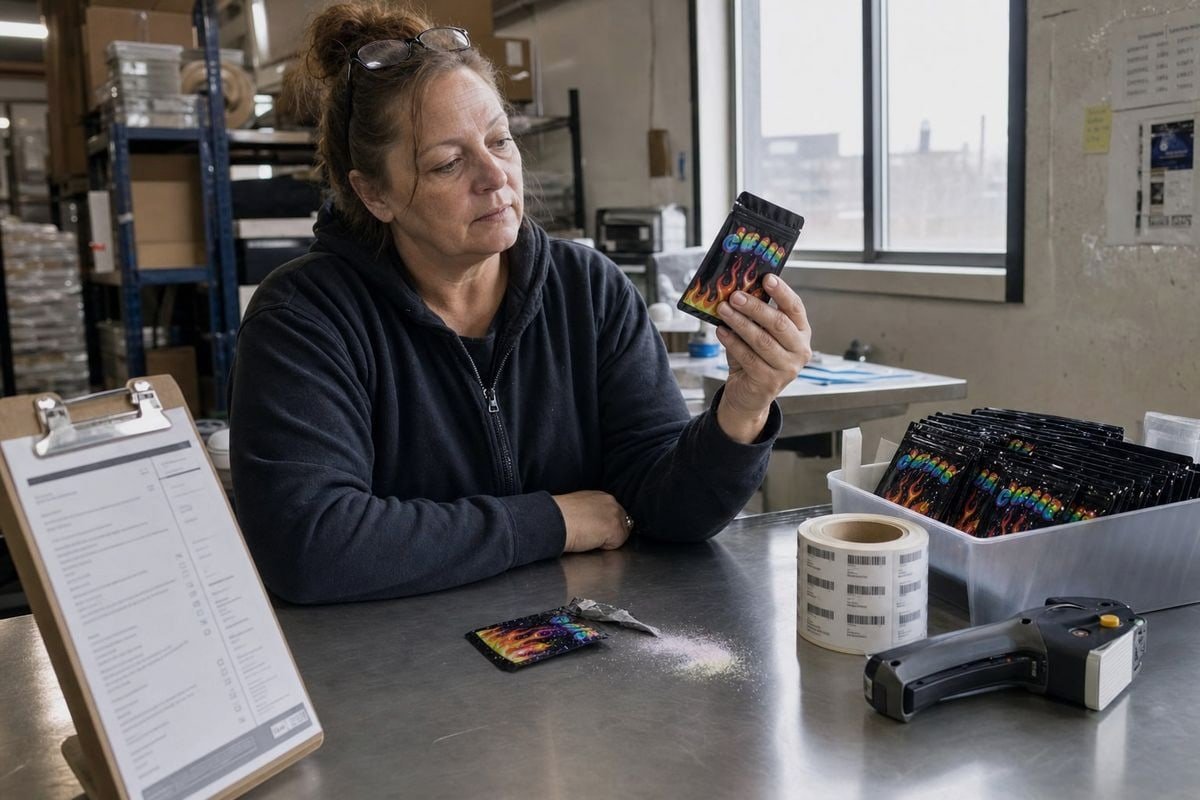
مسحوق نار سحري يحتاج إلى فحص استلام، 100% فحوصات بصرية للتغليف المتسرب، ملصقات FNSKU مطبقة فوق الباركود الخاص بالشركة المصنعة، أكياس بلاستيكية مع ملصقات تحذير الاختناق عند الحاجة، تجميع وتعبئة العبوات المتعددة، وضع ملصقات على الكراتين، وتعبئة المنصات وفقًا لمعايير أمازون قبل دخول FBA.
دفعت أمازون مسؤولية الإعداد إلى المراحل السابقة. تؤكد مصادر لوجستية متعددة لعام 2026 أن خدمات الإعداد والتوسيم لمستودعات أمازون اللوجستية في الولايات المتحدة قد انتهت. هذا يعني أنه يجب أن تصل كل وحدة جاهزة بالكامل. لم تعد هناك شبكة أمان. يصبح مستودعك الخارجي التابع لجهة خارجية هو بوابة الجودة الأخيرة قبل أمازون.
تسلسل الإعداد خطوة بخطوة
إليك سير العمل الذي نوصي به لموزعينا عندما تغادر بضائعهم خط إنتاج نينغبو الخاص بنا:
- يقوم المصنع بشحن البضائع النهائية إلى مزود الخدمات اللوجستية الخارجي (3PL)، وليس مباشرة إلى أمازون.
- يستلم المستودع ويتحقق من الأعداد مقابل قائمة التعبئة.
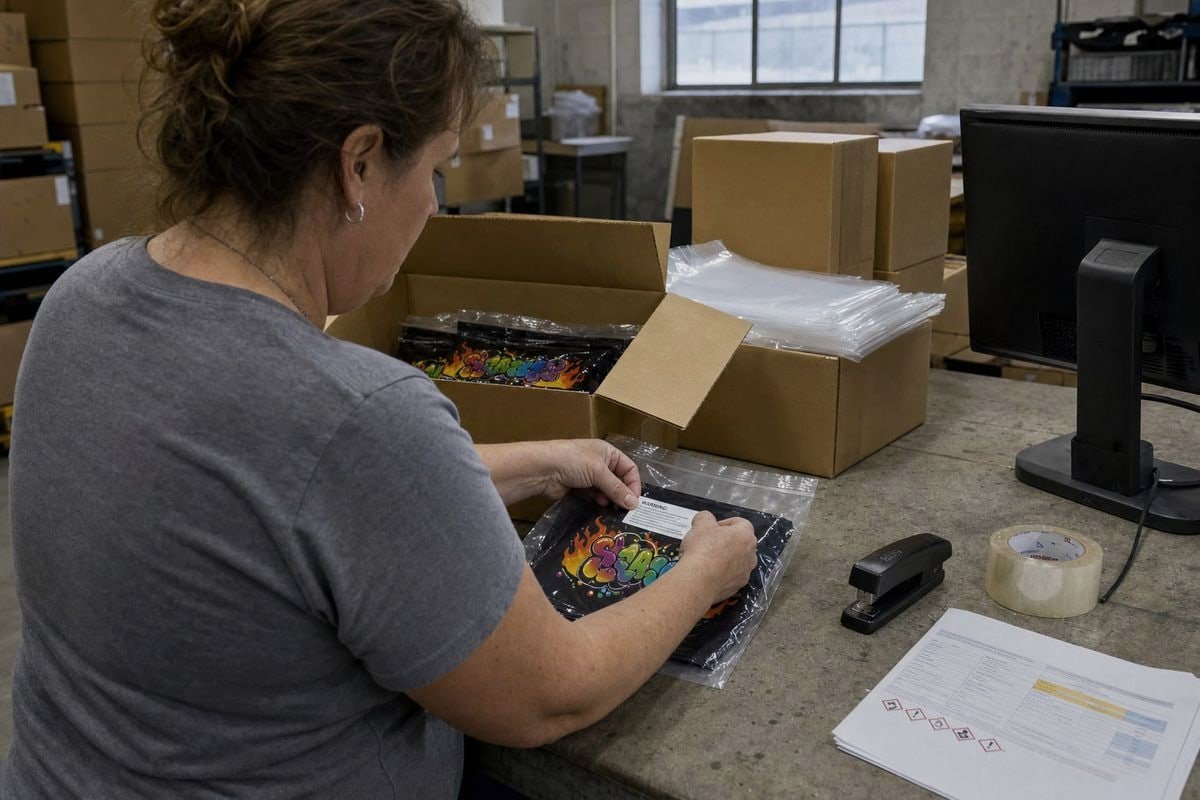
- يقوم الموظفون بإجراء فحص بصري للسلامة للتأكد من عدم وجود "تسريبات" أو أكياس رقائق معدنية تالفة. يمكن لكيس واحد من المسحوق البلوري المتسرب أن يلوث كرتونة ويؤدي إلى رفض منصة كاملة.
- يقوم العمال بتطبيق ملصقات FNSKU 3 القابلة للمسح الضوئي مباشرة فوق أي رموز شريطية للمصنع.
- يتم وضع الوحدات في أكياس بولي محكمة الغلق بالحرارة 4, ، ويفضل أن يكون سمكها 1.5 ميل أو أكثر، كـ تغليف ثانوي مقاوم للتسرب. توضع ملصقات التحذير من الاختناق على أي كيس بفتحة تبلغ خمس بوصات أو أكثر.
- يتم تجميع العبوات المتعددة من خلال التجميع والتغليف، ثم يتم تمييزها بـ "تباع كمجموعة"."
- يتم توسيم الكراتين ووزنها وقياسها وتجهيزها للحجز الخارجي.
مهام الإعداد مرتبطة بالمخاطر
| مهمة الإعداد | المخاطر التي يمنعها | من يجب أن يقوم بها |
|---|---|---|
| الفحص البصري | رفض منصة كاملة بسبب التسريبات | مزود الخدمات اللوجستية الخارجي (3PL) مع تقارير صور |
| توسيم FNSKU | أخطاء في توجيه المخزون وخلطه | مزود الخدمات اللوجستية الخارجي (3PL) أو المصنع |
| التغليف في أكياس بولي (1.5 ميل أو أكثر) | تلوث المسحوق عبر الشحنة | مزود الخدمات اللوجستية الخارجي (3PL) |
| توسيم الكراتين وتعبئتها | تأخيرات الاستلام ورسوم المناولة | مزود الخدمات اللوجستية الخارجي (3PL) |
| التعبئة على منصات وفقًا لمواصفات أمازون | رفض الاستلام في مركز التوزيع | مزود الخدمات اللوجستية الخارجي (3PL) أو وكيل الشحن |
أكياسنا الرقائقية محكمة الغلق بالحرارة على كلا الحافتين بالضبط لأن فشل اللحام هو العيب رقم واحد الذي نتحقق منه في مراقبة الجودة الدفعية. يقوم مستودع إعداد جيد بتكرار هذا الفحص مرة أخرى قبل المرحلة الأخيرة.
كيف أتأكد من أن ملصقات الامتثال ووثائق السلامة جاهزة قبل التعامل معها في مستودع طرف ثالث؟
تعتبر وثائق الامتثال هي أول ما يقوم فريق التصدير لدينا بإعداده، قبل وقت طويل من مغادرة أي كرتونة ليويانغ. تتحرك المستندات أبطأ من الشحن، ولن تنتظر أمازون أيًا منهما.
قم بتحميل صحيفة بيانات السلامة الكاملة المكونة من 16 قسمًا إلى فريق البضائع الخطرة في أمازون واحصل على الموافقة قبل أن تلمس الجهة الخارجية (3PL) البضائع. قم بتأكيد تصنيف المواد الخطرة، وتطبيق تحذيرات السلامة المطلوبة، والتحقق من ترميز HTS، وإعطاء تعليمات الملصقات المكتوبة وخطط الشحن للمستودع.
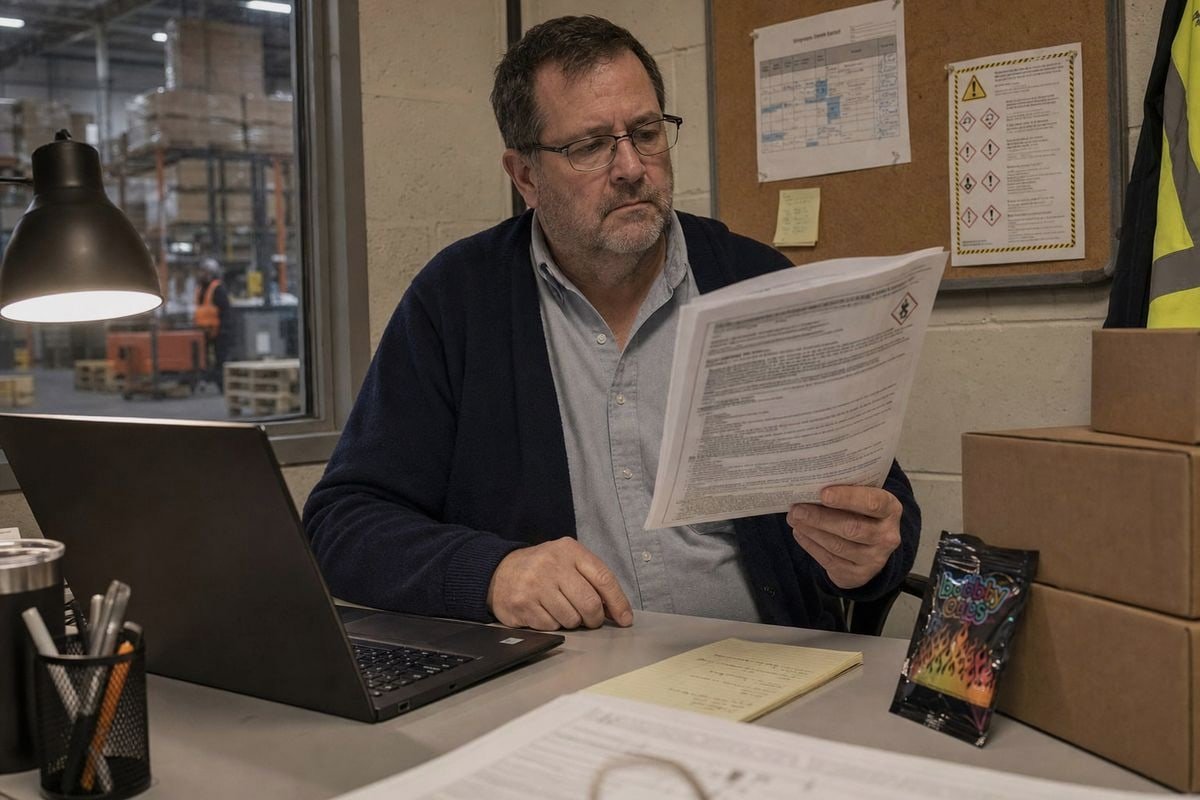
دعني أكون مباشرًا بشأن شيء واحد. من شبه المؤكد أن منتجًا يسمى مسحوق نار السحر سيتم مراجعته من قبل برنامج البضائع الخطرة في أمازون. غالبًا ما يتم تمييز تركيبات اللهب الملون لمحتواها من أملاح المعادن مثل مركبات النحاس. يجب عليك تأكيد الوضع التنظيمي الدقيق لتركيبتك المحددة قبل التخطيط للتخزين أو التعبئة أو الشحن. لا تفترض أنها مقيدة، ولا تفترض أنها معفاة. تحقق من أمازون وشركة الشحن الخاصة بك والسوق الوجهة.
قائمة التحقق من المستندات
من خبرتنا في التصدير إلى الولايات المتحدة وألمانيا والمملكة المتحدة لأكثر من 17 عامًا، هذه هي المستندات التي يجب تأمينها قبل بدء مناولة المستودع:
- صحيفة بيانات السلامة (SDS) مكونة من 16 قسمًا في تنسيق النظام المنسق عالميًا 5, ، تم تحميلها والموافقة عليها من قبل فريق البضائع الخطرة في أمازون.
- تأكيد تسجيل البائع في FBA Dangerous Goods (Hazmat) program 6 if the SKU is classified.
- SGS or Intertek test reports proving the formula's composition and safety profile.
- Correct HTS classification. Many color-flame products fall under code 3604.90 for pyrotechnic articles 7, which lets the 3PL apply "Limited Quantity" ground shipping marks and avoid full hazmat transport surcharges.
- High-visibility warnings on the sachet regarding ingestion and skin contact.
- Written labeling and packaging instructions for the warehouse, matched to your Send to Amazon shipment plan.
Keep the SDS alive, not filed away
One habit we push on every private-label client: set an automated quarterly SDS audit with your 3PL. GHS updates change disclosure requirements, and an outdated concentration statement can invalidate your Dangerous Goods approval. Our compliance team refreshes test documentation on a fixed schedule for exactly this reason. Because our color-flame packets are made from eco-friendly materials with no harmful chemicals, our buyers often clear the review faster, but they still must file the paperwork. Approval is never automatic.
ما الذي يجب أن أبحث عنه عند اختيار مستودع خارجي لإعداد منتجاتي الملونة للنار لـ FBA؟
The trade-off I weigh with every buyer is control versus cost. A prep warehouse adds a handling fee and one more partner to manage. But for a moisture-sensitive, review-flagged product, skipping it usually costs more.
اختر طرفًا ثالثًا (3PL) يتمتع بالقدرة على تخزين المواد الخطرة، وتجهيزًا يتم التحكم في رطوبته أقل من 40% رطوبة نسبية، وفحص جودة موثق بالصور وإبلاغ عن التناقضات، وخدمات وضع العلامات على FNSKU والكرتون، ورؤية نظام إدارة المستودعات (WMS)، وتنسيق الشحن الداخلي، وتسعير شفاف لكل وحدة، وقدرة مثبتة لموسم الذروة للشحنات المتجهة إلى أمازون.
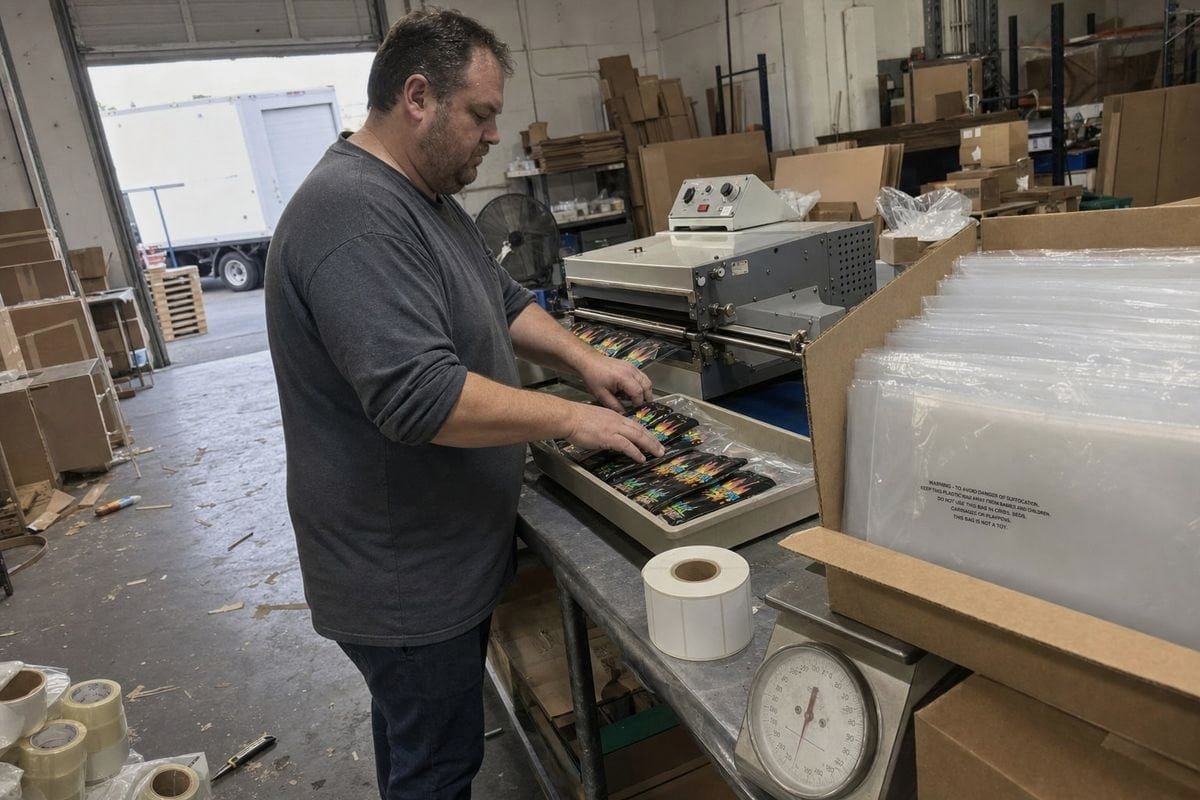
Not every warehouse can handle a crystalline powder in a foil sachet. Our Magic Fire crystals are fine, salt-like granules. In humid port-side facilities, they can cake and clump inside the pouch during long storage. That is why humidity-controlled staging below 40% RH sits near the top of my checklist, not the bottom.
Compare your three routing options first
| خيار | الأفضل لـ | مفاضلة |
|---|---|---|
| Factory-level prep | Lowest handoff count, lowest cost | Less flexibility for relabeling, QC, or mixed-SKU consolidation |
| Third-party overseas warehouse | QC, consolidation, buffer storage, staging | Added handling fee and one more partner to manage |
| Direct-to-Amazon shipping | Fastest transit when prep is already perfect | Highest rejection risk if any label or carton is wrong |
Some buyers argue factory prep makes the 3PL unnecessary. That is fair when the manufacturer executes reliably. We apply FNSKU labels, barcodes, and custom warning labels on our own lines as part of our OEM service, which is why several of our long-term clients ship direct. But if you are consolidating multiple suppliers, or your defect tolerance is zero, the warehouse layer earns its fee. Others argue direct shipping saves time. It does, until one carton fails inspection and the whole shipment sits in limbo.
Cost expectations and the buffer advantage
| Service Level | Indicative Cost Per Unit |
|---|---|
| Standard prep (inspect, FNSKU, carton) | $0.50–$1.50 |
| Full prep (poly bagging, bundling, kitting) | $1.50–$3.00 |
| 1,000-unit monthly operation, all-in | Roughly $700–$1,500 |
Treat these as indicative ranges, not fixed market prices. Geography, seasonality, and compliance complexity move quotes materially. One underrated benefit: use the 3PL as a buffer to drip-feed inventory into FBA. Hazmat-classified SKUs often face strict cubic-foot storage limits at Amazon. Staging bulk stock at the warehouse and releasing small replenishments keeps you in stock without breaching those caps.
كيف يمكنني التنسيق مع الشركة المصنعة الخاصة بي لتجنب التأخير أثناء المعالجة المسبقة لـ FBA؟
A lesson we learned years ago on a German order: the warehouse received perfect goods but had no case-pack data, so pallets sat idle for six days while emails went back and forth. Documentation gaps, not defects, cause most delays.
شارك خطة شحن أمازون، وكميات التعبئة الدقيقة للصندوق، والأوزان والأبعاد المعتمدة، ورسومات الملصقات، وملفات SDS مع كل من المصنع وشركة الخدمات اللوجستية الخارجية قبل انتهاء الإنتاج. اتفق على حدود العيوب، ونقاط فحص الصور، وقناة اتصال واحدة لحل الاستثناءات بسرعة.
Coordination is a data problem before it is a logistics problem. When our clients standardize case-pack quantities and give the 3PL precise weight and dimension data upfront, the physical shipment matches the Send to Amazon workflow exactly, and receiving goes smoothly. When they guess, discrepancies surface at the worst possible moment.
A coordination timeline that works
Here is the sequence we follow with our OEM buyers, timed against production:
- Four weeks before production ends: finalize packaging artwork, warning labels, barcodes, and FNSKU assignments. Our factory prints and applies these on the line, so the 3PL only verifies rather than relabels.
- Two weeks before: send the 3PL the shipment plan draft, product specs, SDS, and carton count targets. Note that the final Amazon shipping plan is only needed when the last leg goes to FBA, so buffer stock can be planned separately.
- At handover: the factory shares batch QC records and carton-level photos. Our batch-to-batch quality control means the first sample reliably reflects mass production, which lets the 3PL run faster spot checks instead of full re-inspection.
- At receiving: the warehouse confirms counts, flags exceptions with photos within 48 hours, and quarantines any damaged cartons for repacking.
- Before outbound: the forwarder confirms customs clearance documents, applies LTD QTY marks if required, checks palletization requirements, and books delivery to the assigned fulfillment centers.
Make exceptions cheap to fix
Agree in writing on who pays for relabeling, who approves replacements, and how fast decisions get made. We keep an English-speaking account manager on every export project so a warehouse query in Los Angeles gets answered within one Chinese business day. Slow answers, not slow ships, are what break FBA timelines.
خاتمة
Prep Magic Fire powder upstream: inspect, label, poly bag, and document at a trusted 3PL before Amazon ever sees it. Get compliance right first, and FBA receiving becomes routine.
ملاحظات ختامية
1. Definition and role of third-party logistics providers in managing global supply chain operations. ↩︎
2. Authoritative Wikipedia entry for Safety Data Sheets (SDS) and international standards. ↩︎
3. Official Amazon documentation for FBA barcode and FNSKU labeling requirements. ↩︎
4. Official Amazon Seller Central guide for product bagging and poly bag specifications. ↩︎
5. Comprehensive Wikipedia overview of the Globally Harmonized System (GHS) for chemicals. ↩︎
6. Amazon's specific compliance requirements and enrollment process for selling

 English
  Spanish
  German
  French
  Arabic
  Portuguese
انضم إلى المحادثة