






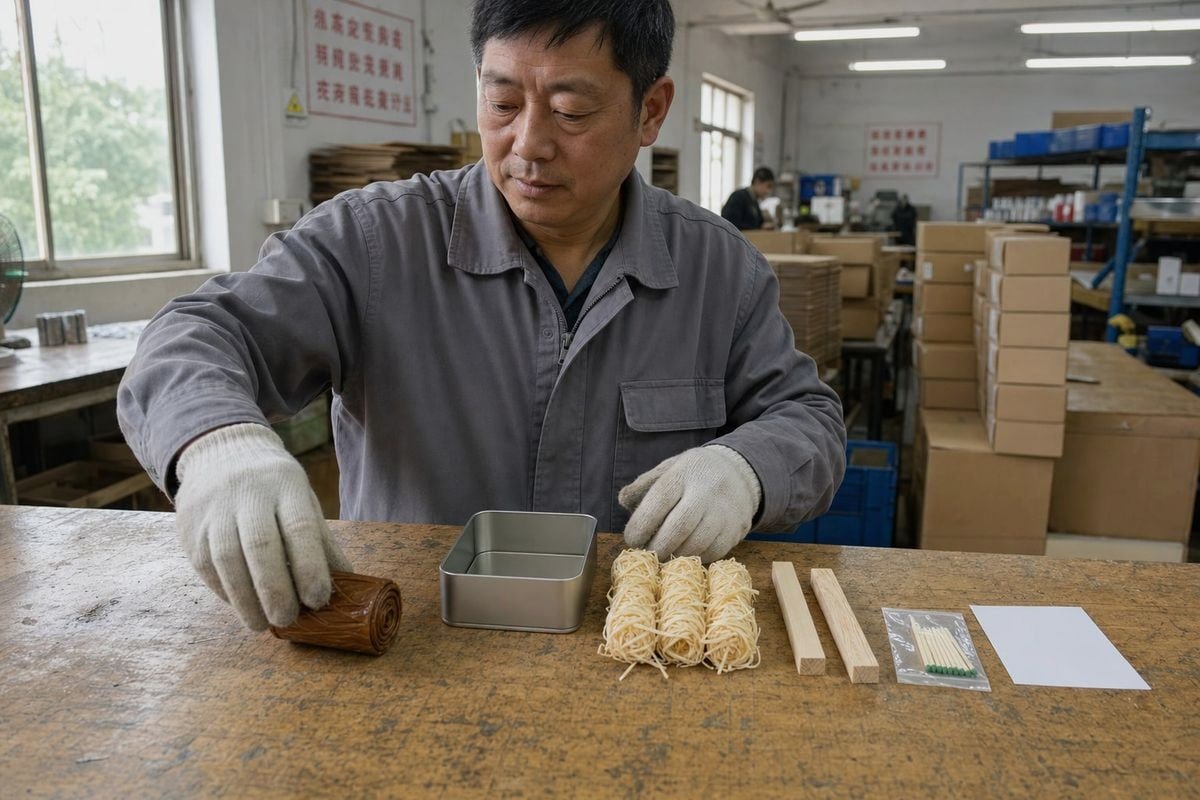
A starter kit bundled with wood fire starter purchases sounds simple until your buyers complain about failed ignition CE marking 1. On our production line, we learned that lesson early — and fixed it.
Design a starter kit bundled with wood fire starters by combining one primary wax-dipped fire starter, a backup ignition source, fast-light tinder, a weather-resistant container, and a simple instruction card. Curate every item around ignition, redundancy, storage, and simplicity — not quantity.
That is the short answer. Below, I will walk through the components, the packaging, the compliance work, and how to test the whole idea with a small trial order.
What products should I bundle with wood fire starters to create a compelling starter kit?
A few years back, a German distributor asked us why his single-item fire starter sold slowly drop-test durability 2. When we bundled it into a small kit at our Ningbo facility, reorders followed fast.
Bundle your wood fire starters with at least one backup ignition source (waterproof matches or a ferro rod), fast-light tinder such as wax-coated wood wool, kindling sticks, a weather-resistant tin or pouch, and a quick-start instruction card. Every item must serve ignition, tinder, storage, or redundancy.
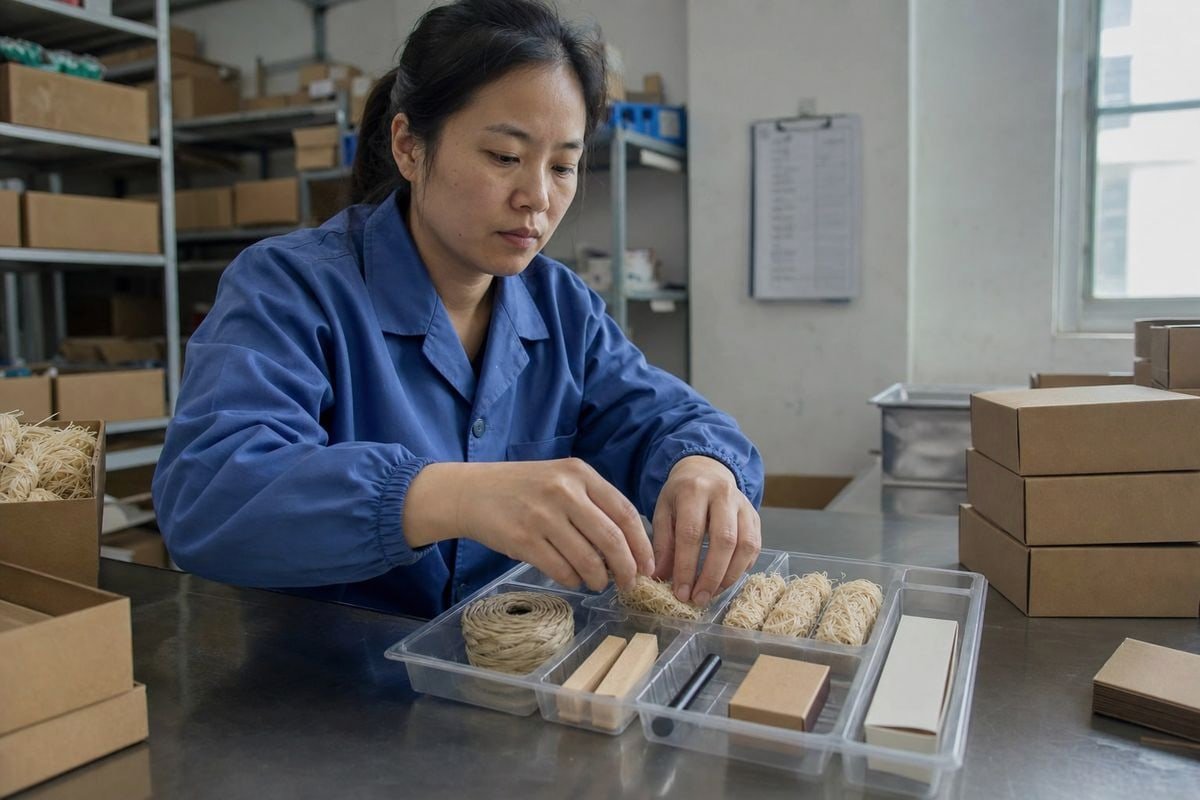
The core problem your customer faces is not "I need a fire starter." It is "I need a fire to actually light — in wind, in dampness, at dusk." A single product rarely solves that. A curated kit does. Our wax-dipped wood rolls light easily, but pairing them with kindling strips 3 and a backup flame source turns a product into a system. That is what buyers pay a premium for.
The curation rule that keeps kits focused
I apply one filter to every proposed component: does it support ignition, tinder, storage, or redundancy? If not, it gets cut. Too many items make the kit feel confusing, especially for beginners. Too few make it feel like an upsell trick.
Suggested bundle structures by tier
| Kit Tier | Components | Target Buyer |
|---|---|---|
| Minimal | Wood fire starter + wood-wool tinder + pouch | Budget retail, impulse buys |
| Beginner | Fire starter + tinder + waterproof matches + instruction card + pouch | First-time campers, fireplace owners |
| Premium Gift | Fire starters + color-flame packet + kindling sticks + branded tin | Gift shoppers, holiday retail |
| Survival | Fire starter + ferro rod 4 + waterproof matches + waxed tinder + waterproof case | Preparedness and bushcraft buyers |
Notice the premium tier. Because we also make Magic Fire color-flame packets and color-flame pinecones, several of our clients add one as a "wow" item. It costs little, but it transforms an ordinary utility kit into a giftable experience. Experienced outdoor users, meanwhile, care most about redundancy — two ignition methods minimum. Segment your audience first, then match the tier. One kit design rarely serves campers, gift buyers, and preppers equally well, so most of our OEM clients launch two tiers at once.
How do I choose packaging that keeps my starter kit shelf-ready and compliant for import?
Packaging is where I have seen more trial orders stumble than anywhere else. Our team in Liuyang once reworked an entire box design because a client's retail chain rejected the barcode placement.
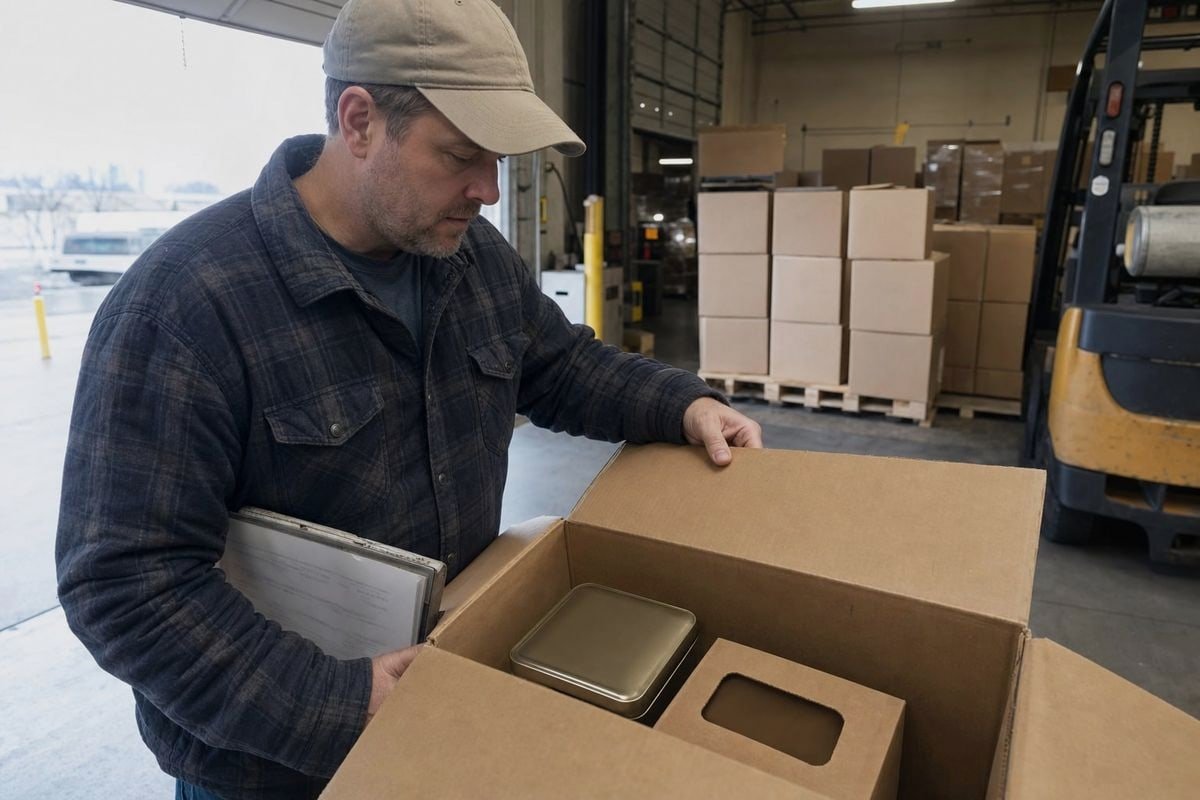
Choose rigid, moisture-resistant packaging — a printed tin, kraft box with inner liner, or sealed pouch — sized to standard shelf dimensions. Include a barcode, net weight, composition statement, country of origin, and required warning labels, and verify carton drop-test durability before shipping.
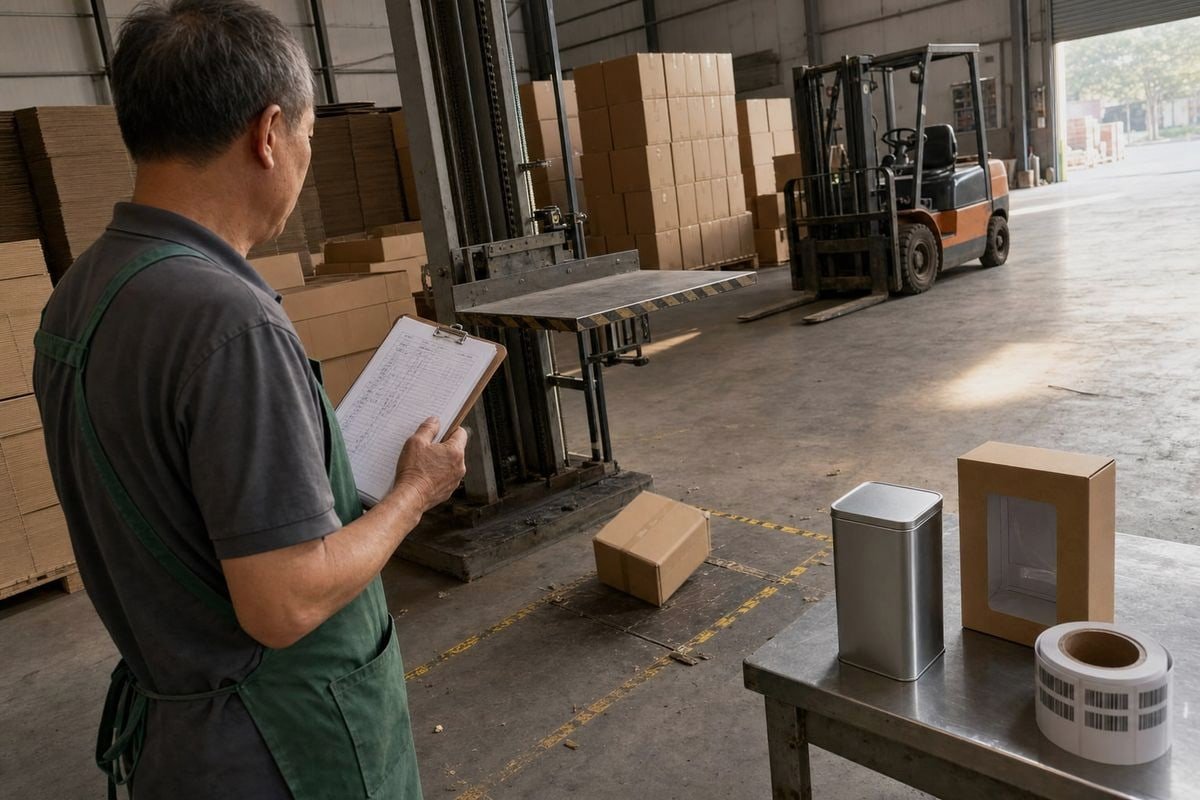
Shelf-ready packaging has to do three jobs at once. It must protect wax-based products from heat and humidity in transit. It must display cleanly on a retail shelf or peg hook. And it must carry every marking your import market demands. Miss any one of these, and you pay for it in returns, rejections, or dead stock.
Protection comes first
Wax-dipped wood rolls and wood-wool starters are stable products, but they still dislike crushing and prolonged damp. We recommend an inner liner or individual wrapping inside the retail unit, then a double-wall export carton. For sea freight to the US or Australia, we also weigh summer container temperatures — soft paraffin 5 blends can sweat, so we adjust the wax formula or add a barrier layer when needed.
Format comparison for retail kits
| Packaging Format | Strengths | Watch-outs | Best For |
|---|---|---|---|
| Printed tin | Premium feel, reusable, crush-proof | Higher unit cost, MOQ on custom tins | Gift and premium tiers |
| Kraft box + window | Eco look, low cost, easy printing | Needs moisture liner | Standard retail |
| Sealed pouch | Lightweight, cheap freight | Weak shelf presence alone | E-commerce, refills |
| Display box (counter unit) | Drives impulse sales | Requires precise carton math | Big-box and chain retail |
Markings that customs and retailers expect
At minimum: product name, composition (for example, wood fiber and paraffin percentages), net weight, country of origin, importer address, barcode, and fire-safety warnings in the destination language. Our design team builds all of this into the artwork before we print, because fixing labels after production is expensive. Ask your supplier for a pre-production artwork proof and a physical packaging sample — we send both as standard, and it prevents most shelf-compliance surprises.
What certifications and safety labeling do I need for a bundled fire starter kit sold in my market?
Compliance questions land in my inbox almost daily, and I understand why. One of our UK buyers told me his previous supplier's missing test report froze a container at port for three weeks.
You typically need third-party test reports (SGS or Intertek), CE marking where applicable, supplier credentials such as ISO 9001 and BSCI, plus destination-language warning labels covering flammability, child safety, indoor-use guidance, and safe storage. Requirements vary by market, so confirm before production.
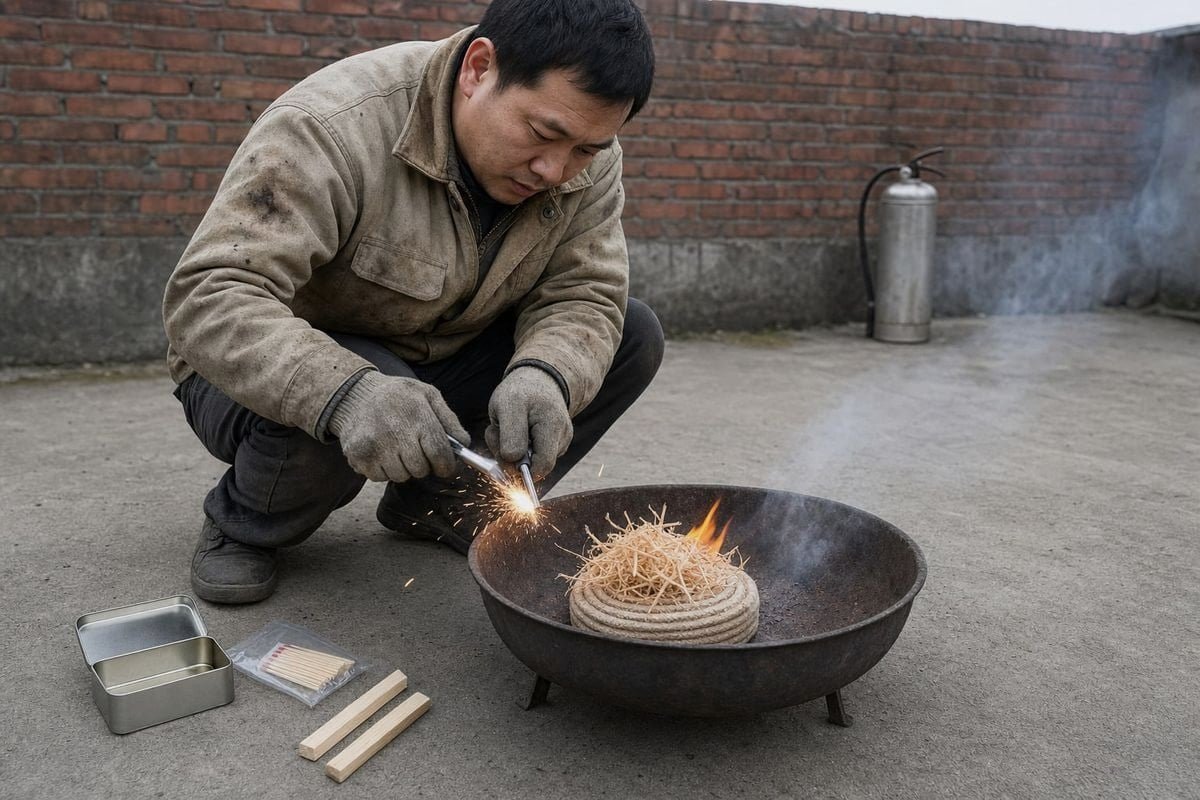
Let me be direct: for serious importers, compliance is not a nice-to-have. It is the gate. Every established distributor we work with — in the US, Germany, France, the Netherlands, Canada — asks for documentation before they ask for price. So build your kit's compliance file at the design stage, not after production.
What a complete compliance file looks like
- Third-party test reports from a recognized lab such as SGS or Intertek, covering the fire starters and any color-flame components in the kit.
- Supplier system certificates — ISO 9001 7 for quality management and BSCI for social compliance. Large retail sourcing channels increasingly require both.
- CE documentation where your product category and market require it.
- A declaration of composition — for example, our standard wax-dipped rolls are wood fiber and paraffin, with no harmful chemicals — so customs and retailers can classify the goods correctly.
- Safety data and labeling artwork in the destination language.
Labeling by market: a practical snapshot
| Market | Language | Typical Label Expectations |
|---|---|---|
| USA | English | Warning statements, keep-away-from-children text, importer details, barcode |
| Germany / EU | German or local + EN | CE where applicable, hazard pictograms if triggered, EU importer address |
| UK | English | UKCA considerations, importer details, safety warnings |
| Australia / Canada | English (FR for Canada) | Bilingual labeling for Canada, local importer identification |
One more point from experience. A bundled kit is judged on its weakest component. If your wood fire starters are tested but your added matches or ferro rod are not, the whole kit can fail a retailer audit. When we build kits under our one-stop OEM program, we align documentation across every item in the box, and we print warning labels, barcodes, and batch codes directly into the packaging artwork. That is far cheaper than stickering thousands of units in a warehouse later.
Can I get a custom private-label starter kit with flexible MOQs for a trial order?
Trial orders are how most of our long-term partnerships started. A Dutch importer once began with a single mixed pallet; three years later, he runs seasonal container programs with us.
Yes. A genuine factory can offer private-label starter kits with flexible trial MOQs, full customization of components, burn time, packaging, and branding, plus pre-production samples that reliably match mass-production quality. Expect a sample, artwork proof, and pilot run before scaling.
Here is the honest trade-off I always explain to new buyers. Very low MOQs are possible, but custom packaging has print minimums. So we structure trial orders in a way that keeps risk low without pretending print costs do not exist. A common path: start with our standard kraft or plastic-jar packaging plus your label for the pilot, then move to fully custom printed tins or boxes once the kit proves itself at retail.
How a trial-to-scale process works with us
- Define the kit. We discuss your market, price point, and tier — minimal, beginner, premium gift, or survival.
- Sample stage. We build physical kit samples with your chosen components: wax-dipped wood rolls, wood-wool starters, kindling, color-flame packets, and containers.
- Artwork and compliance proof. Barcodes, warning labels, language versions, and test-report alignment are locked before production.
- Pilot production run. A flexible MOQ lets you test one or two retail channels without overcommitting.
- Review and scale. We adjust burn time, component mix, or packaging based on real sell-through, then move to container volume.
Because we run our own production lines in Ningbo with 17+ years behind us — not a trading desk reselling someone else's stock — the sample you approve is the product you receive at scale. Batch-to-batch quality control is not marketing language for us; it is why the first sample matters. And since our clients span outdoor brands, fireplace distributors, and big-box sourcing channels across 30+ countries, we can also advise on which kit tier tends to move in your specific market. Ask your supplier these questions before wiring a deposit. If the answers are vague, the trial order will tell you why — the expensive way.
Conclusion
A starter kit bundled with wood fire starter purchases wins when it solves the whole ignition problem: reliable starter, backup method, fast tinder, protective packaging, and full compliance. Start small, test, then scale confidently.
Footnotes
1. Background reference explaining the CE marking system mentioned for EU compliance. ↩︎
2. Background on standardized carton drop-testing referenced for shipping durability verification. ↩︎
3. Background reference explaining kindling materials used to sustain early flame in fire-starting. ↩︎
4. Wikipedia background on ferrocerium fire-starting rods used as backup ignition source. ↩︎
5. Wikipedia background on paraffin wax, the key material used in wax-dipped fire starters. ↩︎
6. IMO reference on dangerous goods classification relevant to shipping fire starter products. ↩︎
7. Official ISO page defining the quality management standard referenced for supplier credentials. ↩︎


 English
  Spanish
  German
  French
  Arabic
  Portuguese
Join the Conversation