







Every October, buyers call our factory asking for a wood fire starters stocking timeline — and every October, some of them are already too late for Black Friday.
Build your wood fire starters stocking timeline backward from two dates: order bulk stock in July–August, complete production and compliance checks by September, ship in October so goods land by early November for Black Friday, and hold a separate replenishment reserve for Christmas delivery cutoffs.
That single paragraph is the skeleton. Now let me walk you through each stage, using what we see on our own production lines every peak season.
What lead times should I plan for wood fire starters before Black Friday and Christmas rush orders?
Last winter, one of our German distributors mapped his entire calendar on a single whiteboard in our Ningbo plant CE marking 1. His conclusion surprised him: the selling window was short, but the supply chain lead times were long.
Plan 25–35 days for bulk production of wood fire starters, 30–40 days for sea freight to the US or Europe, and 1–2 weeks for customs and inbound warehousing. In total, allow 10–14 weeks from purchase order to sellable holiday inventory.

Lead time is not one number. It is a chain of smaller numbers, and each link can slip supply chain management 2. On our lines in Ningbo, wax-dipped wood rolls need molding, dipping, cooling, curing, and drying before they can even reach the packing station. Wax curing alone adds real hours per batch. Then labeling, boxing, and palletizing add days, not hours, when the order runs into six figures of units.
Here is how the chain typically breaks down for a container-sized order of natural firelighters:
| Stage | Typical Duration | What Can Delay It |
|---|---|---|
| Raw material sourcing (wood wool, paraffin, wax) | 1–2 weeks | Seasonal price spikes, supplier backlog |
| Bulk production and curing | 3–5 weeks | Order size, humidity, packaging complexity |
| Quality inspection and compliance docs | 3–7 days | Third-party lab scheduling |
| Sea freight 3 (China to US/EU) | 4–6 weeks | Port congestion, carrier rollovers |
| Customs clearance 4 and inbound receiving | 1–2 weeks | Documentation errors, warehouse queues |
Why fire starters have hidden production lag
A fire starter looks simple. It is not fast. Wood fiber must be dry before dipping, or the paraffin will not bond evenly paraffin wax 5 and burn time becomes inconsistent. We hold batches until moisture readings pass, because a soggy core means customer complaints in January. That discipline protects your brand, but it consumes calendar days you must budget for.
Sea freight vs. air freight in peak season
Air freight can rescue a late order, but it can triple your landed cost on a heavy, wax-based product. In our experience exporting to 30+ countries, buyers who book sea freight in September almost always beat buyers who gamble on air in November — on both margin and reliability.
How far in advance should I place my bulk order to avoid stockouts during peak season?
There is a trade-off we discuss with almost every buyer: order early and risk overstock, or order late and risk empty shelves. After 17+ years of holiday seasons, we lean firmly toward early — but staged.
Place your main bulk order in July or early August so inventory lands by late October. Then commit a smaller replenishment tranche in September for early-December Christmas restocks. This staged approach covers peak season demand without betting everything on one forecast.

The key insight is that Black Friday and Christmas are two different clocks. Black Friday is a demand spike driven by promotions. Christmas is a delivery deadline driven by gift-giving. Your seasonal inventory management should reflect both. Treating them as one date is the most common mistake we see, and it usually shows up as a frantic email to us in mid-November asking for miracles.
Here is the month-by-month calendar we recommend to our wholesale and distribution partners:
| Month | Action | Purpose |
|---|---|---|
| Late July – August | Forecast demand, place main bulk order, lock packaging design | Secures production slot before autumn rush |
| September | Approve pre-shipment samples, confirm test reports, book sea freight | Prevents quality surprises and freight delays |
| October | Goods arrive, barcode and receive inventory, prep listings and photos | Stock is physically sellable before promotions start |
| Early–mid November | Launch Black Friday and Cyber Monday campaigns | Captures early shoppers and extended sale windows |
| Late November – early December | Release the Christmas reserve tranche | Covers gift orders after BFCM depletes base stock |
| Mid-December | Shift messaging to last-minute gifts within shipping cutoffs | Sells only what can still be delivered on time |
| Post-Christmas | Clear remaining units via January offers or subscription bundles | Frees cash and warehouse space |
How much stock to hold back
We suggest splitting inventory into three buckets: base stock for regular November sales, promo stock sized for your BFCM discount depth, and an emergency reserve of roughly 15–20% held for December. Extended Black Friday events now stretch a full week or more, so promo stock gets consumed faster than older holiday sales forecasting models predicted.
Signals that justify the early tranche
Retail data keeps confirming that holiday shopping starts earlier every year. Some firewood sellers now tell customers to order before Thanksgiving just to guarantee delivery. If adjacent winter products like fatwood kindling sticks and wood stove accessories face that pressure, your fire starters will too.
What certifications and compliance checks should I confirm before my holiday shipment ships out?
A buyer from the Netherlands once told me his previous supplier's container sat in Rotterdam for three weeks over missing test documentation — during December. That story is why compliance sits at the top of our pre-shipment checklist, not the bottom.
Before shipment, confirm ISO 9001 factory certification, BSCI social audit status, CE marking where applicable, and current SGS or Intertek test reports. Also verify warning labels, ingredient declarations, barcodes, and destination-market flammable-goods documentation to prevent customs holds during the holiday rush.
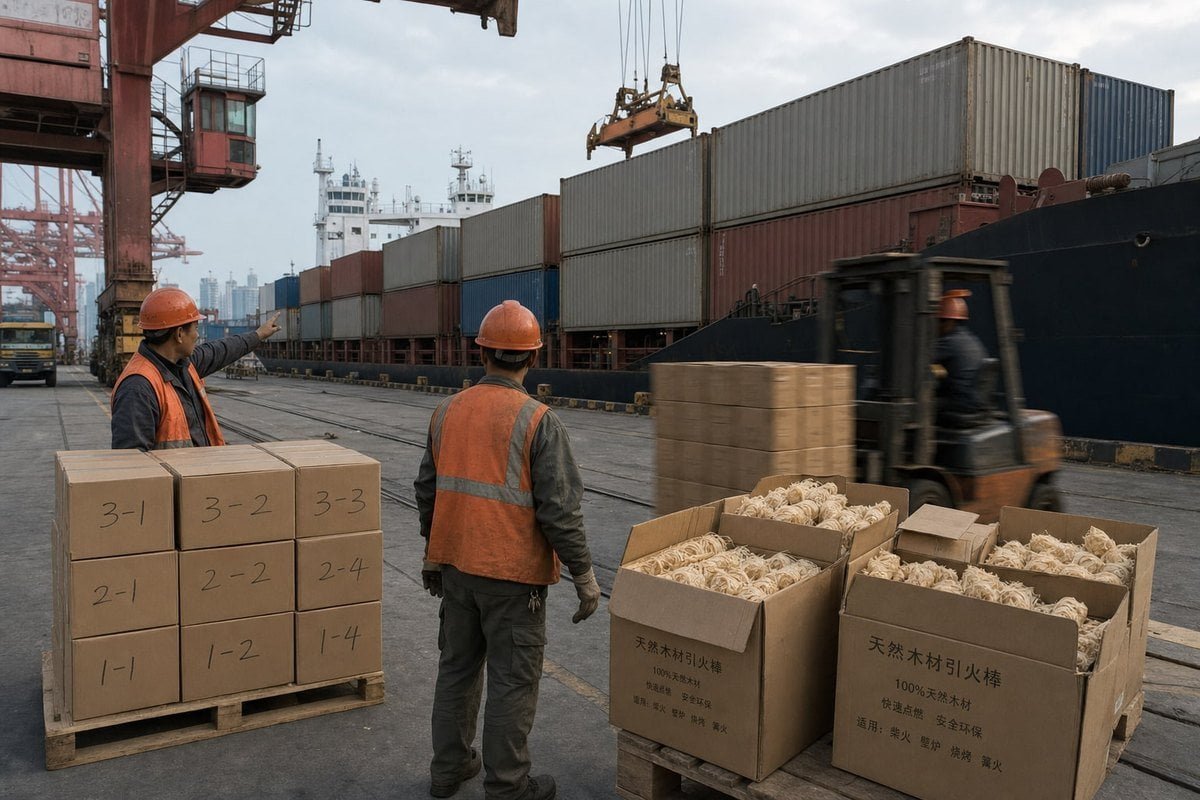
Compliance is a hard requirement for serious retail channels, not a nice-to-have. Big-box sourcing teams and established European importers will not receive goods without paperwork in order. At our factory, we maintain ISO 9001 6, BSCI, and CE certification, plus SGS and Intertek test reports, precisely because our buyers cannot afford a customs dispute in November. A delayed container in July is a problem. A delayed container in December is a lost season.
The pre-shipment compliance checklist
Run through this list before you authorize any holiday shipment:
- Request current copies of factory certifications — ISO 9001 and BSCI at minimum for EU and US retail.
- Verify product test reports from a recognized lab such as SGS or Intertek, and check the report dates are recent.
- Review packaging artwork for mandatory warning labels, flammability icons, and language requirements in your market.
- Confirm the composition declaration on the box matches the actual product — for example, wood fiber and paraffin percentages.
- Check barcodes and retail-ready labeling against your channel requirements before printing, not after.
- Align shipping documentation with your customs broker early, since eco-friendly firelighting products are generally simple to clear but sloppy paperwork still triggers inspections.
Why timing matters for compliance
Third-party lab slots fill up in autumn because every seasonal product category tests at the same time. We advise buyers to finalize compliance documents in September. If a report needs renewal, a two-week lab queue in October can push your shipment past the freight booking you already paid for. Batch-to-batch quality control 7 matters here too: the sample that passed testing must genuinely represent mass production, or you carry silent risk into your busiest season.
How can I coordinate private-label packaging and branding without delaying my seasonal delivery?
Packaging is where we see the most preventable delays. Our OEM team has watched beautiful holiday box designs arrive for approval in October — six weeks after the point where they could still make Black Friday.
Lock your private-label packaging design by early August, approve printed samples by late August, and run packaging production in parallel with product production during September. Parallel workflows, pre-approved dielines, and early barcode files keep branding from adding a single day to delivery.

The secret is parallel processing. Product production and packaging production do not need to happen in sequence. When a buyer sends us final artwork in early August, our team prints boxes while the wax-dipped wood rolls cure on another line. Both streams meet at the packing station in September. When artwork arrives late, the finished product sits in the warehouse waiting for boxes — and every waiting day is a day stolen from your selling window.
A realistic private-label timeline
| Week | Packaging Task | Runs Parallel To |
|---|---|---|
| Weeks 1–2 (early Aug) | Finalize artwork, dielines, warning labels, barcodes | Raw material sourcing |
| Weeks 3–4 (late Aug) | Approve printed proofs and physical box samples | Production line setup |
| Weeks 5–7 (Sept) | Mass box printing and quality check | Bulk product production and curing |
| Week 8 (late Sept) | Final packing, display cartons, palletizing | Pre-shipment inspection |
| Weeks 9–10 (Oct) | Container loading and sailing | Your listing and photo prep |
Design choices that speed things up
Simple wins races. A one-SKU holiday box ships faster than five seasonal variants. Fireplace gift sets and multi-pack bundles sell beautifully, but finalize those configurations by September so photography and catalog updates happen before the promotion window. We also encourage burnable kraft packaging with soy-based inks — the box doubles as kindling, which strengthens your eco-friendly firelighting story and simplifies printing at the same time.
If you are already late
Late buyers still have options. Choose our stock packaging with a custom sticker instead of a fully printed box. Ship neutral cartons and apply retail labels at your warehouse. Or split the order: generic packs for Black Friday, branded fireplace gift sets for a January relaunch. Bulk wholesale sourcing does not have to mean all-or-nothing branding.
Conclusion
Miss the timeline and you miss the season — there is no January rescue for December demand.
Our factory has watched this cycle repeat for 17+ years across 30+ export markets, and the pattern never changes. The winners order natural firelighters in July, verify certifications in September, land inventory in October, and hold a Christmas reserve. The losers compress everything into November and pay for it in air freight, stockouts, and lost shelf placement. Build your two-clock calendar now — one clock for Black Friday sell-in, one for Christmas ship-by dates — and your wood fire starters will be warming fireplaces, not sitting in a port, when peak season demand arrives.
Footnotes
<span id="footnote-



 English
  Spanish
  German
  French
  Arabic
  Portuguese
Join the Conversation