






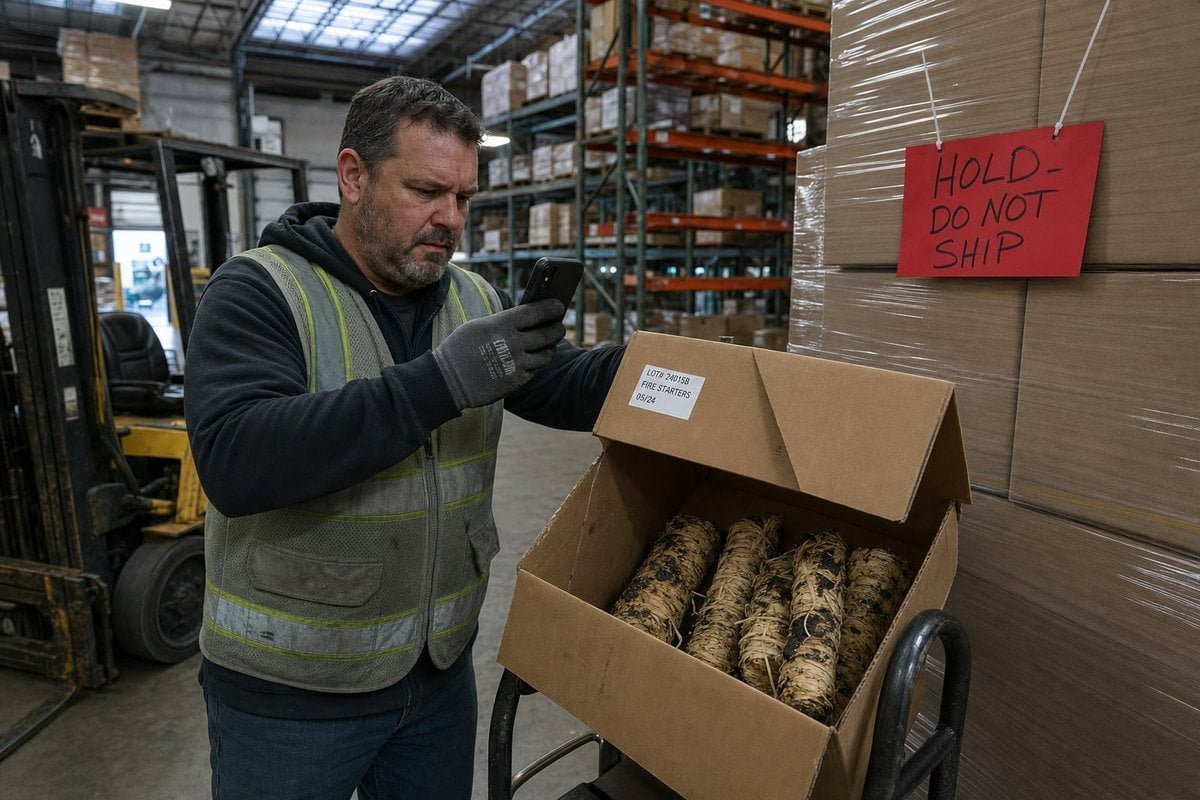
Store complaints about defective wood fire starters after warehouse receipt can spiral fast packing list 1. I have watched importers lose whole retail accounts over one badly handled batch claim from our side of the production line.
To handle store complaints about defective wood fire starters after warehouse receipt, quarantine the affected batch immediately, collect photographic and batch-code evidence, cross-check goods receipt records, file a documented supplier claim, negotiate replacement or credit terms, and tighten pre-shipment quality control to prevent repeats.
That is the short answer. Now let me walk you through each step in detail, based on what actually works between factories, warehouses, and retail stores.
What steps should I take to investigate the root cause when stores report defective wood fire starters?
A buyer in Poland once sent us a single blurry photo and asked for a full refund on 40,000 units. Our first question back was simple: which batch, and how many stores?
Start by verifying the complaint with photos and batch codes, quarantine the suspect lot across all locations, compare store reports against your original goods receipt records, then run a formal root cause analysis to separate manufacturing defects from transit or storage damage.
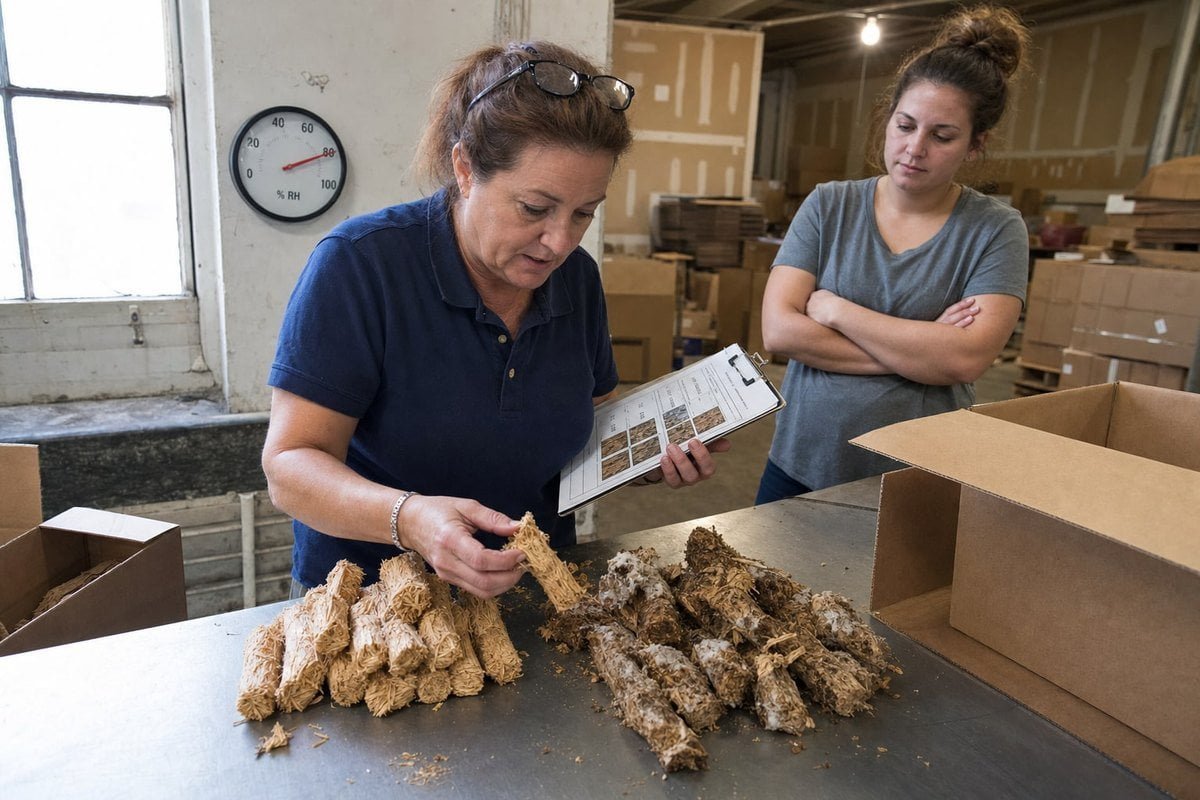
The biggest mistake I see importers make is treating every store complaint as proof of a manufacturing defect. In our seventeen-plus years shipping wax-dipped wood rolls to the US, Germany, and the UK, roughly half of the "defective batch" claims we investigated traced back to something other than production. So the investigation has to be structured, not emotional.
Step 1: Demand structured evidence from the store
Do not accept vague complaints. Require every store to submit high-resolution photos of both the defect and the batch or lot code printed on the packaging. A standardized digital defect report form works best. It should capture ignition failure, excessive smoke, broken wax coating, or packaging compromises in consistent fields. This gives you comparable data instead of angry phone notes.
Step 2: Quarantine by proxy
One verified complaint should trigger a temporary sales hold on that batch across all other store locations. We call this quarantine-by-proxy. It costs you a few days of sales. It saves you from multiplying the problem while you investigate.
Step 3: Trace the defect back through the chain
Cross-reference the complaint with your warehouse goods receipt, the bill of lading 2, and your batch tracking system. Then classify the likely origin:
| Defect Symptom | Likely Manufacturing Cause | Likely Post-Receipt Cause |
|---|---|---|
| Won't ignite or burns weakly | Wax ratio too low, wet wood fiber at production | Moisture re-absorption in humid warehouse zones |
| Crumbling or loose wood wool | Poor winding tension on the line | Rough handling, crushed pallets in transit |
| Excessive smoke | Contaminated fiber or wrong wax blend | Product stored near solvents or damp cardboard |
| Melted or fused units | Overheated during wax dipping | Warehouse or container heat exposure |
A formal root cause analysis 3 matters because it decides who pays. If the defect existed at intake, your supply chain liability discussion goes one direction. If your racking zone sat at high humidity for two months, it goes another. Some of our larger distributor clients now deploy IoT humidity sensors in specific warehouse zones precisely because compressed wood fiber can re-absorb moisture after receipt. One also built a visual defect-versus-variance library for store managers, which cut false-positive complaints caused by natural wood color variation dramatically.
How do I document damage claims properly so my supplier takes responsibility after warehouse receipt?
Here is a trade-off I discuss with buyers constantly: fast receiving versus thorough receiving. Skip inspection at intake, and you weaken every claim you file later. Documentation is your leverage.
Document damage claims with dated photos of products, packaging, and batch codes, plus your purchase order, invoice, goods receipt, and bill of lading. Record affected quantities, storage conditions, and discovery dates, then submit a written claim requesting a specific remedy within a set deadline.

From our side of the table, I can tell you honestly: well-documented claims get paid, and vague claims get argued. When one of our European distributors sends us a claim file with lot numbers, timestamped photos, and their receiving records, our QC team can trace the batch in our system within a day and we resolve it fast. When a claim arrives as "customers say they don't light," we have to push back and ask questions, and everyone loses time.
Build the claim file in this order
- Photograph everything before moving stock. Capture the product, the wax coating, the inner packaging, the retail box, the master carton, the pallet condition, and the printed batch code.
- Pull your paper trail. That means the purchase order, commercial invoice 4, packing list, bill of lading, and the signed goods receipt from your inbound logistics management team.
- Log the facts. Record the receipt date, discovery date, number of units affected, which stores reported, and the storage conditions since arrival.
- Label and hold the physical samples. Mark them clearly as complaint samples. Your supplier will likely request some back for moisture content testing and lab analysis.
- Write the formal claim. State who you are, what was delivered, what is defective, how it was discovered, and exactly what remedy you want. Keep the tone factual, not emotional. Attach everything.
Why timing changes everything
Warehouse receipt is often the legal pivot point. In many B2B contracts, acceptance rules mean that responsibility shifts to you once you sign for the goods without noting exceptions. That is why your packaging integrity check at intake should be documented even when everything looks fine. A clean intake record proves the defect either existed before receipt or developed afterward. Also note that consumer-facing remedy rules vary by jurisdiction. Some markets give a short-term right to reject faulty goods outright, while others require a repair or replacement attempt first. Your B2B claim, however, lives mostly in your contract language, so quote the relevant clauses in your written claim and set a response deadline of five to ten business days.
What replacement or compensation terms should I negotiate with my manufacturer for defective batches?
When we drafted our first vendor compliance agreements with a large US fireplace distributor years ago, the defect-remedy clause took longer to negotiate than the price. That taught me its real value.
Negotiate a tiered remedy structure: free replacement for verified manufacturing defects, credit memos or chargebacks for confirmed batch failures, a defined defect-rate threshold that triggers compensation, agreed return merchandise authorization procedures, and clear cost allocation for freight, disposal, and store-level handling.

The goal of negotiation is not to punish your manufacturer. It is to create a predictable, pre-agreed playbook so neither side improvises under pressure. In our experience exporting to thirty-plus countries, the buyers who negotiate remedies before the first shipment resolve defect claims three times faster than those who negotiate after a problem appears.
The remedy menu and when each fits
| Remedy | Best Used When | Watch Out For |
|---|---|---|
| Full replacement shipment | Defect is widespread and product is still in demand | Lead time; ask for air freight on small urgent portions |
| Credit memo processing | You want flexibility on future orders | Confirm credit validity period and currency |
| Partial refund or price reduction | Defect is cosmetic and product remains sellable | Get written confirmation it closes the claim |
| Rework at destination | Fix is simple, like re-labeling or re-boxing | Agree who pays labor before work starts |
| Chargeback to supplier | Store-level costs like returns handling and inventory shrinkage | Define caps and evidence requirements in advance |
Terms worth writing into your vendor agreement
First, define what counts as a defect. Natural wood color variance is not a defect; ignition failure is. Second, set a defect-rate threshold, for example an agreed acceptable quality limit 5, above which the whole batch qualifies for remedy. Third, establish a return merchandise authorization 6 process so stores and warehouses know exactly how defective stock flows back. Fourth, agree on evidence standards, so a verified claim automatically triggers credit without a fresh negotiation each time. Fifth, allocate ancillary costs: inbound freight, disposal of unsellable units, and compensation for store handling time.
One more point from the factory floor. A serious manufacturer should welcome these clauses, because they reward good production discipline. When a supplier resists any written remedy framework, treat that as a signal about how they will behave when a real problem hits.
How can I strengthen pre-shipment quality control to prevent future wood fire starter complaints?
The lesson that shaped our own QC system came early: a container of wax-dipped rolls that tested perfectly at sampling but arrived damp because the dipping wax ratio drifted mid-run. Prevention beats claims.
Strengthen pre-shipment quality control with documented batch-to-batch inspection, moisture content testing before wax dipping, burn tests on random samples from every production run, third-party inspection for large orders, sealed moisture-barrier packaging, and full batch traceability from raw material to retail carton.

Complaint handling is damage control. Quality control inspection before shipment is where you actually win. Fire starters are an unforgiving product category because the defect only reveals itself at the moment of use, in a customer's fireplace or fire pit. You cannot visually confirm that a wood-wool roll will ignite cleanly. You have to build a system that guarantees it.
What a serious pre-shipment QC program includes
At our Ningbo production facility, every run of wax-dipped wood rolls passes through checkpoints that we developed over years of ISO 9001 7 audits and SGS and Intertek testing cycles. The same logic applies whether you buy from us or anyone else, so ask your supplier to evidence each stage:
| QC Stage | What Gets Checked | Why It Matters for Fire Starters |
|---|---|---|
| Incoming materials | Wood fiber moisture content testing, wax purity | Damp fiber is the top cause of ignition failure |
| In-process control | Winding tension, wax-to-fiber ratio, dip temperature | Ratio drift mid-run creates hidden partial-batch defects |
| Random burn testing | Ignition speed, burn time, smoke level per batch | Only a live test proves function; specs on paper prove nothing |
| Packaging integrity check | Sealed inner bags, carton strength, warning labels, barcodes | Compressed wood fiber re-absorbs moisture through weak packaging |
| Pre-shipment inspection | AQL sampling, batch code verification, container condition | Last chance to reject before supply chain liability shifts |
What you can do on the receiving end
Prevention is shared work. Mandate micro-batch testing at your warehouse: have staff randomly test-light two units from every new pallet before clearing stock for store distribution. Keep your batch tracking system synchronized with your supplier's production codes, so any future complaint traces to a specific run within hours. Monitor humidity in racking zones where wax-and-fiber products sit for months. And close the loop with your supplier: share complaint trends quarterly, because trending data across batches is how corrective and preventive action 8 actually reduces your complaint rate year over year. If a defect ever suggests a genuine safety hazard, such as unpredictable flaring, escalate immediately under a product recall protocol rather than a routine claim, and notify the relevant product safety authority in your market.
Conclusion
Defective batches are inevitable; damaged relationships are not. Quarantine fast, document thoroughly, claim in writing, negotiate remedies upfront, and invest in pre-shipment QC. That system protects stores, margins, and your brand.
Footnotes
1. Mandatory shipping document that provides detailed information about the contents and dimensions of each package. ↩︎
2. Standard legal document used in shipping that provides details about the type, quantity, and destination of goods. ↩︎
3. Standard methodology for identifying the underlying origins of product defects in manufacturing and supply chains. ↩︎
4. Official document used in international trade to provide customs with a declaration of the goods being shipped. ↩︎
5. Statistical sampling standard used to define the maximum number of defects considered acceptable during quality in



 English
  Spanish
  German
  French
  Arabic
  Portuguese
Join the Conversation