






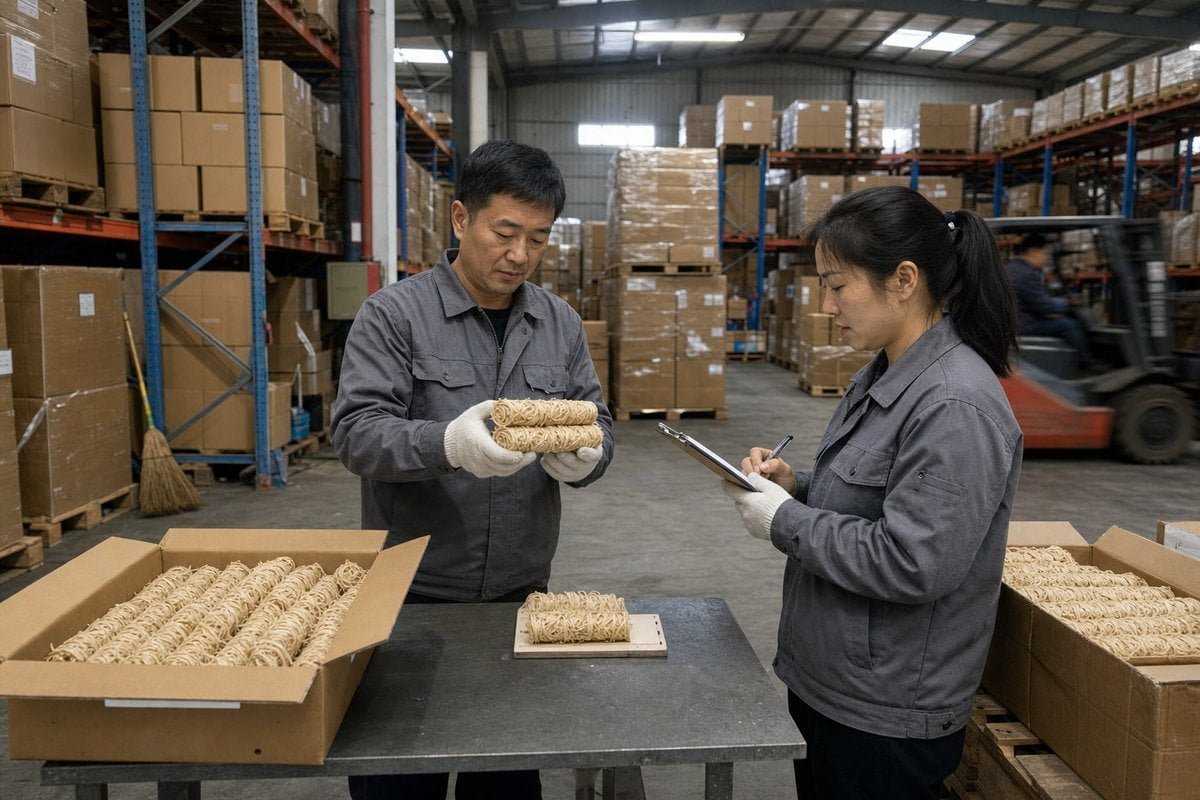
Cross-warehouse spot checks for wood fire starters batch consistency became a priority for us after one distributor found two "identical" lots burning differently. Split inventory hides quality drift. The fix is a structured spot-check program, which I'll walk through here.
Set up cross-warehouse spot checks by defining one batch standard across all sites, pulling random samples from every warehouse, inspecting them against a shared checklist covering lot codes, weight, moisture, and burn time, then comparing results to a master reference sample and documenting every finding.
That is the short answer. Now let me break it down into four practical steps you can apply to your own multi-warehouse operation, starting with what to check first.
What Should I Check First When Comparing Wood Fire Starter Batches Across Different Warehouses?
A few years back, our QC team in Ningbo traced a customer complaint to one warehouse that had quietly repacked a damaged pallet of wax-dipped wood rolls. The lot code 1s told the whole story.
Start with identity checks: verify lot codes, labels, SKU accuracy, and packaging integrity at each warehouse before testing performance. If two sites hold mixed or mislabeled lots, no burn test will give you meaningful comparison data, so traceability always comes first.
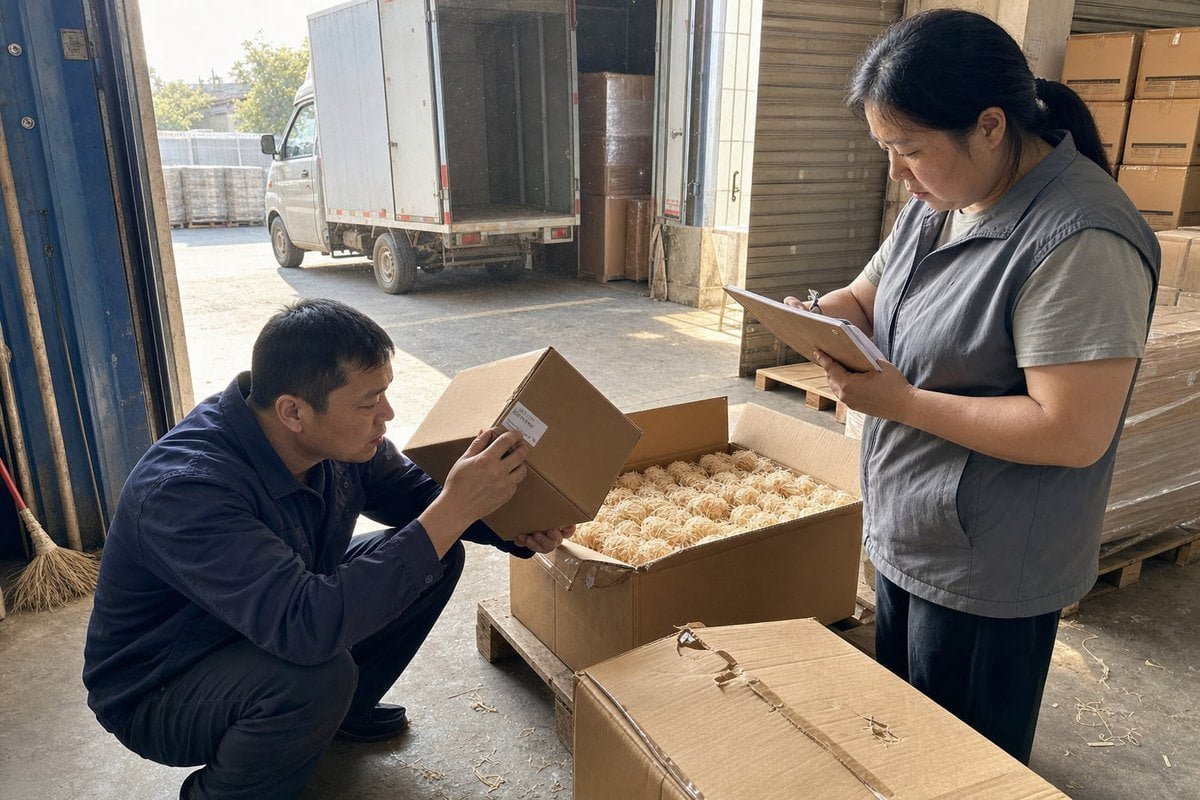
The core problem is simple. "Same product" does not always mean "same batch" once inventory sits in different buildings. Receiving errors, repacking, and storage differences all create drift. So your first checks should confirm you are actually comparing like with like.
Identity Checks Come Before Performance Checks
I split every first-pass inspection into two layers. Identity checks confirm what the stock is. Performance checks confirm how it behaves. Do them in that order.
| Check Type | What to Verify | Why It Matters |
|---|---|---|
| Lot code | Supplier batch code matches receiving records | Enables inventory lot tracking and recalls |
| Label accuracy | SKU, warning labels, barcodes match the spec | Prevents compliance issues at retail |
| Packaging integrity | Seals intact, cartons undamaged | Broken seals let moisture in |
| Count and weight | Units per pack, pack weight vs. spec | Flags repacked or short-filled stock |
| Visual condition | Color, wax coverage, no crumbling | Fast signal of storage damage |
Establish One Batch Definition Across All Sites
Every warehouse must use the same rules. A batch is one supplier lot code plus one receiving ID. Never mix pallets from different lots. Flag any relabeled, repacked, returned, or damaged stock as a separate batch family and keep it segregated. In our own export operations, we found that this single rule — strict batch segregation — prevents most cross-warehouse confusion before it starts. If one site cannot tell you which lot a carton came from, treat that stock as suspect until you can trace it.
How Do I Build a Spot-Check Checklist That Catches Burn Time and Quality Variance?
When we developed our wood firestarter line, we learned that burn time variance almost always traces back to two variables: wax saturation 2 and moisture. Your checklist should be built around catching both.
Build the checklist around measurable criteria: unit weight against spec, moisture content analysis, wax coverage uniformity, ignition rate performance, and timed burn duration. Sample randomly from different pallet positions, record results on a standard form, and compare every warehouse against the same master sample.

A checklist only works if every warehouse team uses it the same way. So write it as a Standard Operating Procedure, train each site on it, and keep the form short enough that people actually complete it during a normal shift.
Randomize Where You Pull Samples
Warehouse handling creates hidden variation. The cartons at the front of a pallet get different exposure than the ones buried in the middle of a rack. Randomized inspection protocols 3 fix this. Pull units from different aisles, different rack heights, and different receipt dates. Rotate which warehouse gets checked first so the schedule stays unpredictable. Some of our larger distribution clients even rotate auditors between sites, which removes local bias entirely.
What Goes on the Checklist
| Checklist Item | Method | Pass Criteria Example |
|---|---|---|
| Unit weight | Scale, per unit and per pack | Within tolerance set on spec sheet |
| Moisture signs | Visual plus meter reading | No swelling, crumbling, or musty odor |
| Wax/resin coverage | Visual against master sample | Even coating, no bare fiber patches |
| Ignition test | Light one unit with a match | Catches within your defined ignition window |
| Burn time testing | Timed burn of sample units | Duration within the range on the spec |
| Residue and odor | Observe after burn | No unusual smoke, residue, or smell |
Keep a Master Sample at Every Facility
Hold an approved reference unit from a qualified production run at each site. Inspectors compare color, texture, and wax saturation against it by hand and eye. This is faster than lab testing and catches most drift. On our production line, we retain samples from every batch for exactly this reason — the first sample a buyer approves must match what ships months later, and retained references make that promise verifiable.
Also, do not over-sample. A simple scaled approach works: test a handful of units per lot per warehouse, and increase only when something looks off. Statistical sampling methods exist precisely so you avoid full inspection.
Which Certifications Should I Verify to Confirm My Supplier's Batch-to-Batch Consistency?
Buyers from Germany and the US ask us the same question in nearly every first meeting: not "what is your price," but "show me your certificates and test reports 4." That instinct is correct, and here is why.
Verify ISO 9001 certification for documented quality management, BSCI for audited factory practices, CE marking where applicable, and third-party test reports from labs like SGS or Intertek. Together these confirm the supplier runs repeatable processes, not just a good first sample.
A certificate does not burn-test your product for you. But it tells you whether the factory behind the product operates with the discipline that makes batch-to-batch consistency possible. In 17-plus years of exporting fire-starting goods to 30-plus countries, I have seen a clear pattern: suppliers who maintain real quality systems ship consistent lots, and suppliers who dodge audits ship surprises.
What Each Certification Actually Tells You
| Certification | What It Confirms | Relevance to Batch Consistency |
|---|---|---|
| ISO 9001 | Documented quality management system | Requires process control, traceability, and corrective action 5s |
| BSCI | Audited social and factory practices | Signals a real, stable factory, not a trading shell |
| CE | Product meets applicable EU requirements | Needed for shelf-ready compliance in Europe |
| SGS / Intertek reports | Independent third-party testing | Verifies composition and performance claims per batch or per period |
Ask for Batch-Level Evidence, Not Just Certificates
A framed ISO certificate is a starting point, not proof. Ask your supplier for their internal SOP for in-process QC, retained sample policy 6, and lot coding rules. Ask how they handle a failed in-line check. Ask whether test reports are tied to specific production runs. At our factory, we keep batch records that link raw material inputs, wax dip parameters, and finished-goods checks to each lot code — so when a buyer asks why lot A matches lot B, we can show the paperwork, not just the promise.
Also verify the composition declaration on the packaging. If a box states a wood fiber and paraffin ratio, the supplier should be able to show how they control that ratio during production. Consistent inputs are the foundation of consistent burn performance.
How Often Should I Schedule Cross-Warehouse Inspections to Avoid Costly Reorders?
One trade-off I weigh constantly with our distribution partners is inspection cost versus reorder risk. Checking too often wastes labor. Checking too rarely means a bad lot ships for months before anyone notices — and by then the reorder, freight, and customer damage cost far more than the audits would have.
Run routine spot checks monthly per warehouse for stable stock, trigger immediate checks after any discrepancy, complaint, or transfer issue, and intensify to weekly checks for new lots, new suppliers, or newly opened warehouses. Adjust frequency by risk, not by a flat calendar rule.

Uniform schedules feel fair, but they waste effort. Risk-based scheduling puts attention where drift is most likely. Here is the three-tier structure I recommend to buyers setting up multi-site quality audits for the first time.
The Three-Tier Frequency Model
- Routine tier. Stable stock, proven supplier, controlled storage. Check monthly per warehouse with a small random sample per active lot.
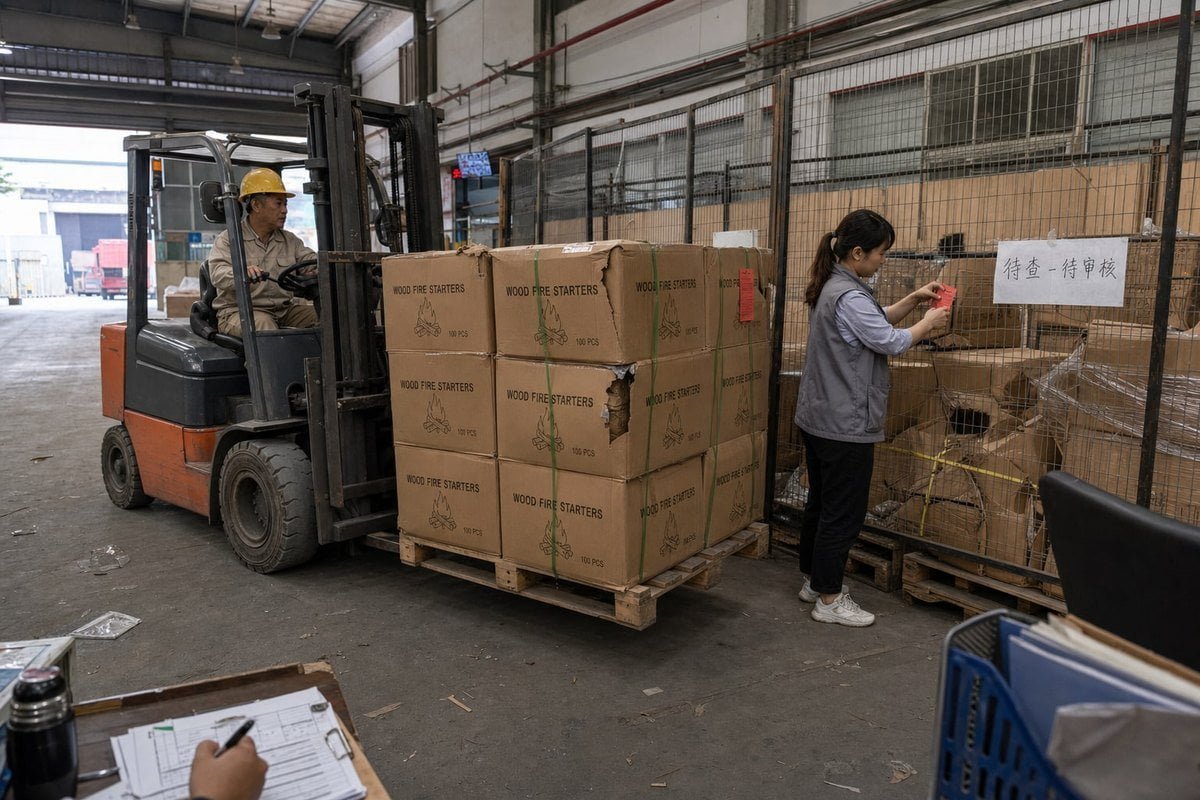
- Triggered tier. Run an unscheduled check immediately after any inventory discrepancy, customer complaint, damaged transfer, or receiving exception. Hold the affected lot until results come back.
- Intensified tier. New supplier, new packaging format, new warehouse, or peak-season volume. Check weekly for the first two or three cycles, then step down once results stay clean.
Factors That Should Increase Your Frequency
Wood fire starters are moisture-sensitive. Wood fiber and wood wool 7 absorb humidity, and wax coatings can soften in heat. So weight your schedule by environment. A warehouse with poor storage humidity control needs more attention than a climate-stable one. The same goes for sites that handle frequent inter-warehouse transfers, since every transfer is a chance for mixing or damage. Logging ambient humidity in each storage zone gives you an early-warning signal: if conditions drift outside your range, trigger a check even if nothing else looks wrong.
Tie Findings to Escalation Rules
A schedule without escalation rules is just paperwork. Define your response in advance. If one warehouse sample fails, place that lot on hold at that site and pull comparison samples from every other site holding the same lot. Investigate root cause — storage, transfer, or supplier — and record the corrective action. Then feed the results into your trend log. Over a few quarters, that log tells you which warehouses, lots, and seasons carry the most risk, and you can tune the schedule with data instead of guesswork. We apply the same closed-loop logic on our own production line, and it is the reason our first samples reliably match mass production.
Conclusion
Batch drift across warehouses is invisible in system data but obvious to customers. Define batches consistently, sample randomly, inspect against one checklist, verify supplier certifications, and schedule checks by risk.
Footnotes
1. Authoritative Wikipedia definition for manufacturing lot numbers and traceability. ↩︎
2. Background on wax composition relevant to coating uniformity and burn performance. ↩︎
3. Explains statistical basis for random sampling used in spot-check inspections. ↩︎
4. SGS issues independent third-party test reports verifying product specification compliance. ↩︎
5. ISO 9001 requires documented corrective action processes within quality management systems. ↩︎
6. Official FDA regulation governing the retention of samples in manufacturing. ↩︎
7. Wikipedia entry for wood wool, explaining its properties and industrial uses. ↩︎



 English
  Spanish
  German
  French
  Arabic
  Portuguese
Join the Conversation