






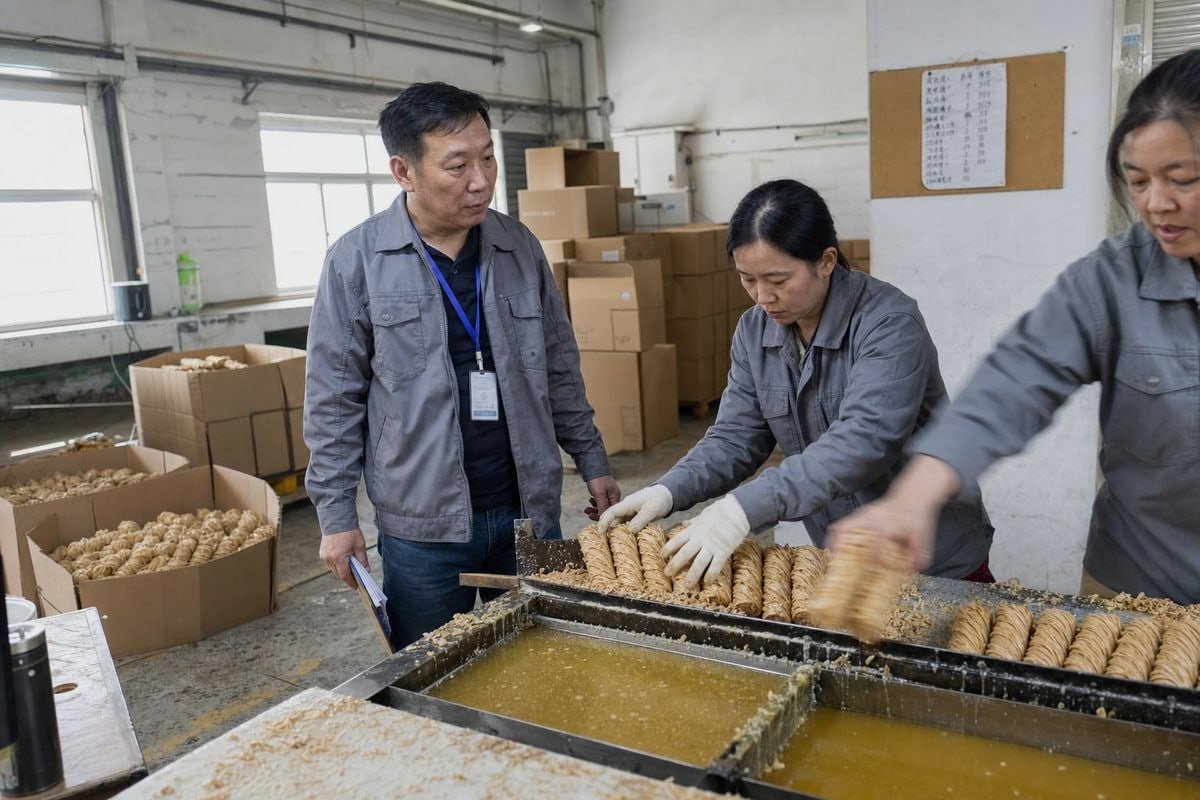
Wood fire starters bulk orders look simple on paper — until a container arrives with pucks that won't light ISO 2859-1 1. On our production line in Ningbo, we've seen exactly how that happens: unstable wax ratios, damp wood wool, rushed seasonal runs. One bad batch can wipe out a full season's margin and a retailer relationship. The fix isn't luck. It's matching your inspection depth to your actual order risk.
For wood fire starters bulk orders, use random pre-shipment inspection for repeat orders from proven suppliers, and full factory supervision for first orders, private-label runs, or high-risk factories. A hybrid model — supervision first, then AQL sampling — protects quality while controlling inspection costs.
Let me break down how to make that call for your own orders. We will look at verification, certifications, the inspection models themselves, and batch consistency 2. Each section gives you something you can act on this week.
How can I verify quality control before placing a bulk wood fire starter order?
A German distributor once asked us to walk him through our entire QC flow on a video call before he would even discuss pricing. That request changed how I think about buyer trust — verification should come before the purchase order, not after.
Verify quality control before a bulk order by requesting production samples, factory audit reports, and batch test records. Check ignition time, burn duration, odor, and residue yourself. Confirm the factory runs raw material inspection and in-process checks, not just final packing checks.
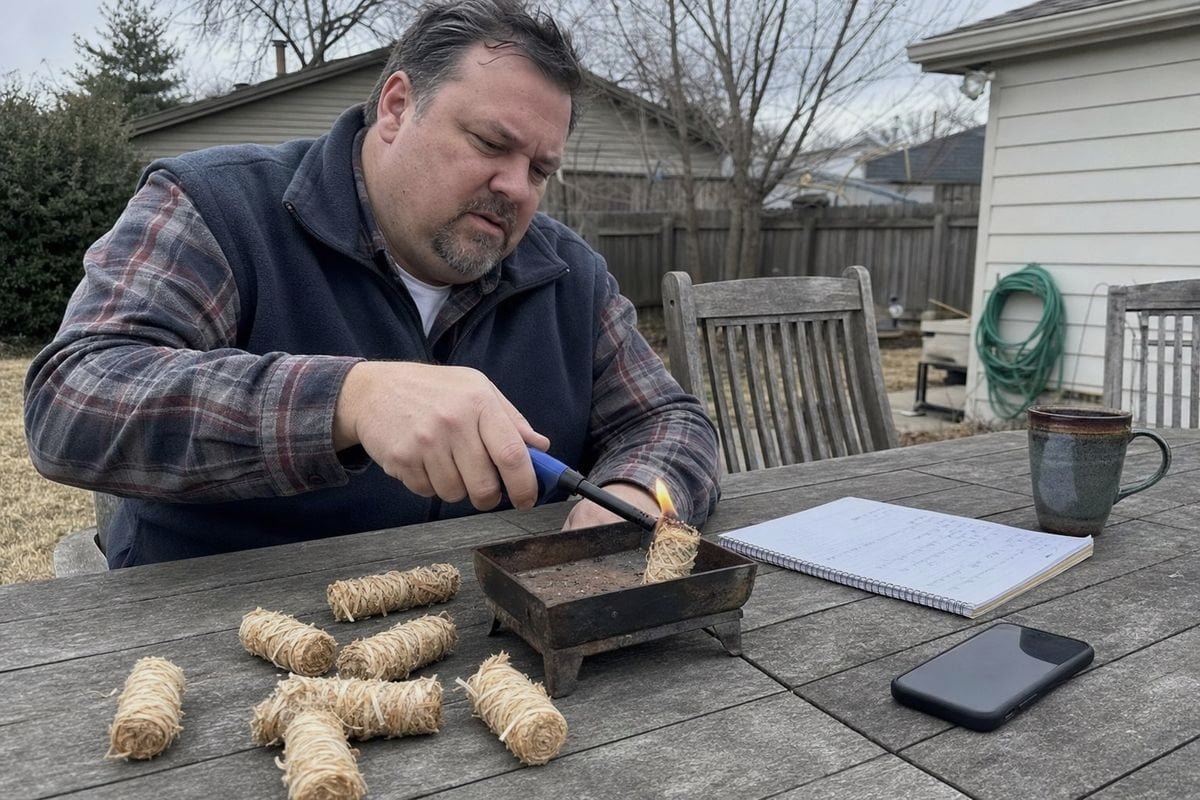
Verification starts long before an inspector ever sets foot in the factory. In my experience exporting fire-starting goods 3 to the US and Europe for over 17 years, the buyers who avoid disasters all do the same three things early.
Step one: test real samples, not marketing samples
Ask for samples pulled from a recent production batch, not a hand-made showroom piece. Then test them the way your customers will use them. Light one in cold weather. Store one somewhere humid for two weeks, then light it. Time the ignition. Time the burn. Smell the smoke. Check the ash left behind. A wax-dipped wood roll should ignite fast, burn steadily for several minutes, and leave minimal residue. If a supplier hesitates to send batch samples, that hesitation is your answer.
Step two: audit the process, not just the product
A finished puck can hide a weak process. Ask the factory these questions directly:
| Question to ask | What a good answer sounds like | Red flag |
|---|---|---|
| Do you inspect incoming wood wool and wax? | Yes, with moisture and purity checks per lot | "Our supplier handles that" |
| How do you control the wax-to-wood ratio? | Documented ratio with batch records | "Experienced workers judge it" |
| Do you burn-test each production batch? | Yes, sample burns logged per batch | "We test when customers ask" |
| Can we see past inspection reports? | Reports shared within days | Excuses or delays |
Step three: check documentation before money moves
Request the factory's audit history, third-party test reports, and photos of the actual production line. At our facility, we keep batch-level QC records precisely because serious buyers ask for them. A factory with nothing to show usually has nothing to show for a reason.
What certifications should I request to ensure my wood fire starters meet international safety standards?
Compliance paperwork is the first thing our European buyers ask about — often before price. I've watched competitors lose six-figure retail contracts because a single test report was missing at customs.
Request ISO 9001 quality management certification, BSCI social audit reports, CE marking for the EU, and third-party test reports from labs like SGS or Intertek. For shipping, confirm MSDS documentation and flammable-goods transport compliance under IMDG or DOT rules where applicable.

Certifications are not decoration. They decide whether your goods clear customs, whether a retailer accepts your shipment, and who carries the liability if something goes wrong. From our side of the export process, here is what actually matters, sorted by what it protects.
The core certification stack
| Certification / document | What it proves | Who demands it |
|---|---|---|
| ISO 9001 | The factory runs a documented quality management system | Most established importers |
| BSCI audit | Ethical labor and social compliance | European retailers especially |
| CE marking 4 | Product meets EU safety requirements | EU market entry |
| SGS / Intertek test reports | Independent lab verification of materials and performance | Retail chains, cautious buyers |
| MSDS 5 / SDS | Safe handling data for wax-based flammable products | Freight forwarders, customs |
| IMDG 6 / DOT compliance | Legal sea and road transport of flammable solids | Carriers and regulators |
The layer most buyers forget
Wax-and-wood fire starters can fall under flammable solids classification 7 depending on composition and destination. That means your inspection — random or supervised — should verify that outer cartons carry the correct handling marks and that the MSDS matches the actual product formula. We build this into every export shipment because one mismatched document can strand a container at port for weeks.
If you sell eco-positioned products, add one more layer: raw material traceability. Buyers claiming sustainable or natural sourcing should ask the factory to document where the wood wool comes from. Generic inspection checklists skip this entirely, and that gap is where marketing claims quietly become legal risk.
Finally, ask for the reports themselves, not just certificate numbers. A real factory shares them without friction. We keep ours ready because our buyers treat compliance as a hard requirement, and frankly, so do we.
Should I choose random pre-shipment inspection or full-time factory supervision for my production run?
Every quarter, at least one new buyer asks me which inspection model to book — and my honest answer always starts with a question back: is this your first order with the factory, or your fifth?
Choose random pre-shipment inspection for repeat orders with proven suppliers and stable specifications. Choose full factory supervision for first orders, custom or private-label runs, seasonal rush production, or suppliers with past defects. Many buyers use supervision first, then downgrade to random inspection.

Here is the core comparison, side by side:
| Factor | Random pre-shipment inspection | Full factory supervision |
|---|---|---|
| Timing | When ~80% of the order is packed | Throughout the entire production run |
| Method | AQL sampling 8 under ISO 2859-1 | Continuous on-site monitoring |
| Cost | Lower, per-inspection fee | Higher, billed in inspector-days |
| Catches | Finished-goods defects | Process problems before they multiply |
| Best for | Repeat orders, stable SKUs | First orders, custom runs, risky suppliers |
| Weakness | Misses process drift; defects already made | Cost may exceed value on routine orders |
Why fire starters complicate the choice
Random inspection works well for products judged by appearance. Fire starters are judged by performance. An inspector can look at a thousand pucks and never know that the wax ratio drifted in week two, cutting burn time in half. By the time random sampling reveals a performance failure, the entire batch already exists. Your only options are rework, discount, or rejection — and all three cost you the shipping season.
Full supervision catches that drift while it is still fixable. An inspector watching raw material intake, wax dipping, and batch burn tests can stop a problem at unit five hundred instead of unit fifty thousand. On our own lines, this is exactly why we run in-process batch controls even when no buyer inspector is present — end-of-line checks alone arrive too late.
The hybrid model most professionals actually use
In practice, experienced sourcing teams do both, sequenced by trust:
- Full supervision on the first production run and any new private-label SKU.
- Random AQL inspection once the factory has proven two or three consistent runs.
- Occasional spot audits or remote video checks during peak season, when rushed capacity raises risk.
This hybrid approach can cut oversight costs substantially compared to permanent supervision, while still covering the moments when failure is most likely. Seasonal timing matters too. Pre-winter and pre-camping-season surges strain every factory's capacity. If your order lands in a rush period, upgrade your oversight for that run even with a trusted supplier.
How do I make sure every batch of wood fire starters matches my approved sample quality?
The hardest lesson from my years running production lines is this: the gap between an approved sample and a bulk shipment is where most sourcing relationships die. Samples get love. Batch fifty gets whatever the process allows.
Lock the approved sample as a signed golden sample, write measurable specifications for ignition time, burn duration, size, and wax content, require batch-level burn test records, and tie payment terms to inspection results. Consistency comes from documented process control, not supplier promises.
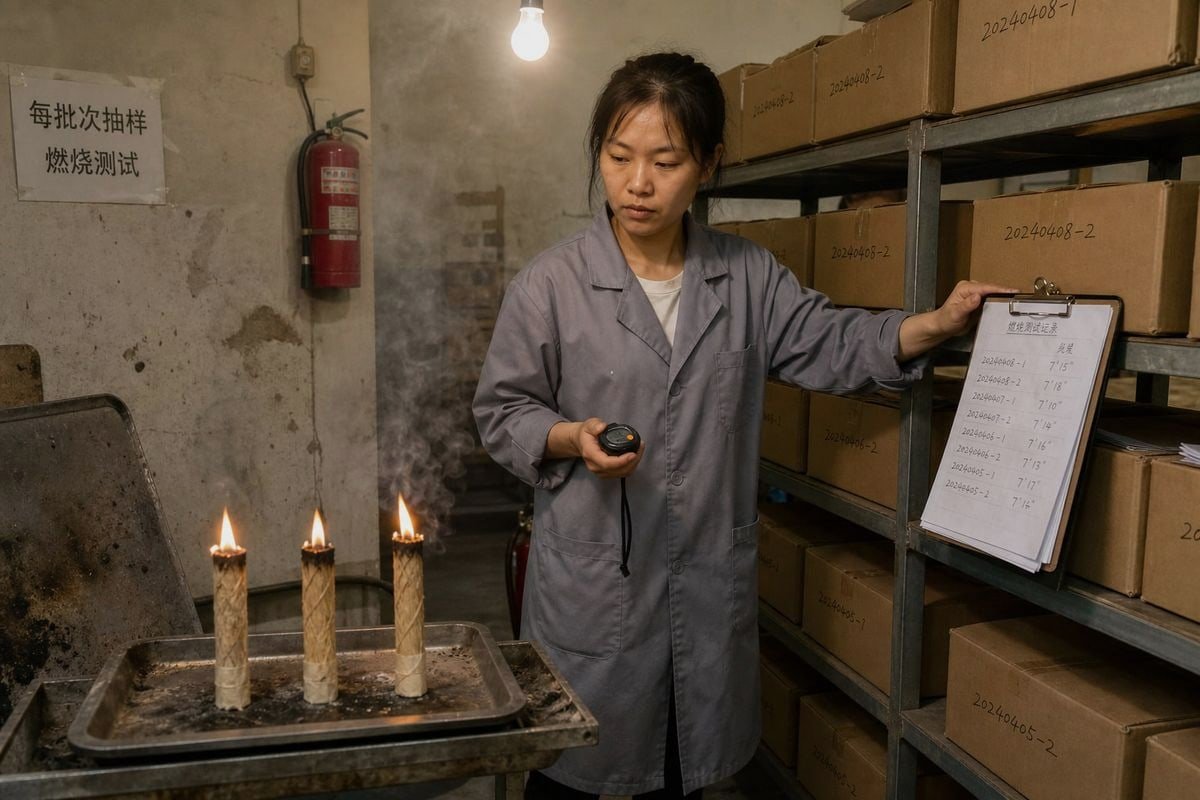
Batch consistency is a system, not a hope. Here is the framework I recommend to every buyer, built from what actually keeps our own batch-to-batch quality tight.
Turn your sample into a specification
A golden sample sitting in a drawer proves nothing by itself. Convert it into numbers both sides sign:
- Ignition time in seconds, with an acceptable range
- Burn duration in minutes, minimum threshold
- Wax-to-wood composition, stated as a ratio
- Dimensions and unit weight, with tolerances
- Odor and smoke expectations, described plainly
- Packaging, barcode placement, and warning label layout
Keep one sealed sample with you, one at the factory, and reference both in your purchase contract. When a dispute arises — and eventually one will — the golden sample plus written spec settles it in minutes instead of weeks.
Demand batch-level evidence, not batch-level promises
Every production batch should generate a record: raw material lot, wax ratio used, sample burn test result, and inspector sign-off. At our factory, this batch discipline is the reason a first sample reliably reflects mass production — the process is calibrated to the spec, so the output cannot quietly wander. Ask your supplier to share these records with each shipment. A factory that already keeps them will say yes instantly.
Close the loop with commercial leverage
Tie your final payment to a passing inspection report against the golden sample spec. This is not hostility; it is alignment. It gives the factory a direct financial reason to keep every batch honest, and it gives you a clean exit if quality slips. Combine that with the inspection model from the previous section — supervision early, sampling later — and you have a repeatable system that scales from a trial order to full retail programs, including big-box requirements like shelf-ready cartons and standardized pallets.
Conclusion
The real risk in wood fire starters bulk orders is discovering defects after the container ships. Match oversight to risk: supervise new and custom runs, sample proven ones, and let documented batch control do the rest.
Footnotes
1. Official ISO standard page for the sampling procedure referenced in the inspection table. ↩︎
2. General reference explaining quality control principles underlying batch consistency practices. ↩︎
3. Background reference on wax-based firelighter products discussed throughout the article. ↩︎
4. Official EU page explaining CE marking requirements mentioned for market entry. ↩︎
5. Background reference explaining safety data sheets required for flammable wax-based products. ↩︎
6. International Maritime Organization page on dangerous goods transport rules cited for flammable solids. ↩︎
7. Background concept on dangerous goods classification relevant to wax-based fire starters. ↩︎
8. Background concept explaining acceptance quality limit sampling used in inspections. ↩︎


 English
  Spanish
  German
  French
  Arabic
  Portuguese
Join the Conversation