






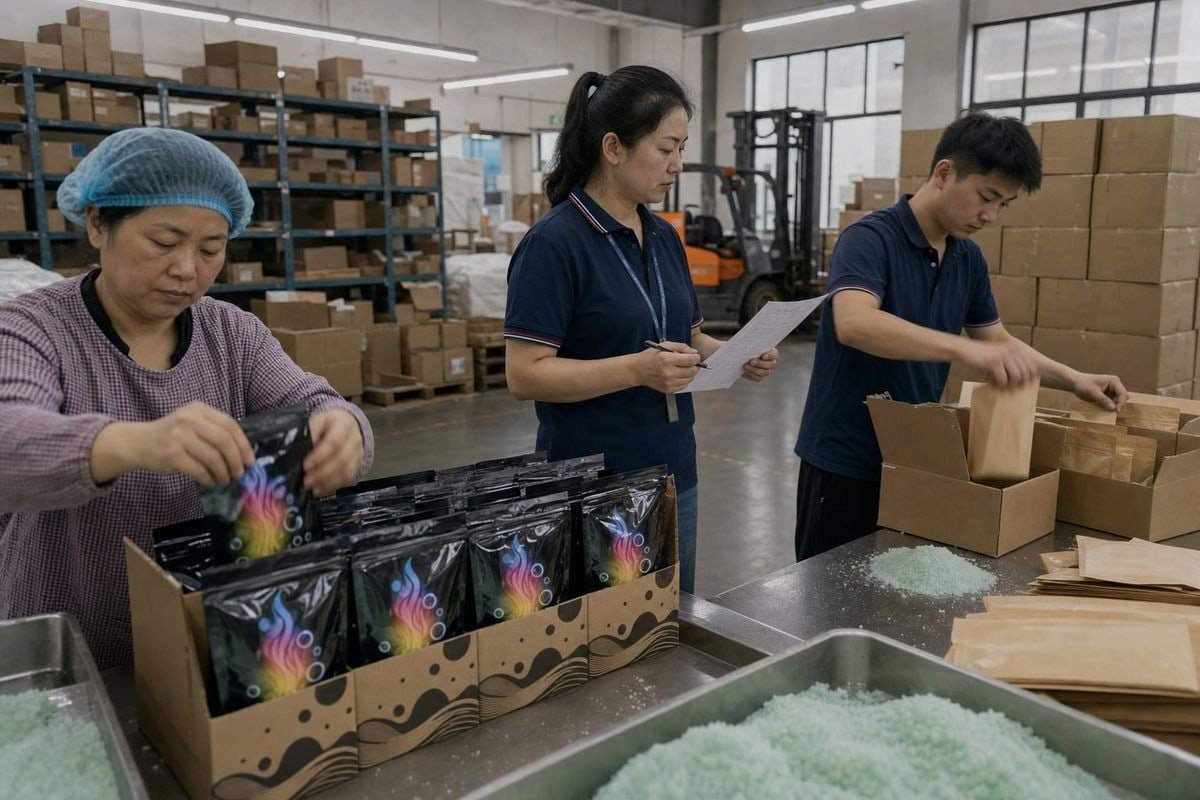
Listing control and return risks decide whether an FBA launch grows or bleeds money HTS classification 1. On our Magic Fire packing lines, we watch buyers wrestle with this exact [private label decision](https://sunrichfire.com/private-label-vs-established-brand-wood-fire-starters-eu-us-markets/) daily.
Private label vs supplier packaging for FBA trades listing control against return risk. Private label gives you full control of the listing, brand, and packaging, but you absorb all return, compliance, and liability exposure. Supplier packaging reduces branding work but exposes you to shared listings, hijackers, and commingled inventory.
That answer covers the core trade-off. But the details matter, especially for fire products like color-flame packets, where compliance labels and return handling carry extra weight country-of-origin marking 2. Let me walk you through each risk area.
One of our German distributors once found four unknown sellers attached to his generic color-flame listing within a month. His Buy Box share collapsed. That call changed how we advise every FBA buyer we work with.
Private labeling protects your Amazon listing by creating a unique brand and FNSKU-labeled ASIN that no other seller can attach to. Brand Registry enrollment then adds A+ Content rights, proactive hijacker detection, and the authority to remove unauthorized listing changes or counterfeit sellers.
The mechanics here are simple but often misunderstood. When you sell a supplier-branded or generic product, your inventory usually enters Amazon as a shared ASIN. Any seller sourcing the same or a similar-looking product can jump onto that listing. They undercut your price, win the Buy Box, and sometimes ship inferior stock that generates reviews on the listing you built.
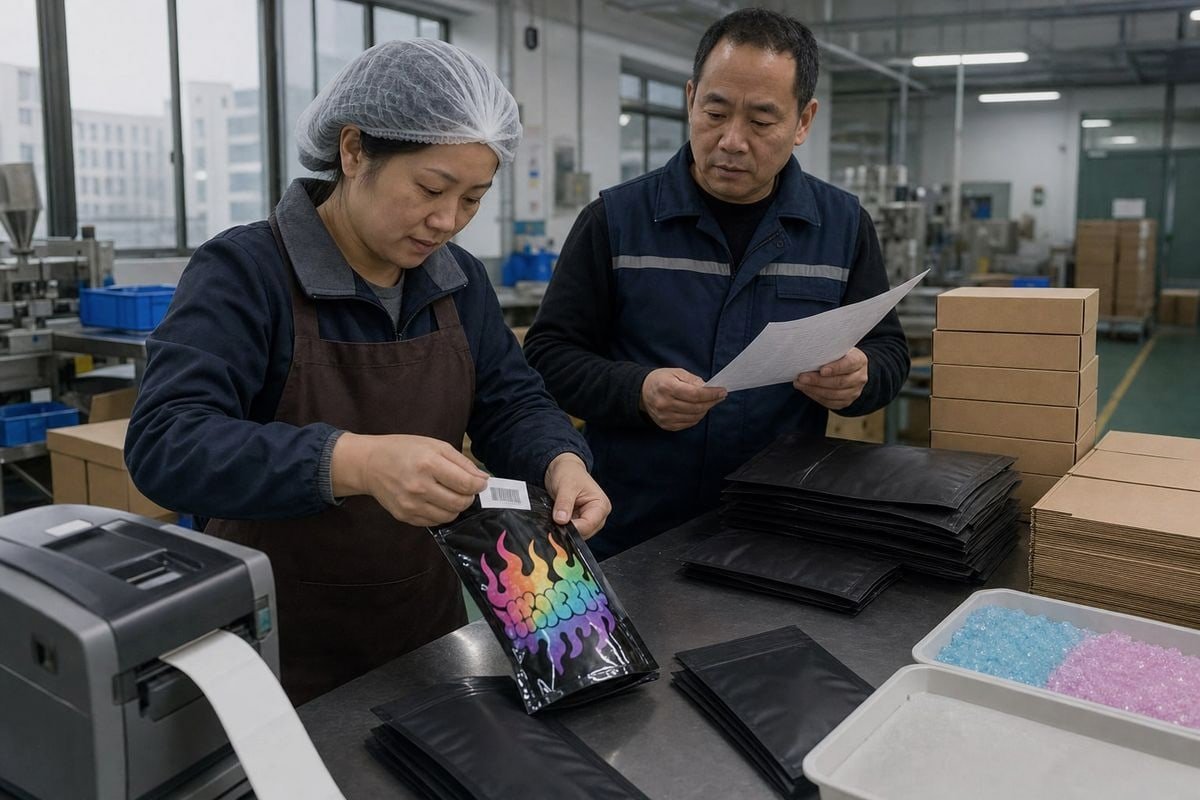
Private label breaks that cycle. Your own brand name, your own artwork, your own FNSKU 3 barcode. No one else can legitimately list against it. When we run private-label jobs for buyers — custom pouches, boxes, or kraft bags with their brand — we also print their barcode and batch codes directly on the packaging, so their FBA inbound stays clean.
What Brand Registry unlocks
Brand Registry 4 is the second layer. Once your trademark is filed and registered, you gain tools that generic resellers never see:
| Protection | Private Label + Brand Registry 5 | Supplier Packaging (Shared ASIN) |
|---|---|---|
| Exclusive ASIN control | Yes — FNSKU locked to you | No — anyone can attach |
| A+ Content and brand store | Yes | No |
| Hijacker takedown tools | Yes — Report a Violation | Limited or none |
| Control of title, images, bullets | Full | Shared or none |
| Commingled inventory risk | Avoidable | High |
But be honest with yourself about the flip side. Full listing control also means full responsibility. If your listing makes an unsupported claim, uses someone else's trademark, or violates a content policy, the suspension lands on you. Control is a double-edged sword: it protects you from hijackers, but it exposes you to your own mistakes. That is why we push buyers to lock down artwork, claims wording, and compliance text before the first production run, not after the first policy warning.
What return and liability risks am I exposed to if I use my supplier's generic packaging for FBA?
A buyer interaction from a few years back still shapes my advice here. A US importer took our stock packaging to save setup costs, then discovered his returns were mixing with another seller's damaged units in commingled bins. He absorbed refunds for products he never shipped.
Using generic supplier packaging exposes you to commingled inventory returns, where customers receive counterfeit or damaged units from other sellers' stock, plus shared negative reviews, Buy Box price wars, and limited return-reason data. Liability may shift to the manufacturer, but your account health still absorbs the damage.
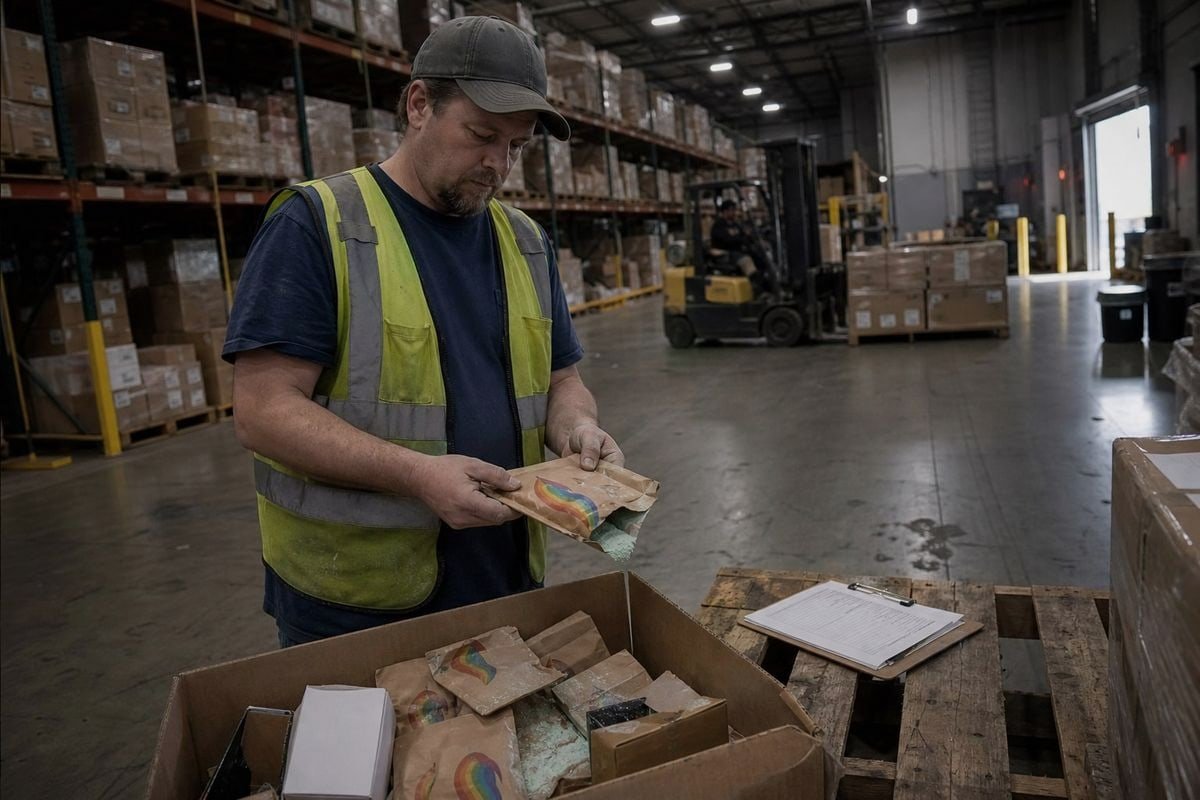
Let me break the exposure into its real components, because returns are never just refunds.
The commingling problem
When identical supplier-packaged products enter FBA without unique FNSKU labels, Amazon may pool them in shared bins. A customer who orders from you might receive a unit from another seller's stock. If that unit is expired, crushed, or counterfeit, the return and the review land on your metrics. You cannot audit inventory you cannot identify.
The data blindness problem
Amazon's SKU-level Return Insights and Voice-of-the-Customer reason codes flow primarily to registered brand owners. Generic resellers see refund totals but rarely the root causes. You know returns are rising, but not why. Private label sellers can diagnose whether the issue is a torn seal, unclear instructions, or a promise mismatch — and fix it at the next production batch. We adjust pouch seal strength and instruction printing between batches for exactly this reason.
The liability question
Here is one genuine advantage of supplier packaging: product liability 6 and recall responsibility often trace back to the original manufacturer whose name is on the pack. Private label owners bear full legal and financial accountability for defective units. For fire products, that difference is real money. But it is not a free pass — your Amazon account, your reviews, and your customer relationships still take the operational hit either way.
| Risk Area | Supplier Generic Packaging | Private Label Packaging |
|---|---|---|
| Commingled counterfeit returns | High | Avoidable with FNSKU |
| Return reason-code visibility | Limited | Full via Brand Registry |
| Legal liability for defects | Often shifts to manufacturer | Fully on you |
| Insert cards to intercept complaints | Not possible | Fully possible |
| Review pool contamination | Shared with all sellers | Yours alone |
Which compliance labels and warnings must I include on private label fire products to avoid FBA suspensions?
Compliance is where our factory earns its keep. After 17+ years exporting color-flame products to 30+ countries, we have learned that a missing warning line can strand an entire container at an FBA warehouse.
Private label fire products need clear hazard warnings, keep-away-from-children text, usage instructions, country-of-origin marking, importer or brand contact details, and any market-specific chemical labeling such as CLP in the EU. Supporting test reports from labs like SGS or Intertek prove claims if Amazon requests documentation.

Amazon treats fire-related and chemical-adjacent products as higher scrutiny categories. Sellers in this space regularly face documentation requests, and a listing without proof gets suppressed first and questioned later. Here is how I advise buyers to build a suspension-proof label.
The non-negotiable label elements
- Hazard and caution statements. Our Magic Fire pouches carry a visible caution label on the front panel. Yours should too — text warning against ingestion, direct skin exposure to flames, and indoor misuse where applicable.
- Child safety wording. Keep-out-of-reach-of-children language is expected on any fire additive, even eco-friendly formulations like ours that contain no harmful chemicals.
- Clear usage instructions. State exactly how to use the packet: toss unopened into an established campfire, fireplace, or fire pit. Vague instructions drive misuse, and misuse drives returns and complaints.
- Country of origin. Modifying packaging for private label can change customs and country-of-origin labeling obligations. "Made in China" must appear correctly, and your HTS classification 7 should match the new retail packaging format.
- Brand owner or importer contact. EU markets in particular expect a responsible-party address on the pack.
- Barcodes and batch codes. We print FNSKU or EAN/UPC barcodes plus batch traceability codes on request, so buyers can trace any complaint back to a specific production run.
Documentation behind the label
The label is only the visible half. When Amazon or a customs officer asks for proof, you need test reports on file. We supply SGS or Intertek reports with our shipments, and our ISO 9001 and BSCI certifications back the production system itself. Buyers who source from suppliers without third-party reports are betting their account on never being asked. In this category, you will be asked.
How do I decide between private label and supplier-branded packaging when launching color-flame products on Amazon?
The trade-off I weigh with every new FBA buyer is the same: how much control do you need, and how much risk can your operation actually absorb? There is no universally right answer — only a right answer for your capital, QA capability, and timeline.
Choose private label if you have capital for trademarks, inspections, and PPC, and want to build a durable brand asset with full listing control. Choose supplier-branded packaging if you need a low-risk, fast market test and can accept shared listings and limited differentiation.
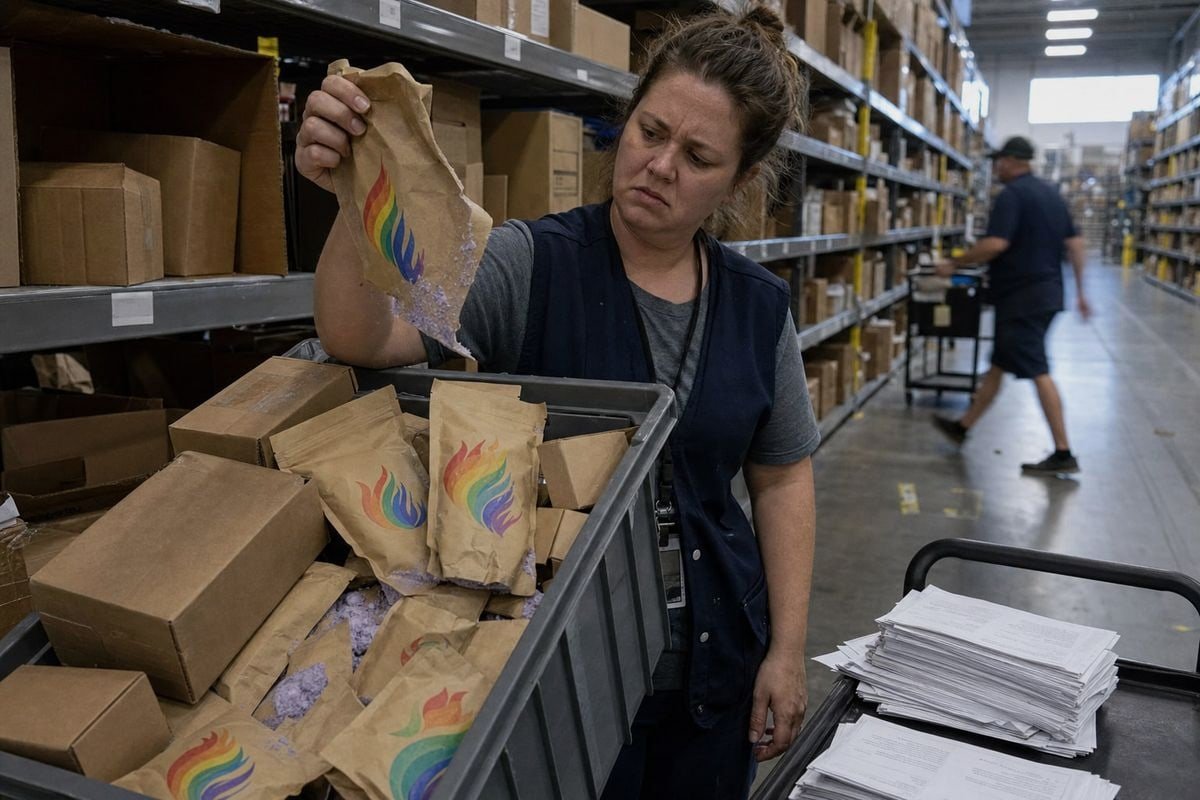
Some sellers argue private label is always superior because it builds equity you can eventually sell. I understand the appeal, but I have watched that logic fail. Private label is more controllable, yet less forgiving. Higher PPC costs, stricter compliance expectations, and QC drift punish undercapitalized launches hard. The honest framing: private label wins on control, but supplier packaging can be safer when you lack strong QA processes or the capital to absorb early mistakes.
A practical decision framework
| Factor | Choose Private Label When... | Choose Supplier Packaging When... |
|---|---|---|
| Budget | You can fund trademark, artwork, inspections, and 3–6 months of PPC | You need minimal upfront investment |
| Timeline | You can wait for custom packaging production | You need inventory at FBA fast |
| Volume goal | You plan repeat orders and long-term growth | You are testing demand with one trial order |
| Compliance capacity | You can manage labels, claims, and test reports | You rely on the supplier's established documentation |
| Exit plan | You want a sellable brand asset | You want cash flow, not equity |
A hybrid path many of our buyers take
Here is what works in practice. Start with a small trial order in near-stock packaging to validate demand — we keep MOQs flexible for exactly this stage. Once sales data confirms the market, move to full private label: your brand on the pouch, kraft bag, or display box, your FNSKU, your warning labels pre-printed, your barcodes applied at our factory. Because our batch-to-batch quality control keeps mass production consistent with the first sample, the product your customers receive in month twelve matches what they reviewed in month one. That consistency is what keeps return rates flat as you scale. Listing control is valuable only if your packaging and product keep matching the promise — so pick a supplier whose QC makes that promise repeatable.
Conclusion
Private label gives you listing control; supplier packaging shifts some risk upstream but invites hijackers and commingling. Match the model to your capital and QA — and partner with a certified factory that keeps the promise consistent.
Footnotes
1. US government trade resource explaining customs classification mentioned for packaging changes. ↩︎
2. US Customs guidance on origin marking rules referenced for compliance labeling. ↩︎
3. Background concept on Amazon product identifiers relevant to private label listing control. ↩︎
4. Official Amazon program referenced for hijacker protection and listing control tools. ↩︎
5. Official Amazon Brand Registry program page explains enrollment requirements and hijacker protection tools. ↩︎
6. Background concept explaining legal liability exposure discussed for private label sellers. ↩︎
7. Official US Harmonized Tariff Schedule database for verifying correct country-of-origin and customs classification. ↩︎



 English
  Spanish
  German
  French
  Arabic
  Portuguese
Join the Conversation