







GPSR manufacturer responsibilities catch many private-label buyers off guard. After 17 years producing color-flame packets in our Ningbo facility, we see this confusion in almost every new inquiry.
Under GPSR, if you sell Magic Fire Powder under your own brand, you are the legal manufacturer. You must ensure product safety, complete a documented risk assessment, keep technical documentation for ten years, apply traceable labeling with warnings, and appoint an EU responsible person if based outside the EU.
That answer sounds simple, but each duty has real detail behind it. Let me walk you through what we have learned helping brands enter the EU market since Regulation EU 2023/988 1 took effect.
What Documentation Do I Need to Prove GPSR Compliance for My Private Label Products?
A German distributor once asked us for our "compliance folder" before signing anything. That request taught me early on: in the EU, paperwork is not an afterthought — it is the product.
You need a technical documentation file containing a product description, a documented risk assessment, applied safety measures, test reports, a Safety Data Sheet where relevant, and label artwork. GPSR requires you to keep this dossier for ten years and provide it to market surveillance authorities on request.

Compliance under EU 2023/988 is documentation-led. It is not enough that your Magic Fire Powder is actually safe. You must be able to prove it, on paper, quickly, when an authority asks. In our experience, buyers who prepare the file before launch avoid the panic that comes with a surprise inspection notice.
The Core Technical File
Your technical documentation should tell a complete safety story. Here is what we assemble for our OEM clients as a baseline:
| Document | What It Covers | Who Usually Prepares It |
|---|---|---|
| Product description | Composition type, format, intended use | Factory + brand owner |
| Risk assessment | Identified hazards and mitigation measures | Factory, reviewed by brand |
| Test reports | Third-party lab results (e.g., SGS/Intertek) | Accredited lab via factory |
| Safety Data Sheet 2 (SDS) | Chemical hazards, handling, first aid | Factory or chemical consultant |
| Label artwork | Warnings, traceability, contact details | Brand owner with factory input |
| Declaration/compliance statement | Confirmation of GPSR conformity | Brand owner as manufacturer |
Why the Ten-Year Rule Matters
Market surveillance authorities can request your dossier long after a batch has sold out. We advise clients to archive files by batch number, because a recall inquiry three years later will reference a specific production lot, not a product name. If your supplier changed the formulation mid-year and you cannot show which batches used which version, you have a traceability gap that authorities will notice.
Chemical Documentation Is Part of the Package
For a flame-coloring powder, GPSR documentation overlaps with chemical rules. Your file should reference REACH compliance 3 for chemicals and confirm whether CLP labeling requirements apply to your specific formulation. A chemical safety assessment from your supplier strengthens the file considerably. Some of our larger clients now use digital tools to track REACH and CLP updates in real time, because substance classifications can change between production runs.
Who Qualifies as the Manufacturer Under GPSR When I Private Label Magic Fire Powder?
Last year, a UK buyer told me confidently that GPSR was "our factory's problem" since we make the product. I had to give him uncomfortable news before he printed his first label.
Under GPSR, whoever places the product on the EU market under their own name or trademark is the legal manufacturer. If you private label Magic Fire Powder, you assume full manufacturer liability — even though a third-party factory physically produces it.

This is the single most misunderstood point we encounter. Private label does not mean private liability avoidance. The moment your brand name goes on that foil pouch, the regulation treats you as if you made it yourself. Economic operators' obligations under EU 2023/988 attach to roles, not to factories.
How Roles Are Assigned
GPSR defines several economic operators, and your position in the chain determines your duties:
| Role | Trigger | Key Obligations |
|---|---|---|
| Manufacturer | Product sold under your name or trademark | Risk assessment, technical file, labeling, recalls |
| Importer | You bring goods into the EU under the factory's brand | Verify manufacturer compliance, add your details |
| Distributor | You resell without branding or importing | Verify labeling, act with due care |
| Authorized Representative in the EU 4 | Appointed by a non-EU manufacturer | Compliance contact for authorities |
The Non-EU Complication
If your company sits in the US, UK, or anywhere outside the EU, there is a second layer. GPSR requires an EU-established responsible person for every consumer product sold there. This can be an Authorized Representative in the EU, an importer, or a fulfilment provider taking on the role. Their name and contact details must appear on the product or packaging. Without one, your Magic Fire Powder cannot legally be placed on the EU market — customs and marketplaces increasingly check for this.
Substantial Modification
One more trap. If you repackage the powder, blend it, or change it in a way that affects safety, you become the manufacturer of the modified product outright. We had a client who wanted to combine our color-flame powder with a firestarter block in one retail pack. That combination created a new risk profile — a synergistic hazard needing its own assessment — and a new manufacturer responsibility sitting squarely with them.
How Do I Ensure My Supplier Handles Risk Assessments and Traceability Requirements?
Every trial order we run in Liuyang starts with a batch code assigned before the first sachet is sealed. We learned that discipline the hard way, years before GPSR made it mandatory.
Require your supplier to deliver a written risk assessment, batch-coded production records, an SDS, and third-party test reports with every order. Verify their traceability system links each sachet batch to raw materials, then mirror those batch numbers on your own packaging and records.
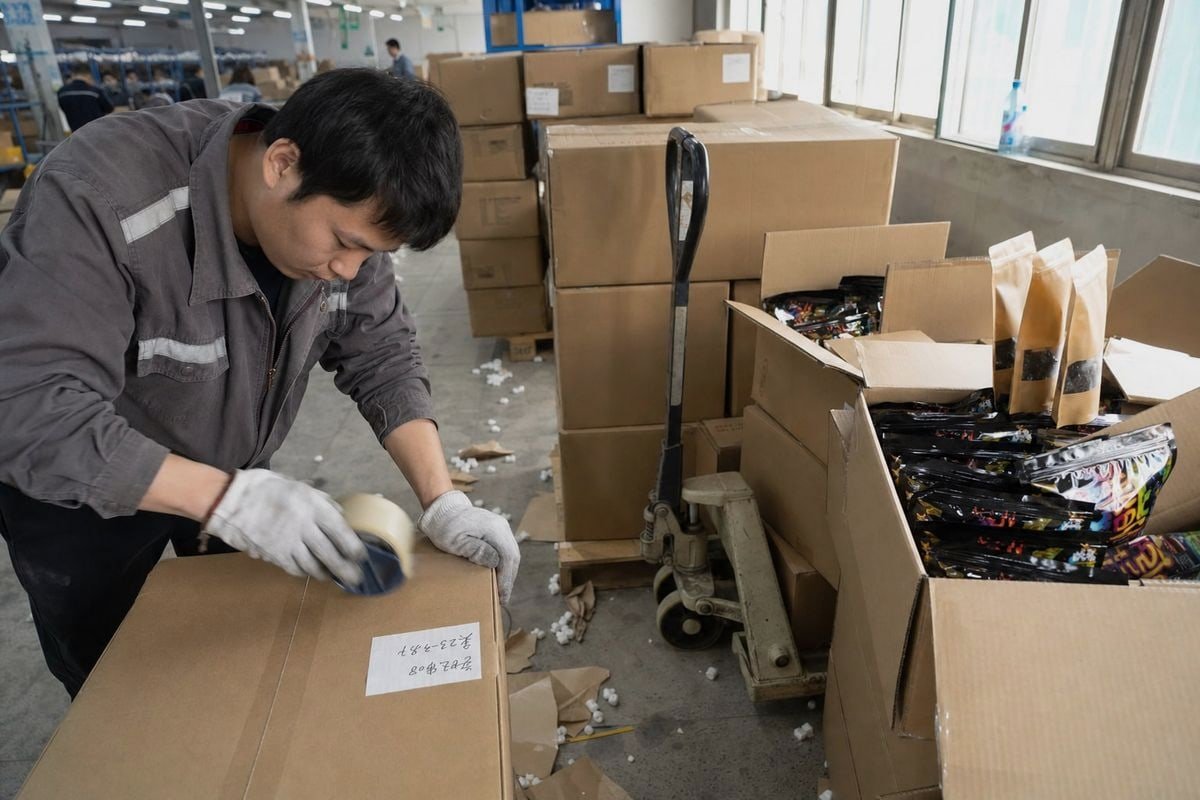
You cannot delegate legal responsibility, but you absolutely should delegate the technical groundwork to a factory that already does it well. Your job is verification. Here is the process we recommend to purchasing managers evaluating any color-flame supplier, including us.
A Five-Step Supplier Verification Process
- Audit certifications first. Ask for ISO 9001 5 and BSCI documentation, plus current SGS or Intertek test reports. Check dates. An expired report is a red flag.
- Review the risk assessment method. For a product like Magic Fire Powder, the assessment must cover ignition behavior, dust and inhalation exposure, eye and skin contact, child access, foreseeable misuse (like adding powder to an indoor open flame), and even ash residue disposal.
- Test the traceability chain. Pick a batch number from a past shipment and ask the factory to trace it back to raw material lots. A genuine manufacturer can do this in a day. A trading company usually cannot.
- Confirm packaging integrity testing. Heat-sealed foil sachets must resist moisture, tampering, and chemical migration. Ask how seal strength is checked batch-to-batch.
- Put compliance duties in the contract. Specify who prepares the SDS, who updates documents when REACH classifications change, and how fast the factory must respond to a market surveillance authorities inquiry.
What Batch Traceability Looks Like in Practice
Product traceability and batch numbers are the backbone of any recall. Each of our production lots carries a printed code linking the sachet to the production date, raw material lots, and QC records. When you private label, that same code must survive onto your retail packaging. If your kraft display box hides the sachet's batch code, print it on the box too. A recall that cannot identify affected batches becomes a recall of everything — and that is an expensive way to learn this lesson.
What Labeling and Safety Warnings Must My Magic Fire Powder Packaging Include Under GPSR?
Designing a glossy black pouch with rainbow flame graphics is the fun part. The yellow caution panel underneath it is where we spend far more revision rounds with our private-label clients.
Your packaging must show your brand name, postal and electronic address, a batch or type number, clear product safety warning labels in the languages of each target market, usage instructions, and — for non-EU brands — the EU responsible person's name and contact details.

Labeling is where GPSR enforcement is most visible. An inspector does not need your technical file to spot a missing address or an English-only warning on a shelf in Poland. In our packaging design service, we treat the warning panel as seriously as the artwork.
The Mandatory Elements, Mapped to Your Packaging
| Label Element | Requirement | Where It Goes on a Sachet Product |
|---|---|---|
| Manufacturer identity | Brand name, postal address, email | Back panel of sachet or box |
| EU responsible person | Name and contact details (non-EU brands) | Back panel, near manufacturer info |
| Traceability identifier | Batch, type, or serial number | Printed on seal edge and outer box |
| Safety warnings | Hazard statements, pictograms if CLP applies | Front-visible caution panel |
| Usage instructions | Outdoor use, quantity, distance from flame | Back panel with pictograms |
| Language versions | Local language of each marketplace | All warning and instruction text |
CLP and Chemical Labeling Overlap
GPSR sits alongside chemical law, not instead of it. If your formulation triggers CLP labeling requirements 6, hazard pictograms and standardized statements are mandatory on top of GPSR elements. Even for eco-friendly formulations like ours, which avoid harmful chemicals, we still recommend clear precautionary wording: keep away from children, do not inhale dust, use in outdoor fires only, and do not cook food over treated flames. Instructions on ash disposal and environmental safety add both compliance strength and consumer trust.
Do Not Forget the Online Listing
For distance sales, GPSR extends labeling to the product page itself. Your Amazon or webshop listing must visibly display the manufacturer identity, the responsible person details, warnings, and safety information before purchase. Several of our clients discovered this only when a marketplace suspended their listing. Product safety recall procedures also connect here: if a corrective action 7 is ever needed, GPSR expects you to notify consumers and offer at least two remedies among repair, replacement, or refund, free of charge. Your labeling and listing data are what make that outreach possible.
Conclusion
GPSR makes the private-label brand the legal manufacturer of Magic Fire Powder. Build your technical file, verify supplier traceability, appoint EU representation, and label correctly — then launch with confidence.
Footnotes
1. Official legal text of the General Product Safety Regulation (GPSR) governing consumer products in the EU. ↩︎
2. Official ECHA guidance on the requirements and compilation of safety data sheets for chemical products. ↩︎
3. Overview of the EU regulation addressing the production and use of chemical substances. ↩︎
4. Corrected Wikipedia URL for the European authorized representative role. ↩︎
5. Authoritative Wikipedia overview to avoid HTTP 403 errors on the official ISO site. ↩︎
6. ECHA rules for the classification, labeling, and packaging of chemical mixtures. ↩︎
7. Official EU Commission portal for product safety rules and corrective actions. ↩︎



 English
  Spanish
  German
  French
  Arabic
  Portuguese
Join the Conversation