






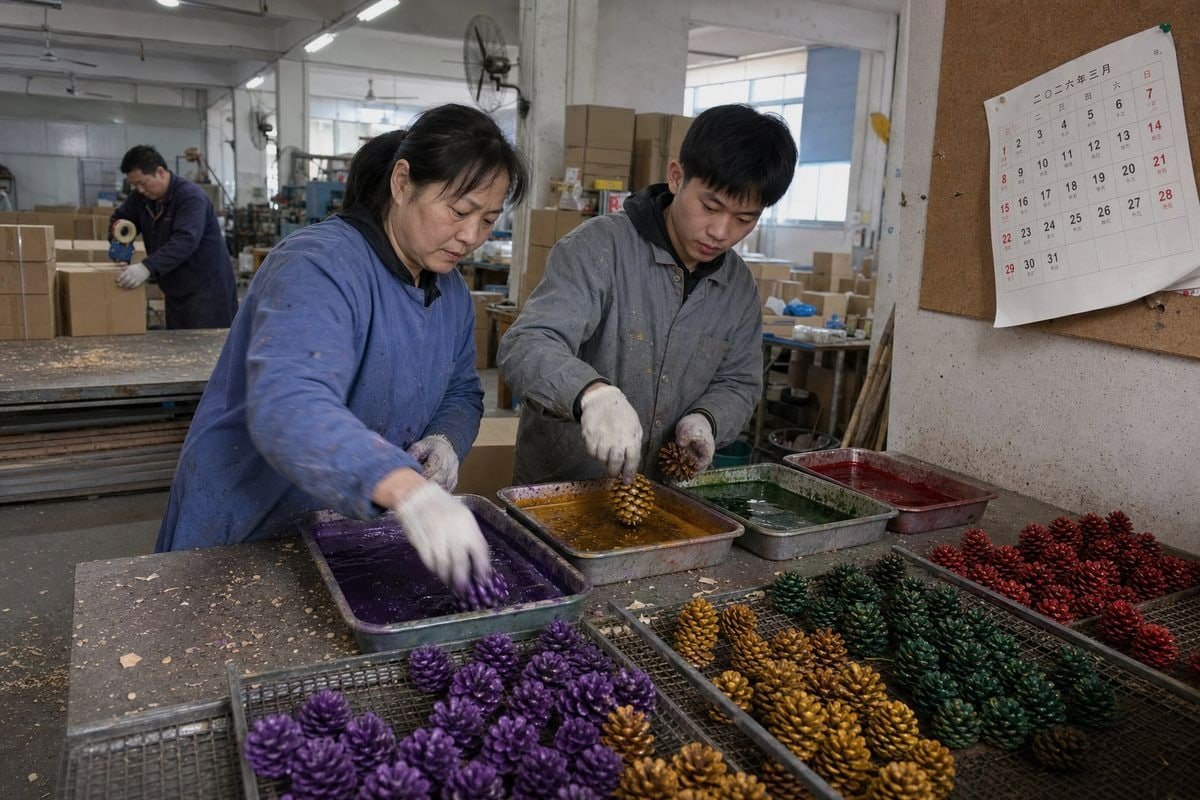
Todas as primaveras, nossa linha de produção em Ningbo começa a tratar pinhas coloridas para pedidos que não chegarão às prateleiras até outubro. Compradores que esperam até setembro muitas vezes perdem completamente a janela.
A demanda máxima por pinhas coloridas ocorre de outubro a dezembro, impulsionada pela decoração de feriados, presentes e uso de lareiras. No entanto, a aquisição comercial atinge o pico no segundo trimestre, pois o fornecimento, a secagem, o tratamento e o envio levam de quatro a seis meses. As prioridades de seleção mudam da quantidade a granel para a apresentação pronta para presente à medida que a temporada se aproxima.
Essa lacuna entre a demanda do consumidor e o momento da aquisição pega muitos compradores de surpresa. Abaixo, detalho o cronograma, as certificações, as prioridades em mudança dos compradores e a flexibilidade de pedidos que você deve exigir.
Como planeio os cronogramas de produção para atingir janelas de pico de demanda sazonal para pinhas coloridas?
Um distribuidor americano de lareiras nos ligou uma vez no final de agosto pedindo 40.000 unidades de pinhas com chama colorida até novembro. Tivemos que explicar por que essa matemática raramente funciona.
Planeje de trás para frente a partir de um lançamento no varejo em outubro. Faça os pedidos de abril a junho, reserve de 45 a 60 dias para produção, de 30 a 45 dias para frete marítimo e tempo de buffer para alfândega e distribuição. A aquisição do segundo trimestre é o caminho confiável para as prateleiras do quarto trimestre.

As buscas dos consumidores por pinhas coloridas aumentam à medida que o Natal se aproxima, mas a cadeia de suprimentos por trás desses produtos começa a se mover duas temporadas antes. As pinhas naturais de coníferas devem ser colhidas, secas em estufa, classificadas por tamanho e, em seguida, pintadas ou tratadas quimicamente para efeitos de chama colorida. Nenhuma dessas etapas pode ser apressada sem prejudicar a qualidade. Em nossa experiência exportando para os EUA e Alemanha, compradores que garantem pedidos no Q2 obtêm a primeira escolha de pinhas grandes e uniformes. Compradores que pedem tarde recebem as classificações que restam.
Um calendário de planejamento reverso
| Mês | Estágio da Cadeia de Suprimentos | O que os Compradores Devem Fazer |
|---|---|---|
| Jan–Mar | Revisão do estoque de pinhas cruas, desenvolvimento de amostras | Solicitar amostras, confirmar especificações e embalagem |
| Abr–Jun | Janela de pico de aquisição, reserva de produção | Fazer os principais pedidos sazonais, aprovar amostras de pré-produção |
| Jul–Ago | Produção em massa, CQ, cura do tratamento | Revisar relatórios de inspeção, finalizar rótulos e códigos de barras |
| Set | Frete marítimo, desembaraço aduaneiro | Rastrear remessas, preparar alocação de armazém |
| Out–Dez | Pico de varejo, reposição apenas por via aérea | Monitorar vendas, planejar volumes do próximo ano |
Por que o prazo de entrega é longo
A secagem em estufa previne infestações de pragas 1 e vazamento de resina, que se tornaram preocupações primárias dos compradores em vez de reflexões tardias. O tratamento químico para produtos de chama colorida requer tempo de cura para que o efeito de queima permaneça consistente. Em seguida, embalagem, rótulos de advertência e documentação de exportação 2 adicionam dias. Nossa fábrica mantém estoque pré-tratado para encurtar isso para clientes recorrentes, mas novos programas personalizados sempre precisam de todo o tempo. As tendências sazonais de varejo recompensam as marcas que chegam às prateleiras primeiro, não as que correm atrás de frete aéreo em novembro.
Quais certificações devo priorizar ao adquirir pinhas coloridas para diferentes estações de varejo?
O compromisso que pesamos constantemente é velocidade versus documentação. Um lote pode estar pronto em semanas, mas um lote com relatórios de teste completos de terceiros é o que realmente passa nas revisões de conformidade de varejo.
Priorize relatórios de teste de segurança da SGS ou Intertek, marcação CE para mercados europeus, ISO 9001 para consistência de produção e BSCI para auditorias de fornecimento ético. Para pinhas com chama colorida, exija testes de emissão de combustão; para pinhas decorativas pintadas, verifique corantes decorativos ecológicos e padrões de solidez da cor.

Pinhas coloridas não são um produto, então a pilha de conformidade difere por segmento. Pinhas decorativas pintadas vendidas como enfeites de artesanato natural enfrentam regras de conteúdo químico 3 em revestimentos. Pinhas com chama colorida são produtos de combustão, portanto, enfrentam um escrutínio muito mais rigoroso sobre emissões, avisos de embalagem e rotulagem de segurança infantil. Nossa fábrica possui certificação ISO 9001, BSCI, CE e SGS/Intertek precisamente porque nossos clientes distribuidores dos EUA e da UE os tratam como requisitos rígidos, não como algo bom de ter. Um único relatório de teste ausente pode reter um contêiner na alfândega durante as semanas exatas em que sua janela de varejo está aberta.
Combinando certificações com tipo de produto e estação
| Segmento do Produto | Certificações Principais | Risco Sazonal Se Ausente |
|---|---|---|
| Pinhas decorativas pintadas | Testes químicos SGS, padrões de solidez da cor, documentos de segurança de corantes | Rejeição do varejista durante as revisões de conformidade do Q3 |
| Pinhas de chama colorida | CE, relatórios de emissão de combustão, conformidade de rótulos de advertência | Retenções alfandegárias em outubro-novembro, semanas de pico perdidas |
| Pinhas cruas a granel para artesanato | Certificados fitossanitários, verificação de secagem em estufa, documentos livres de pragas | Quarentena de importação, reclamações de consumidores por infestação |
Prioridades específicas da estação
Para a temporada de presentes do Q4, a conformidade da embalagem é tão importante quanto a conformidade do produto. Códigos de barras, avisos multilíngues e ícones de inflamabilidade 4 devem estar corretos antes da impressão, pois reimpressões em setembro destroem os cronogramas. Para programas de suprimentos de artesanato durante todo o ano, os testes contínuos de lote são mais importantes, pois os compradores de acessórios florais no atacado reordenam continuamente e esperam que cada remessa corresponda à primeira. Fornecemos relatórios de teste com cada lote de produção para que os gerentes de compras possam arquivá-los antes que suas próprias auditorias de varejo comecem. Se um fornecedor hesitar em compartilhar relatórios, trate isso como sua resposta.
Como as prioridades do comprador mudam entre as temporadas de presentes de fim de ano e o uso diário de lareiras?
Uma lição de mais de dezessete anos em produtos de fogo 5: a mesma pinha vende por razões completamente diferentes em novembro do que em fevereiro. Ignorar essa mudança achata suas margens.
Durante as épocas de presentes de fim de ano, os compradores priorizam embalagens prontas para presente, acabamentos metálicos e foscos, apelo de novidade e impacto visual. Para uso diário em lareiras e fogueiras, as prioridades mudam para tempo de queima, segurança química, pacotes de recarga de tamanho econômico e cor de chama consistente, em vez de apresentação decorativa.

O comprador de feriado está comprando uma experiência ou um presente. O comprador fora de época está comprando um consumível. Essa única distinção deve orientar suas decisões de sortimento, embalagem e precificação.
Temporada de feriados: a apresentação vence
A partir de outubro, as compras mudam drasticamente para formatos acabados e presentes. Sacos de serapilheira com cordão, bolsas autoportantes de kraft com janelas transparentes e caixas prontas para exibição vendem mais do que sacos de recarga simples. Acabamentos metálicos dourados, prateados e de cobre dominam a decoração de casa de feriado de luxo e centros de mesa corporativos, enquanto os enfeites de feriado foscos e as pinhas com ponta de neve atendem ao mercado de decorações de casamento de inverno 6 e sua estética rústica-chique. Até o cheiro importa — variantes de decoração com cheiro de canela têm bom desempenho como presentes por impulso. Curiosamente, o mercado mudou para pinhas maiores porque elas fotografam melhor e têm mais peso visual em coroas de flores e tigelas. Dados de precificação da indústria mostram que os valores das pinhas decorativas variam por ano, região e variedade, com pinhas grandes ganhando participação enquanto pinhas pequenas declinam.
Uso diário: a função vence
Após os feriados, o segmento de chama colorida sustenta a categoria. Proprietários de lareiras e campistas compram pela duração da queima, vivacidade da chama e mensagens de segurança. Nossos pacotes Magic Fire e pinhas de chama colorida usam materiais ecológicos 7 sem produtos químicos nocivos, e essa alegação — apoiada por relatórios de teste — é o fator decisivo para compradores recorrentes, não o design da caixa.
Mudança de prioridade em resumo
| Prioridade | Temporada de Presentes de Feriado | Uso Diário em Lareira |
|---|---|---|
| Embalagem | Sacos de presente, bolsas com janela, caixas de exibição | Sacos de recarga a granel, potes |
| Característica principal | Novidade visual, acabamentos metálicos | Tempo de queima, consistência da chama |
| Foco na segurança | Etiquetas de aviso para presentes | Segurança de emissão, uso familiar |
| Lógica de preço | Prêmio por unidade | Valor por queima |
Que flexibilidade de MOQ e prazo de entrega devo procurar ao fazer pedidos de teste sazonais?
Um importador holandês me disse uma vez que ele havia sido enganado duas vezes: um fornecedor exigiu um teste de contêiner completo e outro enviou um lote de produção em massa que não se parecia em nada com a amostra. Ambos os problemas são evitáveis.
Procure MOQ de teste de algumas centenas a alguns milhares de unidades por SKU, prazos de entrega de 30 a 45 dias para testes, opções de contêineres com vários SKUs e uma garantia por escrito de que a produção em massa corresponde à amostra aprovada. Flexibilidade na personalização de embalagens em baixos volumes sinaliza profundidade genuína de fabricação.

Pedidos de teste existem para responder a duas perguntas: isso venderá em meu mercado e este fornecedor pode entregar consistentemente? Uma política rígida de MOQ bloqueia a primeira pergunta. Controle de qualidade fraco invalida a segunda. Como operamos nossas próprias linhas de produção completas em vez de intermediar através de empresas de comércio, podemos encaixar lotes de teste menores entre execuções maiores — algo que um intermediário simplesmente não pode prometer.
Uma lista de verificação prática de pedidos de teste
- Solicite o MOQ de teste real por SKU, por escrito, e se os SKUs podem ser misturados em um único envio. Misturar pinhas decorativas pintadas com sacos de recarga de chama colorida permite testar os segmentos de feriado e do dia a dia em um único contêiner.
- Confirme o prazo de entrega do teste separadamente do prazo de entrega da alta temporada. Uma execução de teste de 30 a 45 dias no primeiro trimestre informa se um fornecedor pode cumprir uma janela de 60 dias no terceiro trimestre.
- Exija termos de consistência lote a lote. A amostra aprovada deve definir o tom da cor, a durabilidade do revestimento e o desempenho da queima para produção em massa. Nosso processo de CQ trava essas especificações para que a primeira amostra reflita de forma confiável a produção em larga escala.
- Teste opções de marca própria antecipadamente. Mesmo em volume de teste, uma fábrica capaz pode aplicar seus códigos de barras, etiquetas de aviso e embalagens personalizadas básicas. Se não puderem, seu futuro programa de OEM terá dificuldades.
- Verifique a durabilidade do envio. As escamas de pinha pintadas lascam no trânsito; revestimentos flexíveis e embalagem interna adequada evitam danos na desembalagem e devoluções de e-commerce.
Bem programado, um teste no primeiro trimestre fornece dados de vendas dos compradores de artesanato de primavera e mercados de ideias de centros de mesa de outono, deixando espaço para fazer seu pedido sazonal completo do segundo trimestre com confiança, em vez de adivinhação.
Conclusão
Pinhas coloridas atingem o pico de outubro a dezembro, mas vencer essa janela significa pedir no segundo trimestre, combinar certificações com cada segmento de produto, ajustar sortimentos à medida que as prioridades do comprador mudam de presentes para função e garantir termos de teste flexíveis. Planeje com antecedência, verifique a conformidade e faça parceria com uma fábrica que prove consistência antes de escalar.
Notas de rodapé
Entrada da Wikipedia explicando a natureza de pragas e infestações em materiais biológicos. ↩︎
Guia oficial da ITA sobre a papelada essencial exigida para envio internacional e desembaraço aduaneiro. ↩︎
Orientação oficial da CPSC sobre requisitos de teste e certificação para conformidade de segurança de produtos de consumo. ↩︎
Visão geral da Wikipedia sobre pictogramas de perigo padronizados usados para rotulagem de inflamabilidade e segurança. ↩︎
Site da National Fire Protection Association fornecendo padrões de segurança para produtos de consumo relacionados a incêndio. ↩︎
Artigo da Wikipedia sobre decorações sazonais, cobrindo o uso de elementos naturais em exibições de inverno. ↩︎
Guia da Agência de Proteção Ambiental sobre identificação e uso de materiais ambientalmente preferíveis em produtos. ↩︎


 English
  Spanish
  German
  French
  Arabic
  Portuguese
Participe da conversa