






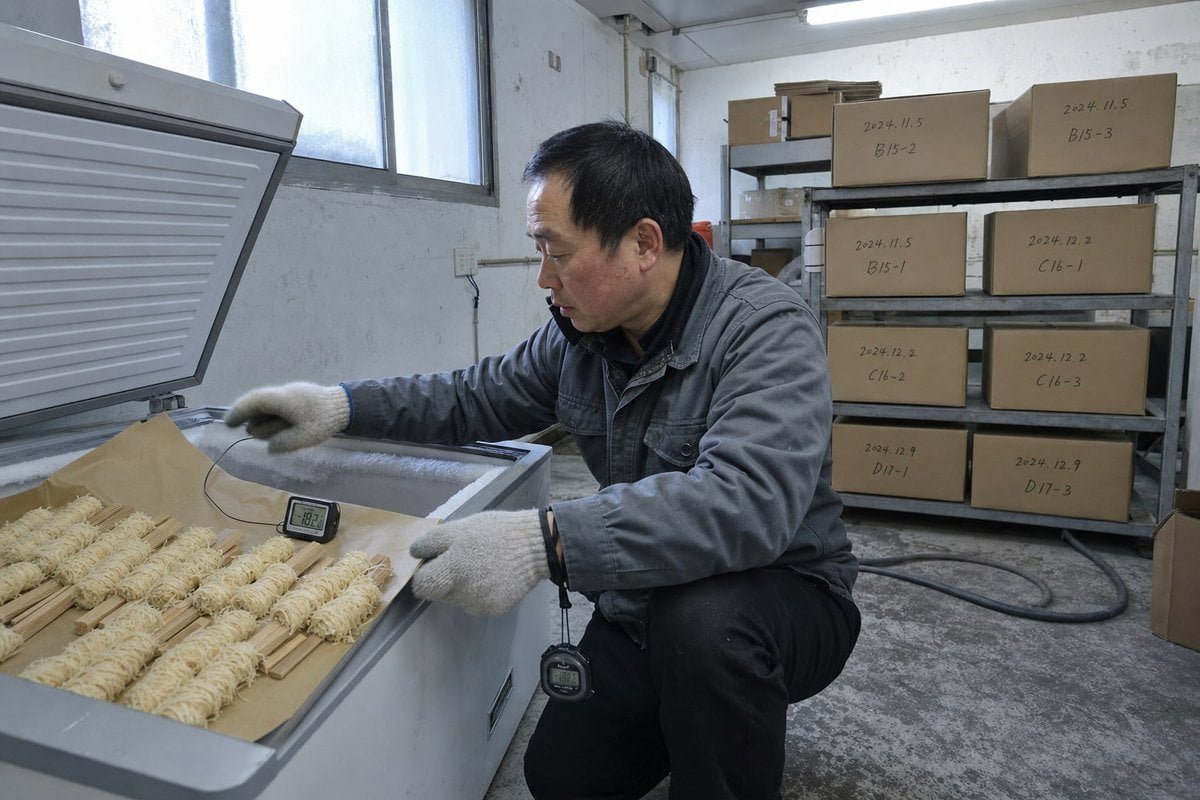
Obter acendedores de fogo a lenha para temperaturas extremas é arriscado quando os fornecedores enviam apenas alegações de marketing. Na nossa linha de produção, vi porque um produto que acende facilmente a 20°C pode falhar gravemente a -20°C — e um contentor de stock falhado pode arruinar uma época de retalho. A solução é simples: [exija os dados de teste corretos](https://sunrichfire.com/how-ask-suppliers-burn-test-reports-kamado-grill-fire-starters/) antes de encomendar.
Ao adquirir acendedores de fogo a lenha para temperaturas extremas, solicite cinco conjuntos de dados: tempo de ignição em condições abaixo de zero, curvas de duração de queima e saída de calor, resultados de resistência ambiental (molhado, vento, imersão a frio), tempos de transferência de gravetos e registros de consistência lote a lote — todos apoiados por relatórios de teste SGS ou Intertek e metodologia clara.
Abaixo, detalho exatamente quais certificações, métricas e documentos solicitar. Use isto como a sua lista de verificação de fornecimento antes de se comprometer com qualquer ordem de compra.
Que Certificações Devo Verificar Antes de Confiar em Relatórios de Testes de Clima Frio?
Um distribuidor alemão disse-me uma vez que tinha rejeitado três fornecedores seguidos porque os seus "relatórios de teste" eram PDFs autoemitidos sem nome de laboratório. Essa conversa moldou como a nossa fábrica documenta tudo hoje.
Verifique ISO 9001 para gestão de qualidade, BSCI para auditoria de fábrica, CE para acesso ao mercado e relatórios de teste de terceiros da SGS ou Intertek. Rejeite relatórios autoemitidos. Confirme se o titular do certificado corresponde ao nome real da fábrica e verifique se os relatórios estão atualizados, não expirados.

As certificações importam porque dizem quem verificou os dados, não apenas o que os dados dizem. Uma alegação de ignição em tempo frio não significa nada se o "laboratório" for a sala de descanso do próprio fornecedor com um termómetro. Nos nossos mais de 17 anos a exportar para os EUA, Alemanha, Reino Unido e outros 27 mercados, aprendemos que compradores sérios verificam três camadas de prova.
As Três Camadas de Verificação
Primeiro, verifique as certificações do sistema. ISO 9001 confirma que a fábrica opera um processo de qualidade documentado. BSCI confirma que a própria fábrica foi auditada — o que também prova que está a lidar com um local de produção real, não com uma empresa comercial que revende bens desconhecidos.
Segundo, verifique os documentos a nível do produto. A marcação CE é importante para compradores europeus. Uma Ficha de Dados de Segurança de Material deve acompanhar qualquer produto à base de parafina 1, e deve indicar o ponto de inflamação e temperatura de autoignição 2 do componente de cera. Se um fornecedor não puder produzir uma MSDS, desista.
Terceiro, verifique os próprios relatórios de teste. Os relatórios SGS e Intertek carregam números de relatório que pode verificar diretamente com o laboratório.
| Documento | O que Comprova | Sinal de Alerta |
|---|---|---|
| ISO 9001 | Sistema de gestão de qualidade existente | Certificado emitido para um nome de empresa diferente |
| Auditoria BSCI | Fábrica real e auditada | Fornecedor recusa videochamada de fábrica |
| Documentação CE | Conformidade com o mercado da UE | "CE" alegado sem dossier técnico |
| Relatório SGS/Intertek | Dados de teste independentes | Relatório autoemitido, sem número de laboratório |
| FISPQ | Análise de composição química, dados de ponto de inflamação | MSDS em falta ou modelo genérico |
Peça também impacto ambiental 3 e relatórios de toxicidade se o seu mercado exigir rotulagem ecológica. Os nossos compradores nos Países Baixos e na Alemanha solicitam estes em quase todas as encomendas agora, e a tendência está a espalhar-se.
Qual Tempo de Queima e Dados de Ignição São Mais Importantes para Condições Sub-Zero?
Existe um compromisso que pesamos constantemente ao formular os nossos rolos de madeira encerados: um mais longo a duração da queima 4 geralmente significa uma rampa térmica mais lenta, mas gravetos congelados precisam de calor rápido e intenso primeiro. Conseguir ambos corretamente requer ajuste.
Priorize o tempo de ignição em condições abaixo de zero após uma imersão a frio de 24 horas, tempo até a temperatura de pico, temperatura mantida a 5, 10 e 15 minutos, limites de extinção pelo vento e sucesso da ignição após exposição à água. O tempo de queima por si só é enganoso sem dados de saída de calor.
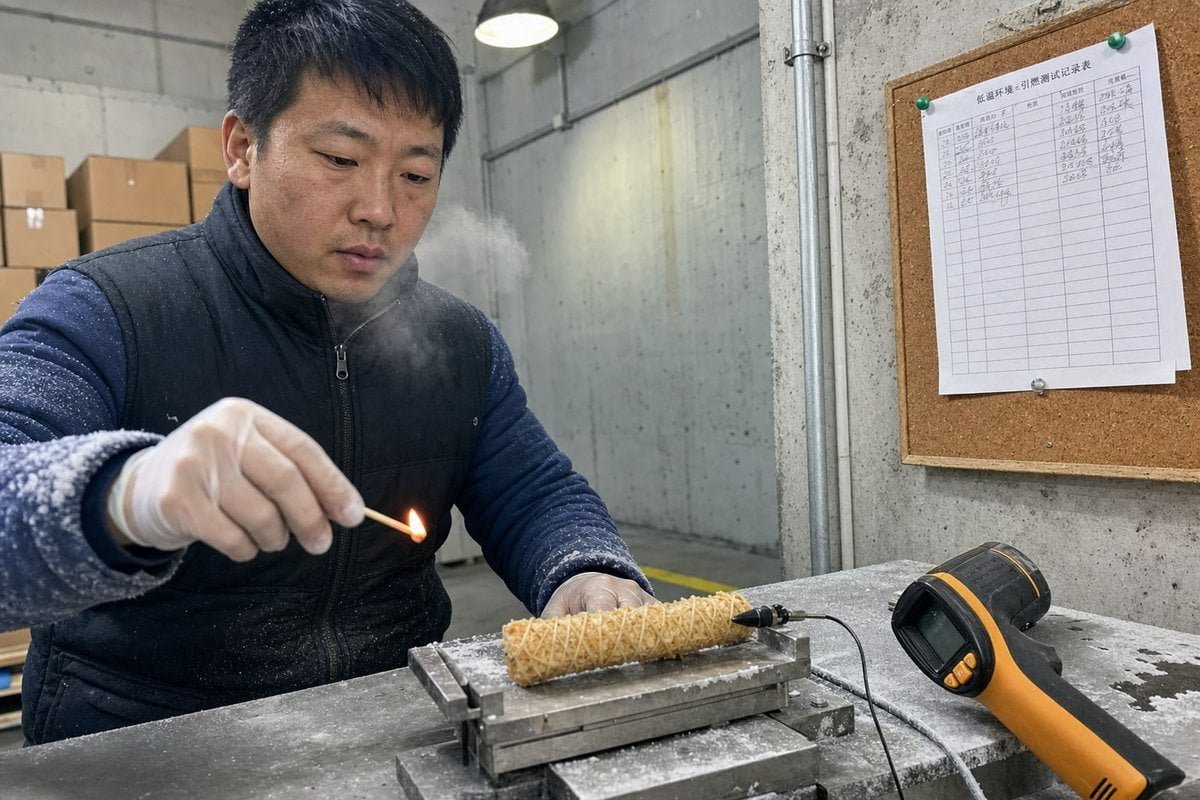
O frio muda tudo sobre a ignição. A cera endurece. A pressão de vapor diminui. As fibras de madeira absorvem a humidade ambiente e o gelo. Assim, um "tempo de queima de 10 minutos" medido à temperatura ambiente diz quase nada sobre o desempenho a -25°C num quintal canadiano ou num parque de campismo polaco.
As Métricas Que Realmente Preveem o Sucesso em Campo
Aqui está a hierarquia de dados que recomendo aos gerentes de compras, por ordem de importância:
- Tempo de ignição em condições abaixo de zero. Quantos segundos desde o contacto com a chama até à queima auto-sustentada, após a amostra ter permanecido a -20°C ou inferior durante 24 horas?
- Tempo até à temperatura de pico. A ignição de madeira de lei geralmente necessita de temperaturas sustentadas em torno de 500°C. Um acendedor que aumenta lentamente desperdiça a sua janela de queima.
- Curva de temperatura ao longo do tempo. Solicite leituras aos 5, 10, 15 e 20 minutos. Um acendedor que mantém calor elevado no final da sua queima pode secar e inflamar combustível húmido; um que aumenta e desvanece não pode.
- Duração da queima e produção de calor em conjunto. Solicite a medição de BTU por unidade para que possa comparar a densidade de energia entre produtos de diferentes tamanhos.
- Teste de resistência ao vento. A que velocidade do vento 5, em metros por segundo, a chama extingue-se? Falhas em campo nos mercados de montanha e costeiro quase sempre remontam a este número.
- Ignição em condições húmidas. Taxa de sucesso após exposição à humidade e após contacto direto com água, uma vez que as taxas de absorção de humidade em produtos de fibra de madeira variam amplamente pela qualidade do revestimento de cera.
| Métrica | Teste à Temperatura Ambiente | Teste de Frio Extremo a Solicitar |
|---|---|---|
| Tempo de ignição | 2–5 segundos típicos | Após 24h de imersão a frio a -20°C |
| Duração da queima | Minutos totais de chama | Minutos úteis acima do calor de ignição de gravetos |
| Temperatura de pico | Leitura máxima apenas | Curva completa em 5/10/15/20 min |
| Desempenho ao vento | Frequentemente não testado | Limiar de extinção em m/s |
| Umidade | Amostra seca | Ensaios pós-umidade e pós-imersão |
Mais um ponto do nosso próprio controle de qualidade: a literatura sobre ciência do fogo mostra que a madeira pode inflamar abaixo dos 482°F comumente citados quando a exposição ao calor é prolongada. O tempo em temperatura importa tanto quanto a temperatura máxima. Peça ambos.
Como Posso Confirmar se os Resultados dos Testes Correspondem à Qualidade Real da Produção em Massa?
No início da minha carreira em nossa fábrica de Ningbo, pegamos um banho de cera derretida operando cinco graus abaixo do ideal em um turno noturno. Os rolos pareciam idênticos. Sua duração de queima caiu quase 20%. Essa lição construiu nosso protocolo de teste de lote.
Solicite dados de consistência lote a lote em pelo menos três lotes de produção, pergunte quantos lotes foram testados por lote, compare as especificações da amostra de referência com as inspeções de remessa e exija testes de queima pré-remessa. As primeiras amostras devem ser retiradas de linhas de produção reais, não de protótipos feitos à mão.

A falha de fornecimento mais comum que vejo não é um produto ruim. É uma boa amostra seguida por produção em massa inconsistente. A amostra foi escolhida a dedo, mergulhada à mão ou feita em uma corrida de teste lenta. O contêiner que chega três meses depois se comporta de maneira diferente.
Perguntas Que Expõem Problemas de Consistência
Pergunte diretamente ao seu fornecedor:
- Quantas amostras por lote passam por testes de queima?
- Qual tolerância você permite no carregamento de cera por peça?
- Você registra a temperatura do banho de cera e o tempo de imersão por turno?
- Você pode compartilhar dados de taxa de falha nos últimos três lotes?
- Você testará em vídeo unidades da minha produção real antes do envio?
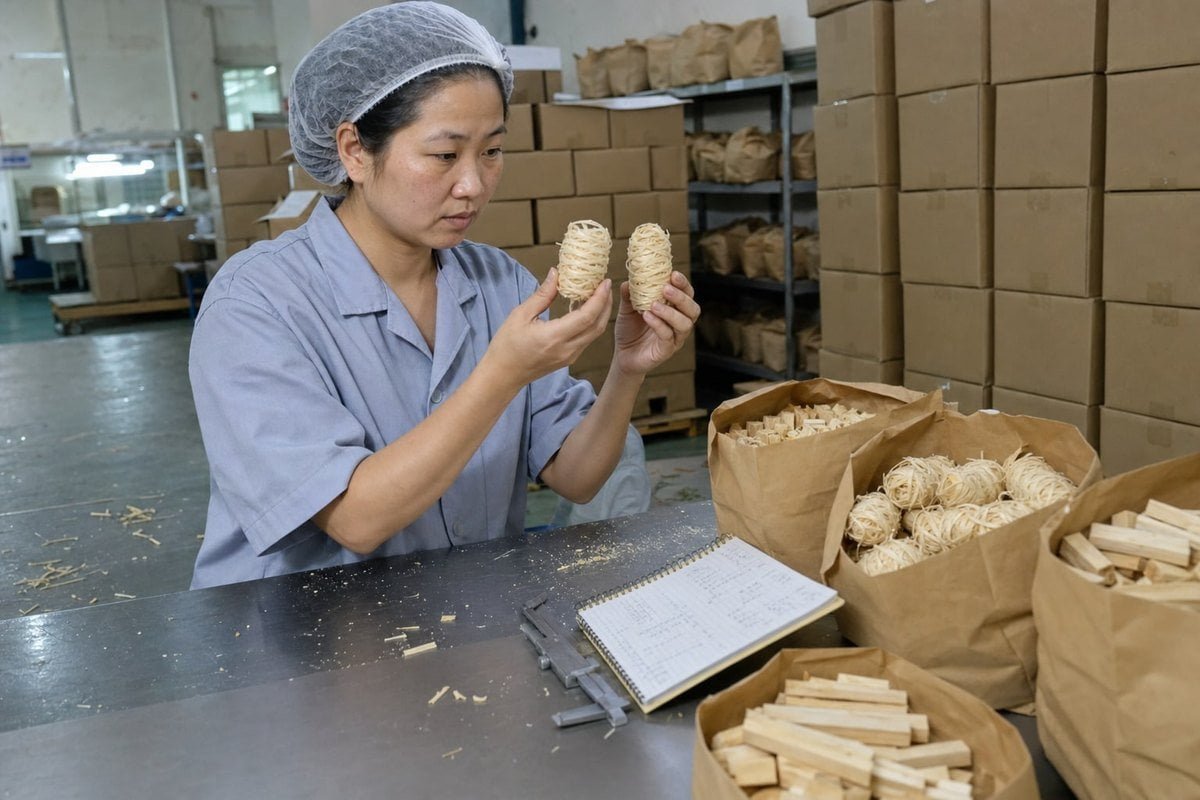
Uma fábrica com profundidade de fabricação genuína responde a essas perguntas rapidamente. Uma empresa de trading fica quieta. Em nossas instalações, pesamos peças de amostra de cada lote porque o carregamento de cera controla diretamente tanto a duração da queima quanto a saída de calor — uma peça com peso inferior, mesmo que por uma pequena margem, queima mais curta e mais fria.
Dados de Envelhecimento e Armazenamento Também Importam
A consistência não é apenas de lote para lote. É também de mês a mês na prateleira. Solicite dados de vida útil e estabilidade de armazenamento, idealmente com resultados de envelhecimento acelerado. Acendedores à base de parafina armazenados em armazéns quentes ou interiores de veículos podem perder componentes voláteis ao longo do tempo, portanto, pergunte sobre retenção de VOC 6 sob armazenamento prolongado a 50°C. A integridade da vedação da embalagem após ciclagem térmica de -40°C a +60°C é importante para remessas para o mercado ártico, onde produtos quebradiços também podem fraturar durante transporte severo. Peça observações de resistência ao impacto em baixa temperatura se sua rota cruzar regiões frias.
Que Documentação Devo Solicitar para Validar Alegações de Desempenho para o Meu Mercado?
Uma compradora dos EUA recentemente nos enviou um checklist de uma página antes de seu pedido de teste: certificações, dados de teste, prova de rotulagem e documentos de logística. Nós o preenchemos em dois dias. Esse checklist vale a pena copiar, então eu o reconstruí aqui.
Solicite um pacote de documentação abrangendo relatórios de testes de terceiros, FISPQ, análise de composição química, prova de conformidade específica do mercado, arquivos de rótulos de advertência e embalagem, dados de vida útil e relatórios de inspeção pré-embarque. Corresponda cada documento aos regulamentos do seu mercado e ao seu caso de uso específico.
Diferentes mercados e diferentes casos de uso precisam de diferentes evidências. Um produto para lareira vendido em ambientes internos na França enfrenta um escrutínio diferente de um produto de kit de emergência vendido no Canadá ou um produto de camping vendido em altitude nas Montanhas Rochosas dos EUA, onde a densidade de oxigênio reduzida afeta a confiabilidade da ignição acima de 3.000 metros.
O Pacote Completo de Documentação
| Categoria de Documento | O que solicitar | Por que é importante |
|---|---|---|
| Desempenho | Metodologia completa de teste, tamanho da amostra, condições ambientes, taxas de falha | Permite julgar se os testes refletem suas condições de campo |
| Químico | FDS, análise de composição química, ponto de fulgor e temperatura de autoignição | Necessário para envio, alfândega e integração de varejistas |
| Conformidade | Arquivos CE, relatórios SGS/Intertek, relatórios de impacto ambiental e toxicidade | Requisito rígido para varejo na UE e América do Norte |
| Embalagem | Etiquetas de advertência, códigos de barras, versões em idiomas, classificação de inflamabilidade da embalagem | Conformidade pronta para prateleira; varejistas rejeitam rótulos não conformes |
| Logística | Declaração de vida útil, limites de temperatura de armazenamento, classificação DG, se houver | Previne degradação no trânsito e atrasos na alfândega |
| Qualidade | Relatório de inspeção pré-embarque, registros de lote, amostras de retenção | Confirma que os bens enviados correspondem às amostras aprovadas |
Combine a Documentação com o Caso de Uso
Para compradores de camping e kits de emergência, insista em dados de ignição em condições de pré-gelo e úmidas. Para distribuidores de lareiras e fogões a lenha, priorize a documentação de emissão de fumaça, comportamento de resíduos e toxicidade relacionada ao ar interior. Para programas de marca própria — que compõem grande parte do nosso trabalho OEM/ODM — solicite também provas de arte, texto legal de rótulo de advertência para cada país de destino e verificação de código de barras. Preparamos tudo isso internamente para compradores em mais de 30 países, porque um envio retido na alfândega por um documento ausente custa mais do que os próprios bens.
Conclusão
As alegações de marketing falham no frio; dados documentados não. Se as promessas de tempo frio de um fornecedor desmoronarem em seu mercado, você arcará com as devoluções e os danos à reputação. Proteja-se: exija dados de ignição abaixo de zero, curvas de saída de calor, resultados de estresse ambiental, registros de consistência de lote e um arquivo completo de conformidade. Em nossa experiência no fornecimento de iniciadores de fogo de madeira encerados em todo o mundo, o melhor produto para temperaturas extremas é aquele com desempenho verificado sob suas condições reais de operação — peça o teste, não a alegação.
Notas de rodapé
Entrada no banco de dados PubChem para parafina, fornecendo propriedades químicas para produtos iniciadores de fogo à base de cera. ↩︎
Entrada da Wikipedia para temperatura de autoignição, uma métrica de segurança chave para componentes iniciadores de fogo. ↩︎
Visão geral da Wikipedia sobre avaliações de impacto ambiental, relevante para rotulagem ecológica e conformidade de mercado. ↩︎
Página da Wikipedia sobre combustão, explicando o processo que determina a duração da queima e a liberação de calor. ↩︎
Explicação da NOAA sobre medições de velocidade do vento, relevante para testar a resistência ao vento de iniciadores de fogo. ↩︎
Recurso da EPA explicando compostos orgânicos voláteis e seu comportamento no armazenamento e qualidade do ar. ↩︎
Página oficial de Comunicação de Perigos da OSHA; a subpágina original específica da FISPQ foi movida ou integrada aqui. ↩︎

 English
  Spanish
  German
  French
  Arabic
  Portuguese
Participe da conversa