







Negative reviews and returns for Magic Fire Powder can quietly destroy a good product line. I have watched buyers lose whole retail programs over complaints our factory could have prevented.
The most common negative reviews and returns for Magic Fire Powder involve weak or inconsistent flame colors, safety and toxicity fears, damaged or leaking sachets, clumping from moisture, unclear usage instructions, and missing warning labels—most of which trace back to poor quality control and inadequate packaging.
Each of these complaint types has a root cause. Most of them are fixable at the factory level. Let me walk you through what I see from the production side.
What causes most customer complaints and returns for Magic Fire Powder in my market?
A distributor in Germany once forwarded me a one-star review that simply said "the flames stayed orange." That single sentence taught our QC team more than any audit checklist ever did.
Most complaints come from five causes: flame colors weaker than marketing photos, powder clumping after humidity exposure, torn or leaking sachets in transit, chemical smells with no ventilation guidance, and buyers using the product indoors when it was designed for outdoor fires.
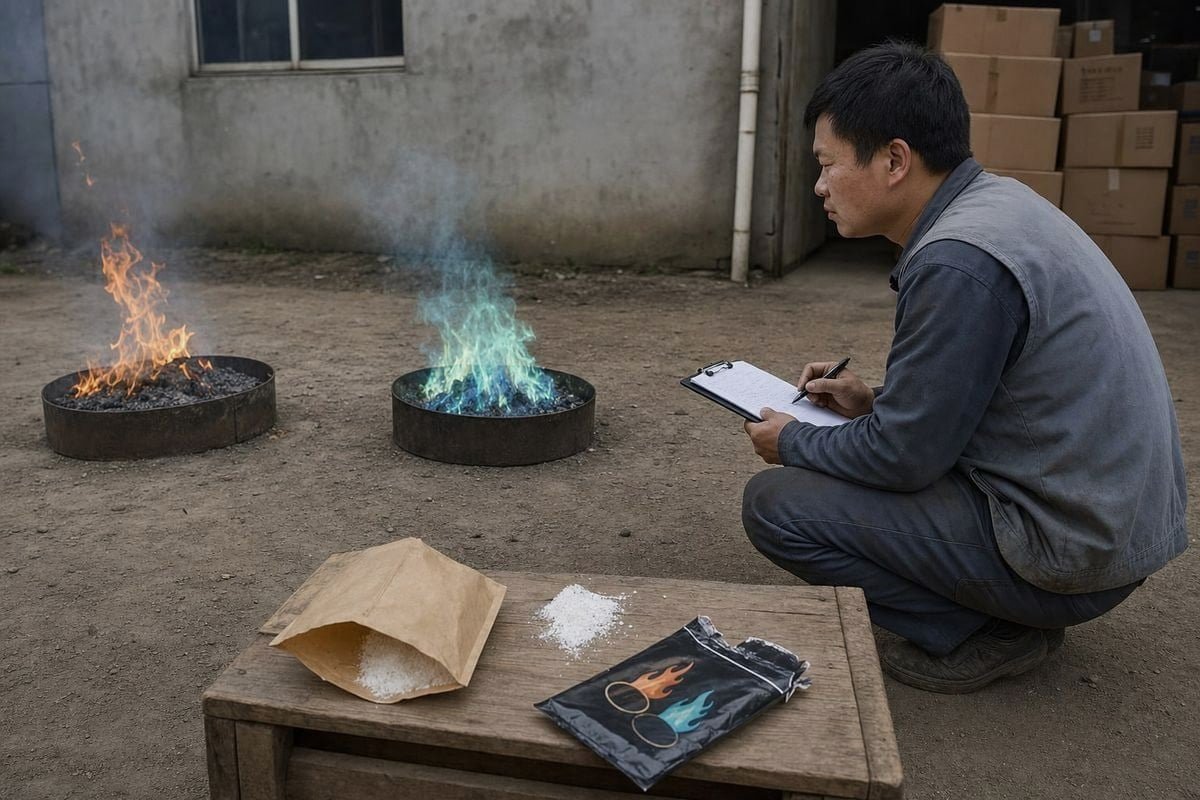
After 17+ years shipping color-flame packets to 30+ countries, I can group nearly every complaint we have ever seen into a short list of themes. The pattern is remarkably consistent whether the end market is the US, the UK, or Australia.
The five complaint categories
| Complaint theme | Typical review language | Causa básica |
|---|---|---|
| Weak or inconsistent color | "Flames barely changed color" | Low-purity colorants, poor blending, bad batch control |
| Safety and toxicity fears | "Worried about fumes near my kids" | Missing safety data, no clear warning labels |
| Damaged packaging | "Packet arrived torn and leaking" | Thin foil, weak heat seals, poor export cartons |
| Clumping or failure to ignite | "Powder turned into a hard brick" | Hygroscopic formula with no moisture barrier |
| Wrong use case | "Used it in my indoor fireplace, smelled terrible" | Unclear instructions on suitable fire types |
Notice something important. Only the first category is about the core product effect. The other four are about communication, packaging, and formulation discipline. That is good news for buyers, because those problems are solvable before a container ever leaves the port.
There is also a growing complaint category worth watching: pet and environmental safety 1. End users increasingly ask about residue in ash, disposal near soil, and ingestion risk for dogs. Our eco-friendly formulations were developed partly in response to this trend, because retail buyers in Europe started demanding proof, not promises. If your listing cannot answer these questions, reviewers will answer them for you—usually negatively.
Expectation mismatch matters too. Product photos showing dramatic rainbow flames at night set a high bar. If daylight use produces subtle color, the review says "fake." Honest imagery reduces returns more than most buyers expect.
How can I reduce return rates by choosing a supplier with strict quality control?
Every trial order we run in Ningbo gets a burn test from three random sachets per batch. We compare flame color against a reference photo card before anything ships. That habit exists because one bad batch can undo years of shelf trust.
Choose a supplier with documented batch-to-batch testing, ISO 9001 processes, third-party reports from SGS or Intertek, moisture-barrier packaging validation, and burn tests on every production run. Consistent quality control directly prevents the weak-color and clumping complaints that drive most returns.

Return rates are not random. They are a lagging indicator of factory discipline. When a buyer tells me their returns spiked, my first question is always the same: did the supplier's mass production actually match the approved sample?
What real quality control looks like on a color-flame line
Here is the process a serious factory should be able to show you, step by step:
- Raw material verification. Colorant salts are tested for purity on arrival. Low-grade copper or mineral salts 2 produce dull, inconsistent flames.
- Controlled blending. Uneven mixing means one sachet burns vivid green while the next barely shifts color. Reviewers call this "fake product."
- Moisture control during filling. Humidity on the filling line is the number one cause of clumping complaints months later.
- Seal integrity checks. Heat seals are pull-tested. A weak crimp becomes a leaking packet in a customer's mailbox.
- Teste de queima de lote. Random sachets from each run are burned and compared against a color standard.
- Inspeção pré-embarque. Third-party verification through SGS ou Intertek 3, with reports you can show your own retail customers.
Questions that separate factories from traders
| Pergunta a fazer | Good answer | Warning sign |
|---|---|---|
| Can I see your burn-test records by batch? | Yes, with dates and photos | "We test sometimes" |
| Who holds the ISO 9001 4 and BSCI certificates? | A própria fábrica | A third party or "our partner" |
| Will mass production match my sample? | Yes, same line, same batch control | Vague reassurance |
| What is your sachet seal strength standard? | A defined pull-test spec | No specification exists |
Trading companies often cannot answer these questions because they do not control the line. In our experience exporting to the US and Germany, buyers who audit these points before ordering see meaningfully fewer quality-related returns than buyers who choose on price alone.
Do unclear instructions or packaging labels lead to more negative reviews from end users?
One lesson cost us a redesign. Early kraft-bag packaging for a Canadian client listed instructions only in small print on the back. Support tickets poured in asking whether the sachet should be opened first. The answer changed everything about how we design labels now.
Yes. Unclear instructions and missing labels are a major driver of negative reviews. When end users do not know whether to open the sachet, which fires are suitable, how long color takes to appear, or what safety precautions apply, they blame the product and post one-star reviews.
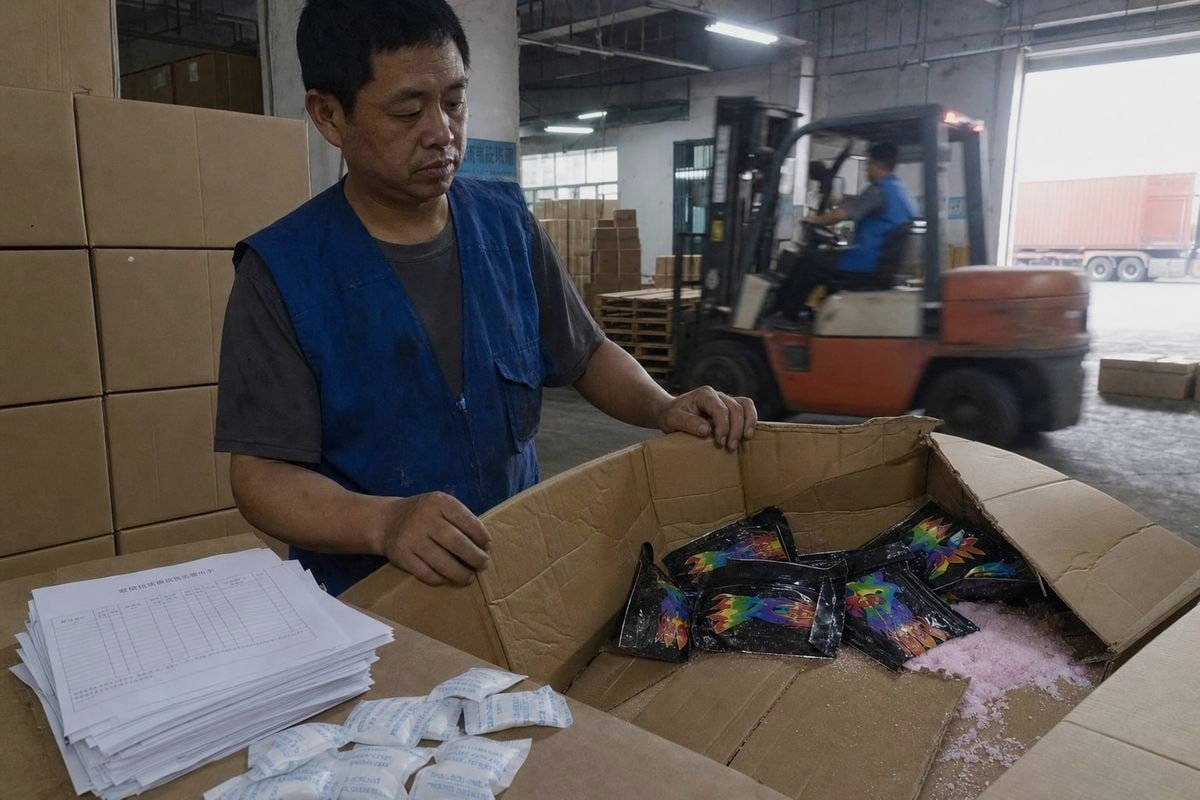
Think about the end user for a moment. They are standing next to a campfire at dusk, holding a small foil packet, probably reading by firelight. If the instructions require careful study, they will guess. And guesses generate reviews like "did nothing" or "smelled awful."
The instruction gaps that generate reviews
From the review patterns we track across our export markets, these are the questions packaging must answer at a glance:
- Open or unopened? Many color-flame sachets are designed to be thrown in whole. If this is not stated in large type, users pour powder onto flames and get poor results.
- Which fires? Outdoor fire pit, campfire, wood stove, indoor fireplace—suitability differs. Indoor misuse drives smell and ventilation complaints.
- How long until color appears? Users expect instant rainbows. If color takes a minute to develop, say so, or the review says "scam."
- How much per fire? Under-dosing produces faint color. Over-dosing wastes product and fuels the "too expensive" complaint.
- Safety basics. Not for cooking fires. Keep away from children and pets. Dispose of ash responsibly. These lines prevent both incidents and fear-driven returns.
Labeling requirements by market
Compliance is not optional in our main markets. Our packaging team builds labels to meet Marcação CE 5 needs in the EU, English-French bilingual requirements for Canada, and retailer-specific warning formats for large US chains. We also print barcodes, batch codes, and country-specific hazard phrasing directly into private-label designs. A compliant label does two jobs at once: it keeps the product on the shelf legally, and it quietly answers the questions that would otherwise become negative reviews.
When we redesign packaging for OEM clients, we treat the front panel as marketing and the back panel as customer support. That framing alone reduces confusion-driven complaints noticeably.
What return and replacement support should I expect from my Magic Fire Powder manufacturer?
A US importer once asked me a blunt question during a factory visit in Liuyang: "What happens when a batch goes wrong on your side?" I respected the question, because how a supplier answers it tells you more than any brochure.
Expect a written quality agreement covering defect thresholds, free replacement of confirmed defective goods, credit on future orders, photo-based claim verification within days, pre-shipment inspection rights, and support with hazmat-related return logistics. A serious manufacturer absorbs the cost of its own quality failures.

Here is the hard truth about this product category. Physically returning color-flame powder across borders is often impractical. Many carriers restrict or refuse it under hazardous-material or dangerous-goods rules 6, and reverse freight usually costs more than the goods. So the real question is not "can I ship it back?" It is "how does my supplier make me whole without shipping it back?"
What a fair claims process looks like
| Etapa | Reasonable standard | What we practice |
|---|---|---|
| Reporting window | 30–90 days after arrival | Claims accepted with batch code and photos |
| Evidence required | Photos or video of defect, batch numbers | Photo verification, no return shipping needed |
| Response time | Written response within a few business days | Direct English communication from our export team |
| Reparação | Replacement in next shipment or order credit | Replacement units or credit, buyer's choice |
| Prevention | Corrective action report on the batch | Root-cause review on our Ningbo line |
Why destroy-in-place beats return shipping
For confirmed defective lots, the practical solution is documented destruction or local disposal, with replacement goods sent in the next container. This avoids dangerous-goods return paperwork entirely. Any supplier who insists you ship defective powder back to China before honoring a claim is signaling that they hope you will give up.
You should also negotiate inspection rights before shipment. We welcome third-party pre-shipment inspections 7 precisely because catching a problem at the factory costs a fraction of handling it after retail distribution. Buyers who use this right almost never need the claims process at all. That is the outcome both sides actually want.
Conclusão
Negative reviews and returns for Magic Fire Powder follow predictable patterns: weak color, safety fears, damaged sachets, and unclear labels. Partner with a certified factory that controls every batch, and those complaints largely disappear.
Notas de rodapé
1. EPA provides guidance on environmental and safety concerns like ash disposal and soil contamination. ↩︎
2. Explains how metal salts like copper produce characteristic flame colors in combustion. ↩︎
3. SG


 English
  Spanish
  German
  French
  Arabic
  Portuguese
Participe da conversa