






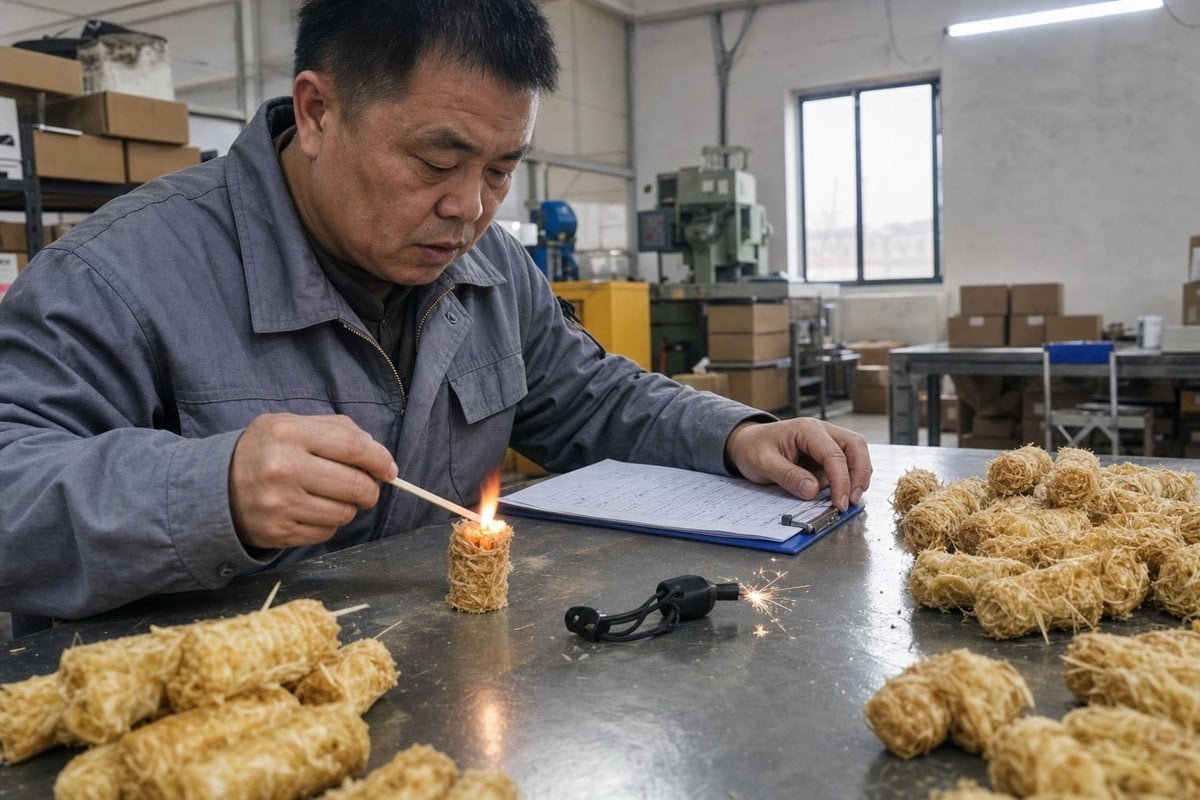
Compradores me perguntam semanalmente como os iniciadores de fogo a lenha devem ser combinados com fósforos e bastões de ferro. certificação BSCI 1. Em nossa linha de produção, testamos ambos os métodos de ignição antes que qualquer lote seja enviado.
A melhor maneira de combinar acendedores de fogo a lenha com fósforos e hastes de ferro é um sistema em camadas: use fósforos para ignição rápida e direta da chama em tempo calmo, e uma haste de ferrocerium para vento, chuva ou tentativas repetidas, com isca fina de fibra de madeira pegando qualquer uma das fontes.
Essa resposta curta esconde decisões reais de fornecimento. Marcação CE 2. Se você compra, embala ou rotula privadamente iniciadores de fogo, a questão da combinação afeta a especificação do seu produto, o design do seu kit e o seu arquivo de conformidade. Deixe-me percorrer cada ângulo da maneira que explico aos nossos clientes B2B.
Que Métodos de Ignição Devo Recomendar ao Embalar Acendedores de Fogo a Lenha para Venda no Varejo?
Durante uma revisão de embalagem com um distribuidor alemão de lareiras no ano passado, passamos uma hora em uma pergunta: a caixa deveria dizer "acender com um fósforo" ou "compatível com faísca"? A redação moldou toda a história do produto.
Recomende fósforos como o método de ignição principal para compradores de varejo domésticos e de lareiras, e hastes de ferro como o método de campo para linhas de camping e bushcraft. Imprima ambos na embalagem quando a isca de madeira e lã for fina o suficiente para pegar faíscas, pois as alegações de ignição dupla ampliam sua base de clientes.
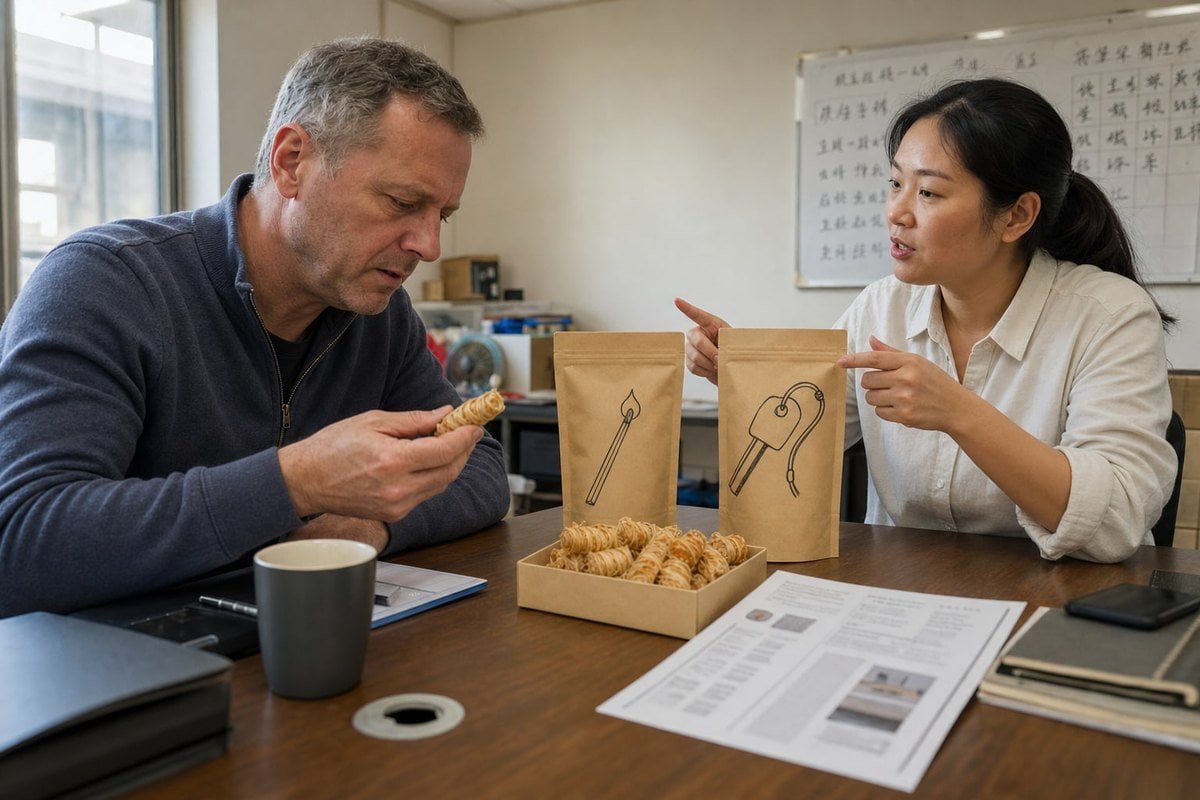
O método de ignição que você imprime na caixa é uma escolha de posicionamento, não apenas uma instrução. Em nossa experiência exportando para os EUA, Alemanha e Reino Unido, os canais de varejo se dividem claramente em dois tipos de clientes. Compradores de lareiras e churrasqueiras querem conveniência. Eles usarão um fósforo longo ou um isqueiro, e esperam que o iniciador pegue na primeira chama. Compradores de camping e sobrevivência querem resiliência. Eles julgam um produto pela capacidade de pegar faísca de um bastão de ferrocério 3 em condições de umidade.
Combine a alegação com a estrutura do produto.
Rolos de madeira mergulhados em cera comportam-se de maneira diferente dependendo de como as fibras são expostas. Um rolo firmemente enrolado e fortemente encerado acende facilmente com a chama de um fósforo, mas resiste a faíscas, pois a cera eleva a temperatura efetiva de ignição na superfície. Um rolo com fios soltos e felpudos de lã de madeira pega faíscas muito melhor. Quando desenvolvemos uma especificação de marca própria, ajustamos a proporção de cera e a soltura das fibras para corresponder à alegação de ignição que a marca deseja fazer.
Um guia simples de posicionamento.
| Canal de varejo. | Alegação de ignição recomendada. | Por que funciona |
|---|---|---|
| Distribuidores de lareiras e churrasqueiras | Fósforo ou isqueiro. | Transferência rápida de chama, conveniência interna. |
| Marcas de camping e atividades ao ar livre | Bastão de ferro mais. fósforos à prova de tempestade 4 | Resiliência climática vende o kit. |
| Varejo em massa (redes de lojas de ferragens). | Ignição dupla. | Um SKU cobre ambos os tipos de compradores. |
| Nicho de sobrevivência e bushcraft. | Bastão de ferro primário. | Alinha-se com a cultura de acender fogo do bushcraft. |
O que quer que você afirme, verifique. Testamos amostras de cada lote antes do envio, pois um rótulo "compatível com bastão de ferro" que falha no quintal de um cliente se torna uma devolução, depois uma crítica ruim.
Posso Agrupar Fósforos ou Hastes de Ferro com Meus Kits de Iniciadores de Fogo de Marca Própria?
Um de nossos clientes holandeses nos procurou com um briefing claro: um kit de fogo de sobrevivência pronto para prateleira combinando nossos rolos de madeira mergulhados em cera, um bastão de ferro e fósforos à prova de tempestade em uma caixa de marca. A resposta foi sim — com condições.
Sim, você pode agrupar fósforos ou hastes de ferro com kits de iniciadores de fogo de marca própria, e kits híbridos são uma tendência de varejo crescente. Fósforos acionam regras de transporte e rotulagem mais rigorosas do que hastes de ferro, portanto, planeje documentos de conformidade, rótulos de aviso e classificação de envio antes de finalizar o design do kit.
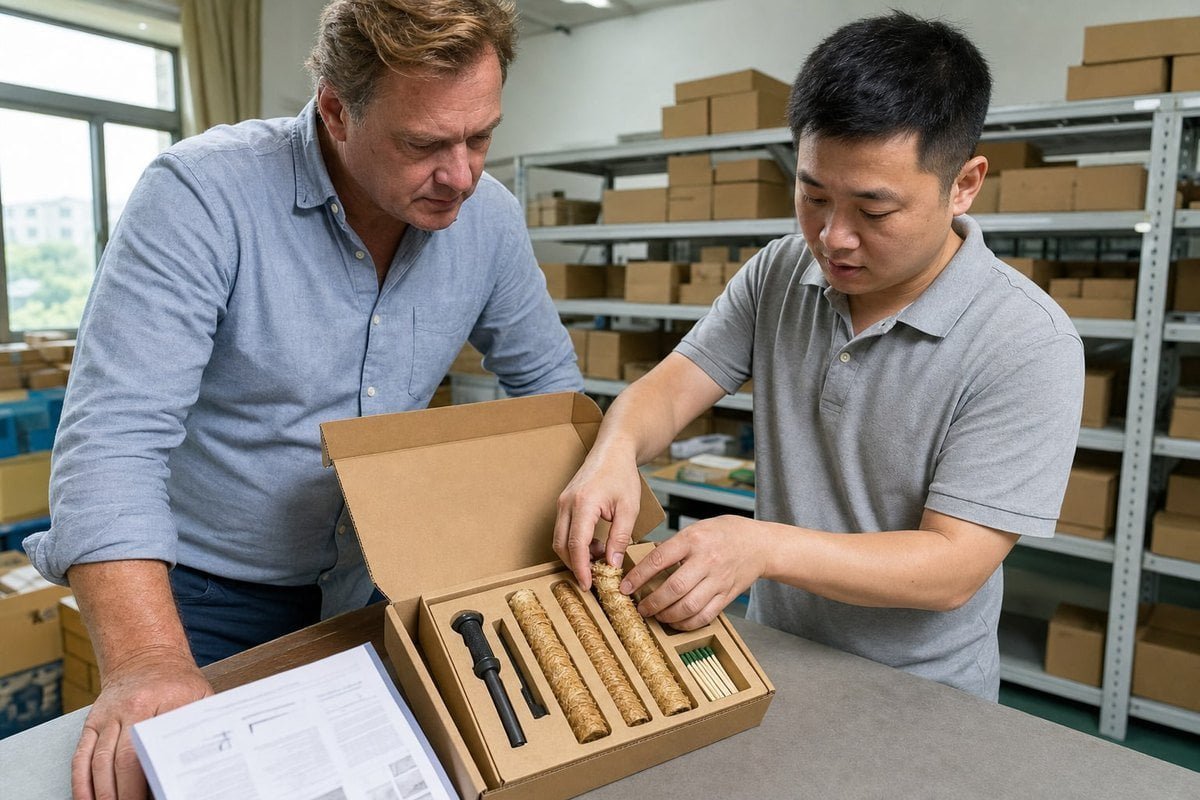
A montagem é onde a capacidade OEM/ODM realmente importa. Um kit é mais do que três itens em uma caixa. É uma especificação coordenada: o tempo de queima do iniciador de madeira, o tamanho do bastão de ferro, a contagem de fósforos, a bandeja de inserção, a etiqueta de aviso e o código de barras, tudo tem que se alinhar. Lidamos com isso como um projeto para os clientes, desde a arte personalizada da caixa até o frete otimizado, pois um kit montado a partir de três fornecedores separados geralmente falha em algum ponto — tamanhos incompatíveis, relatórios de teste ausentes ou uma retenção alfandegária.
O que cada complemento traz para o kit.
Fósforos são a ferramenta de conveniência. Eles dão a um iniciante uma chama instantânea, mas queimam por apenas alguns segundos, então a chama deve transferir rapidamente para a isca. Bastões de ferro são a ferramenta de resiliência. Eles entregam milhares de acendimentos, funcionam quando molhados e lançam faíscas que o vento não pode apagar da maneira que apaga a chama de um fósforo. Alguns kits adicionam aparas de magnésio ou um bloco de magnésio como um intensificador de calor instantâneo, que combina bem com iniciadores de madeira mais densos.
Pontos de decisão de design de kit.
- Escolha o item principal. Um kit de lareira lidera com o iniciador de madeira; um kit de fogo de sobrevivência lidera com o bastão de ferro.
- Decida o backup. Fósforos à prova de tempestade são a ignição secundária padrão para kits externos.
- Dimensionar a isca. Inclua rolos de madeira suficientes para uso realista — os clientes julgam o valor pelo número de fogos, não pelo número de peças.
- Trave o arquivo de conformidade. Fósforos geralmente carregam implicações de envio de mercadorias perigosas; bastões de ferro geralmente enviam de forma mais simples. Confirme a classificação com seu despachante de carga com antecedência.
- Projete a embalagem para a prateleira. Caixas de exibição, abas para pendurar e instruções claras de ignição reduzem devoluções.
Descobrimos que pedidos de teste funcionam melhor aqui. Um MOQ flexível na primeira execução do kit permite que um distribuidor teste o pacote em um mercado antes de se comprometer com o volume do contêiner.
Como Escolho Acendedores de Lenha Que Acendem Confiávelmente Com Fósforos e Hastes de Ferro?
No início do nosso desenvolvimento de CQ, aprendemos uma lição difícil: dois lotes com teor de cera idêntico se comportaram de maneira diferente sob faíscas porque as aparas de madeira foram cortadas em espessuras diferentes. A geometria da fibra decide a ignição por faísca.
Escolha acendedores de fogo a lenha com fibras soltas, finas e secas de lã de madeira, um revestimento moderado de cera e fios expostos sem revestimento em uma extremidade. As fibras finas capturam faíscas como um feixe de isca, enquanto o núcleo de cera sustenta a chama o tempo suficiente para acender gravetos.
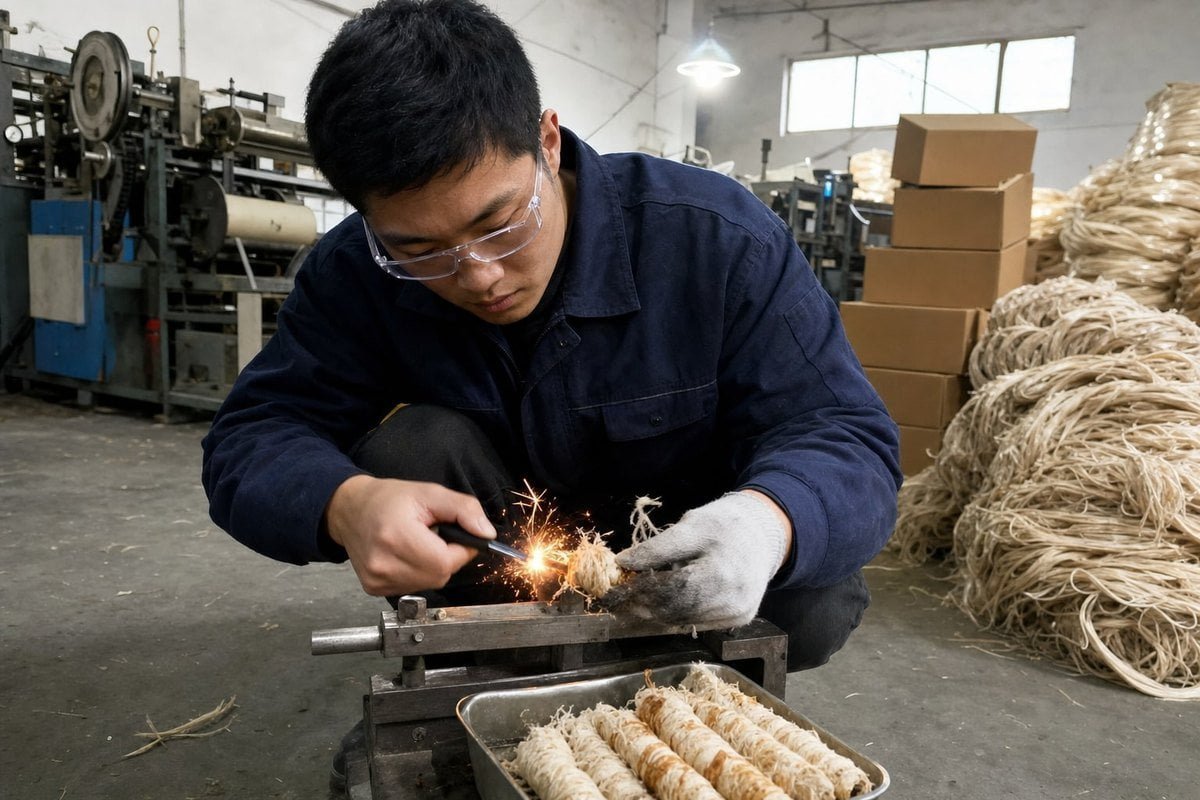
A física é simples. Um fósforo entrega uma chama pequena e sustentada. Um bastão de ferro entrega uma chuva de faíscas muito quentes, mas muito breves. Fósforos podem derreter lentamente a cera e inflamar material denso. Faíscas não podem. Faíscas precisam de fibras finas e secas com oxigênio aprisionado — a mesma razão pela qual instrutores de bushcraft esculpem gravetos e raspam gravetos de gordura em cachos finos antes de riscar. Quanto mais fina a fibra, menor o calor necessário para atingir sua temperatura de ignição.
Os pontos de especificação que importam.
| Fator de especificação | Desempenho do fósforo. | Desempenho do bastão de ferro. |
|---|---|---|
| Espessura da fibra. | Tolerante a fios mais grossos. | Precisa de cachos finos e semelhantes a cabelos. |
| Cobertura de cera | Revestimento completo funciona. | Precisa de fibras secas expostas. |
| Densidade da fibra | Rolos apertados ainda leves | Estrutura solta e arejada necessária |
| Conteúdo de humidade | Baixa tolerância à umidade | Tolerância muito baixa; deve estar seco |
| Teor de resina | Útil | Muito útil; a resina pega faíscas prontamente |
Como testar amostras antes de encomendar
Quando receber amostras, não teste apenas com um isqueiro. Raspe um bastão de ferrocério diretamente na ponta da fibra a dois centímetros de distância. Um bom iniciador de ignição dupla deve pegar em alguns golpes. Em seguida, repita após deixar uma amostra em uma sala úmida durante a noite — isso simula condições de armazém e varejo. Teste também a ponte de isca de flash: alguns compradores adicionam uma camada de pano carbonizado 5 ou casca desfiada entre a faísca e o iniciador. Se o seu produto precisar dessa ponte para funcionar, as alegações de sua embalagem devem refletir isso.
Em nossas linhas, controlamos o corte da fibra, o tempo de imersão na cera e a secagem em cada etapa, para que a primeira amostra que você aprovar corresponda à produção em massa. Essa consistência lote a lote é o objetivo de comprar de uma fábrica real em vez de um comerciante.
Quais Padrões de Conformidade e Segurança Devo Verificar Antes de Obter Kits Combinados de Iniciação de Fogo?
Um comprador dos EUA me disse uma vez que o carregamento de seu fornecedor anterior ficou retido na alfândega por seis semanas devido a um relatório de teste ausente. Esse único atraso custou-lhe uma janela sazonal. Conformidade não é papelada — é seguro de prazo de entrega.
Antes de adquirir kits combinados para iniciar fogo, verifique se o fornecedor possui certificação ISO 9001 e BSCI, marcação CE quando aplicável e relatórios de testes de terceiros de laboratórios como SGS ou Intertek. Confirme também a classificação correta de mercadorias perigosas para fósforos, rótulos de advertência e regras de rotulagem do mercado de destino.
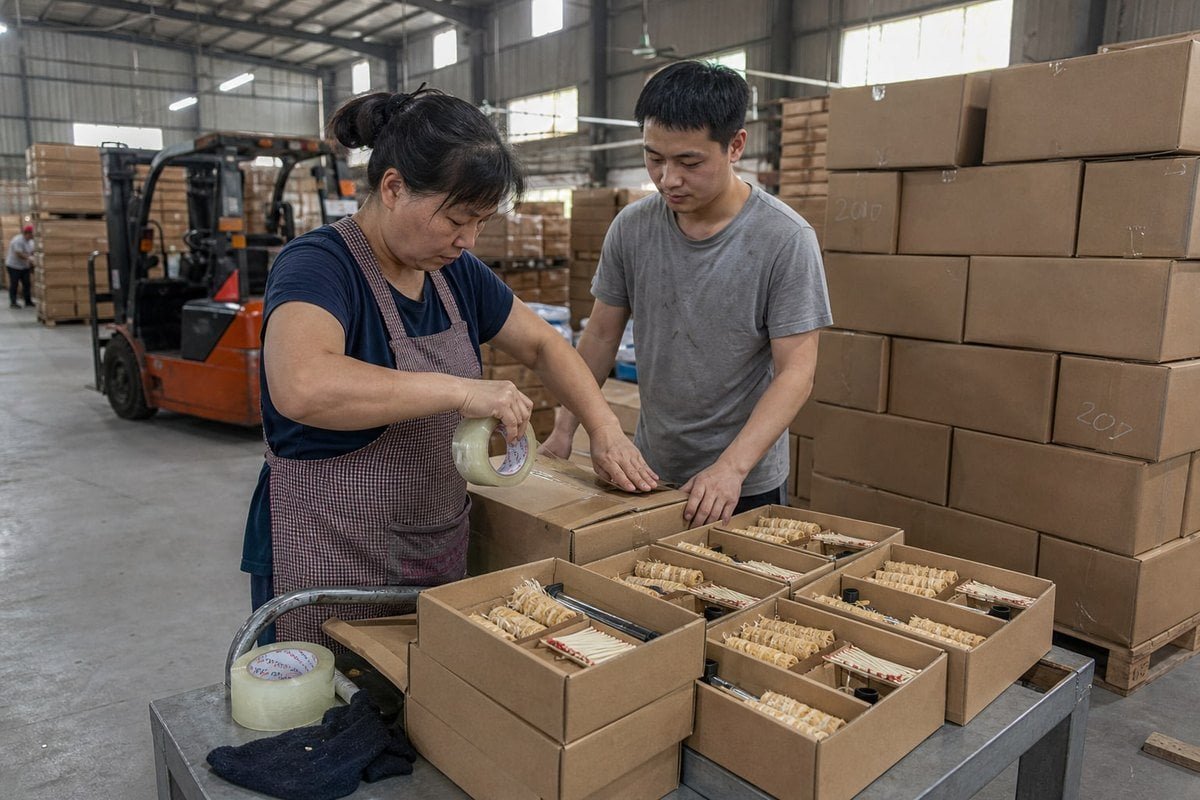
Os requisitos de conformidade se acumulam rapidamente quando um kit combina vários produtos de fogo. Cada componente carrega suas próprias regras, e o kit agrupado herda todas elas. Em dezessete anos de exportação para mais de trinta países, construímos nosso processo de documentação em torno dessa realidade, porque nossos compradores nos EUA e na UE tratam a certificação como um requisito rigoroso, não como algo bom de se ter.
A lista de verificação de conformidade por componente
| Componente | Verificações importantes | Armadilha comum |
|---|---|---|
| Acendedores de lenha | Divulgação da composição (por exemplo, proporção de fibra de madeira e parafina), sem produtos químicos nocivos, alegações de tempo de queima verificadas | Rotulagem vaga de ingredientes bloqueia a listagem no varejo |
| Bastões de ferro | Segurança do material, embalagem que evita abrasão acidental | Nenhuma documentação da composição da liga |
| Fósforos / fósforos à prova de tempestade | Classificação de transporte de mercadorias perigosas, embalagem de segurança para crianças em alguns mercados | Classe de envio incorreta atrasa todo o contêiner |
| Embalagem de varejo | Etiquetas de aviso, instruções de uso, códigos de barras, requisitos de idioma por mercado | Avisos em idioma local ausentes nos mercados da UE |
Padrões de nível de fábrica a exigir
Além dos testes de produto, audite o próprio fornecedor. ISO 9001 6 mostra um sistema de gestão de qualidade funcional. A BSCI cobre a conformidade social, que os grandes canais de fornecimento de varejo exigem cada vez mais antes de integrar um fornecedor. Peça relatórios recentes da SGS ou Intertek 7 sobre o produto real, não um similar. Em seguida, faça uma pergunta mais difícil: como a fábrica controla a consistência lote a lote? Um certificado prova que um sistema existe; registros consistentes de CQ provam que ele funciona todos os dias. Mantemos registros de inspeção em cada estágio de produção — corte de fibra, imersão em cera, secagem, embalagem — precisamente para que o inspetor terceirizado de um comprador possa verificar qualquer lote. Se um fornecedor hesitar em compartilhar esse nível de detalhe, trate isso como um sinal de alerta antes de fechar um pedido de compra.
Conclusão
Combinar iniciadores de fogo de madeira com fósforos e bastões de ferro é uma decisão de sistema: combine a especificação da fibra, a alegação de ignição, o design do kit e o arquivo de conformidade — em seguida, compre de uma fábrica que comprove consistência.
Notas de rodapé
Site oficial do sistema de auditoria de conformidade social exigido pelos principais canais globais de fornecimento de varejo. ↩︎
Orientação oficial da Comissão Europeia sobre requisitos de segurança do produto, saúde e proteção ambiental. ↩︎
Fornece informações técnicas sobre a composição do material e as propriedades de produção de faíscas dos bastões de ferrocério. ↩︎
Explica as diferenças funcionais entre fósforos comuns e variantes resistentes às intempéries usadas em kits para atividades ao ar livre. ↩︎
Definição técnica de um material comum de início de fogo usado como ponte entre faíscas e combustível. ↩︎
Entrada autorizada da Wikipedia fornecendo uma visão geral abrangente do padrão de gerenciamento de qualidade ISO 9001. ↩︎
Site oficial de um dos principais provedores globais de serviços de teste, inspeção e certificação de produtos. ↩︎

 English
  Spanish
  German
  French
  Arabic
  Portuguese
Participe da conversa