






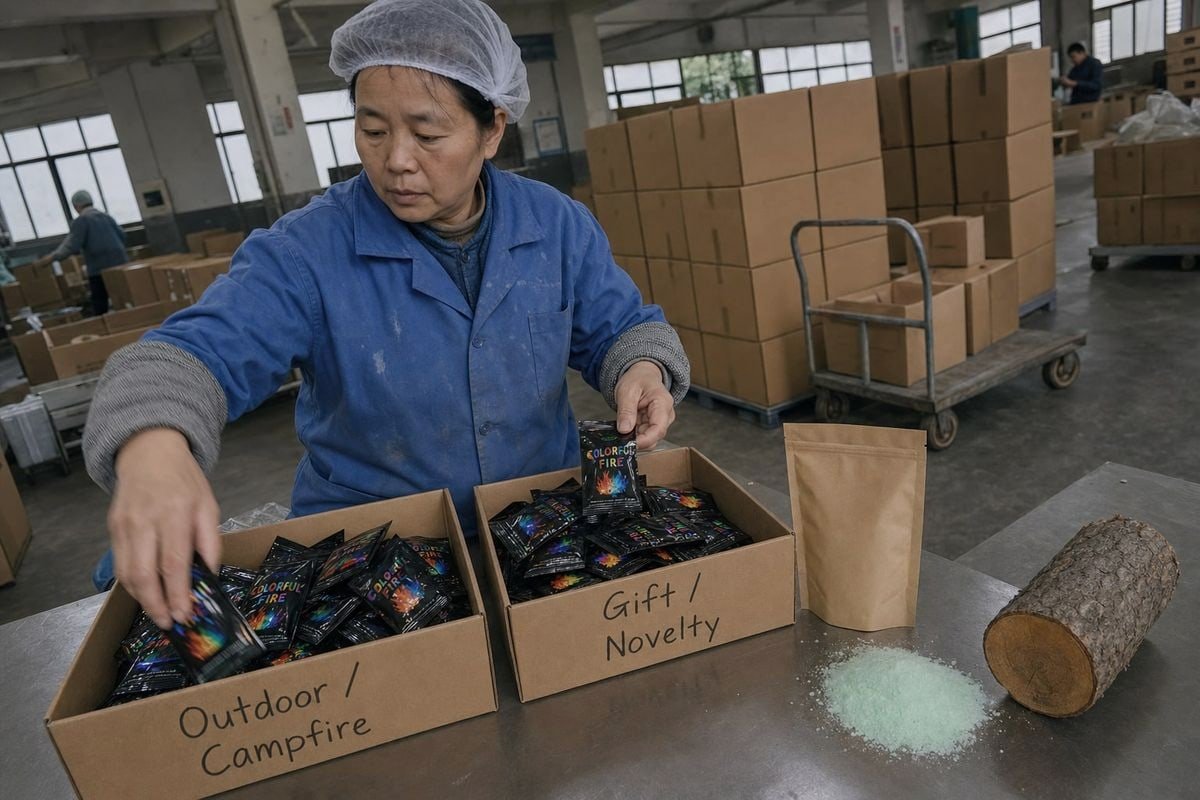
Pó Mágico de Fogo confunde até compradores experientes quando se trata de posicionamento de categoria. Em nossa linha de produção, vimos remessas mal listadas pararem na alfândega, perderem visibilidade de pesquisa e terem desempenho inferior no varejo.
Pó Mágico de Fogo deve ser listado sob Festa ao Ar Livre como a categoria principal, com Itens de Novidade como uma tag secundária. Seus casos de uso dominantes — fogueiras, lareiras, fogueiras e reuniões no quintal — correspondem à intenção de busca funcional ao ar livre, enquanto a marcação de novidade preserva a descoberta para compradores de presentes e de impulso.
Essa resposta curta esconde uma complexidade real. Documentação de conformidade, posicionamento no marketplace, regras de rotulagem e perguntas de fornecedores mudam dependendo da categoria que você escolher. Deixe-me guiá-lo por cada uma delas.
Como a Categoria do Produto Afeta os Documentos de Conformidade Que Preciso do Meu Fornecedor?
Um distribuidor alemão nos pediu uma vez para reemitir um conjunto completo de documentação porque o despachante aduaneiro dele reclassificou nossos pacotes de corante de chama no meio do envio. Aquela semana ensinou uma lição duradoura à nossa equipe de exportação.
A escolha da categoria determina diretamente o seu ônus de conformidade. A classificação como novidade ou brinquedo pode acionar padrões de segurança de brinquedos como EN 71 ou ASTM F963, enquanto a classificação como acessório de festa ao ar livre ou acessório de fogo geralmente requer documentação química: fichas SDS, relatórios de teste SGS ou Intertek e documentação de classificação de transporte.

Os reguladores não leem sua cópia de marketing. Eles leem sua categoria declarada, seu código HS 1, e sua rotulagem. Se você listar o Pó Mágico de Fogo como um item de novidade que "parece um brinquedo", alguns mercados o incluirão em estruturas de segurança de brinquedos. Isso significa requisitos de classificação etária, avaliações de peças pequenas e, em algumas jurisdições, restrições de conteúdo químico que nunca foram projetadas para aditivos de queima de madeira. Esse é um fardo pesado e desnecessário para um produto que é fundamentalmente um corante químico de chama.
Por outro lado, quando você classifica o produto como um acessório de fogo externo, o caminho da documentação é mais claro. Em nossos mais de dezessete anos exportando para os EUA, Alemanha, Reino Unido e outros países, os compradores nos pedem consistentemente o mesmo conjunto de arquivos principais. Mantemos esses prontos para cada lote porque nossos compradores de varejo tratam a conformidade como um requisito rígido, não como algo bom de ter.
A Lista de Documentos por Categoria
| Documento | Festa ao Ar Livre / Acessório de Fogo | Novidade / Adjacente a Brinquedo |
|---|---|---|
| Ficha de Dados de Segurança (FDS) | Necessário | Necessário |
| Relatório de teste químico SGS / Intertek | Necessário | Necessário |
| Documentação de marcação CE | Dependente do mercado | Frequentemente exigido |
| Teste de brinquedo EN 71 / ASTM F963 | Geralmente não é necessário | Frequentemente exigido |
| Classificação de transporte (UN/DOT) | Necessário | Necessário |
| Revisão da etiqueta de advertência | Formato padrão de perigo | Formato de estilo de brinquedo mais formato de perigo |
Por que os Compostos de Cobre São Importantes
A maioria dos efeitos de fogo arco-íris depende de sais metálicos, e ; as regras de segurança do sulfato de cobre exigem separação clara e rótulos de aviso intactos. 2 segurança é a pergunta que os compradores mais levantam. Seu fornecedor deve documentar o que está no sachê, em qual concentração e como é testado. Fornecemos ISO 9001 3, BSCI, CE e certificação SGS/Intertek com relatórios de teste precisamente porque um gerente de compras não pode defender um produto químico não documentado para uma equipe de conformidade de varejo. Se o seu fornecedor hesitar em qualquer um desses documentos, essa hesitação é a sua resposta.
Qual Classificação Me Ajuda a Obter Melhor Posicionamento em Mercados de Varejo ou Online?
Quando ajudamos clientes de marca própria a configurar suas listagens na Amazon e no varejo, um padrão se repete: a decisão da categoria gera mais receita do que quase qualquer ajuste de embalagem que fazemos na fábrica.
Festa ao ar livre e categorias adjacentes a acampamentos proporcionam um posicionamento mais forte e durante todo o ano, pois correspondem à intenção de busca funcional de proprietários de fogueiras e campistas. O posicionamento de novidades impulsiona picos sazonais em torno do Halloween e do Natal, portanto, a estratégia vencedora é Festa ao ar livre primária, Itens de novidade secundários.
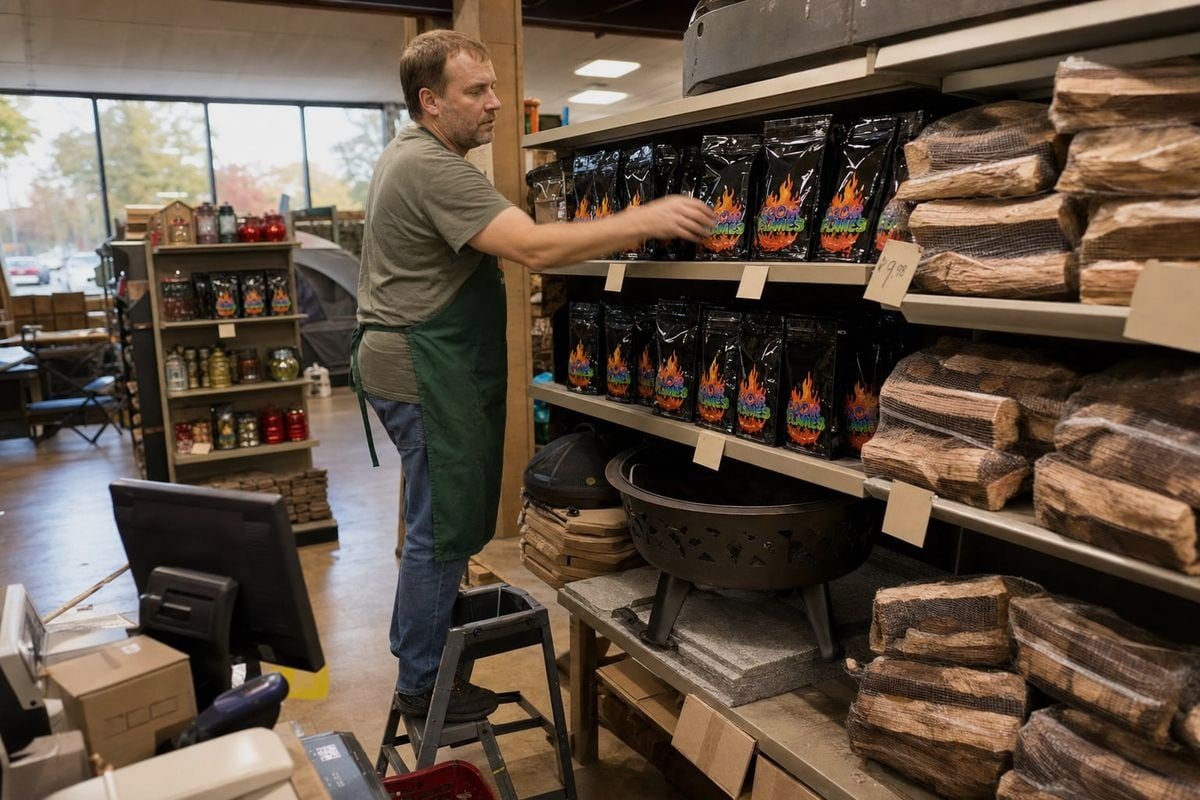
A intenção de busca decide essa questão. Veja como as páginas de comércio eletrônico de melhor desempenho lidam com esses produtos. O padrão dominante os coloca em Equipamentos de Camping, Vida ao Ar Livre ou Entretenimento de Fogueira — não em Brinquedos. Isso não é um acidente. Compradores procurando acessórios para fogueira estão prontos para comprar para uma ocasião específica: uma noite no quintal, uma viagem de acampamento, uma fogueira na praia. Compradores navegando em corredores de novidades procuram surpresa e valor de impulso, o que converte bem, mas apenas em rajadas.
Veja como as duas lógicas de merchandising se comparam:
| Fator | Posicionamento de Festa ao Ar Livre | Posicionamento de Itens de Novidade |
|---|---|---|
| Correspondência de intenção de busca | Funcional, pronto para compra | Navegação, impulsionado por impulso |
| Padrão de receita | Consistente, o ano todo | Picos sazonais (Halloween, Natal) |
| Comprador médio | Proprietários de fogueiras, campistas, anfitriões | Compradores de presentes, compradores de pegadinhas |
| Potencial de venda cruzada | Acendedores de fogo, tochas, pinhas | Produtos luminosos, novidades para lembrancinhas de festa |
| Segmentação de anúncios | Suprimentos para entretenimento ao ar livre | Presentes engraçados, enchimentos de meia |
A Estratégia de Listagem Dupla
Você não precisa escolher apenas uma. A taxonomia moderna de produtos de comércio eletrônico suporta uma categoria primária mais tags secundárias. Nossos parceiros de distribuição mais bem-sucedidos nos EUA e no Reino Unido ancoram o produto em Vida ao Ar Livre, e então o marcam em coleções de novidades e sazonais durante o quarto trimestre. Um comprador me disse que sua listagem cruzada de Halloween triplicou as vendas de unidades em outubro sem canibalizar suas vendas constantes de entretenimento de fogueira no resto do ano.
Aproveitando a Tendência Estética de Camping
Há também um ângulo mais novo que vale a pena observar. O movimento de "camping estético" e glamping 4 rewards positioning the product as an atmospheric accessory. High-spend glamping audiences on social media respond to imagery of rainbow fire effects at curated campsites. That framing sits naturally inside Outdoor Party taxonomy — another point in its favor.
Os Requisitos de Rotulagem e Embalagem São Diferentes Entre Estas Duas Categorias?
Our packaging team once rejected a client's proposed sachet design because the pastel colors and bubble lettering looked, frankly, like a drink mix. That single design review probably prevented a recall.
Yes, they differ significantly. Novelty-positioned packaging faces stricter scrutiny around child appeal and candy-resemblance risks, while outdoor category packaging must lead with chemical hazard warnings, usage instructions, and not-for-cooking statements. Both require clear "not food-safe" and "keep away from children" labeling.

Packaging is where the category question becomes physically real. A glossy foil pouch with rainbow gradient lettering is eye-catching on a shelf. But safety reviewers see the same design differently: colorful sachets are frequently mistaken for candy or drink mixes, by children and sometimes even adults. The more your packaging leans into novelty aesthetics, the more you must counterbalance with unmissable warnings.
From our OEM work across 30+ countries, these are the labeling elements that matter most:
- Hazard warnings. State clearly that the contents are chemical flame colorants, not edible, and not for skin contact.
- Instruções de uso. Instruct users to toss the unopened packet directly into the fire. This avoids skin contact and inhalation of chemical dust.
- Cooking prohibition. State plainly: do not roast marshmallows or cook food over treated flames. Chemical ingestion is the single biggest documented risk.
- Fire type restrictions. Specify indoor and outdoor wood fires only — never gas logs or artificial fireplace setups.
- Burn duration and dosage. Honest claims, typically 20 to 60 minutes per packet depending on fire conditions and pack size.
- Barcodes and market-specific compliance marks. CE where applicable, plus retailer-required label formats.
Pack Size and Packaging Format Options
| Tamanho da Embalagem | Tempo de Queima Típico | Common Packaging Format |
|---|---|---|
| 10–15g | ~20–25 minutes | Sachê individual de folha |
| 25–30g | ~30–40 minutes | Sachet or kraft stand-up pouch |
| 40–50g | ~45–60 minutes | Kraft pouch or plastic jar |
| Multi-pack bundles | Varies by count | Display box with flip-top lid |
We produce all of these formats — plastic bags, resealable kraft bags, jars, and retail display boxes — with custom warning labels and private-label branding. Getting the label right in the design phase is far cheaper than fixing it after a compliance rejection.
O que devo perguntar ao meu fabricante antes de decidir como listar este produto?
Buyers who visit our Liuyang headquarters usually arrive with a price sheet and leave with a question list. The right questions, asked early, prevent nearly every category and compliance problem later.
Pergunte cinco coisas: quais certificações e relatórios de teste cobrem a formulação exata; se a composição é ecológica e livre de metais pesados restritos; qual personalização de embalagem e rotulagem está disponível; como a consistência lote a lote é controlada; e quais mercados o fornecedor já atendeu com sucesso antes.
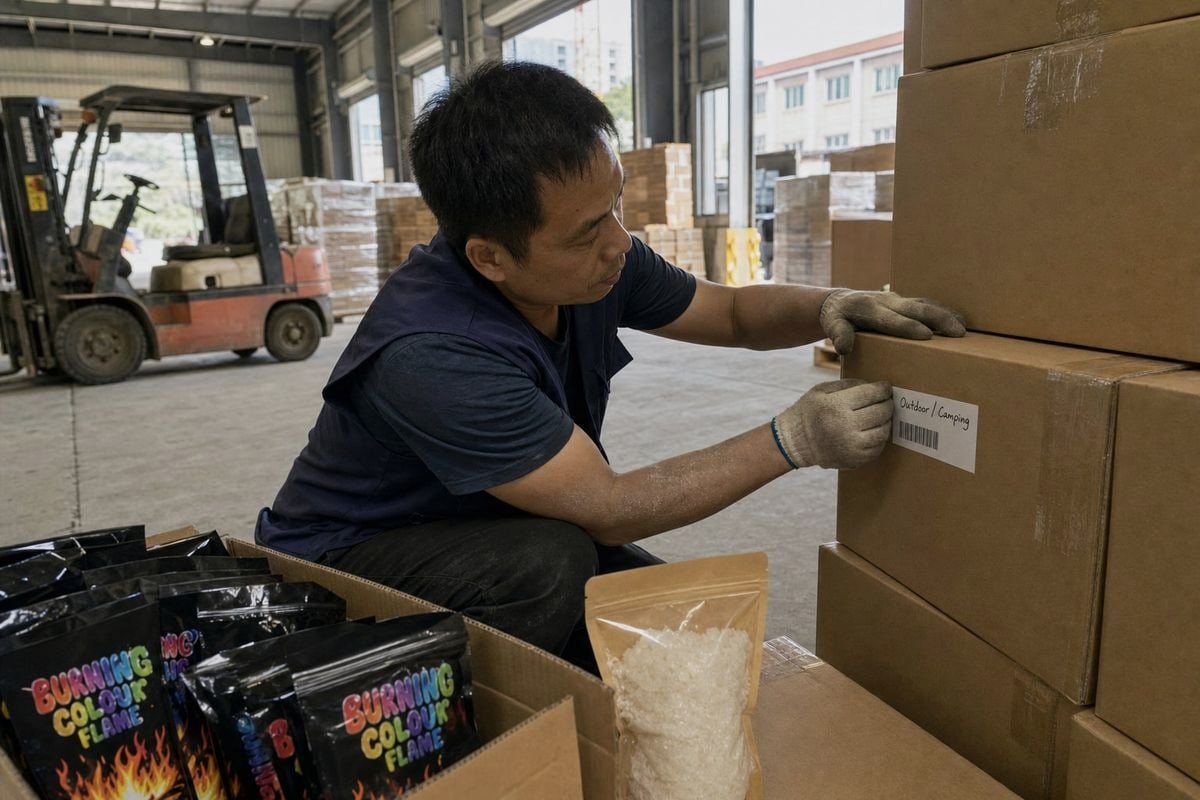
Your listing decision is only as strong as your supplier's answers. A category strategy built on undocumented claims collapses at the first customs inspection or marketplace audit. Here is the question framework I recommend to every purchasing manager, based on what our most rigorous US and European buyers ask us.
Certificação e Testes
Ask for the full certificate set by name: ISO 9001 for quality management, BSCI para conformidade social 5, CE where the market requires it, and third-party chemical testing 6 from SGS or Intertek. Then ask the harder question — do the test reports match the exact formulation and batch you will receive? A report from a different formula is worthless. Our QC process ties test documentation to production batches specifically so the first sample reliably reflects mass-production quality.
Formulation and Environmental Direction
Ask what creates the color. Reputable suppliers will disclose their approach to copper compounds and confirm the absence of restricted substances. This matters more each year: regulatory pressure around heavy metal runoff 7 is building, and eco-safe mineral positioning is becoming a genuine selling point with environmentally conscious campers. We formulate with eco-friendly materials for exactly this reason — buyers who future-proof now avoid reformulating under pressure later.
Customization and Market Experience
Ask whether the supplier can adjust burn time, pack size, packaging format, and warning labels for your target category. If you are listing under Outdoor Party, you may want rugged kraft pouches and camping-oriented copy. If you are cross-listing as party favor novelties, you may want display boxes for checkout counters. True one-stop OEM/ODM support — custom boxes, barcodes, warning labels, and optimized logistics — lets one product serve both categories without two supply chains. Finally, ask which markets they have shipped to successfully. A factory that has cleared US, German, and UK customs repeatedly has already solved problems you have not encountered yet.
Conclusão
Misclassifying Magic Fire Powder costs visibility, compliance headaches, and sales. List it under Outdoor Party, tag it as a novelty, and partner with a certified factory that documents everything.
Notas de rodapé
1. Explains the international tariff classification system referenced for customs declarations. ↩︎
2. Background on the chemical compound used to create rainbow flame colors. ↩︎
3. Authoritative NIST resource explaining ISO 9001 quality management standards and implementation. ↩︎
4. Background on the glamping trend referenced as a marketing angle for outdoor products. ↩︎
5. Official amfori page for the Business Social Compliance Initiative (BSCI) social risk management solution. ↩︎
6. S



 English
  Spanish
  German
  French
  Arabic
  Portuguese
Participe da conversa