






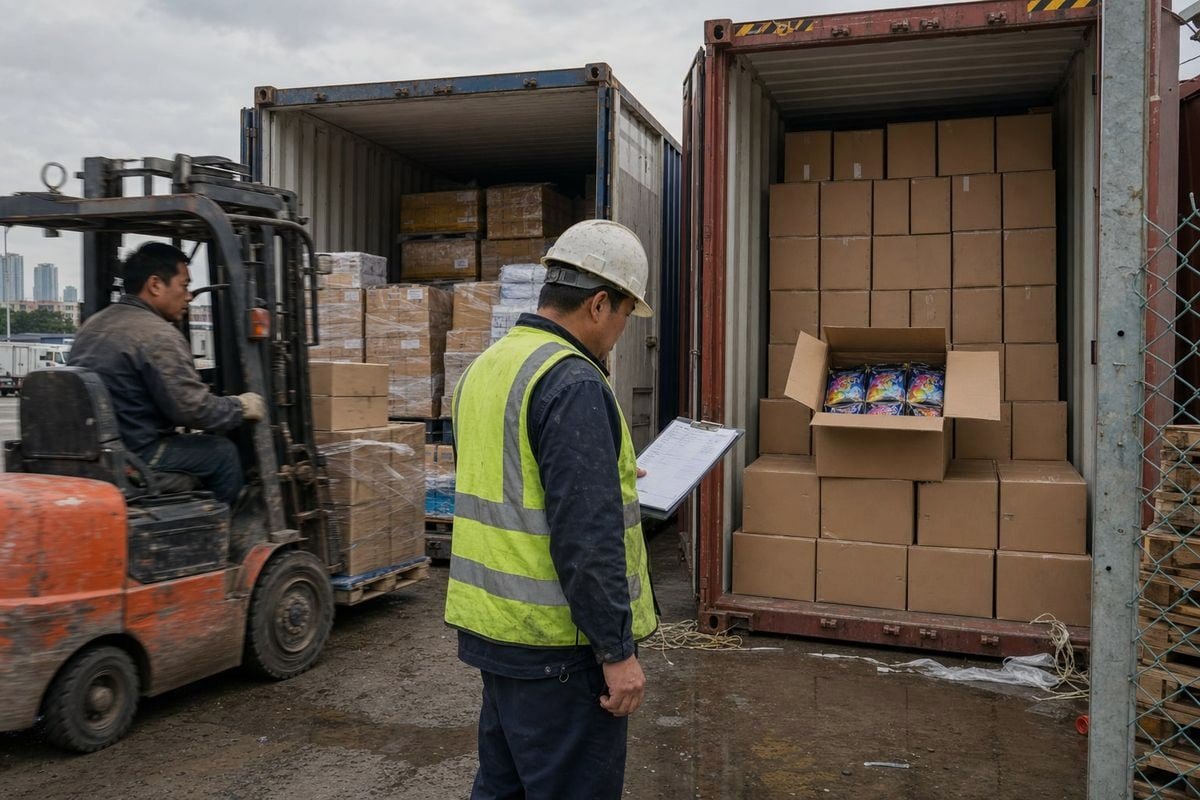
LCL vs FCL shipping decisions can quietly wreck a first import of Magic Fire Powder Documentação CE 1. I have watched buyers save $400 on freight from our Ningbo line, then lose thousands to hidden fees 2, crushed cartons, and customs holds.
LCL vs FCL for Magic Fire Powder from China depends on volume and risk: LCL suits trial orders under roughly 10–13 cubic meters, while FCL usually wins above 13–15 CBM once handling fees, damage risk, transit speed, and customs exposure are counted in the total landed cost.
Let me break this down section by section. I will cover the decision framework, hidden fees, compliance paperwork, and what your first trial order should actually look like.
How do I decide between LCL and FCL when importing Magic Fire Powder from China?
Last spring, a German distributor asked us to ship 8 pallets of color-flame packets from our Ningbo facility. His agente de cargas 3 quoted LCL. We ran the numbers together, and the answer surprised him.
Decide by volume first, then risk. Below 10 cubic meters, LCL is usually cheaper for Magic Fire Powder. Between 10 and 15 CBM, compare all-in quotes. Above 15 CBM, FCL almost always costs less per unit and cuts handling damage sharply.

Here is the quick comparison most buyers ask us for before anything else:
| Fator | LCL (Carga de Contêiner Menos que Completa) | FCL (Carga de Contêiner Completo) |
|---|---|---|
| How you pay | Per cubic meter | Taxa fixa por contêiner |
| Melhor faixa de volume | Under ~10–13 CBM | ~13–15 CBM and above |
| Pontos de contato de manuseio | Muitos (consolidação + desconsolidação) | Poucos (fechado de porta em porta) |
| Typical transit | Slower by 5–14 days | Faster, more predictable |
| Damage risk for powder sachets | Maior | Menor |
| Cash flow for trial orders | Friendlier | Heavier upfront |
The breakeven is a range, not a magic number
Different lanes give different answers. Some guides put the crossover at 12–15 CBM. Others say 15–18 CBM, and a few Asia-to-US routes push it past 20 CBM because FCL rates fluctuate by season. So I always tell buyers: never trust a universal threshold. Ask your freight forwarder for both quotes on your exact lane and compare the totals.
Why powder cargo shifts the line earlier
Our Magic Fire packets are foil sachets filled with fine crystalline powder. They are not fragile like glass, but they hate two things: puncture and moisture. In an LCL container, your cartons sit next to unknown cargo. Forklifts move them at the Container Freight Station twice. Each touch is a chance for a crushed corner or a torn sachet. For durable goods, that risk is a rounding error. For powder products, it can mean a whole retail display box that no store will accept. That is why I often recommend FCL a few CBM earlier than the pure math suggests.
Order pattern matters too
One-off test order? LCL keeps cash free. Recurring quarterly replenishment for a camping brand? Consolidating into FCL usually lowers cost per unit and stabilizes your lead time planning.
A US importer once forwarded me his LCL invoice with a note: "Why is this 60% higher than the quote?" The ocean rate was accurate. Everything stacked on top of it was not.
Watch for CFS handling, consolidation and deconsolidation fees, documentation charges, hazardous material surcharges, and destination delivery minimums on LCL. For FCL, budget for terminal handling, drayage, and demurrage and detention. Always compare all-in landed cost, never the base ocean rate.

The headline ocean rate is the bait. The fee stack is the hook. Here is what actually lands on your invoice with each mode:
| Cost line | LCL | FCL |
|---|---|---|
| O frete marítimo | Per CBM (looks cheap) | Taxa fixa de contêiner |
| Origin CFS / consolidation | Yes, per CBM | Não |
| Origin terminal handling | Included in CFS fees | Yes, flat |
| Destination deconsolidation | Yes, often the biggest surprise | Não |
| Documentation and bill of lading 4 fees | Yes, per shipment | Yes, per shipment |
| Desembaraço aduaneiro | Sim | Sim |
| Local delivery / drayage | Per shipment, minimums apply | Full truck drayage |
| Seguro de carga | Recommended, higher practical risk | Recomendado |
| Demurrage and detention 5 exposure | Storage fees at CFS | Container return deadlines |
The surcharge trap for fire-themed goods
Here is where color-flame products differ from generic dry goods. If a product is treated as dangerous goods, many LCL consolidators either refuse it outright or apply a hazardous material surcharge that can run two to three times the standard LCL rate. They do not want regulated powders sitting next to consumer electronics in a shared box. Our Magic Fire formula is built on eco-friendly mineral salts rather than harsh chemicals, and we support buyers with SGS and Intertek test reports so the cargo can be classified correctly from the start. That documentation often decides whether you pay a general-cargo rate or a punishing surcharge.
Insurance and the fine print
Cargo insurance costs roughly the same on paper for both modes. In practice, LCL claims are messier. More handoffs mean more parties to blame, and proving where a puncture happened is hard. With a sealed FCL container, the chain of custody is clean, which makes any claim faster to resolve.
Currency of time
Do not forget storage. If your LCL shipment sits at a destination CFS while paperwork gets sorted, daily storage fees accrue. With FCL, the equivalent risk is demurrage and detention on the container itself. Both are avoidable with good documents, but only one of them depends on strangers' cargo clearing too.
How does shipping method affect compliance and safety documentation for fire-themed goods?
Paperwork is where fire-themed cargo lives or dies at the port. Over 17 years of exporting to 30+ countries, our team has learned that the document pack matters more than the freight mode itself, but the two interact in ways buyers rarely expect.
Shipping method changes documentation risk, not the documents themselves. Both LCL and FCL require correct dangerous goods classification, a Material Safety Data Sheet, and accurate HS codes. But an LCL hold affects shared cargo and multiplies delays, while FCL isolates your compliance risk to your own container.

Let me walk through the paperwork logic step by step, because this is where most first-time importers of color-flame products stumble.
Step 1: Get the classification right before booking
Some flame-coloring powders are classified as Sólidos inflamáveis Classe 4.1 6 or Class 5.1 oxidizers. Others, formulated from stable mineral salts like ours, can ship as general cargo. The classification drives everything downstream: which carriers accept the booking, whether a Dangerous Goods Packaging Certificate is required from the Chinese factory, and what surcharges apply. We provide test reports from SGS and Intertek precisely so our buyers' freight forwarders can classify the cargo confidently, in writing, before a booking is made.
Step 2: Build the document pack
A clean export file for fire-themed goods typically includes the commercial invoice, packing list, bill of lading, Ficha de Dados de Segurança de Materiais 7, applicable test reports, and CE documentation for European markets. Your Incoterms choice also matters here. Under FOB, your forwarder controls the ocean leg and documentation flow; under EXW, you inherit more of the origin paperwork burden than most first-time buyers expect.
Step 3: Understand how mode multiplies documentation risk
Here is the asymmetry. If customs flags one shipment inside an LCL container, the whole consolidated box can be pulled for inspection. Your compliant cargo waits while a stranger's problem gets resolved. With FCL, an inspection touches only your goods, and a clean, pre-verified file usually clears fast. Ports like Ningbo and Shanghai now support digital hazard declarations that pre-clear chemical documentation, which further shortens the window of exposure — but only if your factory submits accurate data upfront.
Step 4: Match packaging to the paperwork
Limited Quantity packaging exemptions can let small retail sachets move as standard cargo on some lanes. That is a legitimate strategy, but it must match the actual classification. Mislabeling to dodge surcharges is the fastest route to a seized shipment.
Which option, LCL or FCL, minimizes lead time and customs risk for my first trial order?
Trial orders are where I spend the most time advising buyers. A purchasing manager from the Netherlands recently told me his priority was simple: "I need it on shelves before the autumn camping season, and I cannot afford a customs surprise." That framing is exactly right.
For a small first trial order under 10 CBM, LCL with a fully verified document pack usually balances cost and risk best. If the order nears 13 CBM, or your launch date is fixed, a 20ft FCL container minimizes both lead time variability and customs exposure.
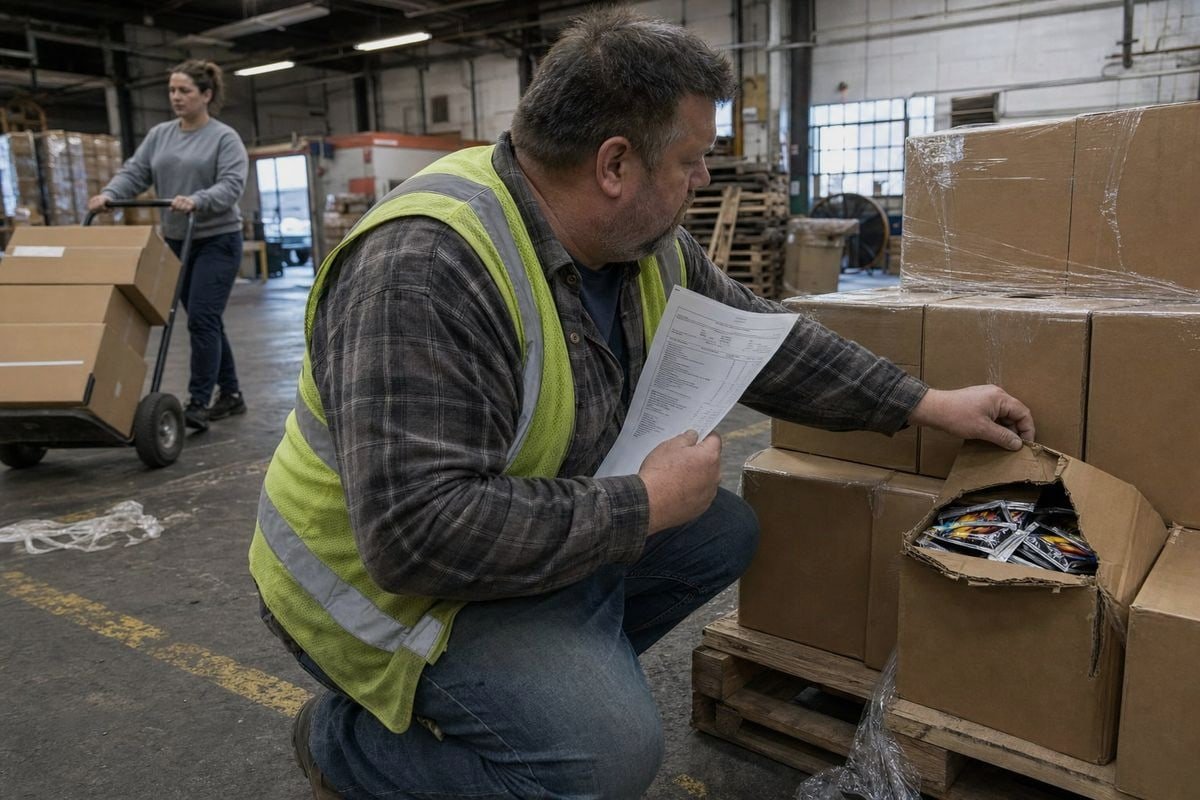
Speed and predictability are different things, and a trial order needs both. Here is how the timeline typically compares on a China-to-US or China-to-Europe lane:
| Etapa | LCL | FCL |
|---|---|---|
| Booking to vessel departure | Longer, waits for consolidation | Shorter, sails when loaded |
| Trânsito marítimo | Same vessel speed | Same vessel speed |
| Consolidation + deconsolidation | Adds roughly 5–10 days | Não aplicável |
| Customs inspection exposure | Shared with co-loaded cargo | Isolated to your goods |
| Total variability | 1 x 20 pés ou 40 pés | Baixo |
The realistic trial-order playbook
Most of our first-time buyers order between 2 and 8 CBM of Magic Fire packets to test their market. At that size, FCL means paying for empty space, and LCL is the rational call. The trick is to strip out the risk that makes LCL scary. Three moves do most of the work. First, insist on a forwarder with direct LCL service on your lane; transshipment consolidations add handoffs and days. Second, verify the full compliance pack before the cargo leaves the factory, since customs clearance delays hurt far more on a shared container. Third, buy cargo insurance and specify export-grade outer cartons 8; we double-wall and shrink-wrap trial pallets by default because we know they will be handled multiple times.
When to jump to FCL early
If your product launch has a hard date, if your order will repeat quarterly, or if your quote lands within about 15–20% of a 20ft FCL rate, take the container. You gain a sealed box from our Ningbo production floor to your warehouse door, a faster and steadier lead time, and a customs process that depends only on your own paperwork. For humidity-sensitive replenishment volumes crossing the Suez or Panama routes in summer, some buyers even step up to climate-controlled containers to prevent caking of the crystalline salts. That is an advanced move, but it shows the principle: with powder products, control is worth paying for slightly earlier than the spreadsheet suggests.
Conclusão
Choosing between LCL and FCL for Magic Fire Powder comes down to volume, risk tolerance, and paperwork readiness — get all three right, and your landed cost stays predictable.
The headline freight rate is never the real cost. LCL wins on small trial orders, but hidden CFS fees, handling damage, and shared-container customs risk narrow that advantage fast. FCL earns its price earlier than most buyers expect, especially for moisture-sensitive powder products. Whatever mode you choose, demand all-in quotes from your freight forwarder, verify the classification and Material Safety Data Sheet before booking, and work with a factory that ships compliant, retail-ready cargo from day one. After 17+ years shipping color-flame products to 30+ countries, our advice is simple: cheap freight is not a cheap shipment — but a well-planned one is.
Notas de rodapé
1. Official EU portal explaining conformity requirements for products sold in the European Economic Area. ↩︎
2. US regulator overseeing ocean carrier and consolidator fee disclosures affecting import shipments. ↩︎
3. Global freight forwarding trade body defining forwarder roles relevant to LCL booking decisions. ↩︎
4. Legal document between a shipper and carrier detailing the type, quantity, and destination of goods. ↩︎



 English
  Spanish
  German
  French
  Arabic
  Portuguese
Participe da conversa