






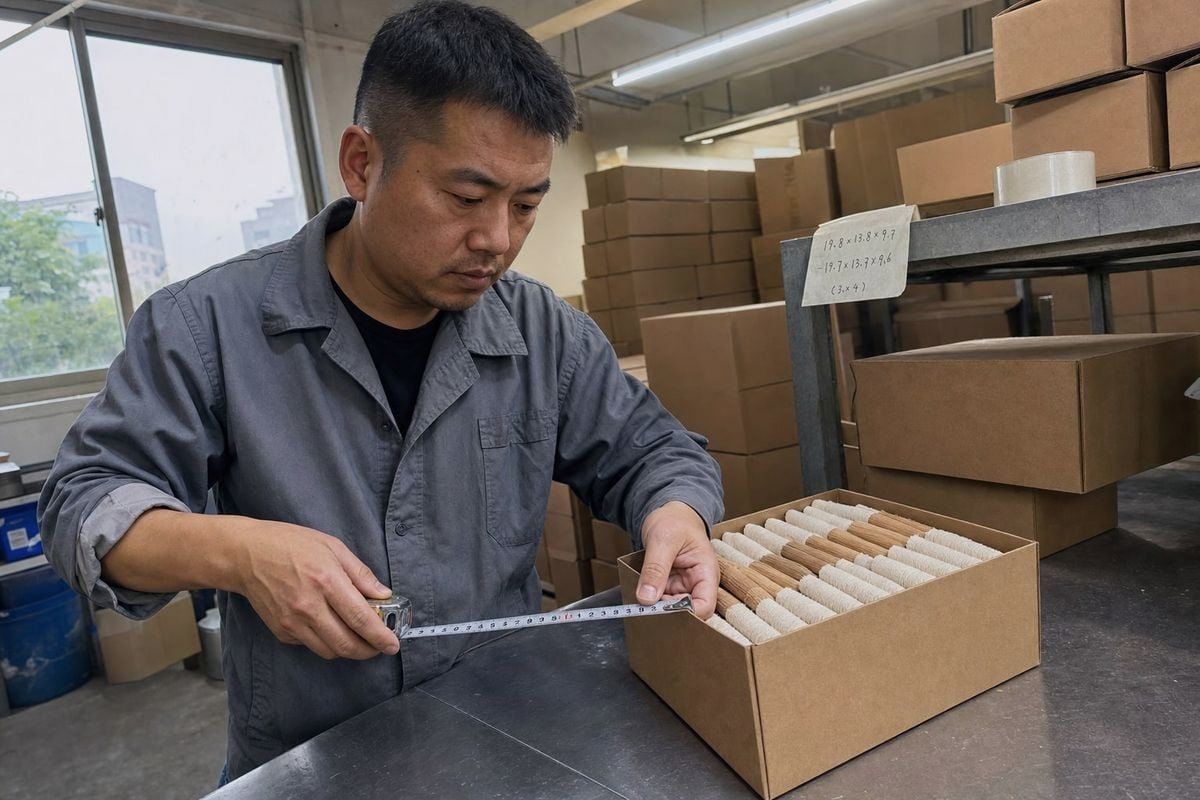
A embalagem do iniciador de fogo a lenha decide silenciosamente suas margens na Amazon layouts de caixas mestras 1. Em nossa linha de produção em Ningbo, observei meia polegada de espaço livre na caixa apagar todo o lucro por unidade de um cliente.
A embalagem do iniciador de fogo a lenha afeta diretamente as taxas FBA porque a Amazon atribui níveis de tamanho com base nas dimensões e peso do item embalado. Se a sua caixa ultrapassar um limite de nível — de padrão pequeno para padrão grande, ou de padrão para superdimensionado — as taxas de fulfillment podem saltar $1–$3 ou mais por unidade.
O problema é simples. A matemática não é. Abaixo, detalho como as escolhas de embalagem se refletem nos resultados das taxas da FBA e como corrigi-las antes de fazer um pedido de compra.
Como Calcular o Peso Dimensional FBA para Pacotes de Iniciadores de Fogo de Madeira Antes de Fazer um Pedido?
Um comprador do Texas me enviou um e-mail em pânico. Seu pacote com 24 rolos de madeira encerados foi cobrado com base peso dimensional 2, não no peso real, e seu modelo de custo de chegada estava subitamente errado.
Para calcular o peso dimensional do FBA, multiplique o comprimento, a largura e a altura embalados em polegadas, depois divida por 139. A Amazon cobra taxas de atendimento com base no maior entre o peso real de envio ou o peso dimensional, portanto, pacotes leves de acendedores de fogo de madeira geralmente são cobrados com base no valor dimensional.
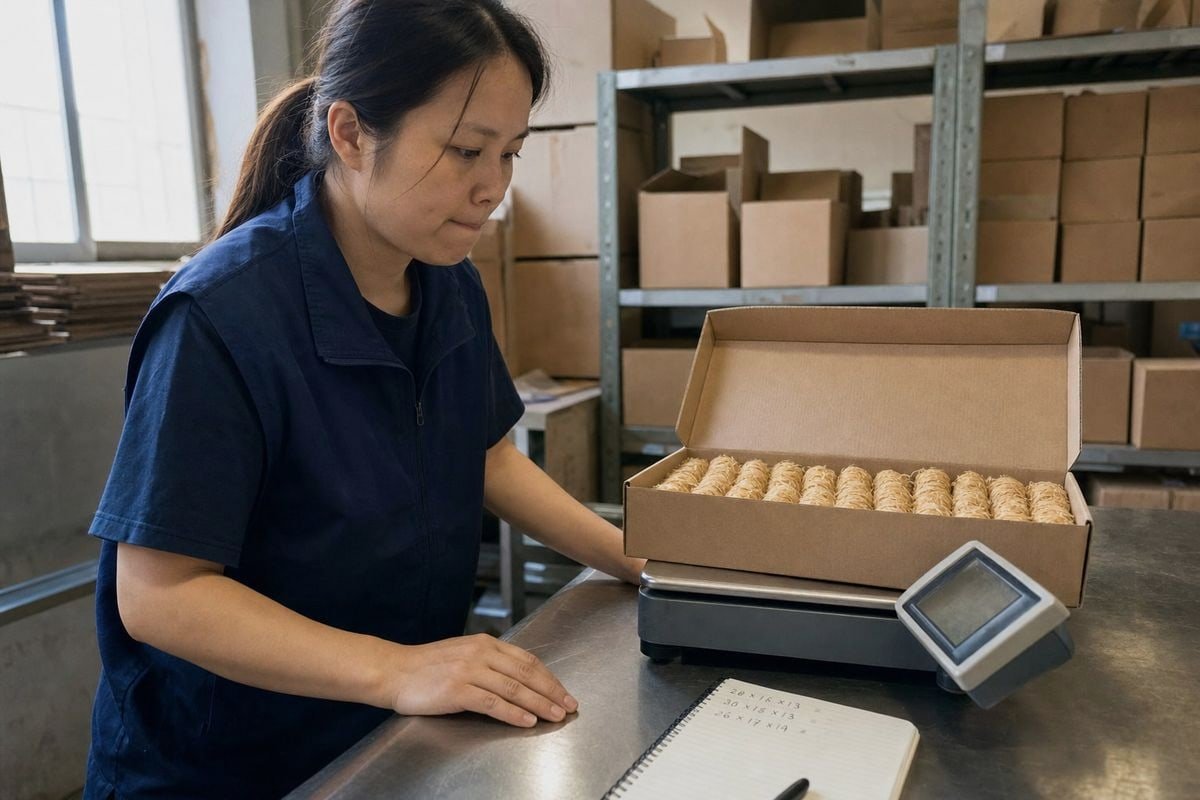
Os iniciadores de fogo a lenha são leves para o seu tamanho. Rolos de estopa e discos de lã de madeira 3 são principalmente ar e fibra, envoltos em cera. Isso significa que o peso dimensional quase sempre supera o peso real na lógica de cobrança da Amazon. Você precisa fazer essa conta antes de aprovar uma amostra, não depois do seu primeiro relatório de taxas.
A Fórmula na Prática
Pegue um pacote típico de 20 rolos cilíndricos para iniciar fogo. Suponha que a caixa de varejo meça 12" x 8" x 5" e pese 2,4 lb. O peso dimensional é (12 × 8 × 5) ÷ 139 = 3,45 lb. A Amazon arredonda para cima e cobra com base em 4 lb, não 2,4 lb. Você acabou de pagar pelo ar.
| Configuração da Embalagem | Dimensões da Caixa | Peso Real | Peso Dimensional | Peso Cobrado |
|---|---|---|---|---|
| Pacote com 10 rolos | 9" x 6" x 4" | 1,2 lb | 1,55 lb | 2 lb |
| Pacote com 20 rolos | 12" x 8" x 5" | 2,4 lb | 3,45 lb | 4 lb |
| Pacote a granel com 50 unidades | 14" x 10" x 8" | 5,8 lb | 8,06 lb | 9 lb |
| Comprimido com 100 unidades | 13" x 9" x 6" | 6,5 lb | 5,05 lb | 7 lb |
Um Checklist Pré-Pedido
Antes de fazer um pedido com qualquer fábrica, faça três coisas. Primeiro, solicite as dimensões e peso exatos do produto embalado da amostra, não da folha de especificações. Segundo, insira esses números na Calculadora de Receita FBA 4 no Seller Central para ver a taxa de fulfillment real. Terceiro, verifique o quão perto você está do próximo limite de categoria. Se você estiver a meio polegada ou algumas onças de um limite, peça ao seu fornecedor para ajustar a embalagem. Em nossos mais de 17 anos exportando para os EUA, os compradores que realizam essa verificação antecipadamente evitam surpresas desagradáveis. Lembre-se de um detalhe específico da madeira: a fibra de madeira é higroscópica. O produto embalado perto de uma faixa de peso pode absorver umidade em um armazém úmido e aumentar de tamanho. Recomendamos deixar uma pequena margem de peso exatamente por esse motivo.
Posso Redesenhar a Embalagem do Meu Acendedor de Madeira para Cair em uma Categoria de Tamanho Inferior da Amazon?
No ano passado, nossa equipe de OEM reformulou a caixa de varejo de 100 peças de um distribuidor europeu. Reduzimos 0,7 polegadas de espaço livre e movemos o SKU de grande padrão para uma categoria de peso inferior. A taxa dele caiu notavelmente por unidade — em milhares de unidades por mês.
Sim. Redesenhar a embalagem de acendedores de madeira pode colocar o item em uma categoria de tamanho menor se a mudança cruzar um limite da Amazon. Reduzir o espaço livre, mudar para padrões de embalagem mais apertados ou comprimir a lã de madeira pode mudar um SKU de padrão grande para padrão pequeno, economizando aproximadamente R$1-R$3 por unidade.
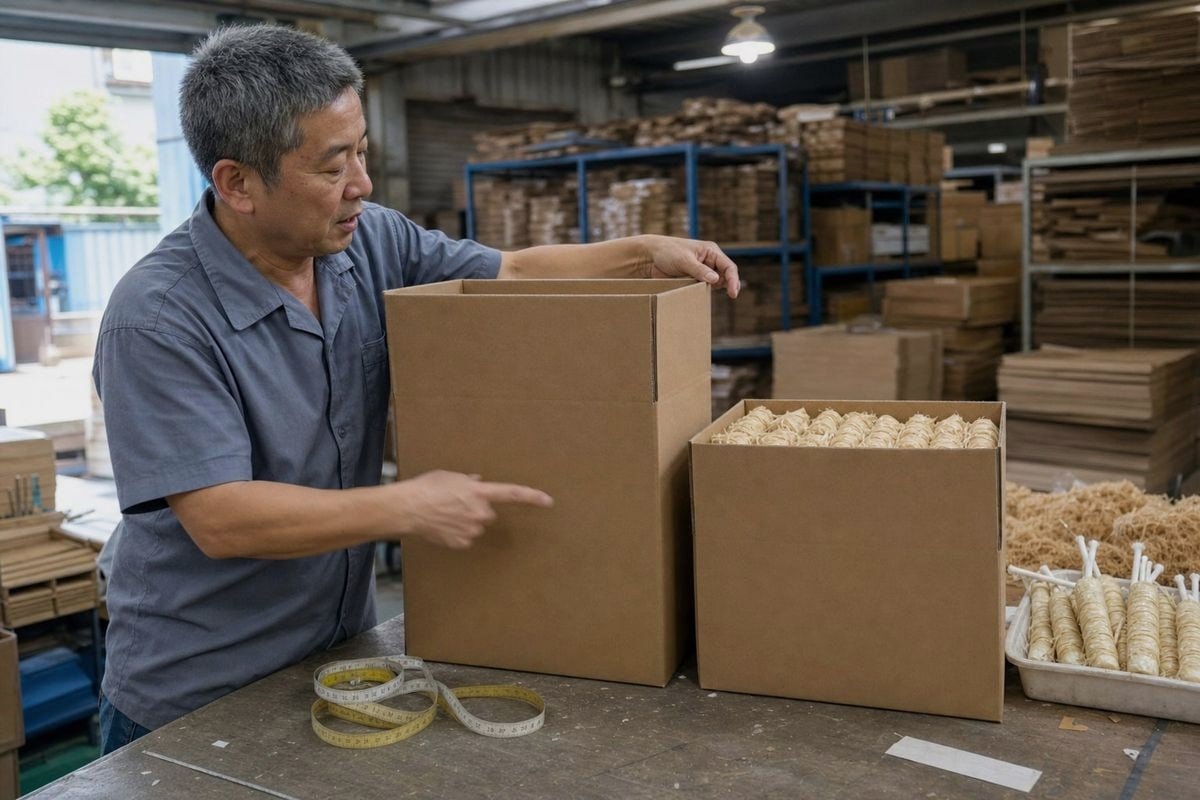
A principal percepção é a matemática dos limites. A Amazon não precifica a embalagem em uma curva suave. As taxas aumentam em limites rígidos. Se sua caixa atual já está confortavelmente dentro de uma categoria, reduzir um quarto de polegada não muda nada nas taxas de fulfillment — embora ainda reduza as taxas de armazenamento cúbico. Mas se você estiver logo acima de um limite, um pequeno redesenho compensa imediatamente.
Where the Thresholds Sit
Small standard caps out around 15" x 12" x 0.75" and 1 lb, which most fire starter multipacks exceed. Large standard runs up to 18" x 14" x 8" and 20 lb. Cross any of those, and you enter oversize territory, where the standard-size vs oversize gap gets expensive fast—often several dollars per unit plus handling surcharges.
Redesign Levers That Actually Work
- Kill the headspace. Extra void fill inflates product dimensions without protecting anything a tighter box would not.
- Compress the fiber. Industrial compression of wood wool can cut package volume by 20–40% while keeping burn performance intact.
- Rethink the pack pattern. Volumetric nesting—hexagonal or offset stacking of cylindrical pucks—shrinks the footprint versus a plain grid.
- Split or merge counts. Sometimes a 60-count sits awkwardly across a boundary while a 50-count and a 100-count both land efficiently.
- Verify with the FBA Revenue Calculator before committing to tooling or dielines.
One warning from experience: never let tier-chasing compromise the retail presentation or crush resistance. A box that dents in transit generates returns and inbound defect fees under Amazon's stricter 2026 rules, and those penalties erase your savings. Also note the 2026 price-based fee bands. Standard-size products priced between $10 and $50 saw average fee increases, so your packaging strategy and your pricing strategy now interact. A multipack priced just under a band boundary, in a smaller box, can be a double win.
Que Materiais de Embalagem Me Ajudam a Reduzir o Peso Dimensional Sem Comprometer a Proteção do Produto?
Material choice is a trade-off we weigh on every private-label project. A rigid gift box looks premium on a Home Depot-style shelf, but for FBA-only SKUs, that rigidity is often paid-for dead air.
Materiais flexíveis — sacos plásticos, filme termoencolhível e capas de kraft — reduzem o peso dimensional abraçando o produto em vez de embalar ar. Fardos de lã de madeira comprimida em embalagens a vácuo ou termoencolhíveis podem reduzir o volume faturável em 20–40%, enquanto inserções de papelão ondulado ou revestimento de cera mantêm a proteção e a conformidade com a preparação da Amazon.
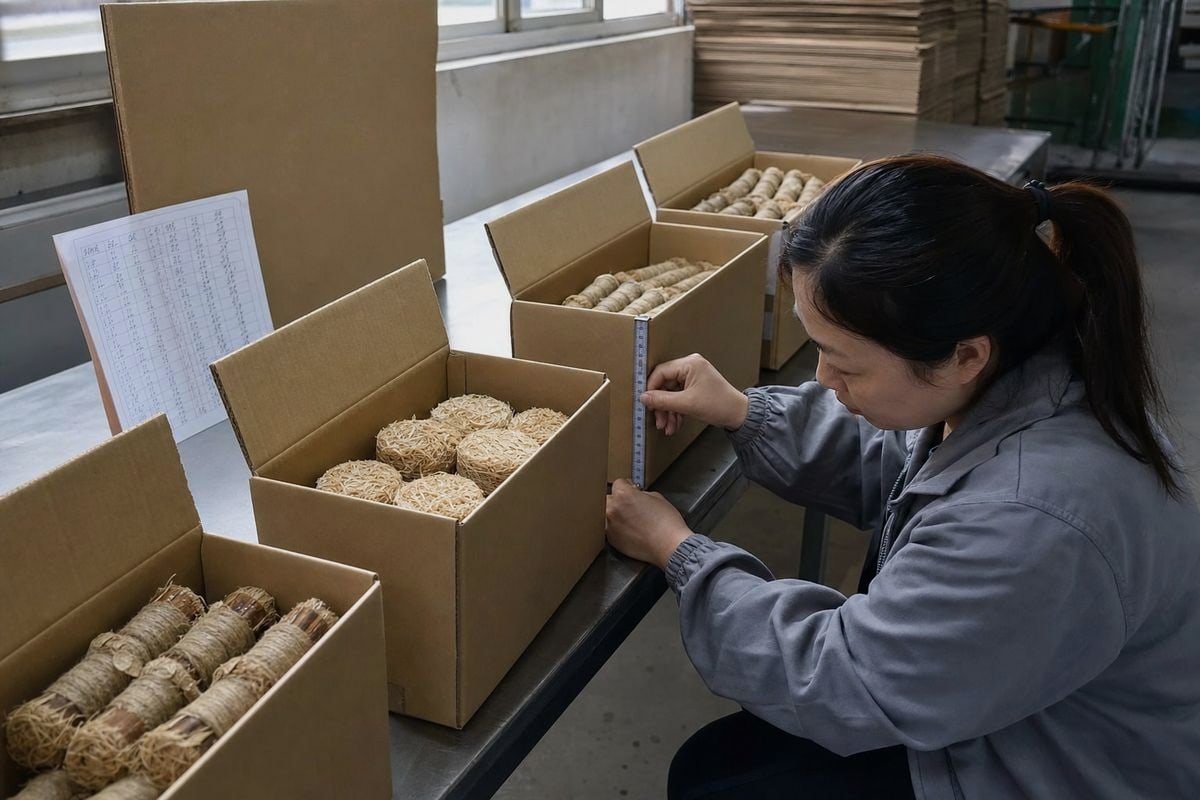
Wood fire starters are forgiving products. They are not fragile like glass, and the wax coating we apply on our wax-dipped rolls already provides moisture resistance and structural stiffness. That opens the door to lighter, tighter packaging formats that a fragile product could never use.
Material Comparison for FBA Fire Starters
| Material Format | Dim Weight Impact | Nível de Proteção | Amazon Prep Notes |
|---|---|---|---|
| Rigid retail box | High—adds dead air and wall thickness | Excellent crush resistance | Usually SIPP-eligible if sturdy |
| Poly bag / shrink wrap | Low—conforms to product | Moderate; needs suffocation warning | Must meet poly bagging requirements 5 |
| Kraft sleeve + tray | 1 x 20 pés, vários produtos | Bom | Recyclable; EPR-friendly |
| Vacuum-compressed pack | Mais baixo | Good after fiber rebound testing | Verify barcode scannability |
Protection Is Non-Negotiable
Here is the counterpoint I always raise with buyers chasing the lowest dim weight. Amazon's poly bagging requirements demand suffocation warnings and minimum thickness. Wax-based fire starters can also soften in hot trailers, so packaging must prevent units from fusing together. And under emerging EPR rules in Europe, non-recyclable film may carry compliance costs later. That is why our factory pairs eco-friendly materials with SGS and Testes Intertek 6—your packaging must survive the supply chain, pass compliance, and satisfy the algorithm all at once. One more lever worth pursuing: the Ships in Product Packaging program 7. If your retail box is certified for SIPP, Amazon skips the overbox entirely, shrinking outbound shipping weight and earning a per-unit discount on top. We design many OEM boxes to ISTA-style drop standards for exactly this reason. Storage fees matter too. Cubic storage costs are volume-based, and during Q4 peak rates, even a 0.25-inch reduction in wall thickness compounds across thousands of stored units.
Como Trabalho Com Meu Fabricante Para Otimizar Configurações de Caixa Para Taxas FBA Mais Baixas?
The most productive sourcing calls I take start with a fee report, not a price target. When a buyer shares their actual FBA charges, our engineers can reverse-engineer a carton configuration that attacks the real cost driver.
Compartilhe sua camada de tamanho FBA alvo com seu fabricante antes que a fabricação de ferramentas comece. Peça dimensões de unidade embalada, layouts de caixa mestra e opções de linha de corte que mantenham a unidade de varejo abaixo dos limites da camada. Uma fábrica OEM capaz prototipará dois ou três pacotes e fornecerá medições verificadas para a Calculadora de Receita FBA.
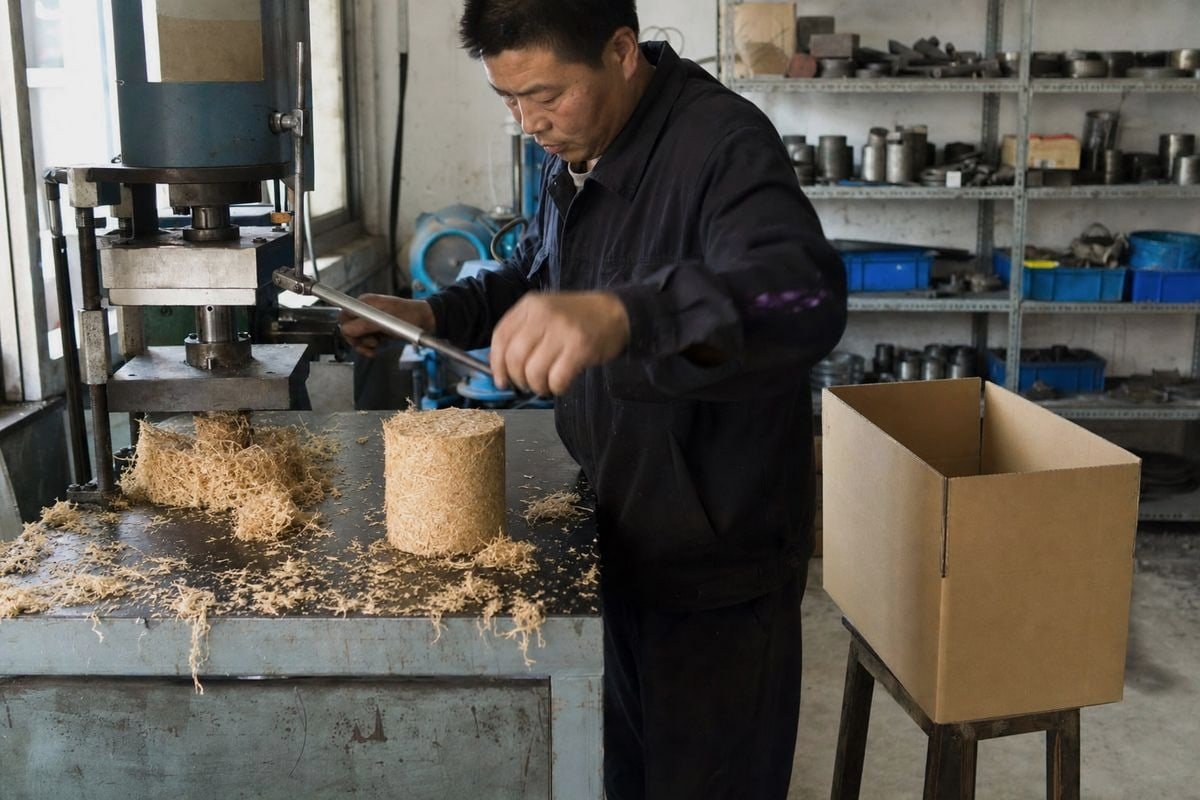
Most factories quote packaging as an afterthought. That is a mistake for FBA sellers. The unit box, inner pack, and master carton form one system, and each layer affects your costs differently. The unit box drives fulfillment fees. The master carton drives inbound freight and receiving efficiency. Optimizing one while ignoring the other leaves money on the table.
A Practical Collaboration Workflow
- Send your fee data first. Share the current size tier, billed weight, and per-unit fulfillment fees from Seller Central.
- Define the target tier. Declare o exact dimensional and weight ceiling you need to stay under, with a safety margin for moisture gain.
- Request dieline alternatives. We typically propose a standard box, a reduced-headspace box, and a compressed or nested configuration.
- Get physical samples measured. Calipers and a calibrated scale on the actual packed sample—never trust CAD dimensions alone.
- Validate compliance. Confirm warning labels, barcodes, suffocation warnings, and SIPP eligibility before mass production.
- Lock QC tolerances. Our batch-to-batch controls hold packed dimensions within tight tolerance, so unit 10,000 matches the first sample.
What a Good Factory Should Provide
| Entregável | Why It Matters for FBA |
|---|---|
| Verified packed dimensions and weight | Feeds accurate FBA Revenue Calculator estimates |
| Master carton cube efficiency report | Lowers inbound freight and receiving costs |
| Compression / rebound test data | Confirms vacuum packs hold their tier after transit |
| Compliance documentation (CE, SGS/Intertek) | Prevents inbound defect fees and listing suspensions |
| Private-label dieline with barcode placement | Ensures scannability and SIPP certification readiness |
The lesson I have learned across 30+ export markets is that packaging optimization is a conversation, not a spec line. Buyers who treat their factory as a fee-engineering partner consistently land better unit economics than those who just negotiate price per piece.
Conclusão
Packaging is a profit lever, not a cost line. Measure your packaged dimensions, run the tier math, and engineer your box with your factory before ordering. Small changes protect real margin.
Notas de rodapé
1. Wikipedia page describing the standardized containers used for shipping and wholesale distribution. ↩︎
2. Explains the shipping industry standard for calculating billable weight based on package volume. ↩︎
3. Wikipedia entry for wood wool, the primary material used in fire starter production. ↩︎
4. Official Amazon tool for calculating fulfillment fees and profit margins for FBA sellers. ↩︎
5. Amazon's official safety and packaging guidelines for products sold in plastic bags. ↩︎
6. Global provider of product safety testing and quality assurance for consumer goods. ↩︎
7. Amazon program directly named in the article for reducing outbound packaging costs. ↩︎

 English
  Spanish
  German
  French
  Arabic
  Portuguese
Participe da conversa