







Verifying supplier raw material stability for Magic Fire powder is the difference between happy repeat customers and a container of complaints. On our production line, I've seen exactly how small raw-material drifts turn vivid rainbow flames into weak, muddy colors. One inconsistent batch can trigger returns, damage your brand, and stall a retail program you spent months building. The fix is a structured verification process — and that's exactly what I'll walk you through here.
To verify supplier raw material stability when sourcing Magic Fire powder, request batch-specific Certificates of Analysis, ISO 9001 and SGS/Intertek reports, compare at least three production lots through burn tests, keep sealed retained samples, and add a raw-material substitution clause to your contract.
That is the short answer. Below, I break it into four practical steps: certifications, batch testing, long-term documentation, and sample-versus-mass-production comparison. Each step is something you can act on this week.
What certifications should I request to confirm raw material consistency?
A buyer from Germany once opened our first call with a single question: "Send me your certificates before we talk price." After 17 years exporting color-flame products to 30+ countries, I've learned that's the right order.
Request ISO 9001 for quality management, BSCI for factory ethics, CE marking for the European market, and SGS or Intertek third-party test reports. Then ask for batch-specific Certificates of Analysis, which prove recent lots actually match the published specification, not just marketing claims.

Certificates fall into two groups, and you need both. The first group proves the supplier runs a controlled operation. The second group proves the actual powder in the actual box meets spec. Many buyers stop at the first group. That is a mistake. A factory can hold ISO 9001 1 and still ship you a drifting formula if nobody checks lot-level data.
System-level certificates vs. batch-level evidence
Here is how I explain the difference to new buyers who visit our Liuyang headquarters:
| Documento | O que prova | O que NÃO prova |
|---|---|---|
| ISO 9001 | The factory has a documented quality system | That any specific batch is in spec |
| BSCI | Ethical and social compliance of the facility | Desempenho do produto |
| Conformidade CE / de mercado | The product category meets regional requirements | Consistência lote a lote |
| SGS 2 / Relatório Intertek | Independent lab verified a tested sample | That future lots use the same raw materials |
| Batch COA | This specific lot met composition and moisture specs | Long-term sourcing stability |
| FISPQ / FISPQ | Safe handling, storage, and reactive properties | Stable formulation or color output |
How to read the paperwork critically
Ask for COAs from at least three recent lots, not one. Look for the same tested parameters across all three: active colorant content, moisture level, tamanho da partícula 3, and appearance. If the numbers are identical to the decimal on every COA, be suspicious — real production data shows small, natural variation within a controlled range. Also check the issue dates. A test report from four years ago tells you about the factory four years ago. When we supply retail chains in the US and Europe, we expect buyers to ask for current reports, and a serious supplier will provide them without friction.
Finally, verify the lab. Third-party reports from recognized bodies like SGS or Intertek 4 carry far more weight than an internal certificate printed by the factory itself.
How can I test if a supplier's flame color additives stay stable across batches?
Every week, our QC team pulls sachets from different production runs and burns them side by side in a test fire pit. The blue must match last month's blue. That discipline is exactly what you should demand from any supplier.
Test stability by ordering samples from three or more separate production lots, running side-by-side burn tests for color intensity, hue, and duration, checking moisture uptake and caking, and sending high-risk lots to an independent lab for composition verification.

You do not need to be a chemist to catch instability. Flame color additives 5 fail in predictable ways, and most failures are visible before the powder ever touches a fire. Follow this workflow.
A simple five-step batch verification process
- Request lot numbers first. Ask the supplier to send samples from at least three distinct lots, with lot codes printed on the packets. If they cannot identify lots, walk away.
- Inspect the powder dry. Compare color, granule size, shimmer, and odor against a known-good reference. Clumping or caking often signals moisture ingress or a changed anti-caking additive.
- Run controlled burn tests. Use the same fuel, the same fire size, and the same dose. Watch for hue shift, weaker saturation, shorter color duration, or unusual smoke.
- Stress the samples. Store one packet in a warm, humid spot for two weeks, then burn it. Stable formulations with proper moisture-barrier packaging 6 should still perform.
- Send one lot to an independent lab when the order is large or the supplier is new. Verify the active colorant content matches the COA.
What drift looks like in practice
| Symptom you observe | Likely raw material cause |
|---|---|
| Colors look washed out or faint | Reduced colorant concentration or a cheaper grade substitution |
| Blue or green shifts toward yellow-orange | Changed mineral salt source or contamination |
| Powder clumps hard in the sachet | Moisture ingress, missing anti-caking treatment, or weak seals |
| Color effect burns out faster than before | Altered tamanho da partícula 7 or blend ratio |
| Visible dust or inconsistent granules | Poor milling control or a changed grinding process |
On our lines in Ningbo, we qualify every incoming raw material lot before it enters blending, precisely because these symptoms trace back to inputs, not just mixing. Ask your supplier whether they do the same — and ask to see the incoming inspection records.
What documentation proves a supplier's raw material sourcing is reliable long-term?
There is a trade-off I discuss openly with buyers: full disclosure of raw-material sources feels reassuring, but suppliers protect proprietary formulas. The workable middle ground is traceability documentation — enough evidence to assess risk without demanding trade secrets.
Long-term reliability is proven by lot traceability records linking finished goods back to raw material batches, incoming-material inspection logs, deviation and out-of-spec investigation records, retained sample registers, and a contractual change-notification clause covering any raw material substitution.
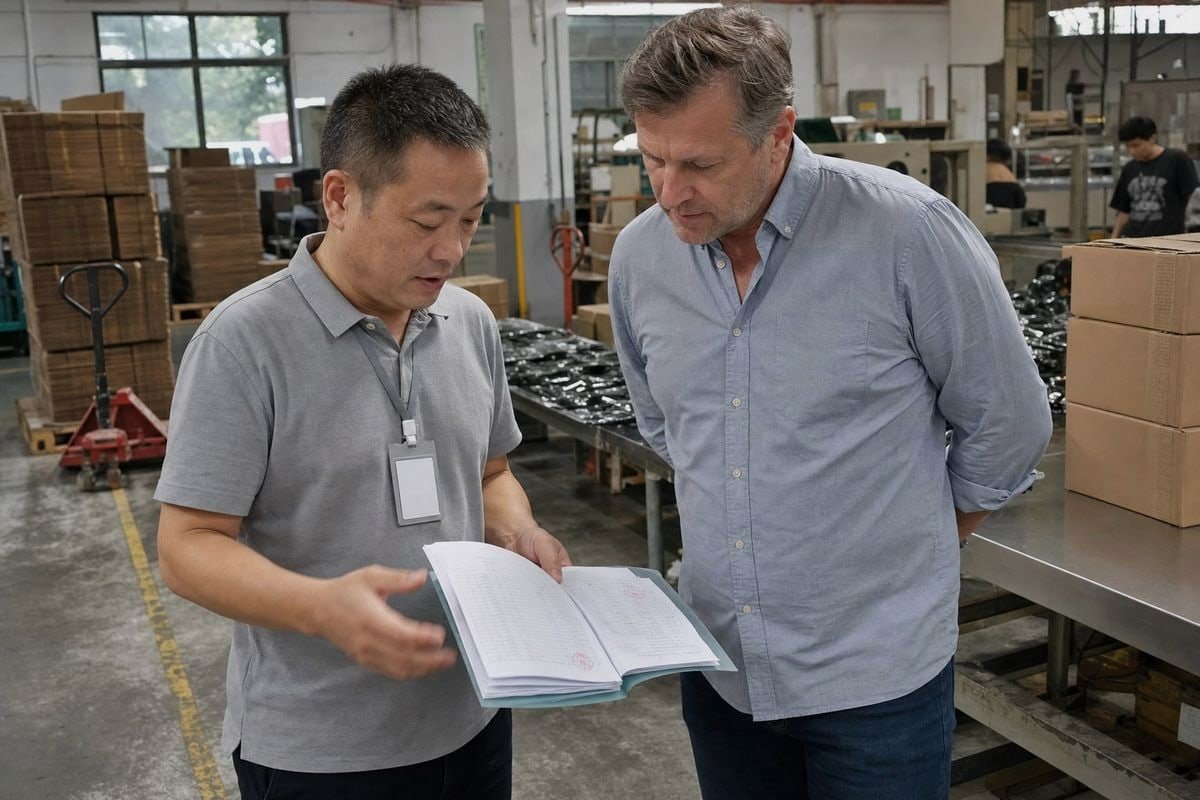
Certificates tell you about today. Documentation systems tell you about the next three years. When importers and distributors evaluate us for private-label programs, the serious ones always dig into our record-keeping, because paperwork discipline is the best predictor of future consistency.
The five documents that matter most
Traceability records. The supplier should trace any finished lot back to the specific raw material batches 8 used. If a color complaint arrives, this record answers "what changed?" in hours instead of weeks.
Incoming-material qualification logs. Stable output requires stable input. Ask how the factory tests raw materials on arrival, and ask to see recent inspection entries. A supplier who buys whatever salt is cheapest that month cannot show you these logs.
Deviation and OOS records. Every factory has out-of-spec events. Good factories document them, investigate, and record corrective actions. A supplier who claims "we never have deviations" is either not measuring or not telling the truth.
Retained sample register. The factory should keep sealed samples from every shipped lot. This protects both sides in a dispute and lets you compare a new delivery against a known-good reference.
Change-control agreement. This is the one buyers most often skip. Put it in the contract: the supplier must disclose any change in raw-material source, grade, or process before shipping affected goods. Undisclosed substitutions are the number one cause of silent quality drift I've seen in this industry.
Audit these systems, don't just request them
A factory visit — or at minimum a live virtual tour — lets you verify these systems exist in practice. Look at how raw materials are segregated and labeled in the warehouse. Ask a line worker to pull the batch record for last week's production. Real systems produce answers in minutes. Fake ones produce excuses. We host buyer audits regularly, and I always tell visitors: judge us by how fast we retrieve records, not by how nice the meeting room is.
How do I compare sample quality against mass-production batches before ordering?
Years ago, a UK distributor told me about a previous supplier whose "golden samples" were hand-blended by an engineer — and whose mass production came off a different line entirely. The colors never matched. That story shaped how we run sampling today.
Confirm in writing that samples come from standard production lines, keep the sealed sample as your reference standard, require a pre-shipment inspection of the first bulk order, and burn-test random units from the shipment against your retained sample before accepting future deliveries.
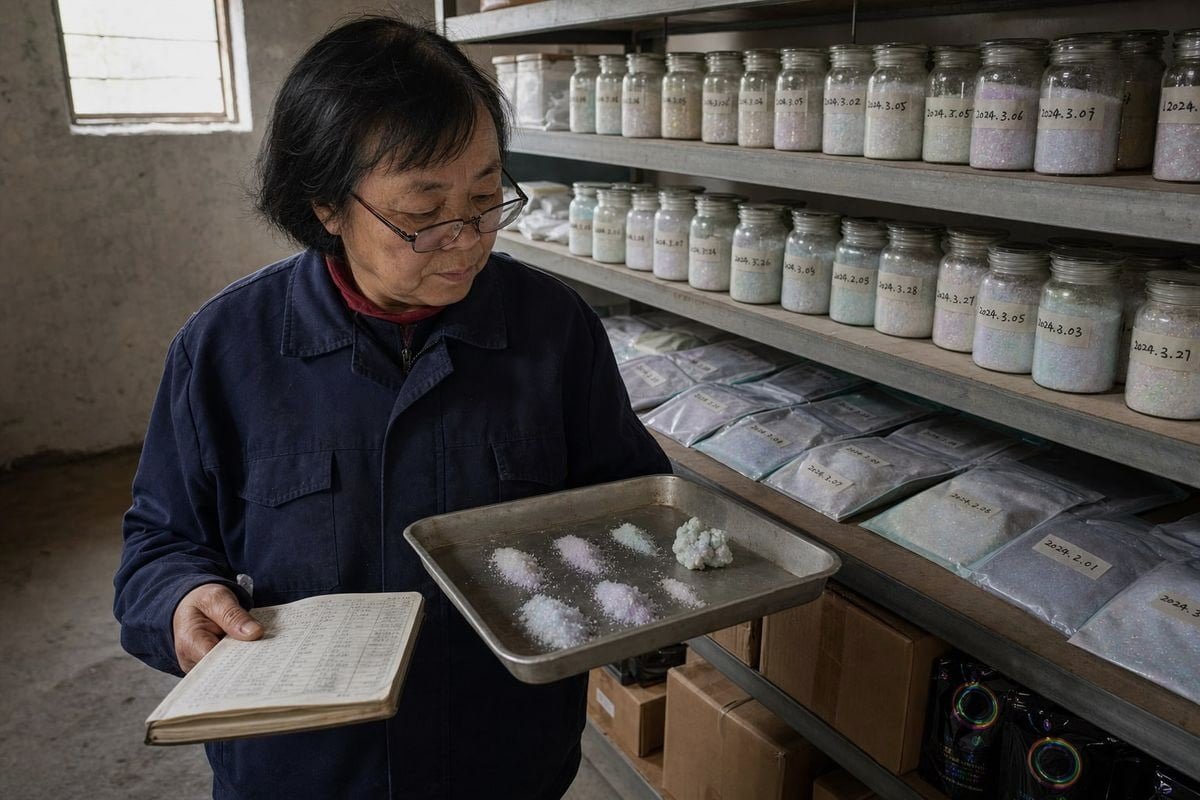
The sample-to-production gap is where most sourcing relationships break. A hand-picked sample proves what a supplier can do. Only process discipline proves what they will do at 50,000 units. Your job is to close that gap contractually and physically.
Make the sample legally meaningful
Before ordering, agree in writing that the approved sample is the quality standard for mass production. Attach the sample's lot number, COA, and burn-test results to the purchase order. Include acceptance criteria: color match, moisture limit, packet seal integrity, and net weight tolerance. Vague terms like "good quality" are unenforceable. Specific references to a sealed, numbered sample are.
A practical comparison protocol
| Etapa | Quem Lida Com Isso | What it catches |
|---|---|---|
| Sampling | Request samples pulled from a normal production run, with lot code | Hand-blended "golden samples" |
| Pre-order | Seal and store two reference samples; document burn results with photos | Disputes about what was approved |
| During production | Ask for in-process photos or video of blending and filling | Line or formula changes |
| Pré-envio | Third-party or self-conducted inspection with random sachets pulled | Weight, seal, and labeling defects |
| On arrival | Burn-test random units against your retained reference sample | Color drift and moisture damage |
| Contínuo | Repeat arrival tests on every shipment; log results | Slow drift across reorders |
Por que a profundidade de fabrico importa aqui
This is where the supplier's structure becomes decisive. Trading companies often cannot control which factory — or which line — produces your reorder. A genuine factory with complete production lines and batch-level QC can commit that the first sample reflects mass production, because both come from the same controlled process. That commitment is one of the reasons we encourage trial orders with flexible MOQs: a small first order lets you run this full comparison protocol at low risk before scaling to container volumes.
Conclusão
An unstable supplier costs you complaints, returns, and shelf space. Verify certifications, test across batches, demand traceability documentation, and lock samples to production. Stability is proven, never promised.
Notas de rodapé
1. Official ISO reference explaining what ISO 9001 quality management certification actually verifies. ↩︎
2. Official SGS site confirms the scope and credibility of its third-party testing services. ↩︎
3. Background on particle size measurement supports the quality parameters discussed for powder testing. ↩︎
4. Official Intertek page verifies independent lab testing and inspection capabilities referenced in the article. ↩︎
5. Provides background on the chemistry behind flame-coloring compounds and why they can be unstable. ↩︎
6. Explains moisture-barrier principles relevant to preventing hygroscopic powder degradation. ↩︎
7. Explains particle size as a measurable quality parameter referenced in supplier COA testing. ↩︎
8. Background on traceability concepts supports the lot-tracking documentation discussed in this section. ↩︎


 English
  Spanish
  German
  French
  Arabic
  Portuguese
Participe da conversa