







Usar o volume combinado do portfólio para negociar um MOQ mais baixo para o Pó Mágico de Fogo é uma pergunta que nossa fábrica responde semanalmente documentação SGS/Intertek 1. Compradores querem quantidades de teste; linhas de produção querem corridas eficientes.
Para negociar um MOQ mais baixo para o Pó Mágico de Fogo, combine sua demanda em todos os SKUs relacionados, formatos de embalagem e pedidos futuros em uma proposta comercial. Os fornecedores aceitam lotes menores por SKU quando o valor total do relacionamento cobre seus custos de configuração, limites de material e risco de estoque.
Essa é a resposta curta. A resposta mais longa é sobre como você constrói essa proposta, o que confirmar e onde estão os limites. Deixe-me guiá-lo.
O que conta como volume de portfólio combinado quando estou a adquirir vários produtos Fire de um único fornecedor?
No ano passado, um distribuidor alemão nos pediu 300 unidades de um tamanho de sachê. Sozinha, essa encomenda não fazia sentido em nossa linha. Seu plano de catálogo completo, no entanto, mudou tudo.
O volume combinado do portfólio é a demanda total que você pode direcionar de forma confiável a um fornecedor: vários SKUs e formatos de embalagem, pedidos de compra globais retirados ao longo do tempo, demanda agrupada de vários canais de vendas e pedidos de acompanhamento comprometidos — tudo apresentado como um caso de negociação agregado.
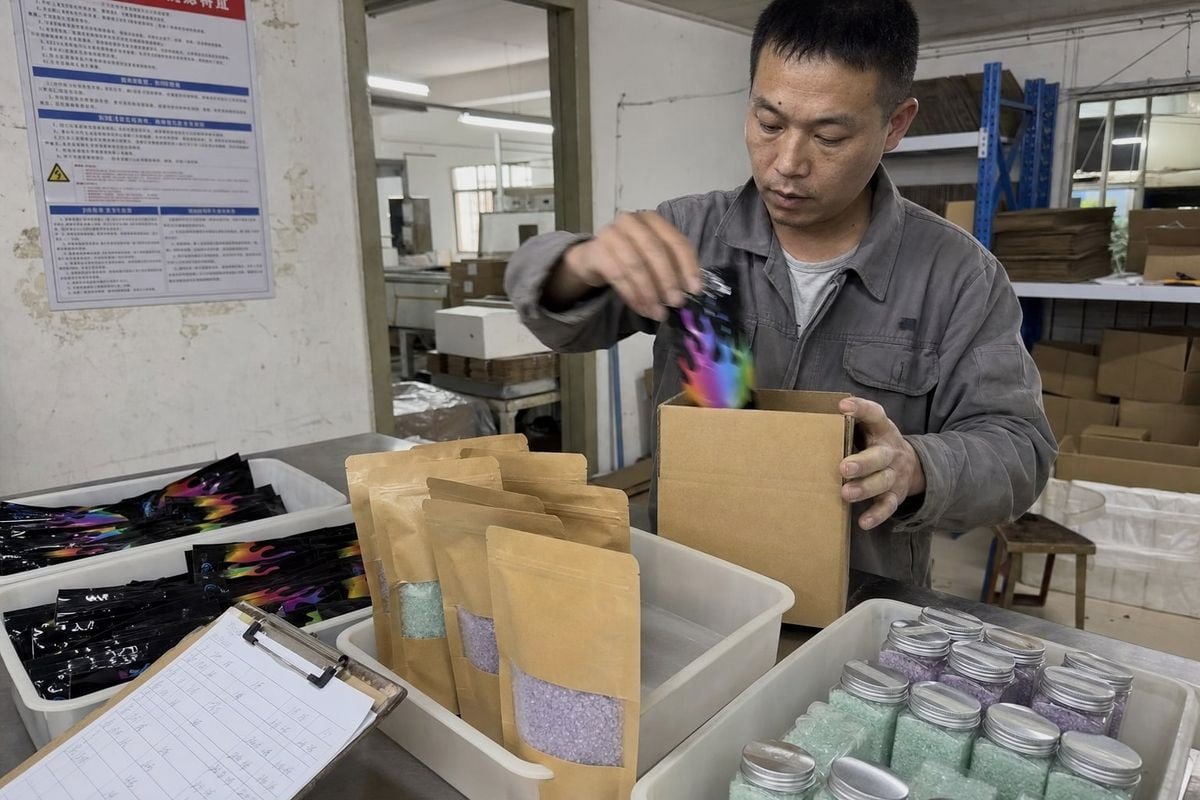
A maioria dos compradores pensa em termos de SKU único. Fornecedores não. Quando nós cotamos um MOQ, estamos protegendo custos reais: limiares de aquisição de matéria-prima 2, trocas de linha, mínimos de filme de embalagem e o trabalho de agendamento de uma corrida curta. Portanto, a pergunta nunca é apenas "quantas unidades deste sachê?" É "quanto negócio total e previsível essa conta representa?" Essa é a demanda agregada, e é a base do seu poder de barganha de aquisição.
Os Quatro Baldes de Volume de Portfólio
Em nossa experiência exportando para mais de 30 países, o volume credível do portfólio se enquadra em quatro baldes. Cada um reduz nosso risco percebido de uma maneira diferente.
| Balde de Volume | Como se parece | Por que o Fornecedor Se Importa |
|---|---|---|
| Demanda Multi-SKU | Sachês, bolsas stand-up de papel kraft, potes, caixas de exibição do mesmo pó | Compartilha a mesma formulação base e corrida de mistura |
| Compromissos futuros | Pedido de compra em bloco com chamadas trimestrais | Permite que a fábrica lote a produção e compre materiais em massa |
| Agrupamento de canais | Demanda combinada de varejo, e-commerce e eventos comerciais | Transforma pedidos pequenos fragmentados em um fluxo previsível |
| Produtos adjacentes | Pinhas de chama colorida, acendedores de fogo, tochas de cera da mesma fábrica | Aumenta o valor da conta sem integração de novo fornecedor |
Esse último balde importa mais do que a maioria dos compradores percebe. A consolidação de fornecedores funciona nos dois sentidos. Quando você compra seus produtos para iniciar fogo e seus pacotes de chama colorida de uma fábrica, você corta seus próprios custos de frete, auditoria e controle de qualidade - e você dá ao fornecedor uma conta estratégica pela qual vale a pena se flexibilizar. Uma ressalva importante do nosso lado da mesa: o volume combinado ajuda mais quando os SKUs compartilham infraestrutura de produção. Um sachê e um pote do mesmo pó compartilham uma corrida de mistura. Um pó e uma tocha de cera não - mas eles ainda aumentam o valor total da conta, o que apoia a negociação de uma forma mais sutil.
Como Posso Estruturar Meu Primeiro Pedido Para Qualificar Para um MOQ Mais Baixo em Pó Mágico de Fogo e Itens Relacionados?
Há uma troca que pesamos em cada pedido de teste: uma pequena primeira corrida nos custa eficiência hoje, mas um piloto bem estruturado muitas vezes se torna uma conta de cinco anos. A estrutura decide qual resultado obtemos.
Estruture seu primeiro pedido como piloto dentro de um plano maior: proponha um Valor Mínimo de Pedido em todo o portfólio em vez de MOQs por SKU, padronize a embalagem sempre que possível, solicite o loteamento base da formulação principal e anexe um cronograma de acompanhamento escrito vinculado a marcos de vendas.

O movimento mais forte é parar de negociar quantidade e começar a negociar valor. Quando um comprador nos pede para tratar sua conta em uma base de Valor Mínimo do Pedido 3 , podemos ser flexíveis sobre como as unidades se dividem entre sachês, sacos de papel kraft e potes. Receita garantida é o que protege nossa margem - não qualquer contagem de SKU única. Isso é sourcing estratégico na prática, não apenas caça a descontos.
Uma Estrutura de Pedido Prática Que Funciona
Aqui estão as contas de portfólio que achamos persuasivas. Em vez de pedir 500 unidades de um item com um MOQ de 2.000 unidades, apresente algo como isto:
| Elemento | Abordagem Fraca | Abordagem Forte |
|---|---|---|
| Enquadramento da Quantidade | 500 unidades de um SKU de sachê | 400 unidades em quatro SKUs ao longo de 90 dias |
| Compromisso | Teste único, sem acompanhamento | Piloto mais pedido de etapa escrita com venda concluída |
| Mistura multicolorida padrão | Mínimos de mistura separados por SKU | Lote base: um lote grande de formulação, diferenciado apenas na embalagem |
| Embalagem | Quatro designs de bolsa personalizados | Filme de bolsa padronizado, apenas rótulos variados |
| Ação | Pedido de pico de temporada | Off-season slot when line capacity is idle |
Base-batching deserves special attention for a product like Magic Fire Powder. Our color-flame formulation is mixed in large batches regardless of final pack. If your sachets, kraft pouches, and jars all draw from one batch, the per-SKU mixing minimum effectively disappears. Only the packaging changeover remains — and standardizing your secondary packaging and label dimensions cuts that too.
Two more levers help. First, a tiered pricing structure: accept a modest premium on low-volume test SKUs in exchange for MOQ relief on your hero product. Second, timing. Our lines in Ningbo have genuinely more flexibility in the weeks after Lunar New Year than in the pre-Q4 rush. Counter-cyclical requests get warmer answers.
O que devo perguntar ao meu fabricante para confirmar antes de me comprometer com um acordo de MOQ de volume combinado?
A UK buyer once signed a combined-volume deal with another factory, then discovered each pouch size ran on a different machine. His "combined" MOQ quietly split back into three. Confirmation questions prevent that.
Antes de se comprometer, confirme quais SKUs compartilham genuinamente um lote de produção, como funcionam a ordem de compra global e o cronograma de chamadas, o que acontece se você perder um marco de volume, como os níveis de preços se ajustam e se os documentos de conformidade cobrem todos os formatos de embalagem que você planeja vender.
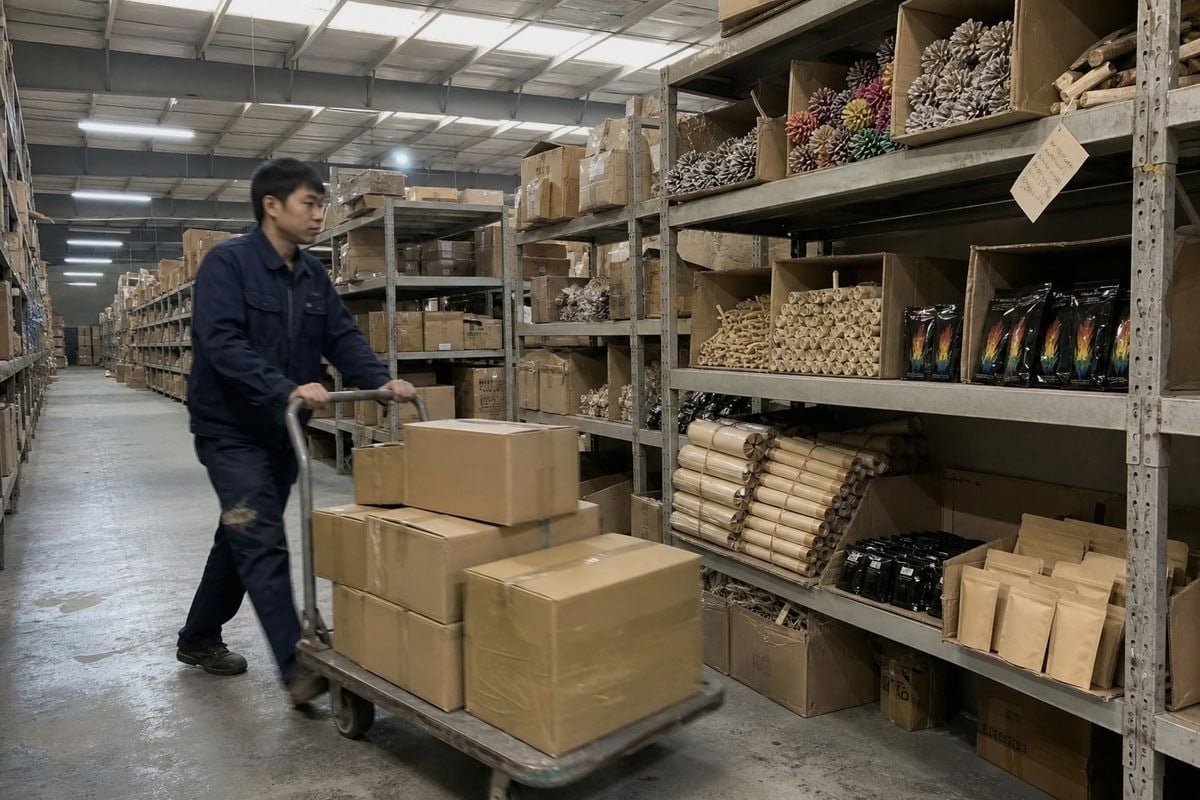
Supplier relationship management is built in this confirmation stage, not in the negotiation itself. A deal that looks generous on paper can hide assumptions that surface only at production time. I encourage buyers to work through the questions below in writing, before any deposit moves.
Production and Batching Questions
Ask exactly which of your SKUs share a mixing batch and which require separate runs. Ask what the packaging changeover time is between your formats, and whether standardizing your label size would reduce it. For Magic Fire Powder specifically, ask whether sachet, kraft pouch, and jar fills run on the same line. If they do not, your combined MOQ may only apply within each line, not across the whole portfolio.
Commercial and Commitment Questions
Get clarity on the blanket purchase order mechanics. How far ahead must call-offs be scheduled? Who carries custos de manutenção de estoque 4 if the factory pre-produces your annual volume — you, or them, and at what warehousing fee? What happens to your pricing tier if your actual drawdown falls short of forecast? A fair supplier will name a re-pricing mechanism rather than a penalty. Also confirm payment terms per call-off, not just for the pilot.
Compliance and Documentation Questions
This one is non-negotiable for fire products. Confirm that test reports and certifications cover every packaging format and every destination market in your plan. At our factory, ISO 9001 5, BSCI, CE, and SGS/Intertek documentation is standard, and we issue reports that match the actual shipped configuration. Ask any supplier whether their hazmat classification 6, warning labels, and shipping documentation apply across all your SKUs — and whether consolidating chemical-based SKUs in one shipment changes freight handling or cost. Hazmat freight pooling can lower per-unit logistics cost, but only if the paperwork is aligned first.
Como Protejo a Qualidade e a Conformidade Ao Negociar MOQs Mais Baixas Através de Pedidos Agrupados?
Something we learned early in our 17 years: the fastest way to lose a good buyer is a small, rushed run that ships with looser QC than the sample. Bundled orders must never dilute quality discipline.
Proteja a qualidade exigindo registros de CQ lote a lote, direitos de inspeção pré-embarque e amostras retiradas do lote de produção real. Proteja a conformidade bloqueando certificações, relatórios de teste, etiquetas de advertência e documentação de materiais perigosos no contrato para cada SKU no pacote, em cada nível de volume.
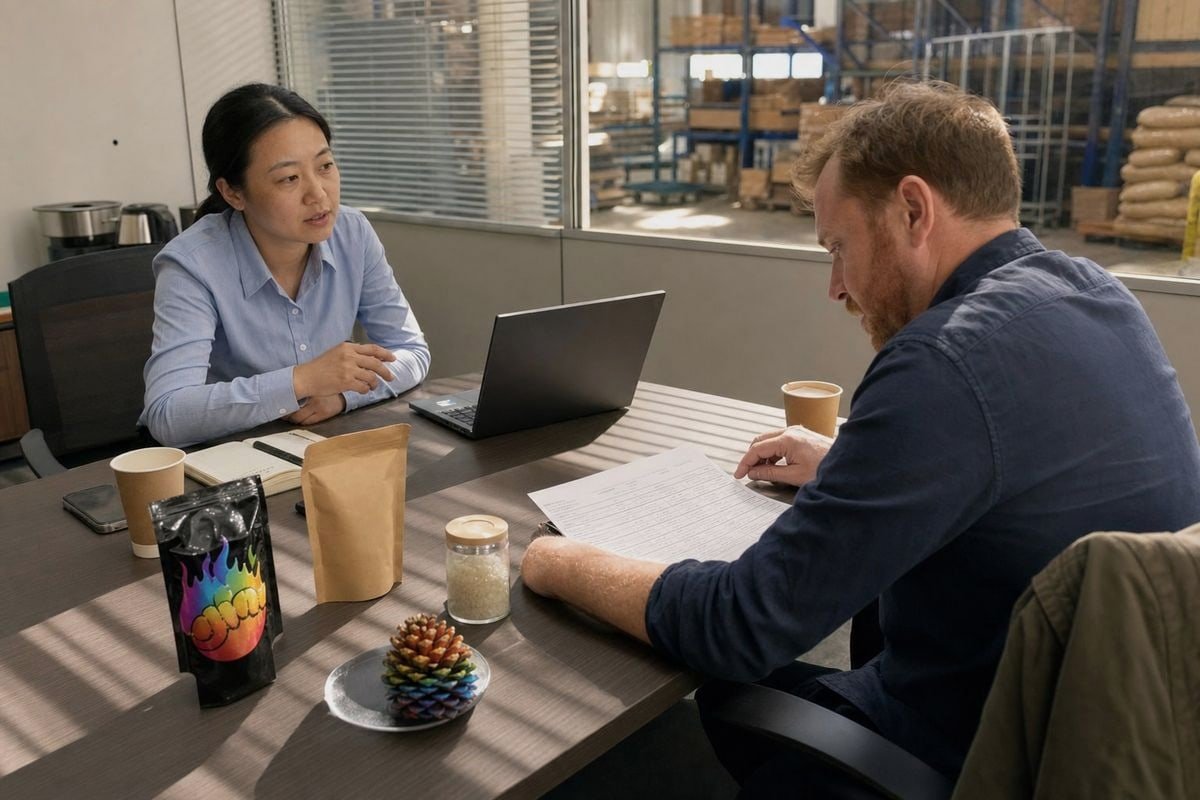
There is a real tension here. Buyers push for the lowest possible MOQ. Suppliers, honestly, would rather concede a smaller quantity at a slightly higher unit price than run a true low-volume batch — because tiny runs strain process control. Weak factories cut corners on short runs. That is why your negotiation should trade something back: a deposit, forecast visibility, faster payment, or simplified packaging. Risk-sharing keeps the supplier's incentive aligned with your quality standard.
Safeguards to Write Into the Bundled Deal
| Risk in a Bundled Low-MOQ Deal | Safeguard to Negotiate |
|---|---|
| Small runs get looser QC | Batch QC records and burn-test results delivered with each call-off |
| Sample quality does not match mass production | Golden sample sealed by both parties; production pulled against it |
| Compliance docs cover only the pilot SKU | Certificates and test reports named per SKU and per market in the contract |
| Formulation drift across drawdowns | Base-batch lot numbers traceable on every carton |
| Group-buying or pooled orders blur accountability | One contracting party owns QC sign-off and payment |
One more point on pooled purchasing. Buying groups and sourcing agents can help you meet thresholds, but they add coordination complexity — who inspects, who pays, whose label goes on the pouch. Keep a single accountable party for quality sign-off. And think in total cost of ownership 7 terms: a marginally higher unit price from a certified factory with consistent batch control usually costs less than a cheap run that gets held at customs or returned by a retailer.
Finally, use cross-product leveraging to strengthen — not weaken — compliance. When your powder packets, color-flame pinecones, and firestarters all come from one audited factory, you audit once and every SKU benefits. Predictive demand transparency helps here too: share your inventory data, and a good supplier will pre-purchase raw materials in bulk for your whole portfolio while holding one consistent quality standard across it.
Conclusão
Do not negotiate one SKU — negotiate the supplier's total opportunity. Present aggregate demand, structure a phased pilot, confirm batching and compliance, and share risk. That is how lower MOQs get earned.
Notas de rodapé
1. SGS is a leading global provider of inspection, verification, testing, and certification services. ↩︎
2. Explains the procurement process and cost factors that influence supplier minimum order requirements. ↩︎
3. Defines the concept of minimum order requirements in a commercial and supply chain context. ↩︎
4. Explains the costs associated with holding inventory, a critical factor in blanket order negotiations. ↩︎
5. Official page for the ISO 9001 standard, which defines requirements for quality management systems. ↩︎
6. Government guide on classifying hazardous materials to ensure safety and regulatory compliance during transport. ↩︎
7. Explains the financial estimate used to determine the direct and indirect costs of a product. ↩︎


 English
  Spanish
  German
  French
  Arabic
  Portuguese
Participe da conversa