






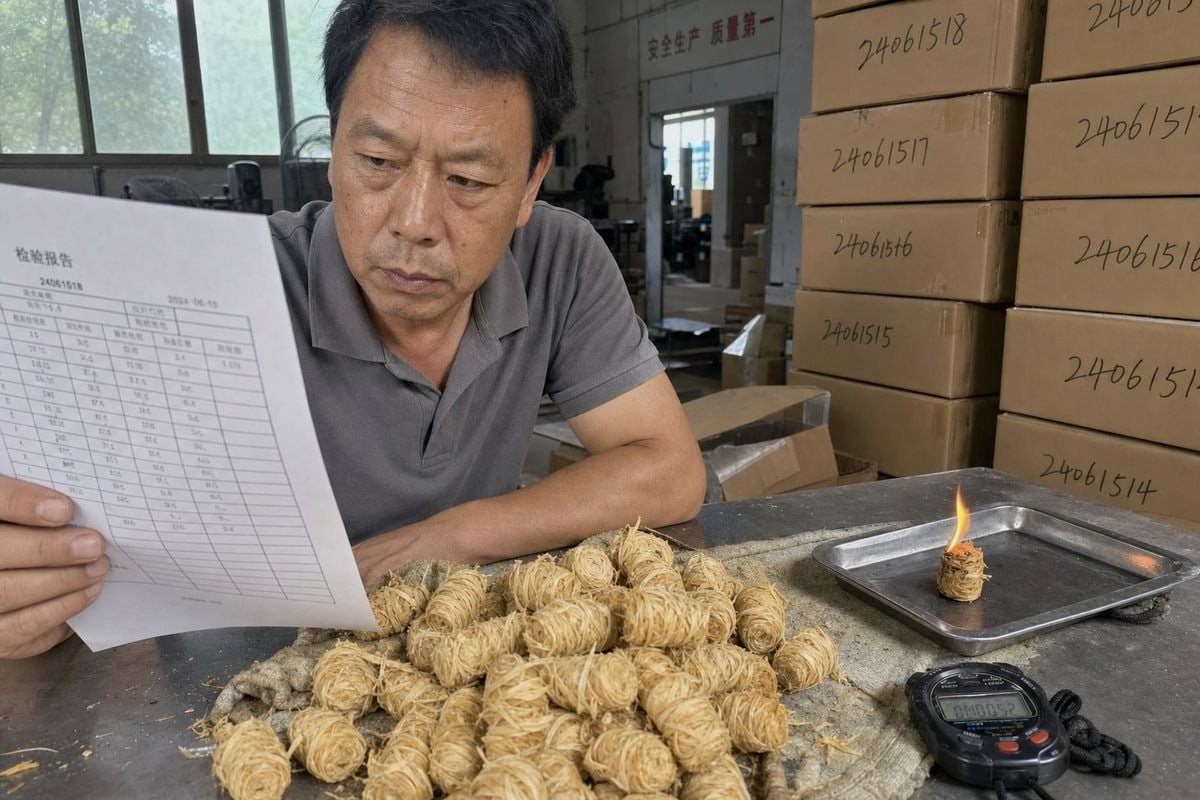
Os relatórios de teste dos fornecedores podem prever suas taxas de retorno antes mesmo de você fazer um pedido ordem de compra 1 — Aprendi isso da maneira mais difícil em nossa própria linha de produção. No início de nossa trajetória de 17 anos fabricando iniciadores de fogo de madeira mergulhados em cera, vimos o concorrente de um comprador perder uma listagem inteira em uma grande rede porque a papelada de seu fornecedor parecia boa, mas o produto falhou em uma verificação aleatória de ignição na doca de recebimento. Um palete rejeitado resultou em cobranças, perda de espaço nas prateleiras e uma marca própria danificada. A solução não é sorte. É aprender a ler um relatório de teste da maneira que lemos nossos próprios dados de CQ em Ningbo: como uma previsão de desempenho em campo, não uma formalidade de conformidade.
Os relatórios de teste dos fornecedores preveem taxas de devolução porque medem os mesmos modos de falha que impulsionam as reclamações dos clientes: velocidade de ignição, desempenho do tempo de queima, odor, resíduo de cinzas, teor de umidade e peso da embalagem. Relatórios recentes e específicos de lote com resultados consistentes sinalizam baixo risco de devolução; relatórios vagos ou desatualizados sinalizam defeitos ocultos.
Deixe-me guiá-lo exatamente sobre o que verificar, quais métricas são mais importantes e como transformar a papelada da fábrica em uma previsão real de risco de retorno para sua linha de marca própria.
O que devo procurar em um relatório de teste do fornecedor antes de fazer um pedido de marca própria?
Um distribuidor alemão me enviou uma vez o relatório de teste de um concorrente e fez uma pergunta: "Você enviaria com base nisso?" Eu disse não em menos de dois minutos. Eis o porquê.
Antes de encomendar, verifique se o relatório é recente, específico do lote e emitido por um laboratório terceirizado. Verifique o tempo de ignição (inferior a 3 segundos), a duração da queima (8+ minutos), o teor de umidade (inferior a 15%), o resíduo de cinzas (inferior a 5%), a tolerância do peso da embalagem e os resultados do odor. Métodos de teste ou datas ausentes são desqualificadores.
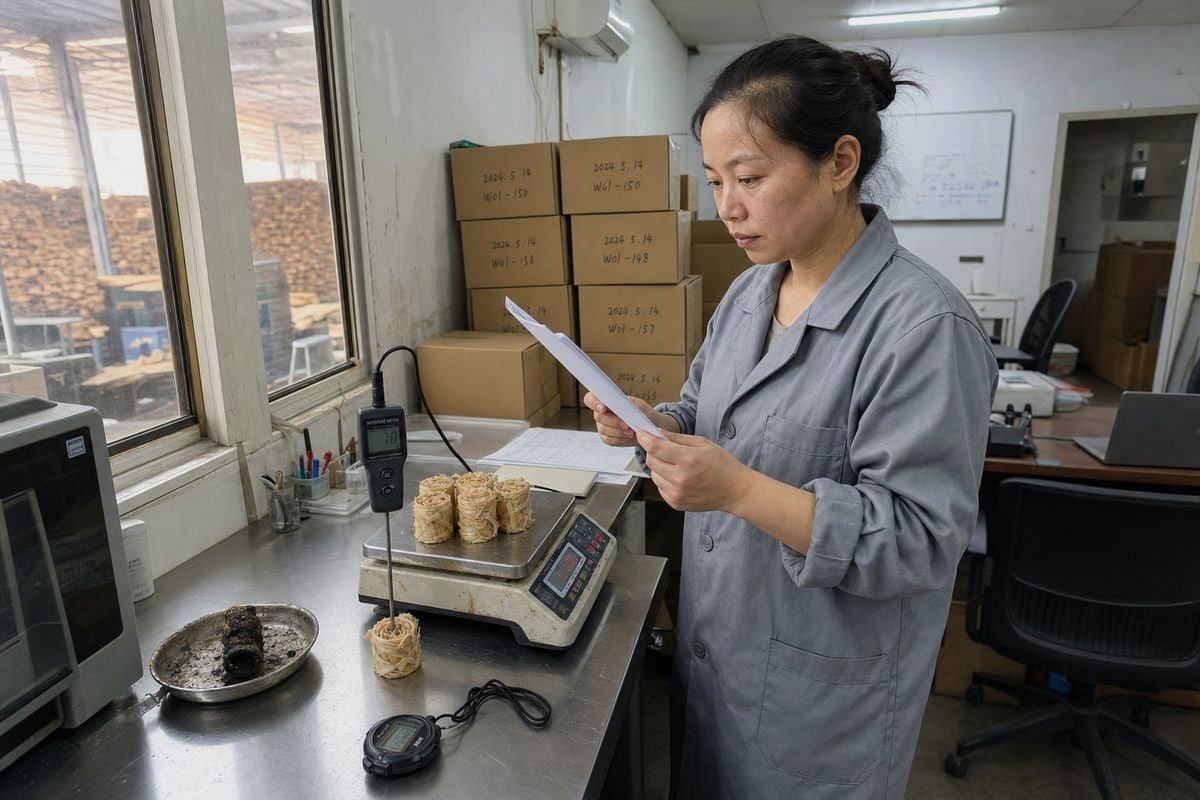
Um relatório de teste só é preditivo se descrever o produto que você realmente receberá. Isso parece óbvio. No entanto, muitos compradores aceitam PDFs genéricos e sem data que foram gerados em amostras de ouro escolhidas a dedo anos atrás. Em nossas linhas, cada lote de rolos de madeira mergulhados em cera é registrado contra um número de lote, para que a papelada remonte à produção real. Essa rastreabilidade é a primeira coisa que você deve exigir de qualquer fornecedor.
As Métricas Principais e o que elas Preveem
Cada item de linha em um relatório corresponde a uma reclamação específica do cliente. Ignição lenta corresponde a avaliações de "não acende". Duração de queima curta corresponde a reembolsos de "meu carvão nunca pegou". Odor químico corresponde a pacotes abertos e devolvidos, que são os mais caros.
| Métrica do Relatório | Marco Saudável | Risco de Retorno se Falhar |
|---|---|---|
| Tempo de ignição (TTI) | Acende em até 3 segundos de contato com a chama | "Reclamações de "falha ao acender", devoluções de primeira utilização |
| Duração da queima | Mínimo de 8 minutos de chama sustentada | O fogo nunca se estabelece; solicitações de reembolso |
| Análise de teor de umidade 2 | Abaixo de 15% | Ignição fraca, fumaça, produto com sensação de úmido |
| Resíduo de cinzas | Abaixo de 51% em peso | "Avaliações de "bagunça", classificações baixas, resistência do varejista |
| Odor durante a queima | Sem cheiro químico | Devoluções abertas, avaliações negativas |
| Peso da embalagem | Dentro da tolerância declarada | Reclamações de enchimento insuficiente, fiscalização de conformidade |
A Lista de Verificação de Documentos Além das Métricas
Números sozinhos não são suficientes. Você também quer detalhes do método, tamanhos de amostra e assinaturas. Peça a SDS/MSDS junto com o relatório de desempenho. Se o produto alegar uma formulação natural, pergunte como a concentração de cera de parafina 3 é verificada lote a lote — no nosso caso, a proporção de fibra de madeira e cera é uma especificação controlada, não uma estimativa. Pergunte também se o fornecimento de madeira carrega Certificação FSC 4 se o seu canal de varejo exige documentação de cadeia de custódia. Um fornecedor que responde a essas perguntas rapidamente geralmente opera uma fábrica real. Um que hesita é muitas vezes uma empresa comercial que encaminha a papelada de outra pessoa.
Como os Padrões de Certificação Como CE e SGS se Correlacionam com Menos Devoluções de Produtos?
Quando começamos a buscar testes SGS e Intertek ao lado de nossas ISO 9001 5 e auditorias BSCI, eu via isso como um custo de entrada no mercado. Quinze anos de dados de exportação mudaram completamente minha visão.
As certificações CE, SGS e Intertek se correlacionam com menos devoluções porque forçam padrões de controle de qualidade documentados e repetíveis. Fornecedores certificados executam processos controlados, testes de laboratório de terceiros e lotes rastreáveis — para que o produto que um cliente recebe corresponda ao produto que passou nos testes.
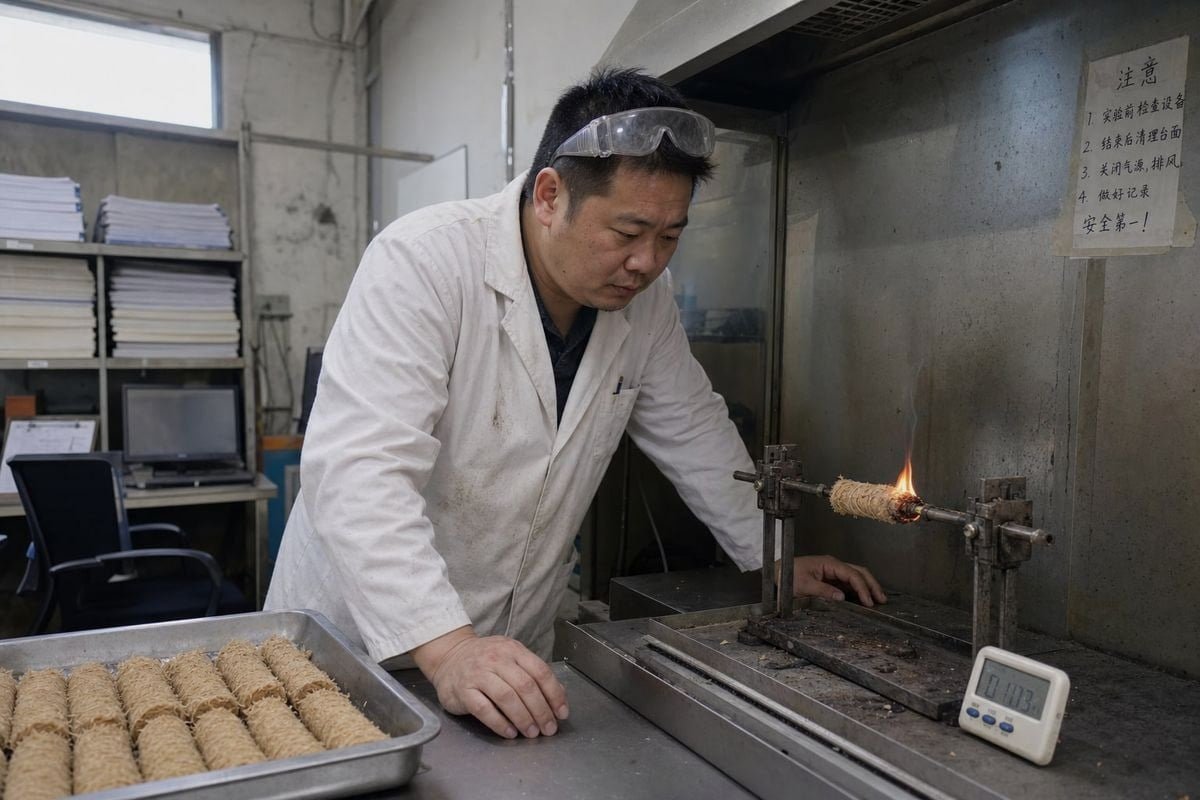
A certificação não faz um iniciador de fogo queimar melhor. O que ela faz é remover a aleatoriedade de como o produto é feito. Essa distinção é importante, porque a maioria das devoluções nesta categoria não são causadas por formulações ruins. Elas são causadas por execução inconsistente — um lote úmido, uma caixa com enchimento insuficiente, um lote onde o revestimento de cera 6 era muito fino. Processos certificados capturam esses desvios antes do envio.
Por que a Verificação de Terceiros Muda o Comportamento do Fornecedor
Um fornecedor que se submete a testes de laboratório de terceiros aceita responsabilidade externa. Em nossa experiência exportando para os EUA, Alemanha e Reino Unido, isso se manifesta de três maneiras. Primeiro, as matérias-primas recebidas são verificadas, incluindo análise de teor de umidade na fibra de madeira antes de entrar na produção. Segundo, verificações em processo capturam desvios, como a temperatura do banho de cera afetando o peso do revestimento. Terceiro, os produtos acabados são amostrados contra critérios de aprovação documentados em vez de uma inspeção visual.
A Conexão com a Aceitação no Varejo
Grandes canais de fornecimento de varejo recusam cada vez mais a integração de fornecedores sem Marcação CE 7, documentação SDS e relatórios de laboratório reconhecidos. Isso cria um efeito de filtragem. Fornecedores certificados já sobreviveram a auditorias que fornecedores não certificados evitam. Grandes redes varejistas podem retirar amostras aleatórias de um carregamento e rejeitar todo o palete se uma unidade falhar em uma verificação de ignição ou peso. Um palete rejeitado é funcionalmente uma taxa de retorno de 100% nesse carregamento. Portanto, a certificação protege você duas vezes: ela reduz as devoluções de consumidores ao estabilizar a qualidade e reduz as "devoluções" B2B na forma de remessas rejeitadas e cobranças. Para um comprador de marca própria, a diferença de custo entre um fornecedor certificado e um não certificado geralmente é muito menor do que o custo de uma única inspeção de varejo falha.
Os Dados de Controle de Qualidade Lote a Lote Podem Me Ajudar a Prever Taxas de Devolução a Longo Prazo?
Um de nossos compradores holandeses de longa data pede a mesma coisa em cada reordenação: não apenas o relatório de teste mais recente, mas os registros de CQ das três execuções de produção anteriores. Ele está medindo algo que um único relatório não pode mostrar.
Sim. Dados de CQ de lote para lote revelam variância, e variância prevê devoluções melhor do que qualquer pontuação única de aprovação. Um fornecedor cujos tempos de ignição, durações de queima e pesos de embalagem permanecem firmemente agrupados entre os lotes entregará uma taxa de devolução estável; grandes oscilações preveem reclamações imprevisíveis.
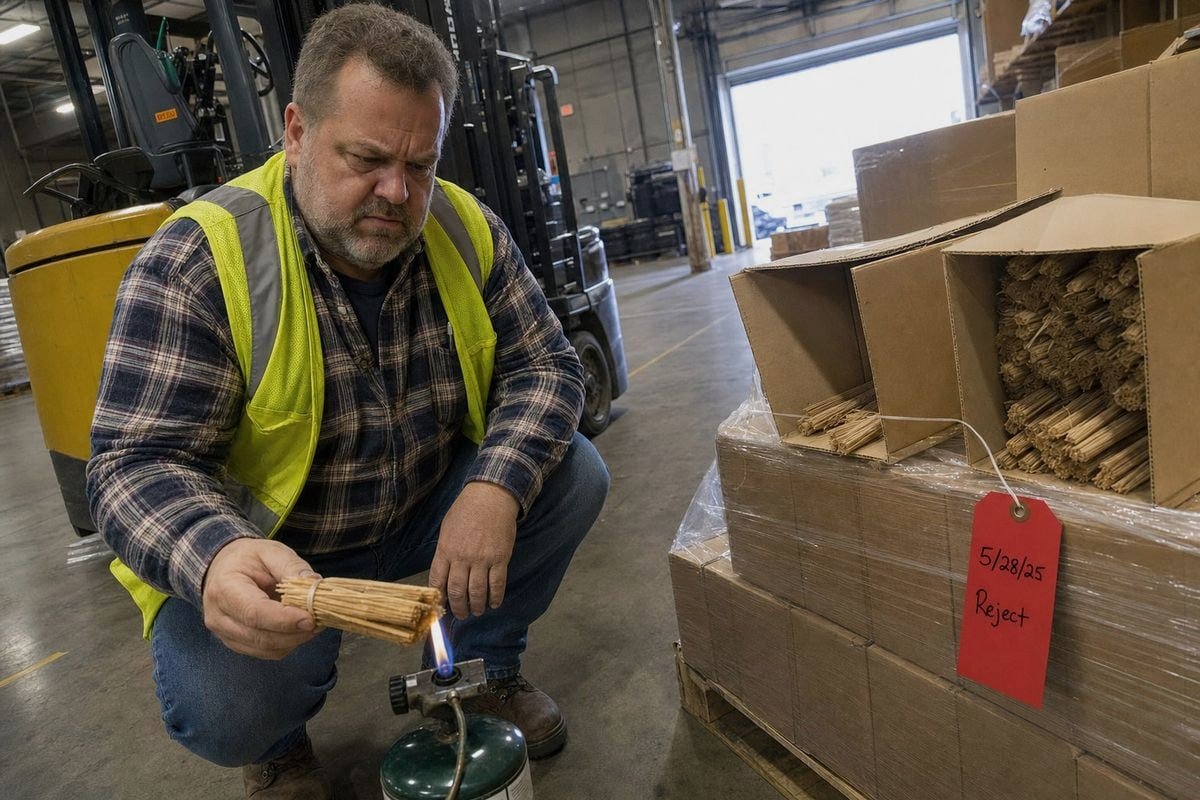
Um único relatório de teste é um instantâneo. As taxas de retorno, no entanto, são moldadas ao longo de meses de produção. É por isso que consistência do lote é o melhor preditor de longo prazo disponível para um comprador de marca própria. Pense desta forma: um fornecedor com uma média de 9 minutos de queima com tolerância apertada decepcionará quase ninguém. Um fornecedor com uma média de 10 minutos, mas oscilando entre 5 e 15, gerará reclamações constantes de "defeito" de todos os lotes de baixo custo — mesmo que sua média pareça melhor no papel.
Como são os dados consistentes de CQ
Em nossa linha de produção, a primeira amostra que um comprador aprova deve refletir de forma confiável a qualidade da produção em massa. Para tornar isso verdadeiro, rastreamos o mesmo punhado de variáveis em todas as execuções. Ao avaliar um fornecedor, peça exatamente esse tipo de dado de execução para execução.
| Variável de CQ | Lote 1 | Lote 2 | Lote 3 | O que a Variação Significa |
|---|---|---|---|---|
| Tempo médio de ignição | 2,1 s | 2,3 s | 2,2 s | Estável — baixo risco de falha no primeiro uso |
| Duração média da queima | 9,4 min | 9,1 min | 9,5 min | Estável — desempenho confiável do tempo de queima |
| Conteúdo de humidade | 8% | 9% | 8% | Estável — taxa de sucesso de ignição consistente |
| Desvio do peso da embalagem | ±1,5% | ±1,8% | ±1,6% | Estável — baixo risco de reclamação de enchimento insuficiente |
Traduzindo a Variação em uma Previsão de Devolução
Aqui está uma regra simples que compartilho com novos compradores. Sua taxa de defeito de produto esperada rastreia aproximadamente a proporção de unidades que caem abaixo do limite de tolerância do seu cliente, não a média do lote. Portanto, faça três perguntas: Qual é o pior lote nos últimos seis meses? O que o causou? Foi enviado ou retrabalhado? Um fornecedor que pode responder com dados tem um sistema de CQ. Um fornecedor que diz "todos os lotes passam" sem números está adivinhando — e você também.
Por que Relatórios de Teste Inconsistentes Sinalizam Maior Risco para Meus Iniciadores de Fogo de Marca Própria?
O compromisso que mais pondero ao aconselhar compradores é este: um relatório ligeiramente mais fraco, mas honesto, versus um relatório de aparência perfeita, mas inconsistente. Eu escolherei o relatório honesto sempre, e aqui está o raciocínio.
Relatórios de teste inconsistentes sinalizam maior risco porque revelam produção instável ou relatórios seletivos. Datas conflitantes, métodos de teste em mudança, números de lote ausentes ou resultados que nunca variam sugerem que a documentação não reflete a produção real, tornando os retornos imprevisíveis.
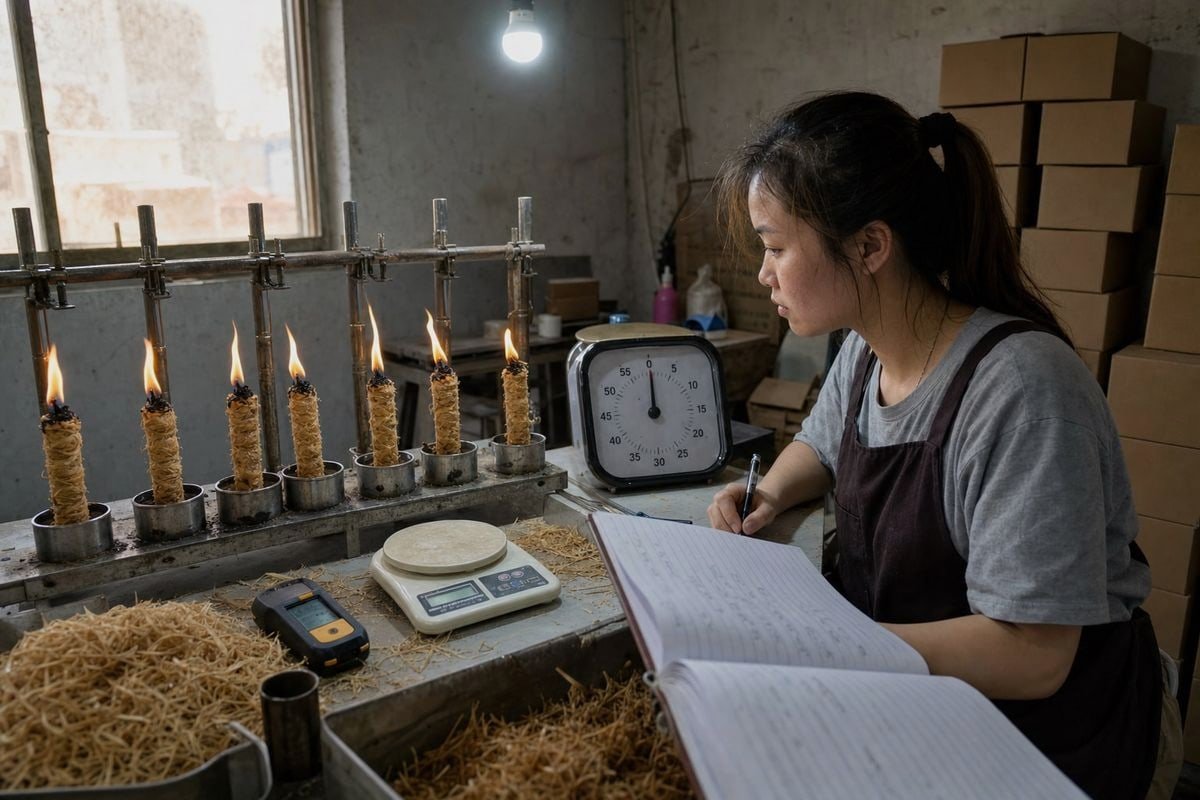
A inconsistência na documentação quase sempre espelha a inconsistência na fábrica. Em 17 anos de produção de iniciadores de fogo e chamas coloridas, nunca vi um fornecedor com papelada caótica e produto estável. Os dois andam juntos, porque a mesma disciplina que produz registros limpos também produz processos controlados.
Bandeiras Vermelhas que Preveem Risco Oculto de Devolução
- Relatórios sem data ou antigos. Um relatório de dois anos não diz nada sobre o fornecimento atual de matérias-primas ou a estabilidade da vida útil. Fornecedores de fibra de madeira mudam, graus de cera mudam e os resultados variam.
- Sem método de teste ou tamanho de amostra. "Tempo de queima: aprovado" não são dados. Sem metodologia, você não pode comparar fornecedores ou verificar nada independentemente.
- Resultados que são perfeitos demais. A produção real tem uma dispersão natural. Relatórios mostrando números idênticos em todos os lotes sugerem papelada copiada, não testes repetidos.
- Teste apenas em condições ideais. Amostras secas em laboratório ignoram fatores do mundo real, como armazéns de varejo úmidos. A fibra de madeira porosa pode reabsorver umidade durante o armazenamento, portanto, um relatório "seco" é inválido sem barreiras de embalagem adequadas.
- Métricas que mudam silenciosamente. Se um relatório cita a concentração de cera de parafina e o próximo a omite, pergunte por quê. Métricas descartadas geralmente escondem uma mudança de formulação.
Por que o Laboratório-Aprovado Não Significa Sucesso no Mundo Real
Mesmo relatórios honestos têm limites. Os clientes usam iniciadores de fogo com iscas molhadas, vento e mãos frias. Um produto que mal atinge o limite de queima de 8 minutos em um laboratório pode falhar ao ar livre. É por isso que sempre dizemos aos compradores: combine a papelada com seus próprios testes de amostra sob as condições esperadas, e compare os fornecedores pelo custo por minuto de queima em vez de apenas pelo preço unitário.
| Tipo de Sinal | Sinal Verde | Sinal de Alerta |
|---|---|---|
| Data do relatório | Dentro do ciclo de produção atual | Mais de 12 meses ou sem data |
| Rastreabilidade | Número do lote corresponde ao lote de produção | Nenhuma referência de lote |
| Metodologia | Método de teste, tamanho da amostra, nome do laboratório listado | "Aprovado" sem detalhes |
| Padrão de resultado | Variação natural e em pequenos lotes | Figuras idênticas em todos os relatórios |
| Dados de armazenamento | Estabilidade de vida útil e embalagem testadas | Ignição testada apenas em amostras frescas |
Conclusão
Devoluções destroem as margens de marca própria silenciosamente — um lote úmido de cada vez. Mas elas são em grande parte previsíveis. Leia os relatórios de teste como previsões, exija dados de lote, verifique as certificações e teste as amostras você mesmo antes de se comprometer.
Notas de rodapé
Entrada autoritativa da Wikipedia definindo a natureza legal e comercial das ordens de compra. ↩︎
Visão geral técnica dos métodos usados para determinar o teor de água em vários materiais. ↩︎
Dados químicos abrangentes sobre cera de parafina da Biblioteca Nacional de Medicina. ↩︎
Explica os padrões para o manejo florestal responsável e a documentação da cadeia de custódia para produtos de madeira. ↩︎
Visão geral confiável da Wikipedia sobre o padrão de gerenciamento de qualidade ISO 9001 e seus requisitos. ↩︎
Descrição técnica da aplicação de cera e seu papel no desempenho e proteção do produto. ↩︎
Página oficial da Comissão Europeia explicando os padrões de saúde, segurança e proteção ambiental para produtos. ↩︎



 English
  Spanish
  German
  French
  Arabic
  Portuguese
Participe da conversa