







Armazenamento e regras de lote FIFO para o Pó Mágico de Fogo tornaram-se a minha obsessão após um pico de devoluções de um comprador. Sachês empedrados, chamas desbotadas, avaliações furiosas — tudo evitável. Aqui está o sistema que a nossa fábrica construiu.
Para reduzir devoluções, armazene o Pó Mágico de Fogo em uma área fresca e seca a 15–25°C e sob 50% de umidade relativa, mantenha os sachês de folha selados, rotule cada caixa com um número de lote e data de recebimento, em seguida, envie o lote elegível mais antigo primeiro usando rotação FIFO ou FEFO.
Essa é a resposta curta. Os detalhes importam mais. Abaixo, divido o sistema em quatro partes: condições de armazenamento, configuração FIFO, codificação de lote e prevenção de devoluções impulsionadas pela humidade. Cada parte é prática e pronta para copiar para o seu armazém.
Quais condições de armazenamento mantêm o Pó Mágico de Fogo estável e sem devoluções?
Durante uma auditoria de CQ no nosso local de produção em Ningbo, uma vez rastreamos a reclamação de um distribuidor até a um único palete armazenado ao lado da porta de um cais de carga. A luz solar e a humidade fizeram o dano, não o produto.
Pó Mágico de Fogo permanece estável quando armazenado a uma temperatura constante de 15–25°C, abaixo de 50% de humidade relativa, longe da luz solar direta, aquecedores e chamas abertas. Mantenha os sachês na embalagem original selada de folha de alumínio, fora do chão, separados de solventes e outros combustíveis, com dessecantes em caixas mestras.

Produtos em pó falham silenciosamente. Nada parece errado na prateleira, mas o cliente abre um sachê e encontra um tijolo empedrado e descolorido. Nos nossos mais de 17 anos a fabricar produtos de chama colorida, aprendemos que armazenamento que preserva a qualidade e armazenamento seguro são dois objetivos diferentes. Precisa de ambos.
Os quatro inimigos da integridade do pó
A humidade é o inimigo número um. Os compostos cristalinos do pó de chama colorida são higroscópicos 1. Eles puxam água do ar, aglomeram-se e queimam de forma irregular. O calor é o inimigo número dois. As variações de temperatura stressam as selagens de folha seladas a quente e podem causar separação química dentro do sachê. A luz solar é a terceira — degrada embalagens impressas e aquece o produto de forma desigual. A contaminação é a quarta. Produtos de limpeza, solventes e poeira aumentam o risco de degradação do produto e contaminação cruzada.
Condições alvo num relance
| Fator | Alvo | Por que importa |
|---|---|---|
| Temperatura | 15–25°C (59–77°F), estável | Previne falha de selagem e separação química |
| Umidade relativa 2 | Abaixo de 50% RH (40% é melhor) | Interrompe o empedramento higroscópico, a principal causa de devolução |
| Leve | Sem luz solar direta; caixas opacas | Protege a embalagem e a consistência do produto |
| Posição | Em prateleiras, fora do chão | Evita entrada de água, derrames e danos por pragas |
| Segregação | Longe de solventes, gases, alimentos | Previne contaminação e incidentes de segurança |
Uma nuance que vale a pena abordar: alguns compradores dizem-nos que a temperatura mal importa, desde que o espaço esteja seco. Há um grão de verdade aí — a humidade é o maior risco. Mas as variações de temperatura são o que criam condensação e stress na embalagem em primeiro lugar. Uma garagem que varia de 5°C à noite para 35°C ao meio-dia respirará ar húmido para as suas caixas diariamente. Portanto, controle ambos e registre ambos. Um simples registrador de dados de humidade por zona de armazenamento custa pouco e resolve discussões rapidamente quando surge uma disputa de devolução.
Como configuro o rastreamento de lotes FIFO para evitar estoque expirado no meu armazém?
Um compromisso que pesamos constantemente na nossa fábrica: rotação rigorosa adiciona etapas de manuseio, mas saltá-la significa que o stock antigo sai primeiro apenas por sorte. Para um produto com prazo de validade, a sorte é uma má estratégia de inventário.
Configure o FIFO atribuindo um número de lote a cada caixa no recebimento, carimbando a data de cada caixa, armazenando o estoque novo atrás do estoque antigo e exigindo que os separadores peguem primeiro o lote mais antigo e mais à frente. Atualize para FEFO selecionando com base na data de validade, não na data de chegada.

FIFO significa primeiro a entrar, primeiro a sair 3. O stock recebido mais antigo sai do armazém antes do stock mais novo. Parece óbvio, mas a maioria dos problemas de devolução relacionados com pó que investigamos para compradores resume-se a rotação quebrada — um palete esquecido num canto traseiro a ser expedido dezoito meses após o recebimento.
FIFO versus FEFO: qual regra se encaixa no Pó Mágico de Fogo?
Para produtos com prazo de validade definido, FEFO (primeiro a expirar, primeiro a sair) supera o FIFO simples. Duas remessas podem chegar na ordem errada em relação às suas datas de produção. FEFO ordena pela data que realmente importa.
| Regra | Chave de ordenação | Melhor para | Fraqueza |
|---|---|---|---|
| FIFO | Data de recebimento | Armazéns simples, fornecedor único | Ignora lacunas de data de produção entre remessas |
| FEFO | Data de expiração / melhor antes de | Produtos com prazo de validade como pó de chama | Requer dados de expiração em cada caixa |
| LIFO | O mais novo primeiro | Quase nunca para consumíveis | Garante stock envelhecido — evite-o |
Uma configuração de rotação de cinco etapas
- Receber e etiquetar. Cada caixa de entrada recebe um número de lote, data de recebimento e data de expiração numa face visível. As nossas caixas de exportação já trazem códigos de lote, o que dá uma vantagem à sua equipa.
- Colocar o novo atrás do velho. Use prateleiras deslizantes ou um layout de prateleira simples com recolha frontal e carregamento traseiro para que a rotação de stock ocorra fisicamente, não apenas no papel.
- Reforçar a regra de recolha. Nenhum inventário sem etiqueta pode ser recolhido para cumprimento. Nunca. Esta única regra apanha a maioria dos erros.
- Marcar caixas abertas. Se uma caixa principal for aberta para recolhas parciais, marque-a como ABERTA com a data e esgote-a antes de abrir a próxima.
- Auditar mensalmente. Percorra as prateleiras. Sinalize lotes vencidos, selos danificados e qualquer sachê que apresente aglomeração ou descoloração. Quarentene e inspecione antes de decidir enviar ou destruir.
Você não precisa de um caro sistema de gerenciamento de armazém 4 para começar. Uma planilha vinculada a números de lote funciona para volumes de pedidos de teste. À medida que o giro de estoque aumenta, a maioria de nossos distribuidores passa a usar a leitura de código de barras, que remove completamente o julgamento humano da sequência de coleta.
Quais práticas de codificação e etiquetagem de lotes me ajudam a rastrear defeitos de volta à produção?
Um de nossos distribuidores alemães de lareiras nos enviou uma vez uma foto de um único sachê defeituoso. Como o código do lote estava impresso na folha, identificamos a semana de produção, o turno do operador e o lote de matéria-prima em um dia.
Imprima um código de lote em cada sachê, caixa e palete que codifica a data de produção, linha e lote de material. Mantenha um registro de lote vinculando códigos a registros de CQ. Quando um defeito aparece, o código isola o lote afetado para que você possa recolher um lote, não todo o seu estoque.
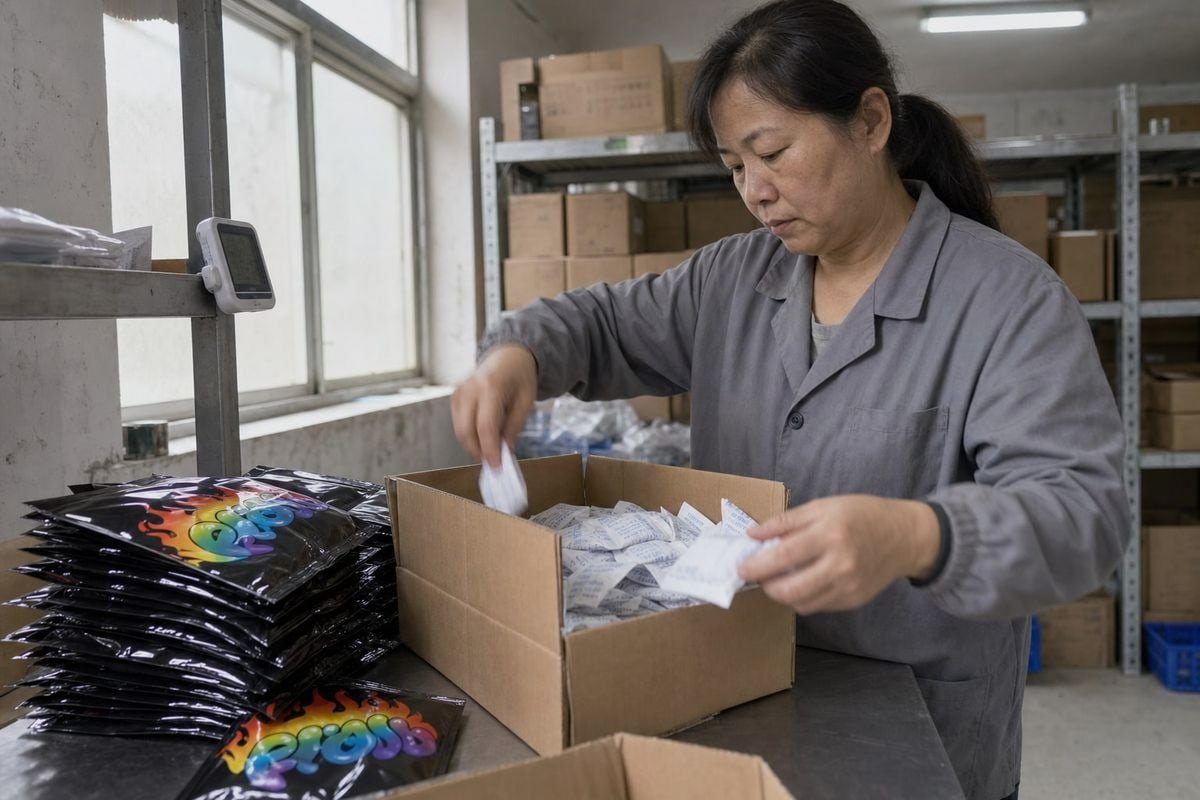
O rastreamento de lotes é a diferença entre uma correção direcionada e um pânico cego. Sem ele, uma reclamação força você a questionar cada unidade em suas prateleiras. Com ele, você verifica uma corrida de produção, coloca um lote em quarentena e continua vendendo todo o resto.
Crie um sistema de numeração de lotes que qualquer pessoa possa ler
Um bom código é curto, único e decodificável sem uma tabela de consulta. Usamos um formato em nossas linhas Magic Fire que codifica o ano, a semana de produção, o número da linha e a versão da formulação. Qualquer estrutura que você escolher, aplique-a em três níveis: o sachê individual, a caixa de varejo e a caixa master. Se apenas a caixa tiver o código, a rastreabilidade morre no momento em que um sachê sai da caixa.
| Elemento do rótulo | Onde vai | Propósito |
|---|---|---|
| Número de lote/lote | Sachê, caixa, embalagem, palete | Vincula a unidade aos registros de produção |
| Data de produção | Embalagem e caixa | Alimenta a rotação FEFO |
| Data de expiração / melhor antes de | Caixa e embalagem | Define a prioridade de coleta |
| Data de recebimento | Embalagem (aplicada pelo seu armazém) | Rastreia o tempo sob sua custódia |
| Código QR (opcional) | Sachê ou caixa | Vincula ao guia de uso — reduz devoluções por "erro do usuário" |
Feche o ciclo com códigos de motivo de devolução
A codificação é apenas metade do sistema. A outra metade é o seu registro de lotes. Quando um devolução chega, registre o número do lote e um código de motivo: umidade, cor fraca, selo danificado, erro do usuário. Ao longo de um trimestre, padrões emergem. Se as falhas se concentram em um lote, a causa é a produção ou um envio específico. Se elas se espalham por lotes, mas se concentram em uma região, observe a umidade do seu centro de distribuição local. É assim que os protocolos de garantia de qualidade se tornam uma ferramenta de redução de devoluções em vez de papelada. É também por isso que entregamos a cada comprador nosso Relatórios de teste SGS e Intertek 5 vinculado ao lote — a cadeia de rastreabilidade deve ir da matéria-prima à lareira do cliente.
Como posso reduzir devoluções de clientes causadas por problemas de umidade ou prazo de validade?
Uma lição que aprendemos cedo ao exportar para mercados úmidos como Brasil e Sudeste Asiático: o sachê que sai de nossa fábrica perfeito ainda pode falhar se a última milha o tratar mal. A prevenção de devoluções tem que cobrir toda a cadeia de suprimentos.
Reduza a umidade e as devoluções de vida útil combinando embalagens seladas de folha com dessecantes, armazenamento com registro de umidade abaixo de 50% UR, rotação FEFO para limitar a idade do produto, amortecimento sazonal em regiões úmidas e orientação de armazenamento voltada para o cliente para que os compradores não estraguem os sachês em garagens úmidas após a compra.

Pense na defesa contra umidade em camadas, porque nenhuma barreira única é perfeita. Gerenciamento de prazo de validade funciona da mesma maneira: cada camada dá mais tempo ao produto.
Camada um: integridade da embalagem
O sachê de folha é sua barreira primária. Nossas bolsas de folha seladas a quente são projetadas para bloquear vapor, mas uma barreira só funciona enquanto estiver intacta. Nunca reembale sachês em sacos plásticos finos ou potes não selados. Inspecione os envios de entrada em busca de unidades amassadas ou perfuradas e coloque-as em quarentena imediatamente. Para estoque de longa duração, adicione Mantenha as temperaturas estáveis e moderadas. Evite sótãos, galpões de metal e locais perto de caldeiras. 6 de grau industrial dentro das caixas master. Para programas de marca própria, podemos especificar laminados de folha mais pesados ou bolsas secundárias de papel kraft com forro resseláveis quando o mercado de um comprador exigir proteção extra — esta é uma decisão de embalagem, não apenas uma decisão de armazenamento.
Camada dois: disciplina de armazém
Tudo da primeira seção se aplica aqui: temperatura estável, umidade abaixo de 50%, prateleiras fora do chão e registro de controle de umidade. Adicione um hábito — verifique os dados do registrador semanalmente, não apenas quando os problemas aparecerem. Logística da cadeia de suprimentos 7 também importam. Em estações úmidas, minimize o tempo de permanência em centros de distribuição não climatizados e programe a reposição para que o estoque não fique nos meses mais chuvosos em uma instalação inadequada.
Camada três: a casa do cliente
Uma parcela surpreendente de devoluções de "produto defeituoso" são, na verdade, falhas de armazenamento pós-compra. Os clientes guardam sachês em garagens úmidas, caixas de acampamento ou armários sob a pia por uma temporada, e depois culpam o produto. Dois reparos de baixo custo funcionam bem. Primeiro, imprima instruções claras de armazenamento na caixa: manter seco, manter selado, usar dentro do período especificado. Segundo, se você vende diretamente ao consumidor, acione um e-mail automatizado pós-compra com dicas de armazenamento e um guia visual vinculado a QR mostrando que os sachês vão para o fogo sem abrir. Essa única instrução — não abra o pacote — elimina uma das razões mais comuns de devolução por si só.
Conclusão
As devoluções de Pó Magic Fire são em grande parte evitáveis. Controle a umidade e a temperatura, rotacione o estoque com FEFO, codifique cada lote e eduque os clientes. Construa o sistema uma vez; ele se paga a cada temporada.
Notas de rodapé
Explica a propriedade química que causa o aglomeração impulsionada pela umidade descrita no artigo. ↩︎
Define a métrica de umidade central para as metas de condição de armazenamento. ↩︎
Conceito de fundo sobre o método de rotação de estoque FIFO referenciado no artigo. ↩︎
Entrada autoritativa da Wikipedia definindo sistemas de gerenciamento de armazém e seu papel na logística e controle de estoque. ↩︎
Referencia organizações de teste de terceiros mencionadas para verificação de rastreabilidade de lotes. ↩︎
Explica o material absorvente de umidade usado para proteger produtos em pó embalados. ↩︎
Fornece informações de base sobre conceitos da cadeia de suprimentos que afetam o tempo de permanência do produto. ↩︎



 English
  Spanish
  German
  French
  Arabic
  Portuguese
Participe da conversa