






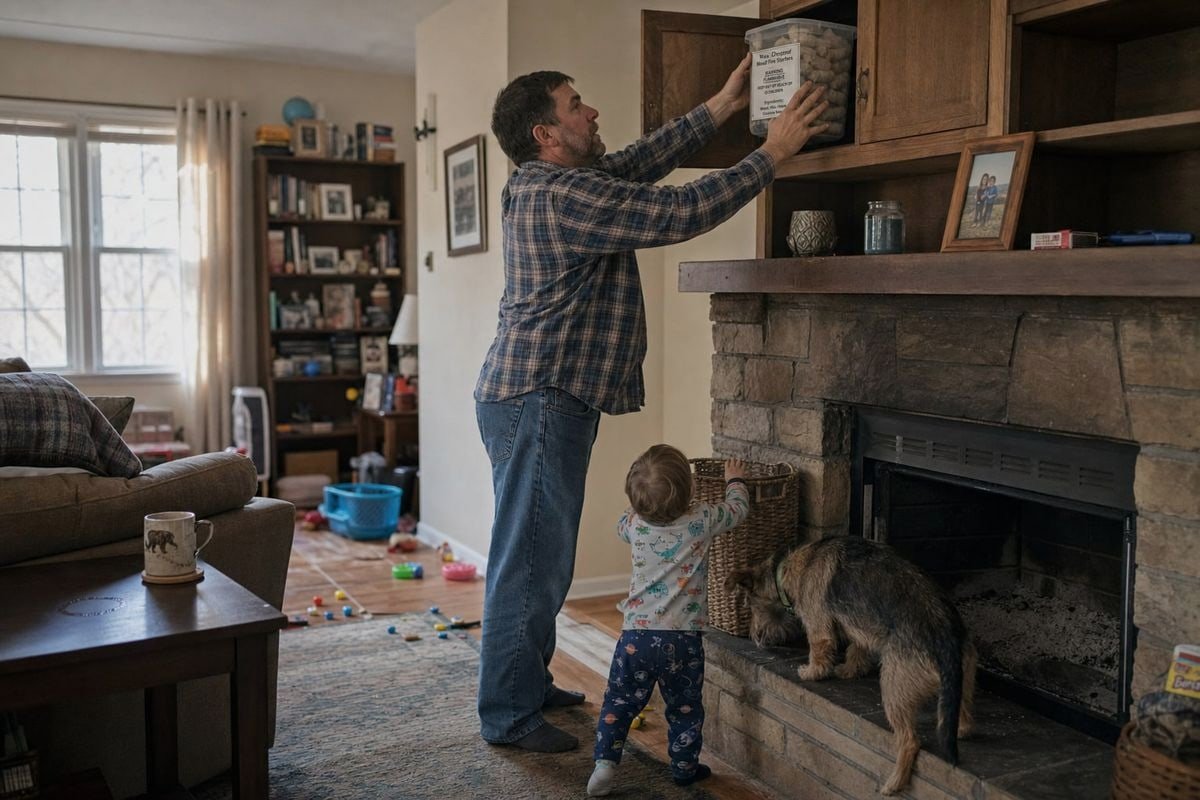
Wood fire starters look harmless sitting in a basket by the hearth. On our production line, we know better. One curious toddler or chewing puppy can turn convenience into an emergency.
Store wood fire starters in a locked cabinet or high shelf, inside a sealed, labeled, airtight container, in a cool dry spot away from heat, sunlight, matches, and lighters. Keep them fully out of reach of children and pets, and use certified child-resistant packaging where possible.
That is the short answer. Now let me walk you through the details. I will cover certifications, storage locations, packaging options, and training, based on what we see across 30+ export markets.
What safety certifications should I check before storing these fire starters at home?
During a factory audit last year, a German distributor spent two full days reviewing our test reports before placing a single order. That taught me something: paperwork is the first layer of home safety, long before storage.
Check for CE marking, SGS or Intertek test reports, and ISO 9001 manufacturing certification. These confirm the fire starters meet flammable material safety standards, contain no banned chemicals, and carry accurate warning labels. Verified low firelighter toxicity matters most in homes with children and pets.

Certifications are not decoration on a box. They tell you what is actually inside the product you are bringing into a home with kids and animals. In our experience exporting to the US, Germany, the UK, and France, buyers who skip this step often discover problems later. Some cheap fire starters use uncontrolled paraffin blends or gel accelerants 1. Fire gels with methanol, for example, can cause serious harm if ingested. That is why firelighter toxicity data should be your first question, not an afterthought.
The core documents to ask for
Here is what I recommend checking before any fire starter enters your home or your retail shelf:
| Certificação / Documento | O que Comprova | Why It Matters at Home |
|---|---|---|
| Marcação CE 2 | O produto atende aos requisitos de segurança da UE | Baseline legal compliance for household use |
| SGS ou Intertek 3 relatório de teste | Third-party lab verified composition | Confirms no hidden toxic accelerants |
| ISO 9001 4 | Consistent manufacturing quality | Batch one behaves like batch one hundred |
| Auditoria BSCI 5 | Ethical, controlled production site | Real factory oversight, not a reseller |
| Composition label (e.g., 50% wood fiber, 50% paraffin) | Transparent ingredients | Lets you assess pet ingestion risks quickly |
Why composition transparency protects families
A clear label matters in an emergency. If a dog chews a wax-dipped wood roll, the vet needs to know what was in it. Natural wood wool coated in food-grade paraffin is a very different situation than a white cube soaked in hydrocarbons. We insist on printed composition and warning labels on every retail box we produce, along with o centro de intoxicações 6 contact info guidance for our private-label clients. Cera de parafina 7 hazards are relatively low compared to solvent-based starters, but "low" is not "zero." Certified products give you a known, tested risk profile. Uncertified products give you a guess.
Where is the safest place to store wood fire starters away from kids and pets?
A Canadian buyer once told me his customers kept our wood rolls in decorative baskets right beside the wood stove. Beautiful photo. Terrible storage plan. We redesigned his packaging inserts to say so.
The safest location is a locked cabinet or a wall-mounted shelf above adult shoulder height, in a cool, dry, dark room away from heat sources. Never store fire starters near the fireplace, stove, furnace, water heater, or alongside matches, lighters, or fuels.
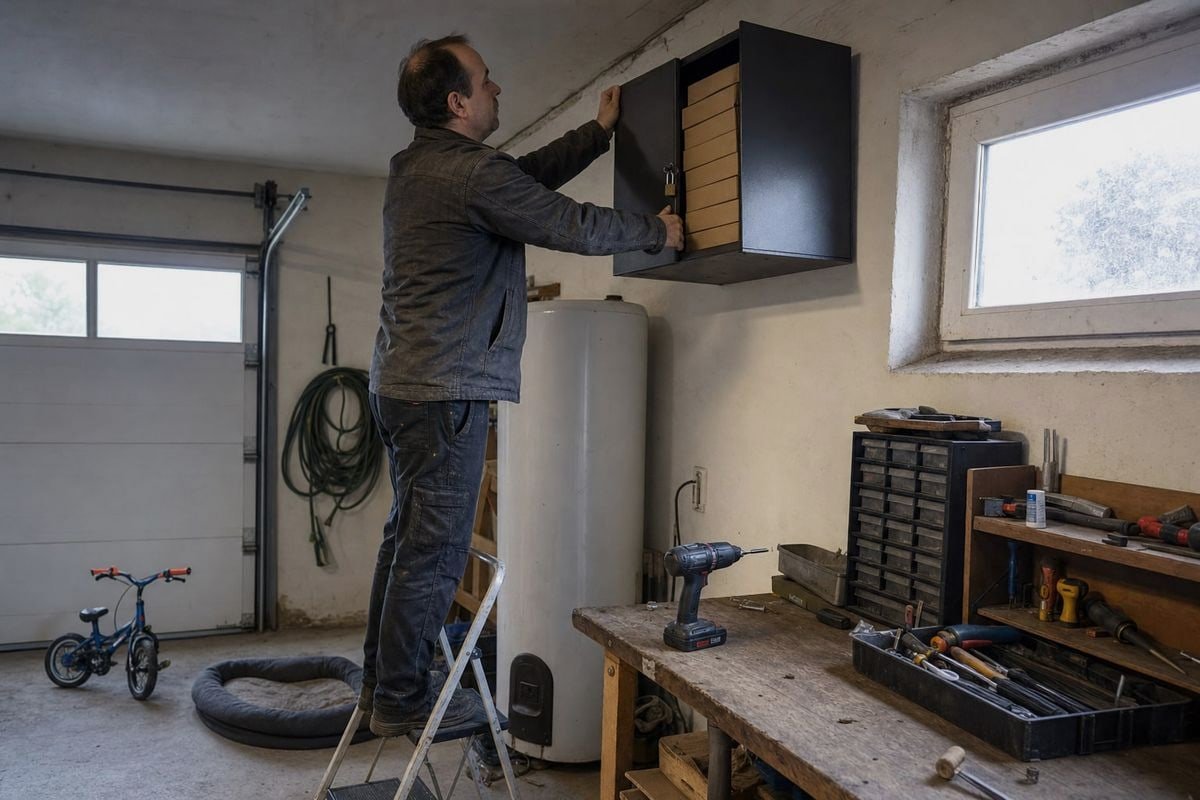
Think of storage as three questions: how high, how locked, and how far from heat. If your answer to any of them is weak, the location fails. Children climb. Dogs jump and chew. Cats knock containers off open shelves. So the location must beat all three behaviors at once.
Compare your storage options
| Localização | Child-Safe? | Pet-Safe? | Heat-Safe? | Veredito |
|---|---|---|---|---|
| Basket beside the fireplace | Não | Não | Não | Avoid entirely |
| Open shelf in living room | Parcialmente | Não | Depends | Weak choice |
| Locked kitchen cabinet, low | Sim | Sim | Check for stove proximity | Acceptable if away from oven |
| High wall-mounted cabinet with lock | Sim | Sim | Sim | Best indoor option |
| Locked garage or shed shelf | Sim | Sim | Watch summer heat | Best for bulk supply |
The micro-batching approach
Here is a practical system we recommend to our fireplace distributors. Keep only a single evening's supply indoors, in an airtight container, high and locked. Store the bulk supply in a locked shed or garage, off the floor and away from direct sunlight. This limits what a child or pet could ever access. It also keeps ignition source separation clean: fire starters in one place, matches and lighters in a completely different locked spot. Never store them next to paints, solvents, or fuel cans. And keep storage dry. Damp conditions degrade both natural fatwood storage and wax-coated wood wool, causing crumbling and poor ignition later.
Do not forget the hearth zone itself
Storage safety extends to the fire area. Fireplace hearth safety gates, screens, and perimeter rings create a physical barrier around active flames. A three-foot boundary rule for children, enforced with a gate rather than just words, protects them from both the fire and any starter left near it.
What child-resistant packaging options can I request from my supplier?
Packaging is where we spend a surprising amount of engineering time. When we develop a private-label box for a US retail chain, the child-resistance discussion usually happens before the burn-time discussion.
You can request child-resistant lidded jars, resealable heavy-duty kraft or plastic pouches with locking zippers, individually wrapped starters, tamper-evident seals, and printed warning labels with poison guidance. Airtight metal bins can also be specified for scent-proof, chew-proof secondary storage.
Packaging does three jobs at once. It slows down a child. It blocks a pet's nose. And it communicates danger clearly to every adult in the house. Most standard fire starter boxes do only the third job, and often poorly. As a true OEM/ODM supplier, we customize all three layers for our buyers, and you should expect the same flexibility from any serious supplier.
Packaging features worth specifying
| Característica | Protects Against | Notas |
|---|---|---|
| Child-resistant screw or push-turn lid | Small hands opening the container | Similar mechanism to medicine jars |
| Airtight seal | Scent trails attracting pets | Wax and wood scents draw curious dogs |
| Heavy-duty rigid container | Chewing and crushing | Teething puppies destroy thin cardboard fast |
| Individual wrapping per starter | Bulk spills if container tips | Limits exposure to one unit |
| Tamper-evident band | Undetected access | You know instantly if it was opened |
| Printed warnings, barcodes, and first-aid text | Adult confusion, emergencies | Include poison control contact info on the label |
Extra measures pet owners request
Some of our distributors serving pet-heavy markets go further. A pet-safe bitterant spray, such as bitter apple, applied to the container exterior deters chewing. A few buyers line airtight metal bins with activated charcoal sheets to neutralize VOC scent trails. One tech-focused brand even bundles smart contact sensors, so a phone alert fires the moment the bin opens. These are optional layers. But the baseline is non-negotiable: childproof storage containers with sealed lids and clear labels. Never decant fire starters into unlabeled jars or reused food containers. A wax-coated wood roll in a cookie tin is an accident written in advance, especially since compressed excelsior can visually resemble food items.
How do I train staff or family members on safe fire starter storage practices?
Every new worker on our Ningbo production floor goes through the same fire-handling induction before touching a single wax bath. The same principle applies at home: safety is a taught habit, not common sense.
Train everyone on four rules: return starters to the locked container immediately after use, keep matches and lighters stored separately, enforce a three-foot barrier around active fires, and know the emergency response steps, including poison control contact info posted visibly.

Good storage fails without good habits. The most common accident pattern we hear about from our fireplace-brand clients is simple: an adult lights the fire, sets the open bag of starters on the hearth, and walks away for two minutes. Training closes that gap.
A simple four-step household routine
- Retrieve one, not many. Take out only the starters you need for this fire. Reseal and relock the container before you strike a match.
- Light with barriers up. Place the fireplace screen or hearth gate before ignition, not after. Keep pets gated out of the room during lighting.
- Enforce the distance rule. Teach children the three-foot rule with a physical marker, like a rug edge. Give kids longer roasting sticks around fire pits. Train dogs on a firm "leave it" command for anything near the hearth.
- Reset the scene. After the fire, confirm the container is locked, matches are in their separate spot, and nothing flammable was left out.
Training for staff in retail or hospitality settings
For our B2B buyers with warehouse or showroom staff, we recommend a short written protocol. Cover flammable material safety basics, ignition source separation, monthly inspection of containers for leaks, moisture, or damage, and a rotation schedule so old stock gets used first. Include an emergency card: burn first aid, evacuation steps, and pet ingestion risks with the vet hotline number. Repeat the training seasonally. In our factory, refresher drills catch more bad habits than initial training ever does. Homes are no different. A five-minute family review each autumn, right before fireplace season starts, resets everyone's awareness at exactly the moment risk returns.
Conclusão
Safe storage prevents most fire starter accidents before they start. Lock them high, seal them tight, separate them from ignition sources, and train everyone at home.
After 17+ years producing wax-dipped wood fire starters for markets across the US and Europe, I can say this plainly: the product is only as safe as the household system around it. Certified composition, childproof storage containers, smart placement, and a trained family form four layers of protection. If you are a distributor or brand sourcing fire starters, demand tested products, compliant labels, and packaging built for real homes with real kids and pets. That is exactly the standard we build to, and it is the standard your customers deserve.
Notas de rodapé
1. Explains fire accelerants like gel formulas, clarifying the ingestion and flammability risks noted. ↩︎
2. Explains the EU conformity standard buyers should verify before storing flammable products at home. ↩︎
3. Links to a recognized third-party testing lab that verifies fire starter composition and safety. ↩︎
Entrada autoritativa da Wikipedia fornecendo uma visão geral abrangente do padrão de gestão de qualidade ISO 9001. ↩︎
5. Amfori BSCI is the official body behind the ethical production audit mentioned for factories. ↩︎
6. Authoritative emergency resource households should keep listed alongside fire starter storage guidance. ↩︎
7. Background on the wax material used in fire starters and its relative toxicity profile. ↩︎



 English
  Spanish
  German
  French
  Arabic
  Portuguese
Participe da conversa