






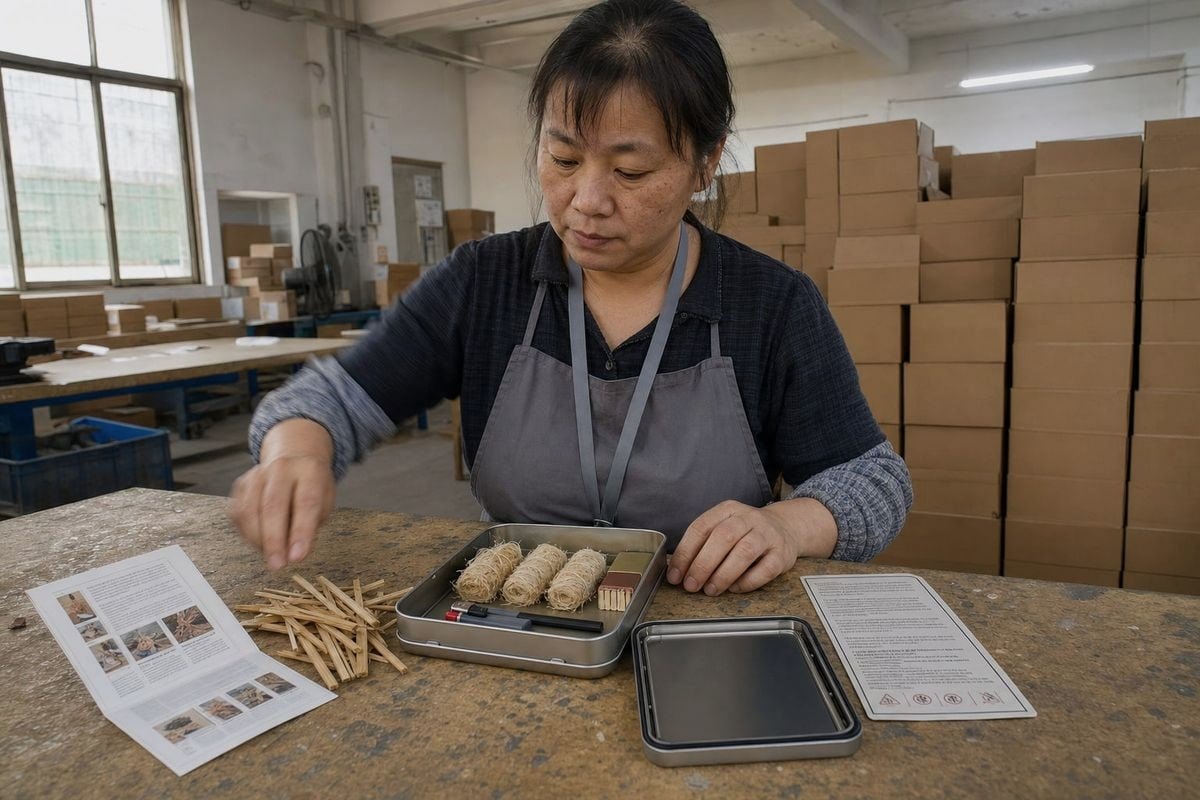
Buyers often order acendedores de lenha 1 without a demo kit, then struggle to convince their own retail channels. I have watched deals stall for exactly this reason on our production floor. A proper demo kit and safety guide solves it before it starts.
To prepare a wood fire starters demo kit, include 2–3 retail-form samples, ignition tools, dry kindling, an instruction card, and a waterproof storage tin. Pair it with a plain-language safety guide covering storage, handling, supervision, and compliance-aligned warning labels backed by test reports.
That is the short answer. Below, I break down each piece step by step, so you can build a demo pack that wins retail buyers and passes compliance checks in your market.
What should I include in a wood fire starter demo kit to convince my retail buyers?
A few years back, a German distributor visited our Ningbo facility with nothing but a spec sheet. We built him a demo kit on the spot. He closed his first chain-store listing within two months.
A convincing wood fire starter demo kit should contain 2–3 finished retail samples, multiple ignition sources, a small kindling bundle, a waterproof storage tin, a one-page instruction card, and a printed safety card. Together, these let a retail buyer test the product exactly as an end customer would.

The goal of a demo kit is simple. It turns a claim into a proof. Your retail buyer does not want a brochure. They want to strike a match, watch the flame catch the lã de madeira 2, and time the burn themselves. In our experience shipping to 30+ countries, the kits that close deals share the same core items.
The six essential components
| Componente | What to Include | Why It Matters to the Buyer |
|---|---|---|
| Retail samples | 2–3 wax-dipped wood rolls in final packaging | Shows size, shape, and shelf presence |
| Ignition tools | Stormproof matches, butane lighter, ferro rod | Proves ignition across skill levels and conditions |
| Kindling sample | Thin dry twigs or fatwood sticks | Demonstrates the real job: lighting kindling |
| Storage tin | Gasket-sealed waterproof container | Shows moisture protection during transport |
| Instruction card | One-page placement and lighting steps | Reduces user error during the demo |
| Safety card | Warnings on heat, flammability, supervision | Signals compliance awareness up front |
Each item answers a buyer objection before it is spoken. The multiple ignition sources matter more than people think. A ferro rod demo proves the exposed wood fibers catch sparks, not just open flame. That impresses outdoor and bushcraft channels especially.
I also recommend adding two optional extras. First, a burn-time log sheet with a stopwatch reference, so the buyer can benchmark burn time performance against competing products. Second, a fine-mist spray bottle for a moisture stress test. When a lightly dampened starter still ignites, hesitation disappears. We include both in the sample packs we ship from our factory, and buyers consistently mention them in follow-up calls.
Keep the kit compact. A box the size of a hardcover book is enough. Portability itself is part of the message, because camping and emergency-prep retailers care about shelf and pack footprint.
How do I create a safety guide that meets compliance standards in my target market?
The trade-off I weigh most often is guide length versus clarity. A ten-page document satisfies lawyers but loses users. Our export experience across the US and EU taught us to compress, not pad.
Create a plain-language safety guide organized into before-use, during-use, and after-use sections. Include storage protocols, a safety perimeter checklist, supervision warnings, and disposal notes. Align every warning with your market's labeling rules, and base flammability claims on the supplier's actual test reports.

A safety guide has two audiences. The end user reads it under stress, often outdoors. The retail compliance officer reads it at a desk, looking for gaps. Your guide must serve both. Short sentences serve the first audience. Documented backing serves the second.
Structure the guide in three phases
Before use, the guide should cover storage and handling protocols. Wood-fiber starters can absorb ambient moisture 3 through wicking, which slows ignition. Tell users to store starters in a cool, dry place, ideally in a sealed container, away from ignition sources. A note about checking kindling with a firewood moisture meter adds practical value for fireplace users.
During use, mandate a safety perimeter. A 15-foot clearance from tents, low branches, and structures is a widely used benchmark. Add supervision language for children and pets. Explain the bottom-up ignition technique: place the starter at the base of a tipi or log cabin kindling stack so heat rises through the fuel.
After use, cover cooling, ash disposal, and residue. Quality eco-friendly wax-based starters leave fine, pale ash rather than heavy black soot. Teaching users to read residue and ash production builds trust in the product itself.
Match warnings to your market
US retailers generally expect labeling consistent with federal hazardous-substance rules. EU markets expect CLP-aligned hazard pictograms and multi-language text. UK buyers follow similar post-Brexit rules. We prepare warning labels for each destination as part of our OEM service, because a mismatch here can stop goods at customs or get a product delisted. Ask your supplier for a Ficha de Dados de Segurança de Materiais 4 and use its language as the basis for your warnings. Never write flammability text from guesswork.
What certifications and test reports should I request before building my demo presentation?
Early in our export history, a buyer asked us for a flash point figure mid-meeting. We had the relatório SGS 5 on hand. That single moment taught me documents close deals faster than demos alone.
Before building your demo, request ISO 9001 factory certification, a social audit such as BSCI, CE conformity where applicable, SGS or Intertek product test reports, a Material Safety Data Sheet, and flash point testing data. These documents let you present verified claims, not assumptions.
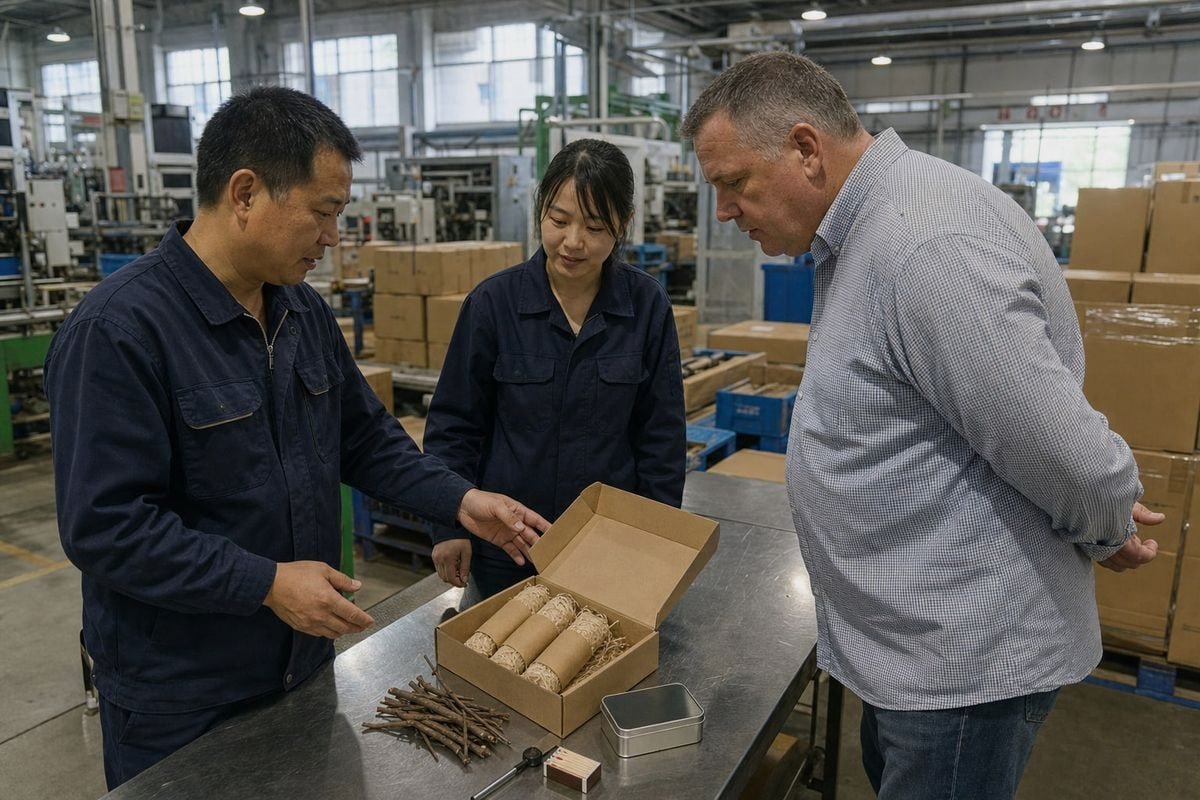
A demo presentation built on unverified claims is a liability. Retail chains audit their suppliers' suppliers now. So your paperwork stack matters as much as your flame. Here is the checklist we hand to new buyers who ask what wholesale procurement standards look like for fire products.
Core document checklist
| Documento | O que Comprova | Quando Você Precisa |
|---|---|---|
| Certificado ISO 9001 | Gerenciamento consistente da qualidade da fábrica | Before first order |
| relatório de auditoria BSCI | Condições éticas de trabalho e de fábrica | Required by most large retailers |
| Documentação CE | Conformidade da UE, quando aplicável | Before EU market entry |
| Relatório de teste SGS / Intertek | Verificação independente de segurança do produto | Before the demo presentation |
| Ficha de Dados de Segurança de Materiais | Composition and handling hazards | For labels and safety guides |
| Flash point testing 6 data | Ignition temperature of wax content | For transport and storage claims |
Two of these deserve extra attention. First, testes de ponto de fulgor 7 determines how you classify the product for shipping and how you word storage warnings. Paraffin-based starters typically fall outside dangerous-goods thresholds, but you should confirm with data, not habit. Second, the third-party test report should match the exact formulation you are buying. A report for a 40% paraffin blend does not cover a 50% blend.
I also suggest requesting internal QC data. At our lines in Ningbo, we run batch-to-batch ignition speed test checks and burn-duration sampling. A supplier who shares this data willingly is signaling manufacturing depth. One who hesitates is signaling trading-company behavior. In 17+ years, I have found that distinction predicts long-term reliability better than any price quote.
Bring copies of these documents to the demo itself. When a retail buyer asks a hard question, answering with a stamped report ends the discussion in your favor.
Can my supplier help me customize packaging and labeling for a retail-ready demo kit?
A UK importer once told me his previous kit failed a shelf review over a missing barcode placement rule. We rebuilt his packaging in three weeks. That conversation reshaped how we scope OEM projects.
Yes, a capable supplier should offer full OEM/ODM customization: private-label branding, custom box design, display-ready packaging, market-specific warning labels, barcodes, and multi-language inserts. Confirm they can also adjust starter size and burn time to match your positioning before finalizing the demo kit.

Packaging is where a demo kit becomes retail-ready or stays a sample bag. The question is not whether your supplier prints boxes. Almost anyone can. The question is whether they understand what your retail channel demands and can build to it from the first sample.
What real customization covers
Start with the product itself. Size, wax ratio, and burn time performance should be adjustable. A fireplace-channel starter can be larger and slower-burning. A camping-channel starter should be compact and fast-catching. We routinely tune wax saturation on our wood rolls for exactly this reason, because too much wax slows ignition while too little cuts burn duration. Your packaging story should match the formulation inside.
Then move to the box. Ask about these specifics:
- Private-label branding with your artwork and brand colors.
- Display packaging such as counter units or shelf-ready trays.
- Warning labels pre-formatted for your destination market.
- Barcodes and retail compliance marks positioned to scanner standards.
- Multi-language instruction inserts for EU distribution.
- An airflow compatibility note for stove, fire pit, and pizza-oven users.
Questions that reveal supplier depth
| Perguntas a Fazer | Strong Answer | Sinal de Alerta |
|---|---|---|
| Can you match mass production to the first sample? | Yes, with batch QC records | Vague assurances |
| Do you handle destination-market warning labels? | Yes, with market-specific templates | "Send us your file" |
| What is the MOQ for a trial custom run? | Quantidades flexíveis de teste | Full-container minimums only |
| Who owns the packaging tooling and artwork? | You do | Unclear terms |
One more point from our side of the table. A good supplier will flag problems you did not ask about. When a buyer's proposed pouch fails our moisture check, we say so before production, not after a complaint. That is what separates a manufacturing partner from a vendor filling a purchase order.
Conclusão
A weak demo kit loses listings you never hear about. Build one with real samples, verified documents, and compliant labels, and your wood fire starters sell themselves at the buyer's table.
Notas de rodapé
1. Wikipedia entry for fire starters, providing context on various ignition materials and methods. ↩︎
2. Wikipedia page explaining wood wool, its manufacturing, and its common uses as a fuel source. ↩︎
3. Scientific explanation of ambient moisture and its effects on material properties and environmental interactions. ↩︎
4. OSHA hazard communication standard defines what an MSDS must contain for safety warnings. ↩︎
5. SGS is a recognized third-party testing authority referenced for verified product safety claims. ↩︎
6. Wikipedia article defining flash point and its importance in determining the flammability of substances. ↩︎
7. Explains the flash point concept used to classify wax-based products for shipping and storage. ↩︎



 English
  Spanish
  German
  French
  Arabic
  Portuguese
Participe da conversa