







Planejar a quantidade de pedido de pó Mágico de Fogo para viagens de capacidade de carga de contêineres engana muitos importadores de primeira viagem Relatórios de teste SGS/Intertek 1. Já vi compradores pagarem por contêineres meio vazios que nossa fábrica poderia ter enchido adequadamente.
Para planejar a quantidade do pedido de pó Magic Fire para carregamento de contêiner, calcule unidades por caixa master, divida o volume utilizável do contêiner (cerca de 28 CBM para 20 pés, 58 CBM para 40 pés) pelo volume da caixa, em seguida, alinhe esse número com seu MOQ, limites de conformidade e um buffer de 5-10%.
Essa é a resposta curta. Abaixo, detalho cada etapa com números reais de nossa experiência de exportação, para que você possa dimensionar seu próximo pedido com confiança.
Quantas unidades de Pó de Fogo Mágico cabem em um contêiner de 20 pés ou 40 pés?
Na primavera passada, um distribuidor alemão nos fez exatamente essa pergunta antes de seu primeiro pedido de teste Marcação CE 2. Nossa equipe de remessa fez os cálculos com ele, caixa por caixa, e a resposta o surpreendeu.
Um contêiner de 20 pés (cerca de 28 CBM utilizáveis) geralmente contém 250.000–350.000 sachês padrão Magic Fire de 25g em caixas master, enquanto um contêiner de 40 pés (cerca de 58 CBM) contém aproximadamente 550.000–700.000 sachês, dependendo das dimensões da caixa e da embalagem da caixa de exibição.
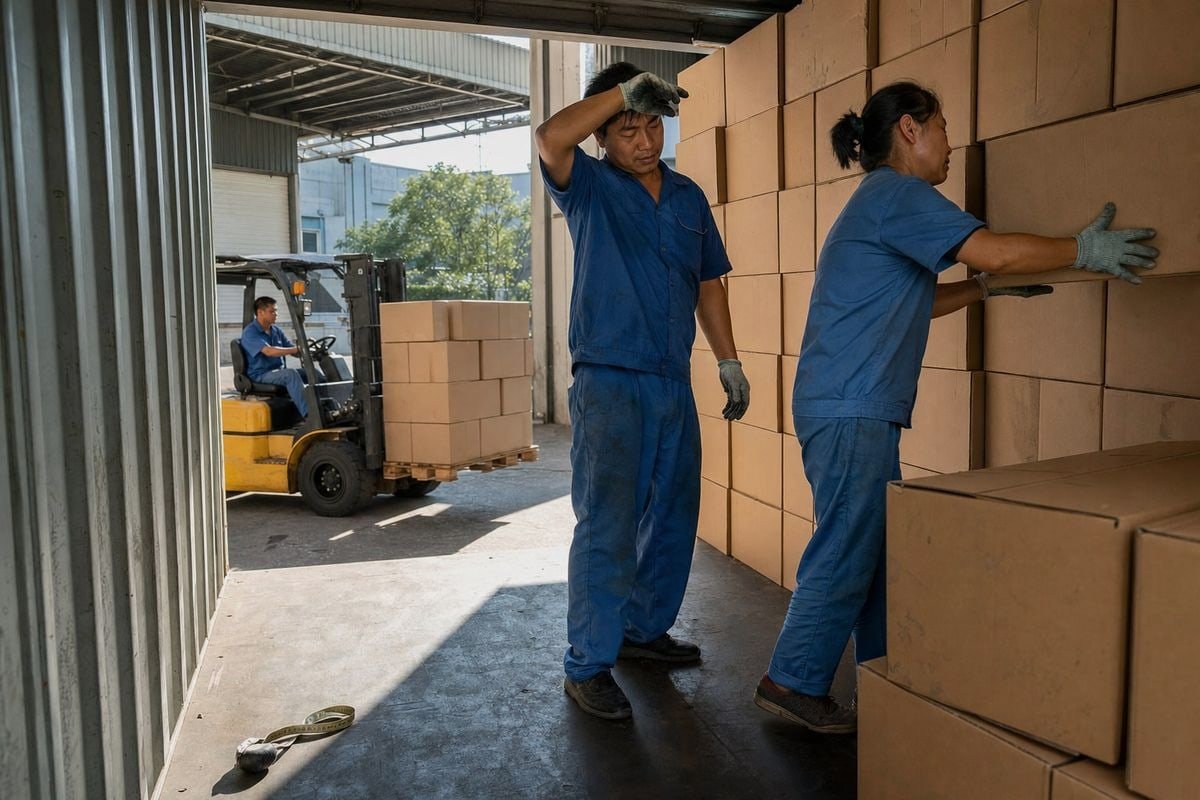
O ponto de partida nunca é o contêiner em si. É a caixa principal. Em nosso local de produção em Ningbo, embalamos sachês em caixas de exibição internas, depois em caixas de exportação caixas master 3. As dimensões externas e o peso bruto da caixa decidem todo o resto.
O cálculo básico, passo a passo
Aqui está o método que seguimos com todos os novos compradores:
- Confirme o tamanho da unidade (por exemplo, um sachê de 25g).
- Confirme unidades por caixa de exibição (geralmente 24 ou 50).
- Confirme caixas de exibição por caixa principal.
- Meça as dimensões externas da caixa principal e calcule seu CBM.
- Divida o CBM utilizável do contêiner pelo CBM da caixa.
- Verifique o limite de peso de carga útil do contêiner.
Referência de capacidade típica
| Contêiner | Volume Utilizável | Limite de Carga Útil | Caixas Principais Estimadas | Sachês de 25g Estimados |
|---|---|---|---|---|
| 20 pés | ~28 m³ | 000–24.000 kg | 550–650 | 250,000–350,000 |
| 40 pés | ~58 m³ | 000–28.000 kg | 1,150–1,350 | 550,000–700,000 |
| 40 pés HQ | ~68 m³ | 000–28.000 kg | 1,350–1,550 | 650,000–800,000 |
Um ponto chave: sachês de chama colorida são leves em relação ao seu volume. Em nossa experiência de envio para os EUA e Europa, a carga Mágica de Fogo quase sempre "atinge o volume" antes de "atingir o peso". Isso significa que o volume, não o peso, é o seu fator limitante. Portanto, a otimização das dimensões da caixa importa muito mais do que o número de carga útil na folha de especificações do contêiner. Frequentemente ajustamos os tamanhos das caixas em alguns centímetros para encaixar uma camada extra de caixas — uma pequena mudança que pode adicionar milhares de unidades vendáveis por contêiner.
A minha escolha de formato de embalagem afeta a quantidade de produto que posso carregar por contentor?
O formato da embalagem é a maior alavanca aqui. Quando desenvolvemos nossa linha de sacos de papel kraft ao lado do sachê de folha clássico, medimos uma diferença de dois dígitos na densidade do contêiner entre os dois.
Sim, o formato da embalagem altera significativamente a capacidade do recipiente. Sachês compactos de folha em caixas a granel maximizam a densidade; bolsas de papel kraft autoportantes perdem 10–20% de capacidade para o espaço livre; potes de plástico perdem 25–40% para espaços de ar rígidos; e caixas de exibição de varejo reduzem ainda mais a densidade, mas chegam prontas para prateleira.

Cada formato que produzimos — sachê de folha, bolsa autoportante de papel kraft e pote de plástico — carrega uma penalidade de densidade diferente. A troca é simples: os formatos que embalam mais apertado nem sempre são os formatos que vendem melhor em uma prateleira de varejo.
Comparando nossos três formatos principais
| Formato da Embalagem | Densidade do Contêiner | Prontidão para Varejo | Comprador Típico |
|---|---|---|---|
| Sachê de folha (plano, embalado a granel) | Mais alto | Necessita de caixa de exibição | Atacadistas, marcas de etiqueta privada |
| Bolsa Kraft autoportante | 1 x 20 pés, vários produtos | Boa presença na prateleira | Marcas de atividades ao ar livre e camping |
| Pote de plástico | Mais baixo | visual premium | Distribuidores de lareiras e churrasqueiras |
| Sachês em caixa de exibição flip-top | Médio-baixo | Totalmente pronto para prateleira | Grandes redes de varejo |
Por que o espaço livre e a rigidez importam
O pó não preenche a embalagem em 100%. Bolsas flexíveis precisam de espaço livre para que os grânulos se acomodem e o selo permaneça limpo. Potes rígidos retêm ar por design — você envia o espaço vazio junto com o produto. Em manuseio de pó 4 de forma mais ampla, os contêineres são frequentemente preenchidos com apenas 50–80% da capacidade volumétrica para estabilidade e dispensação consistente. Aplicamos a mesma lógica conservadora: bolsas superenchidas correm o risco de falha na vedação, empedramento e poeira durante o transporte.
Há também a questão da umidade. Nossos grânulos de chama colorida são sensíveis à umidade, portanto, revestimentos selados e dessecantes 5 são às vezes adicionados para mercados de destino úmidos como o Brasil ou o Oriente Médio. Essas camadas protetoras consomem uma pequena quantidade de volume da caixa. É uma troca que vale a pena — um envio rejeitado custa muito mais do que alguns CBM perdidos. Quando fazemos projetos OEM, modelamos tudo isso antes de orçar, para que o custo total por unidade do comprador reflita a realidade, não um máximo teórico.
Posso misturar vários SKUs ou cores em um único contêiner sem desperdiçar espaço?
Uma marca de camping do Reino Unido nos pediu para combinar sachês, pinhas de chama colorida e tochas de cera em um contêiner de 40 pés para sua primeira temporada. Conseguimos — com algum planejamento.
Sim, você pode misturar vários SKUs, cores ou até mesmo linhas de produtos em um único contêiner sem desperdiçar espaço, desde que todas as caixas mestras compartilhem dimensões padronizadas, cada SKU atenda ao seu próprio mínimo de embalagem de caixa e o plano de carga seja simulado antes da reserva para confirmar a eficiência de empilhamento.

A carga mista é prática padrão para nossos compradores de exportação e, muitas vezes, é a maneira mais inteligente de testar um mercado. Em vez de comprometer um contêiner inteiro com um único SKU, você distribui o mesmo custo de frete por uma gama mais ampla de produtos.
Como tornamos os contêineres mistos eficientes
O segredo é a padronização das caixas. Em nossa fábrica, projetamos caixas mestras para diferentes SKUs em torno de dimensões de base compartilhadas sempre que possível. Quando as caixas compartilham uma base, elas se empilham em camadas limpas e interligadas, independentemente do que está dentro. Quando não compartilham, você obtém vãos em forma de pirâmide que desperdiçam CBM pelo qual você já pagou.
Nosso processo para um pedido misto é o seguinte:
- O comprador envia as quantidades alvo por SKU e cor.
- Verificamos cada SKU em relação à sua embalagem de caixa e ao mínimo do lote de produção.
- Nossa equipe de logística executa uma simulação de carregamento para mapear a colocação das caixas.
- Ajustamos as quantidades para cima ou para baixo ligeiramente para eliminar camadas parciais.
- Itens mais pesados (potes, caixas de pinhas) vão na parte inferior; caixas de sachês mais leves se empilham em cima.
Regras práticas que valem a pena seguir
Algumas lições de mais de 17 anos fazendo isso. Primeiro, mantenha a contagem de SKUs razoável — de três a seis SKUs por contêiner é gerenciável; quinze cria erros de separação no destino. Segundo, misturar cores dentro de um SKU de sachê não custa nada a mais em espaço, pois as dimensões da embalagem são idênticas; apenas a impressão ou o rótulo mudam. Terceiro, insista em um plano claro de carregamento de contêiner e esquema de marcação de caixas, para que seu armazém possa classificar o envio rapidamente na chegada. Fornecemos diagramas de carregamento rotulados com cada envio misto exatamente por esse motivo. 6 A troca que discutimos mais com novos compradores é esta: nossos MOQs flexíveis de teste são muito menores do que um contêiner completo, mas o frete por unidade cai acentuadamente à medida que você se aproxima do FCL.
Como posso equilibrar o meu MOQ com a capacidade do contentor para obter o melhor custo de envio?
A economia de frete recompensa o volume, mas apenas até o ponto em que o risco de estoque assume. O objetivo não é o maior pedido possível. É o tamanho do pedido em que o custo total por unidade e o risco de fluxo de caixa se cruzam em um ponto aceitável.
Equilibre o MOQ e a capacidade do contêiner encomendando em múltiplos de contêineres completos sempre que a demanda o justificar, pois o FCL reduz drasticamente o frete por unidade em comparação com o LCL. Para pedidos de teste, use um MOQ menor via LCL e, em seguida, aumente para um contêiner completo de 20 pés assim que o volume de vendas for comprovado.

FCL versus LCL: o quadro real de custos.
Abordagem do Pedido
| Custo de Frete por Unidade | Risco de Estoque | Pedido de teste LCL (nível MOQ) | Exposição de Caixa Inicial |
|---|---|---|---|
| Teste de mercado, novos SKUs | 1 x 20 pés ou 40 pés | Baixo | Contêiner parcial via LCL |
| Reordenações crescentes | Médio-alto | 1 x 20 pés, vários produtos | Contêiner completo de 20 pés (FCL) |
| Demanda estabelecida em mercado único | Baixo | 1 x 20 pés, vários produtos | Contêiner completo de 40 pés (FCL) |
| Estoque para múltiplos canais ou sazonal | Mais baixo | Maior | Um método simples de planejamento |
Aqui está a sequência que recomendo aos gerentes de compras:
Estime a venda realista por mês por canal.
- Multiplique pelo seu ciclo de reordenação (tempo de produção mais trânsito).
- Adicione um buffer de 5–10% para danos, problemas de umidade ou retenções de qualidade.
- Arredonde o total para a quantidade de contêiner completo mais próxima — ou permaneça deliberadamente em LCL se a diferença for muito grande.
- Agende a reserva antes dos picos sazonais.
- . Produtos para fogueira e lareira aumentam antes do outono e das festas de fim de ano, e as taxas de frete aumentam com eles. Mais um fator que os compradores muitas vezes perdem:. afeta a capacidade utilizável e o agendamento. Nossos produtos são ecológicos e enviados com relatórios de teste SGS/Intertek, mas as alfândegas de destino ainda querem a classificação correta, rótulos de advertência e papelada. Obter a documentação correta antes de reservar evita o cenário caro de um contêiner parado no porto. Em nossa experiência exportando para mais de 30 países, um envio FCL bem documentado é liberado mais rápido do que um LCL mal documentado — outra razão oculta pela qual contêineres completos geralmente vencem em custo total.
O envio FCL geralmente oferece um custo de frete por unidade muito menor do que o LCL para o pó Magic Fire documentação de conformidade O FCL distribui uma taxa fixa de contêiner por centenas de milhares de unidades leves, enquanto o LCL adiciona taxas de manuseio, encargos de consolidação e preços por CBM que inflacionam o custo unitário. Marcação CE 7 Você deve sempre pedir um contêiner completo para obter o melhor negócio.
Conclusão
ou enchendo contêineres de 40 pés a cada temporada, nós da Sunrich fazemos esses cálculos com cada comprador antes de orçar — porque um contêiner bem planejado é o mais barato que você já enviará.
Comece com as dimensões da sua caixa master, avance para o CBM do contêiner, leve em consideração o formato da embalagem e o espaço livre, e alinhe o resultado com seu MOQ e demanda sazonal. O volume, não o peso, será sua restrição, portanto, a otimização da caixa compensa. Quer você esteja testando o mercado com um pedido experimental ou enchendo contêineres de 40 pés a cada temporada, nós da Sunrich fazemos esses cálculos com cada comprador antes de orçar — porque um contêiner bem planejado é o mais barato que você jamais enviará.
Notas de rodapé
Links para uma autoridade de teste reconhecida por trás da documentação de conformidade mencionada. ↩︎
Fonte oficial da UE esclarece os requisitos de marcação CE referenciados para a documentação de conformidade. ↩︎
O histórico do design da caixa ajuda os compradores a entender a unidade de embalagem que impulsiona a matemática do contêiner. ↩︎
Explica os princípios gerais por trás das taxas de enchimento e da capacidade volumétrica referenciadas no texto. ↩︎
Esclarece o material de controle de umidade mencionado para remessas em mercados úmidos. ↩︎
Órgão de regras de comércio internacional relevante para documentação de remessa e práticas de carregamento. ↩︎
Fonte oficial da UE explica a marca de conformidade exigida para produtos exportados. ↩︎


 English
  Spanish
  German
  French
  Arabic
  Portuguese
Participe da conversa