






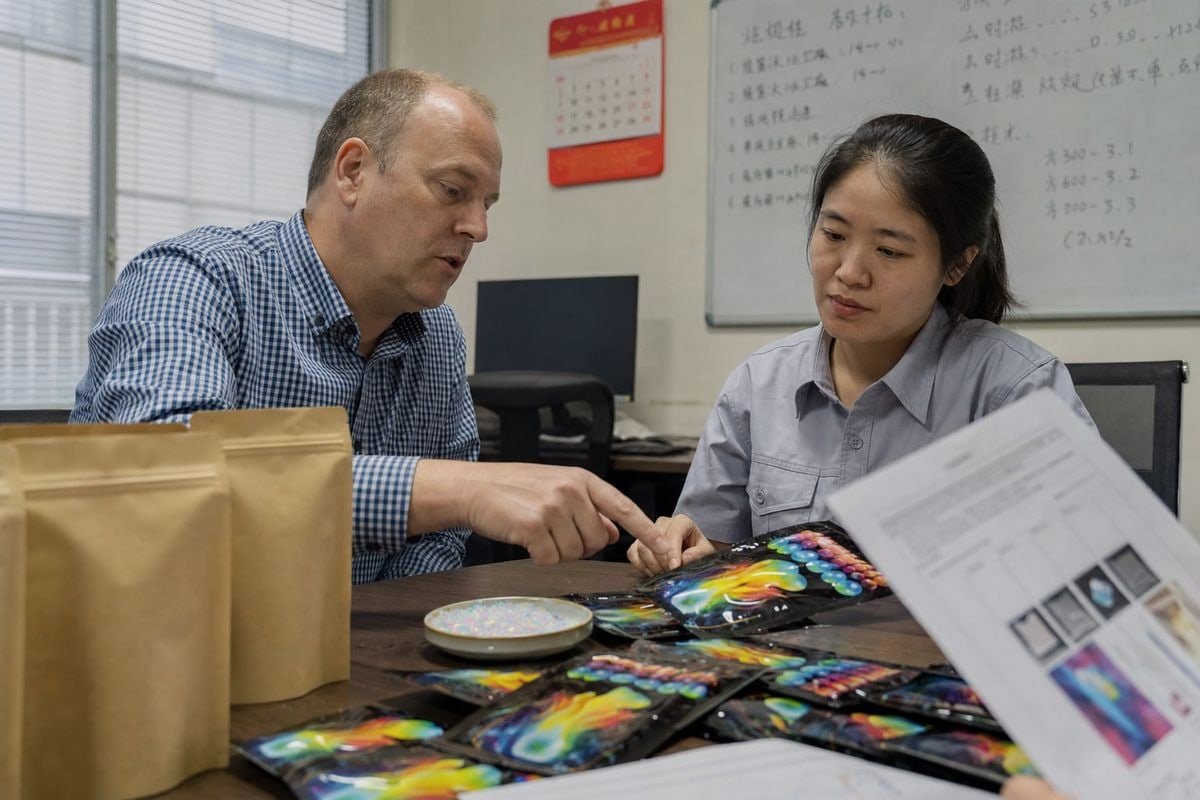
Embalagens de checkout em pequenas porções para pó mágico de fogo parecem simples até que os fornecedores comecem a dizer não. Em nossa linha de produção, ouvimos as mesmas histórias frustradas de compradores a cada temporada.
Para conseguir que os fornecedores façam embalagens de checkout de pequena porção para pó mágico de fogo, envie um resumo de embalagem definido: formato de sachê de porção única ou stick pack, peso exato de enchimento, unidades por caixa de exibição, volumes de primeira tiragem e anuais, além de um pedido de tiragem piloto. Resumos específicos obtêm cotações; pedidos vagos obtêm rejeições.
Deixe-me detalhar isso nas quatro perguntas que os compradores nos fazem com mais frequência. Cada uma remove um motivo para um fornecedor recusar seu projeto.
Qual MOQ Posso Esperar ao Encomendar Pacotes de Pó Mágico de Fogo de Pequena Porção?
Na primavera passada, um distribuidor alemão de lareiras pediu à nossa equipe 500 sachês personalizados como primeiro pedido. Tivemos que explicar por que apenas o filme tornava esse número impossível — e o que realmente funciona em vez disso.
Espere uma quantidade mínima de pedido de aproximadamente 5.000–10.000 sachês de porção única para embalagens impressas personalizadas, e 1.000–3.000 unidades ao usar sachês de estoque com etiquetas adesivas de marca. Os MOQs de teste podem cair ainda mais se você aceitar um preço unitário mais alto para um lote de teste de mercado.
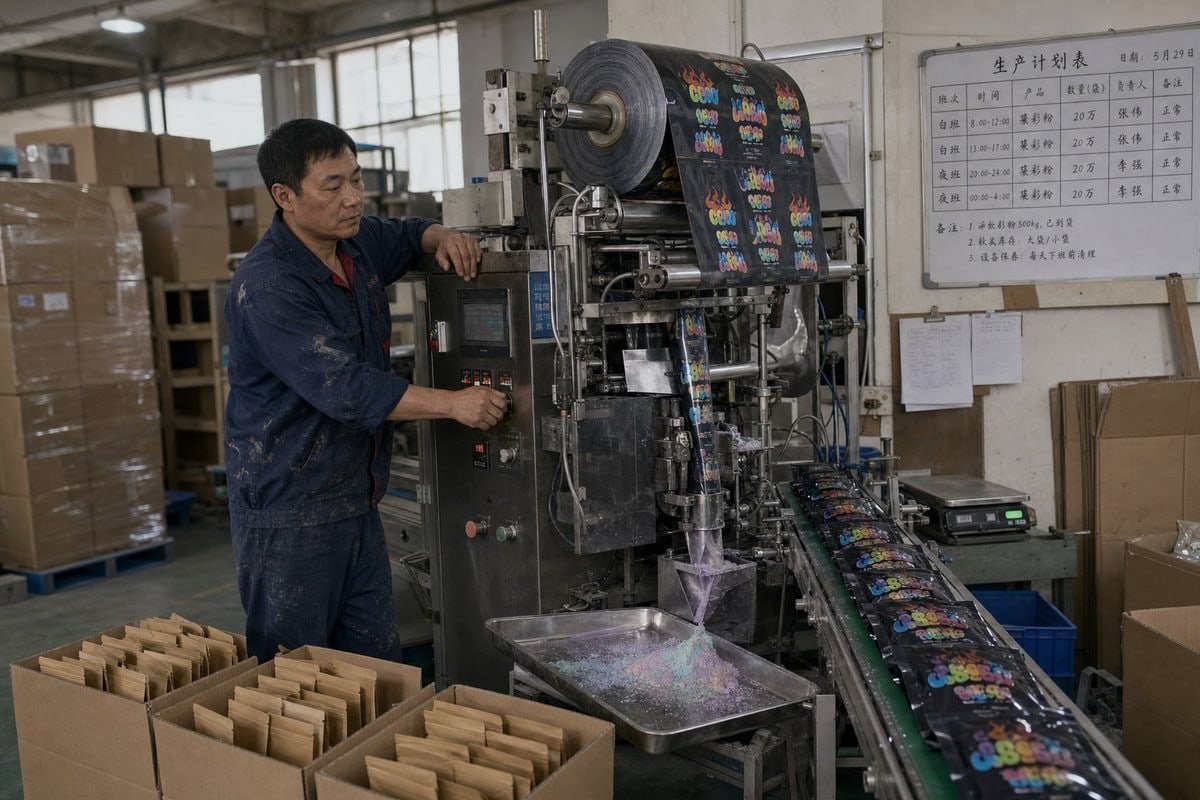
O MOQ para embalagens de dose unitária não é arbitrário. É impulsionado pela economia de filme, impressão e configuração de máquina. Quando um fabricante de embalagens flexíveis imprime um laminado de folha personalizado 1, as chapas de impressão e o mínimo de corrida de filme ditam o piso. É por isso que 500 pacotes totalmente personalizados raramente fazem sentido para qualquer pessoa.
Por que embalagens pequenas carregam maior pressão de MOQ
Aqui está a tensão que você precisa entender antes de negociar. Embalagens de pequenas porções multiplicam tudo: mais selagens, mais ciclos de enchimento, mais mão de obra, mais embalagem em caixa. Os fornecedores argumentarão que embalagens de tamanho de checkout só compensam em volume real. Eles não estão errados na matemática. Mas essa objeção é solucionável, e nós a resolvemos com compradores o tempo todo.
Existem três alavancas práticas que reduzem seu MOQ efetivo:
- Rotulagem leve de OEM. Use nossos tamanhos de sachê em estoque 2 e aplique seu rótulo adesivo de marca personalizada. Você pula o mínimo de filme impresso inteiramente, que é o maior impulsionador de MOQ.
- Pague mais por unidade no piloto. Um lote de teste de mercado a um preço unitário mais alto permite que ambos os lados validem o produto antes de se comprometerem com ferramentas personalizadas completas.
- Compre os materiais de embalagem antecipadamente. Alguns compradores compram o filme personalizado em uma corrida e nos deixam armazená-lo, depois retiram dele em vários pedidos de produção menores.
Faixas Típicas de MOQ por Abordagem
| Abordagem | MOQ Típico | Custo por unidade | Exposição de Caixa Inicial |
|---|---|---|---|
| Sachê em estoque + rótulo de marca | 000–3.000 unidades | Maior | Teste de mercado, primeira apresentação no varejo |
| Sachê impresso personalizado | 000–10.000 peças | 1 x 20 pés, vários produtos | Posicionamento no varejo confirmado |
| Stick pack personalizado, impressão completa | 000+ peças | Menor em escala | SKUs estabelecidos, varejo em cadeia |
| Corrida piloto/amostra | 100–500 peças | Mais alto | Aprovação de protótipo, amostras do comprador |
Em nossos mais de 17 anos fornecendo pacotes de corante para fogueira 3 para importadores nos EUA e Europa, os compradores que têm sucesso quase sempre começam na linha um ou na linha quatro dessa tabela. Eles testam, obtêm feedback do varejo e, em seguida, escalam para impressão personalizada com confiança — e com volumes que tornam os fornecedores ansiosos em vez de relutantes.
Quais Formatos de Embalagem Funcionam Melhor para Exibição no Caixa de Pó Mágico de Fogo?
Um compromisso que pesamos constantemente em nossa fábrica de Ningbo: stick packs rodam mais rápido e usam menos filme, mas sachês se exibem melhor no caixa. A resposta certa depende de como seu comprador realmente compra.
Sachês de folha plana em uma caixa expositora de bancada com alimentação por gravidade funcionam melhor para vendas no caixa de pó mágico de fogo. Os sachês oferecem a maior face imprimível para apelo de impulso, enquanto os pacotes em bastão são adequados para pacotes múltiplos e as bolsas kraft autoportantes são adequadas para colocação em prateleiras.
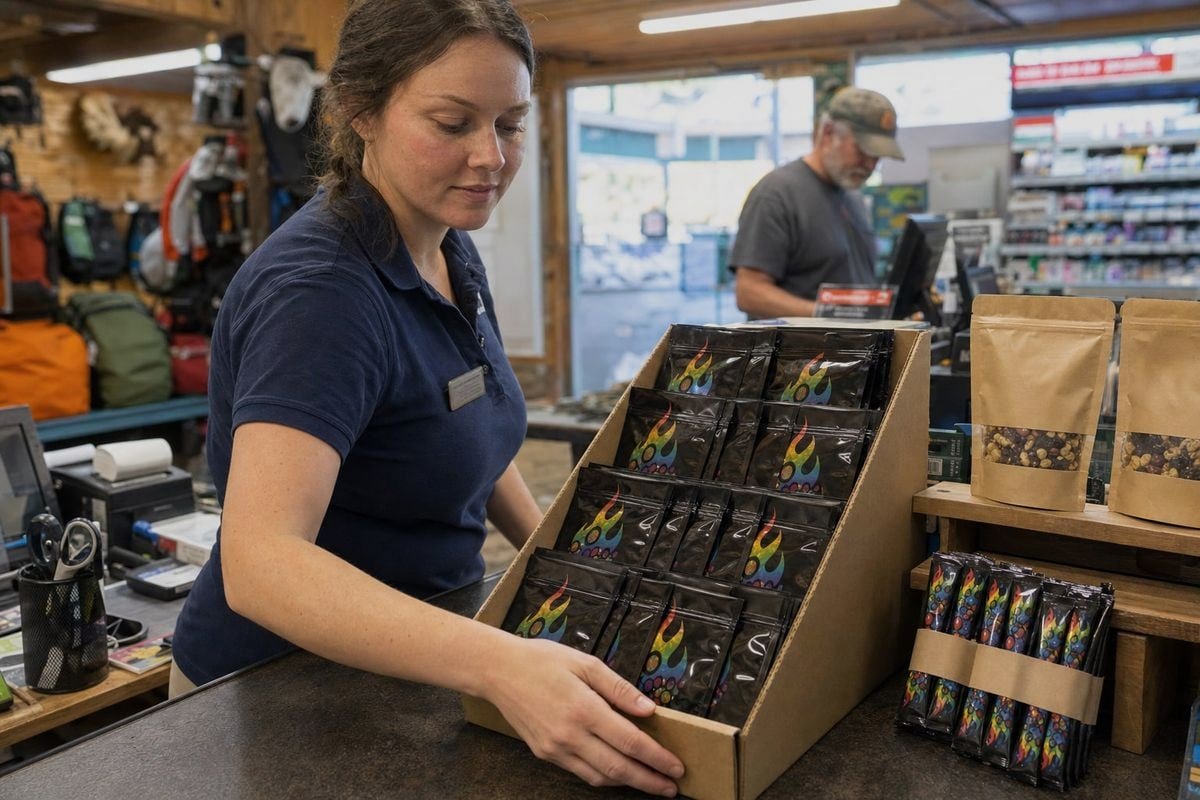
Para uma comparação rápida antes dos detalhes, veja como os principais formatos se comparam:
| Formato | Faixa de Enchimento | Adequação ao Caixa | Área de Impressão | Eficiência de Material |
|---|---|---|---|---|
| Sachê de papel alumínio | 10–30 g | Excelente | Grande face frontal | Moderado |
| Pacote em bastão | 1–15 g | Bom em multipacks | Estreito | Melhor |
| Bolsa Kraft autoportante | 100–500 g | Ruim no caixa | Grande | Bom |
| Pote / lata de plástico | 250 g+ | Não | Etiqueta de embrulho | Baixo |
| Caixa de exposição PDQ | 24–48 sachês | O facilitador | Caixa completa | N/A |
Por que o Sachê Vence no Caixa
Comprar no caixa é comprar por impulso. O comprador tem três segundos para ver o produto, entendê-lo e pegá-lo. Um sachê plano oferece uma face de outdoor completa — em nossos próprios pacotes Magic Fire, isso significa filme preto brilhante com gráficos de chama arco-íris que são lidos instantaneamente a uma distância de um braço. Um stick pack estreito simplesmente não pode carregar esse peso visual por si só.
A caixa de exposição é tão importante quanto o pacote. Solicite uma unidade de balcão PDQ (Quantidade de Exposição do Produto) alimentada por gravidade ao seu fornecedor. Ela mantém a pegada compacta em um balcão de caixa lotado, apresenta os pacotes de frente e se auto-organiza à medida que as unidades são vendidas. Construímos essas caixas de exposição internamente como parte de nosso serviço de exposição no ponto de venda, geralmente contendo 24 ou 48 sachês por caixa.
O Padrão de Design Toss-In
Um detalhe de formato que os compradores muitas vezes perdem: o sachê deve ser projetado como uma unidade toss-in. O consumidor joga o pacote inteiro fechado na fogueira, lareira ou poço de fogo. Este é o padrão da indústria por um motivo — mantém as mãos longe do pó, garante que a dose completa chegue ao fogo e torna as instruções de uma linha. Alguns varejistas premium de atividades ao ar livre agora também perguntam sobre filmes compostáveis e reativos ao calor para um ângulo de "não deixar rastros", o que é uma conversa que vale a pena ter com seu fornecedor cedo, pois afeta o fornecimento de filme e as configurações de selagem.
Planeje também seu filme de barreira adequadamente. Para pacotes de pequena porção, recomendamos um laminado de folha de 3 camadas 4 (PET/AL/PE). Pacotes pequenos têm proporcionalmente mais borda de selagem por grama de produto, então o risco de entrada de umidade é maior — e sais metálicos úmidos aglomeram e queimam de forma irregular.
Como Garanto a Conformidade e a Rotulagem de Segurança em Pacotes Pequenos de Corantes para Fogo?
A conformidade é onde vimos mais remessas falharem do que em qualquer outro lugar. Um importador do Reino Unido veio até nós depois que a alfândega reteve o contêiner de seu fornecedor anterior por falta de documentação — uma lição cara que ajudamos os compradores a evitar desde o primeiro dia.
Exija que o seu fornecedor forneça uma Ficha de Dados de Segurança, marcação CE onde for exigido, relatórios de testes de terceiros de laboratórios como SGS ou Intertek, e texto de aviso impresso em cada embalagem e caixa de exibição. Em alguns mercados, os corantes de chama são regulamentados de forma semelhante aos brinquedos pirotécnicos, portanto, verifique a classificação antes de encomendar.

A embalagem de pequena porção multiplica suas obrigações de rotulagem. Cada sachê individual é uma unidade voltada para o consumidor, portanto, cada sachê precisa de avisos em conformidade — não apenas a caixa externa. Isso é mais espaço de impressão para gerenciar, mas é inegociável para varejo sério.
Os Documentos Que Seu Fornecedor Deve Fornecer
Antes de fazer qualquer pedido, solicite este conjunto de documentos. Se um fornecedor hesitar em qualquer item, trate isso como um sinal de alerta:
| Documento | O que Comprova | Quem o Exige |
|---|---|---|
| Ficha de Dados de Segurança (SDS/MSDS) | Composição química e orientação de manuseio | Varejistas, alfândegas, seguradoras |
| Documentação CE | Conformidade da UE, quando aplicável | Importadores da UE/Reino Unido |
| relatórios de teste SGS ou Intertek | Verificação independente de alegações de segurança | Varejistas de rede, distribuidores |
| Certificado ISO 9001 | Sistema de gestão de qualidade consistente | Gerentes de sourcing |
| relatório de auditoria BSCI | Condições éticas de fábrica | Programas de varejo dos EUA e da UE |
| Declaração de classificação de remessa | Manuseio e declaração de frete corretos | Agentes de carga, alfândega |
Nossa fábrica possui certificações ISO 9001, BSCI e CE com relatórios de teste SGS e Intertek arquivados, pois para nossa base de compradores — importadores estabelecidos nos EUA, Alemanha, Reino Unido e além — a conformidade com a Ficha de Dados de Segurança é um requisito rígido, não um "bom ter". Fornecemos esses documentos com cada cotação, não após o depósito.
Rotulagem no Próprio Pacote
No mínimo, cada pacote de pequena porção deve conter: instruções de uso, uma declaração de cautela, orientação de idade, escopo de uso interno/externo, lote ou codificação de lote 5 para rastreabilidade, e seu código de barras. Em um sachê tão pequeno quanto 10–30 g, esse texto compete com sua marca, portanto, planeje a arte com zonas de conformidade desde o primeiro rascunho. Roteamos toda nova arte por uma verificação de conformidade antes que as chapas de impressão sejam feitas, pois reimprimir o filme é muito mais caro do que revisar um PDF.
Mais um ponto: formulação ecológica simplifica tudo a jusante. Produtos feitos sem produtos químicos nocivos enfrentam menos obstáculos de classificação, envio mais fácil e recepções mais calorosas das equipes de conformidade de varejo.
Um Fornecedor Pode Oferecer Marca Própria para Pequenas Encomendas de Teste de Pó Mágico de Fogo?
A pergunta que mais gosto de novos compradores é se a marca própria é realista antes de se comprometerem com um contêiner. Nossa resposta, refinada ao longo de centenas de projetos OEM, é sim — se você a sequenciar corretamente.
Sim, fornecedores estabelecidos de OEM/ODM podem rotular privadamente pequenas encomendas de teste de pó mágico de fogo. O caminho padrão são sachês de estoque rotulados para a execução piloto, em seguida, bolsas totalmente personalizadas impressas, caixas de exibição e códigos de barras assim que o teste validar a demanda — geralmente dentro de um a dois ciclos de produção.
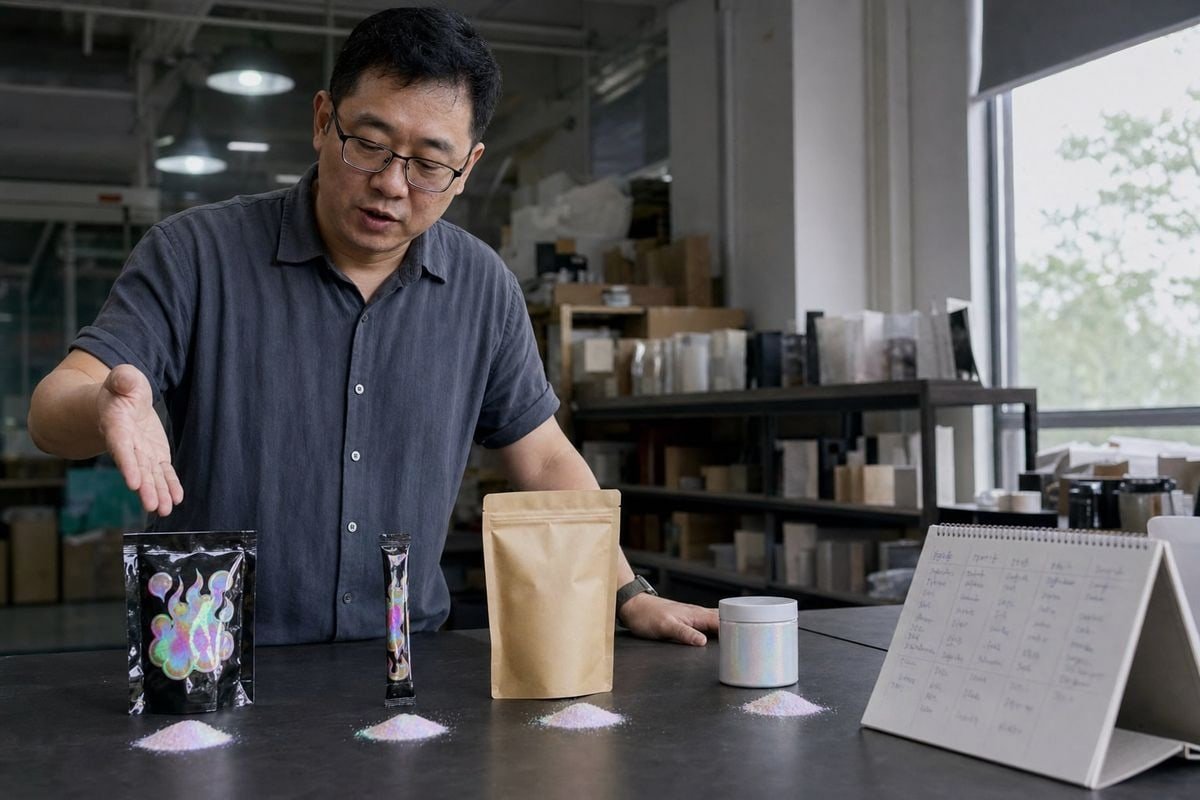
A fabricação de marca própria para produtos com tema de fogo funciona melhor como um processo faseado e espelha como as operações profissionais de embalagem por contrato 6 funcionam em todos os lugares: consulta, amostragem, lote piloto, depois produção completa. Pular etapas é onde os projetos dão errado.
O Caminho de Quatro Fases de Teste para Escala
- Consulta e briefing. Você compartilha seu mercado-alvo, peso de enchimento, preferência de formato e conceito de varejo. Respondemos com recomendações de formato, opções de filme e pontos de interrupção de MOQ honestos.
- Amostragem e protótipos. Produzimos amostras físicas — sachês cheios, caixas de exposição mock-up — para que você possa testar o desempenho da queima, integridade da vedação 7, e presença na prateleira. As primeiras amostras devem refletir de forma confiável a qualidade da produção em massa; nosso controle de qualidade lote a lote existe precisamente para que o façam.
- Lote piloto com marca leve. Um pequeno lote usando tamanhos de bolsa padrão e seus rótulos impressos. Este é o seu teste de mercado com o menor risco possível.
- Produção personalizada completa. Bolsas impressas personalizadas, sua própria embalagem de exposição, rótulos de aviso no idioma do seu mercado, códigos de barras e frete consolidado. Nossos serviços de enchimento de sachês e cartonagem acontecem sob o mesmo teto, que é o que significa realmente serviço OEM/ODM completo na prática.
O que incluir em sua prospecção de fornecedores
Quando você entra em contato com qualquer fornecedor — inclusive nós — um argumento curto e específico muda tudo. Algo como: "Precisamos de uma embalagem de uso único para o consumidor para pó de cor de fogo, idealmente um sachê, com caixas de exibição de balcão para o checkout. Queremos testar dois pesos de enchimento e precisamos de orientação sobre MOQ e prazo de entrega." Em seguida, pergunte: Quais formatos você executa? Você oferece enchimentos de protótipo? Você pode fornecer e imprimir o filme? Quais são os pontos de interrupção de custo por unidade? Você pode embalar em caixas de exibição PDQ?
Esse breve resumo leva dez minutos para ser escrito. Ele o posiciona como um parceiro sério e, em nossa experiência exportando para mais de 30 países, é o preditor mais forte de uma cotação rápida e flexível. Comece com seu potencial de crescimento



 English
  Spanish
  German
  French
  Arabic
  Portuguese
Participe da conversa