







Evaluating tiered pricing for fireplace colored pine cones confuses many buyers Intertek 1. On our production line, I have watched importers chase deep discounts and lose margin to hidden fulfillment costs.
Evaluate tiered pricing for fireplace colored pine cones by comparing landed unit cost, gross margin, and profit per tier — not discount size. Verify each price break reflects real production savings, confirm certifications apply at every tier, and negotiate a small MOQ to test quality first.
That is the short answer. Now let me walk you through each part of the evaluation, step by step, using real numbers and the questions I hear from buyers every season.
What price breaks should I expect at different order quantities for colored pine cones?
When we quote a new distributor from Germany or the US, the first question is almost always about price break thresholds Documentação CE 2. I understand why. Quantity drives everything in this category.
Expect meaningful price breaks at roughly 500, 1,000, and 5,000 units, with per-unit reductions of 5–15% at each step. Larger tiers should also unlock packaging upgrades, freight consolidation, and private-label options — not just a slightly lower unit cost comparison on paper.
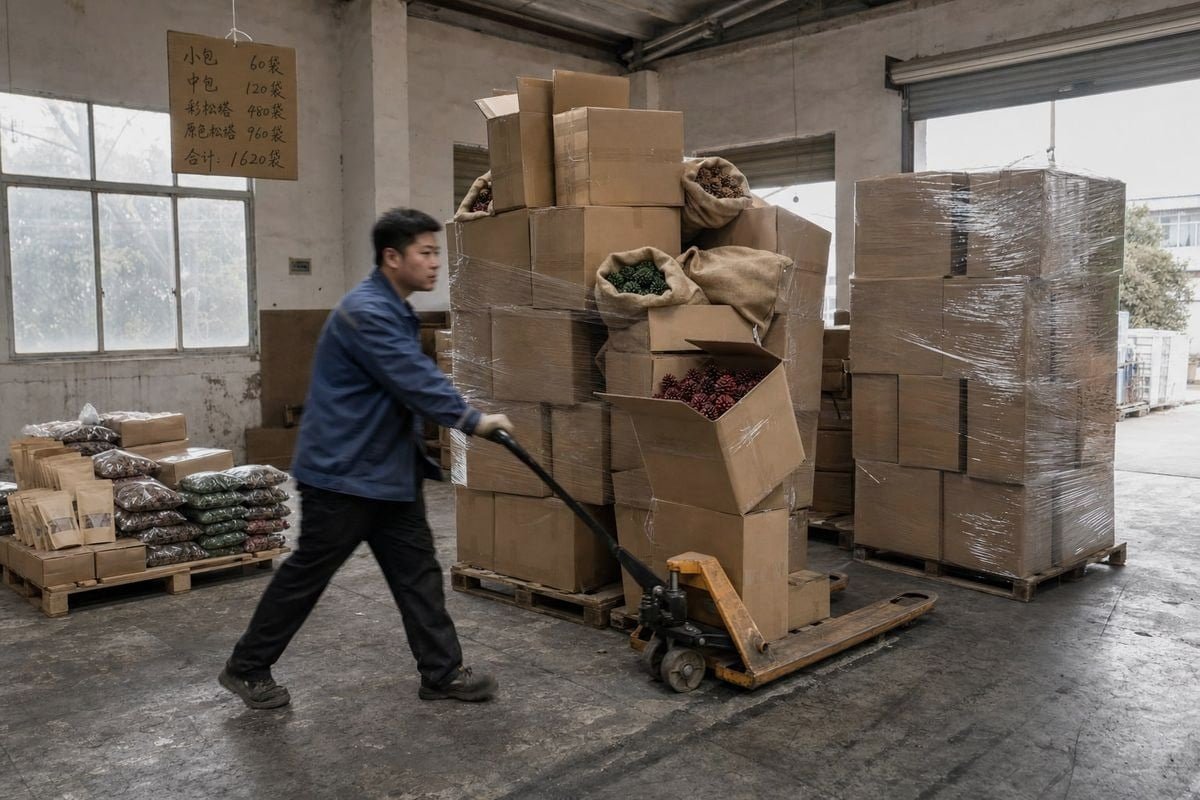
Volume-based pricing for colored pine cones follows a fairly predictable logic once you understand where the costs actually sit. The pine cones themselves are cheap. The real cost drivers are the flame colorant chemicals, the coating and drying labor, the packaging format, and the shipping and logistics costs. Each of those scales differently, which is why price breaks cluster at specific thresholds rather than sliding smoothly.
Typical tier structure we see in this category
| Nível | Quantity Range | Typical Per-Unit Discount | What Usually Changes |
|---|---|---|---|
| Teste | 100–500 unidades | Preço base | Standard polybag or kraft pouch |
| Principal | 500–1.000 unidades | 5–8% off baseline | Mixed carton options, better freight rate |
| A granel | 000–5.000 unidades | 10–15% off baseline | Private-label eligibility, palletized shipping |
| Atacado | 000+ unidades | 15–20% off baseline | Custom packaging, display trays, split delivery |
Packaging is a real tier differentiator, not a footnote. A basic polybag, an eco-friendly mesh sack, and a gift-ready burlap pouch with printed branding all carry different costs. In our experience, packaging can swing the unit price more than the pine cone treatment itself.
Seasonal timing matters too. Seasonal demand fluctuations in this niche are extreme — most retail sales happen from October through January. Suppliers like us often offer early-bird pricing on orders placed in spring or summer, because it lets the factory balance production year-round. If a supplier offers a deeper discount for off-season commitment, that is usually a genuine cost saving being shared, not a gimmick.
Finally, check whether higher tiers include shelf-ready packaging or PDQ display trays. For retail buyers, that labor saving at the store level is worth real money and should factor into your unit cost comparison.
How do I know if a supplier's tiered pricing reflects real cost savings or just a sales tactic?
A UK buyer once showed me a competitor's quote where the 5,000-unit tier was only 3% cheaper than the 500-unit tier. That structure told me the supplier was a trading company marking up someone else's price breaks.
Real tiered pricing maps to actual cost drivers: batch coating efficiency, carton and pallet utilization, and freight consolidation. Ask the supplier to explain which cost drops at each tier. If they cannot, or if adjacent tiers differ by under 3%, it is likely a sales tactic.
The way I break this down for buyers is simple: every honest price break has a physical reason behind it. In a real factory, costs step down when a full coating batch is used, when a carton fills completely, when an order fills a pallet, and when a shipment fills a container. Those are the four checkpoints. If a supplier's tiers do not line up with any of them, be skeptical.
Four questions that expose fake tiers
- Which specific cost decreases at this tier? A genuine manufacturer of wholesale fire starters and colored pine cones can answer immediately — batch size, labor per unit, or freight per kilo. A middleman usually cannot.
- Does the discount curve flatten or steepen? Real cost savings flatten as volume grows, because material costs stop falling. A curve that steepens at the top tier is often an artificial anchor designed to push you upward.
- Are shipping and logistics costs quoted separately by tier? Consolidação de frete 3 is one of the largest true savings. Palletized logistics at higher tiers should visibly reduce your landed cost. If freight stays flat across tiers, savings are being hidden or invented.
- Do value-adds appear, not just price cuts? Legitimate top tiers unlock things that cost the factory real effort: custom hang-tags, branded burlap sacks, exclusive color-blend formulations. A tier that offers only a percentage off is thinner than it looks.
There is a counterargument worth addressing. Some buyers say discount depth is all that matters — take the lowest number and move on. In my experience, that approach backfires in this category. A supplier who discounts beyond their real cost savings will recover the margin somewhere: cheaper flame colorant chemicals, thinner coating, or skipped QC steps. The price survives; the product does not.
What MOQ should I negotiate to test quality before committing to a bulk tier?
Flexible trial orders are something we deliberately built into our export program in Ningbo, because I learned early that buyers who test first become the longest partners. The ones who skipped sampling often churned after one bad season.
Negotiate a trial MOQ of 100–300 units — enough to test burn color, coating consistency, and packaging in real conditions. Agree in writing that the trial batch comes from the same production line and formulation as bulk orders, and that trial cost credits toward your first bulk tier.
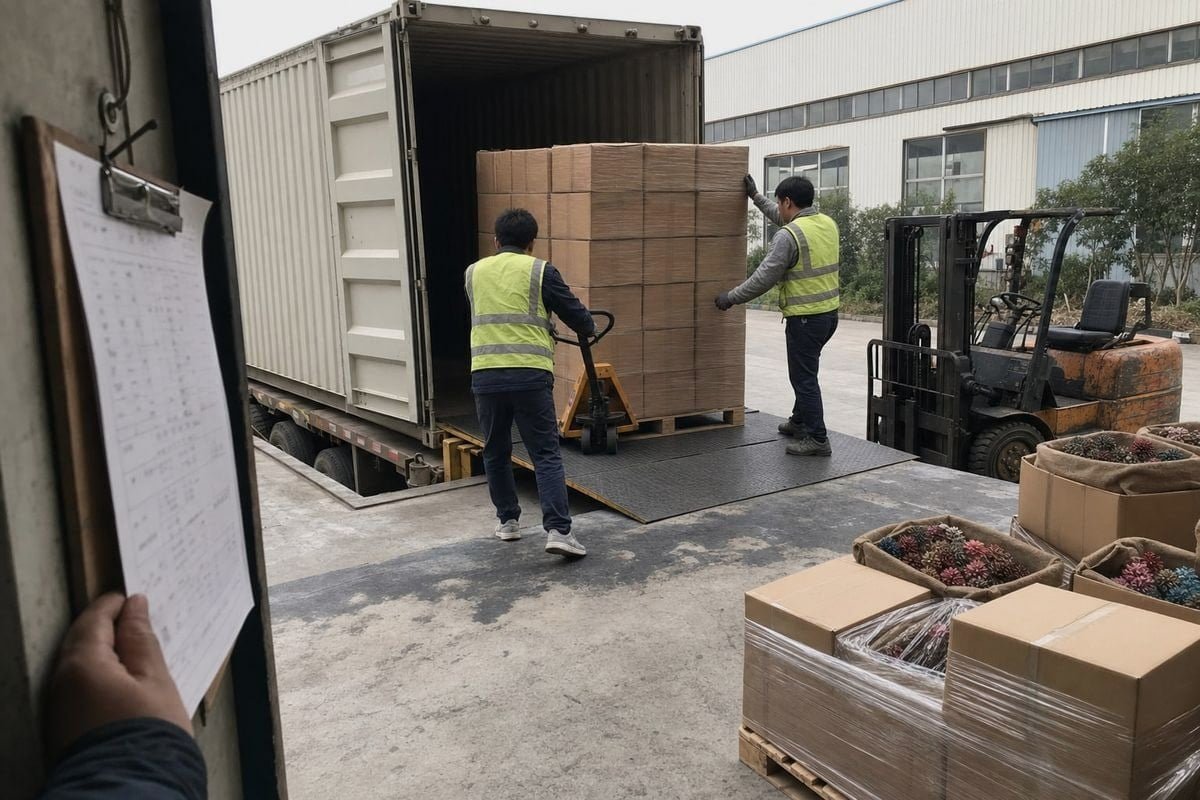
O quantidade mínima de pedido 4 conversation is where many buyers negotiate the wrong thing. They push hard on trial price. I would push instead on trial conditions. A cheap trial batch that does not represent mass production tells you nothing. Here is the process I recommend, based on how our own trial orders run.
A five-step trial protocol
- Request 100–300 units from a standard production run, not a hand-picked sample set. You want the batch-to-batch reality, including natural variation in cone size and coating coverage.
- Test across your actual use cases. Burn cones in a fireplace, a fire pit, and an outdoor campfire if your customers include campers. Flame color intensity and duration can differ by fuel bed and airflow.
- Check the paperwork with the product. SGS 5 or Intertek test reports, CE documentation, and safety data for the flame colorant chemicals should arrive with the trial, not after the bulk PO. In our factory, this is standard because our EU and US buyers treat compliance as a hard requirement.
- Stress-test the packaging. Resealable kraft pouches, burlap sacks, and jars behave differently in transit and on shelves. Drop-test cartons. Check moisture resistance, since damp cones burn poorly.
- Negotiate the trial-to-bulk bridge. Ask that the trial cost be credited against your first bulk order, and lock the bulk tier price for 60–90 days so a good trial converts smoothly.
One trade-off I always flag: a very low MOQ from an unknown supplier can be a warning sign, not a favor. Real factories have setup costs per run. A supplier offering 20-unit "trials" is often shipping repackaged stock of unknown origin. A reasonable trial MOQ signals a real production line behind the quote.
Does choosing a lower price tier compromise compliance certifications or product consistency?
A question from a Dutch distributor stuck with me last year: "If I only order the small tier, do I still get the certified product?" The fact that he had to ask says a lot about this industry.
From a legitimate manufacturer, no — certifications like CE, ISO 9001, and SGS testing apply to the product and factory, not the order size. However, some suppliers quietly source small orders from uncertified stock, so always require batch-level test documentation regardless of tier.

Let me separate what should vary by tier from what must never vary. Legitimate tier differences are commercial: unit price, packaging format, branding options, delivery scheduling. Illegitimate tier differences are chemical and procedural: coating formulation, heavy-metal content, QC sampling rates, and documentation.
What can and cannot change between tiers
| Atributo | Acceptable to Vary by Tier? | Por quê |
|---|---|---|
| Preço unitário | Sim | Reflects real volume-based pricing economics |
| Formato da embalagem | Sim | Polybag vs. burlap vs. display tray is a value step |
| Marca própria | Sim | Setup costs justify a threshold |
| Flame colorant formulation | Não | Safety and burn performance must be identical |
| Heavy-metal-free coating standard 6 | Não | Compliance is binary, not tiered |
| Batch QC and test reports | Não | Every batch needs the same inspection |
The risk is real because of how some low-cost suppliers structure their business. Traditional copper-sulfate-based coatings are cheaper than heavy-metal-free mineral formulations. A supplier under margin pressure at a discounted tier may substitute the cheaper chemistry and hope nobody tests the batch. That exposes you to REACH 7 problems in Europe and retailer compliance failures in the US.
Our answer to this at Sunrich has always been structural: one formulation, one production standard, every tier. Our color-flame pinecones and Magic Fire packets run through the same eco-friendly process whether the order is a 200-unit trial or a container load, and our ISO 9001 8 and BSCI audits cover the whole line, not selected orders. That is what genuine manufacturing depth looks like, and it is exactly what you should demand in writing from any supplier.
Some buyers argue that for a novelty seasonal item, compliance rigor at small tiers is overkill. I disagree, and so do the retailers. One failed customs inspection or one retailer chemical audit costs more than years of tier discounts. Consistency is not a premium feature. It is the floor.
Conclusão
Chasing the deepest discount on colored pine cones is how buyers lose seasons. [Judge every tier by landed cost, profit, and consistent compliance](https://sunrichfire.com/how-determine-if-supplier-price-fireplace-colored-pine-cones-fair/) — then partner with a factory that proves all three.
Here is the evaluation framework in one view:
| Evaluation Step | O que Verificar | Sinal de Alerta |
|---|---|---|
| Price break logic | Tiers align with batch, carton, pallet thresholds | Under 3% gaps between tiers |
| Custo total real | Freight, packaging, inventory carrying costs included | Flat freight across all volumes |
| Trial MOQ | 100–300 units from standard production | Suspiciously tiny "trials" |
| Conformidade | Same certification and formulation at every tier | Documents only for bulk orders |
| Sazonalidade | Early-bird terms for spring and summer orders | No off-season flexibility |
After 17 years of shipping color-flame products to more than 30 countries, my advice is unchanged: negotiate tiers on evidence, test before you commit, and never let a discount buy down your compliance standard. Do that, and tiered pricing becomes a margin tool instead of a margin trap.
Notas de rodapé
1. Official site of third-party testing organization named as compliance verification source. ↩︎
2. European Commission official page explaining CE marking compliance requirements referenced in article. ↩︎
3. Wikipedia entry for LTL shipping, the standard logistics method for freight consolidation in bulk orders. ↩︎
4. Wikipedia background on MOQ concept central to the trial negotiation discussion. ↩︎
5. Official site of testing and certification body referenced for compliance documentation.



 English
  Spanish
  German
  French
  Arabic
  Portuguese
Participe da conversa