






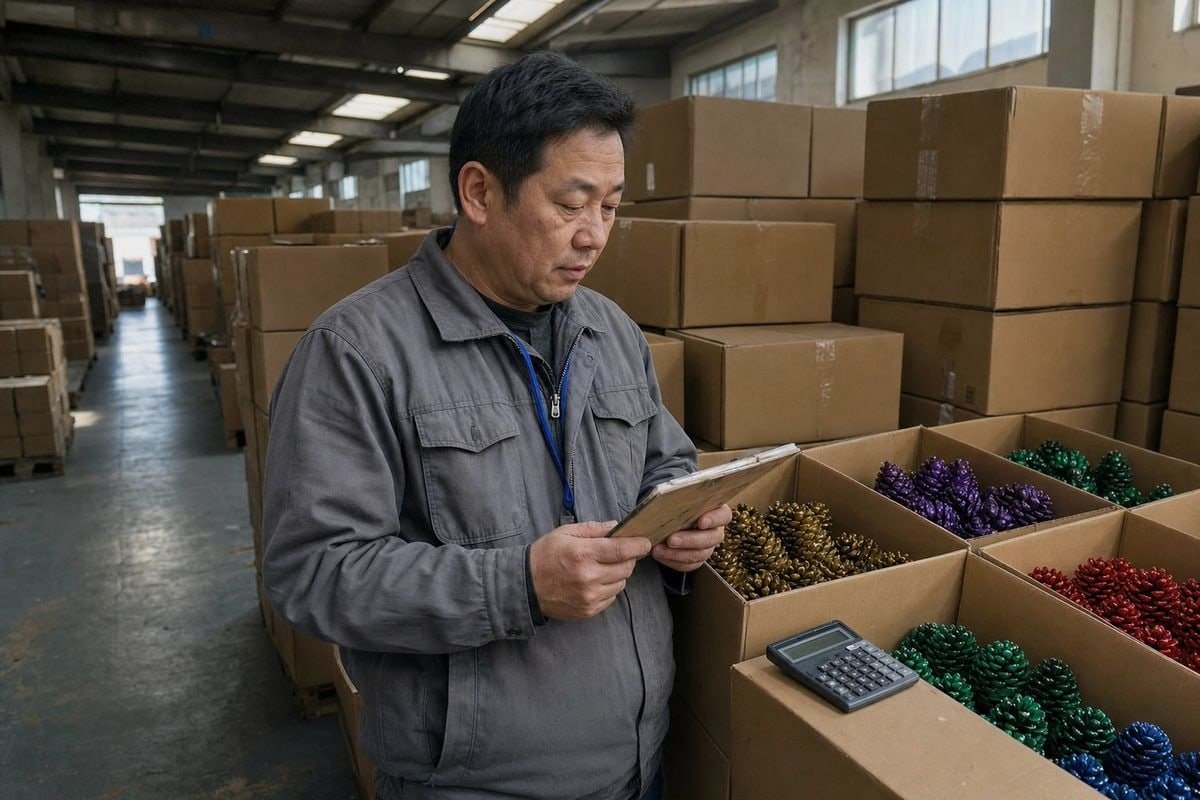
Estimar o valor residual e o espaço de descarte para pinhas coloridas de lareira não vendidas é uma pergunta que nossos compradores nos fazem toda primavera, quando a alta temporada termina e o estoque fica parado.
Estimar o valor residual multiplicando o preço de liquidação esperado (geralmente 30–60% do varejo) pelas unidades vendáveis, subtraindo os custos de venda e manuseio. Calcular o espaço de liquidação dividindo as unidades não vendidas pelas unidades por prateleira, caixa ou palete, adicionando um buffer de 20% para acesso e empilhamento irregular.
Essa fórmula parece simples. Mas os detalhes importam. Abaixo, detalho cada parte para que você possa fazer os cálculos para seu próprio [estoque restante](https://sunrichfire.com/how-handle-leftover-fireplace-colored-pine-cones-inventory-after-heating-season/).
Quais Fatores Afetam o Valor de Revenda de Pinhas de Fogo Coloridas Não Vendidas?
Durante uma visita à fábrica no ano passado, um distribuidor alemão me perguntou por que dois lotes idênticos de nossas pinhas de chama colorida foram vendidos por preços muito diferentes. A resposta foi condição e momento, não o produto em si.
O valor de revenda depende de cinco fatores: sazonalidade restante, condição da embalagem, estabilidade do revestimento, canal de vendas e economia de envio. Embalagens de varejo seladas na estação mantêm valor próximo ao de varejo, enquanto estoque aberto, danificado ou fora de estação pode cair 70–90% em direção ao valor de salvamento rapidamente.
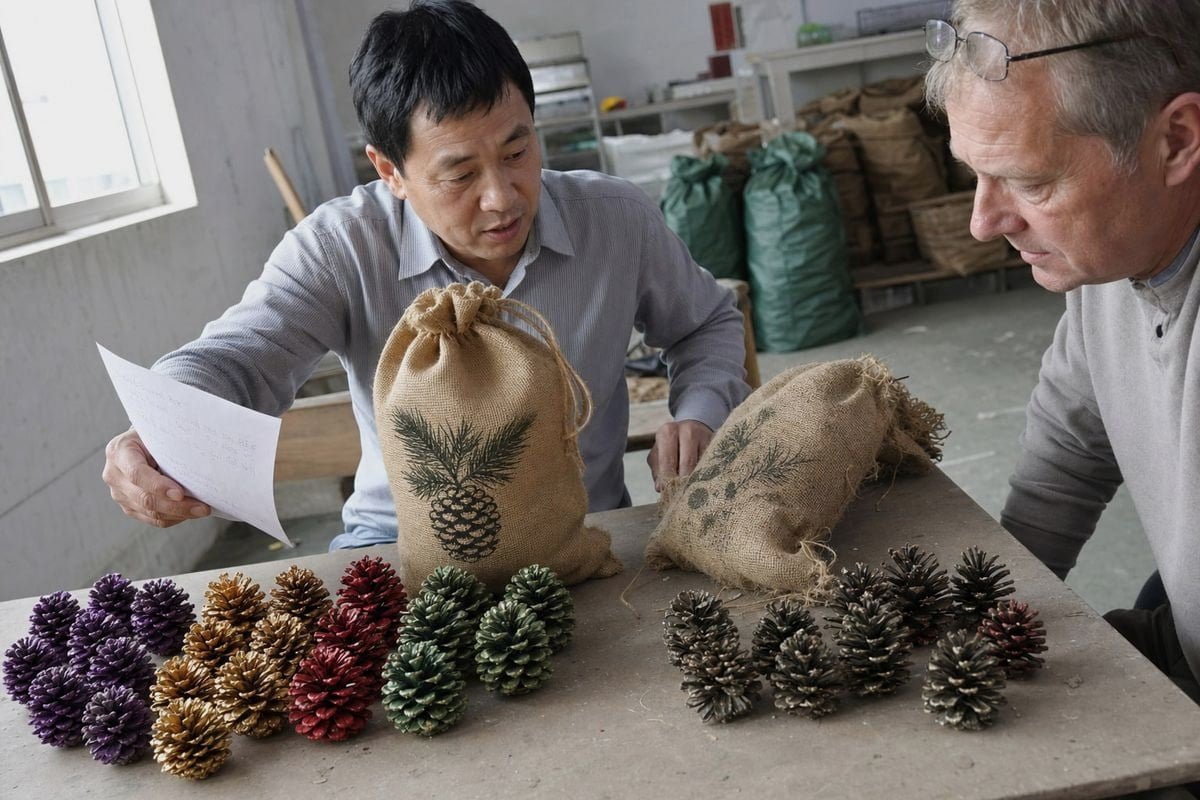
Pinhas de fogo coloridas são uma novidade sazonal de nicho. Não há um preço de "tabela" para elas. Isso significa que sua estimativa de valor residual tem que começar a partir de economia de unidade 1, não de um índice de mercado. Em nossos mais de 17 anos fornecendo distribuidores de lareiras nos EUA e na Europa, vimos o mesmo padrão se repetir: o valor é impulsionado muito mais pela embalagem e pelo momento do que pelas próprias pinhas.
A Classificação de Condição Vem Primeiro
Antes de precificar qualquer coisa, classifique seu estoque. Recomendamos três categorias simples:
| Grau | Descrição | Recuperação Típica |
|---|---|---|
| Imediatamente vendável | Embalagens seladas, embalagem de kraft ou pote intacta, ainda na temporada | 60–100% do varejo |
| Vendável com desconto | Produto intacto, embalagem desbotada ou amassada, ou fora de estação | 25–50% do varejo |
| Não vendável | Exposição à umidade, descoloração, selos rompidos | Quase zero; custo de descarte |
A embalagem muitas vezes importa mais do que as pinhas. Esses produtos são vendidos como novidades para presentes. Um saco de juta amassado ou uma bolsa resselável rasgada mata o apelo do presente, mesmo que as pinhas dentro queimem perfeitamente.
Estabilidade Química e Física
A qualidade do revestimento é o fator oculto. Revestimentos de cera ou aglutinantes podem ficar quebradiços após 12+ meses de armazenamento. Corantes mal formulados podem "florescer" em condições de umidade, deixando uma película esbranquiçada. Esta é uma razão pela qual nossa linha de produção executa um controle de qualidade rigoroso de lote para lote e Testes SGS/Intertek 2 — revestimentos estáveis mantêm o valor residual para uma segunda temporada. Estoque mais barato não certificado muitas vezes não sobrevive a um verão em um armazém.
Economia de Canal e Envio
Finalmente, pense em onde a recuperação acontece. As pinhas têm uma proporção volume-peso terrível. Peso dimensional 3 precificação significa que o envio por correio pode custar mais do que o produto vale. Descarte local, vendas combinadas na loja e liquidação em massa quase sempre superam a revenda online de unidade única.
Quanto Espaço de Armazenamento Preciso para Limpar o Inventário de Pinhas Sobrantes da Lareira?
Um compromisso que pesamos constantemente em nossa fábrica de Ningbo é a densidade de armazenamento versus a proteção do produto. Empacote as pinhas muito apertadas e as escamas quebram; muito soltas e os custos do armazém explodem. Seu planejamento de descarte enfrenta a mesma tensão.
Divida as unidades não vendidas por unidades por caixa, depois caixas por prateleira ou palete, para obter espaço base. Adicione um buffer de 20% para formas irregulares, sinalização e acesso. Um lote típico de 200 unidades restantes precisa de aproximadamente 15–25 pés cúbicos de armazenamento seco e climatizado.
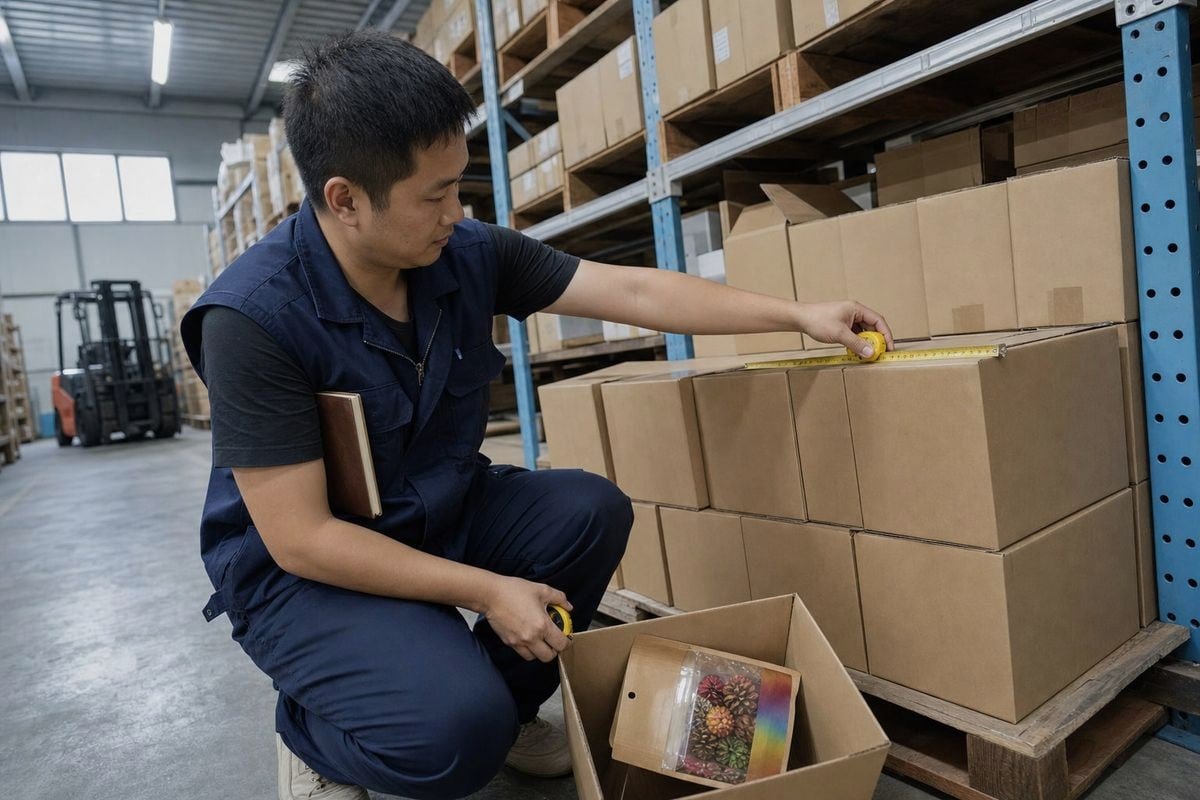
Espaço de descarte não é apenas "onde colocar as caixas". É o espaço que você precisa para segregar o estoque com desconto do estoque com preço integral, exibi-lo visivelmente e retirá-lo rapidamente. Comece com um cálculo de volume cúbico: meça o comprimento × largura × altura da caixa, multiplique pela contagem de caixas e adicione sua margem.
Um Exemplo de Espaço Trabalhado
Digamos que você tenha 200 bolsas restantes. Cada bolsa mede aproximadamente 8 × 5 × 3 polegadas, e 12 bolsas cabem por caixa master.
| Item | Valor |
|---|---|
| Unidades não vendidas | 200 bolsas |
| Unidades por caixa master | 12 |
| Caixas necessárias | 17 |
| Tamanho da caixa | 1,2 pés cúbicos cada |
| Volume base | ~20,4 pés cúbicos |
| Com 20% de margem | ~24,5 pés cúbicos |
Isso cabe em uma única prateleira ou metade de um palete. Sua densidade de armazenamento no armazém melhora muito se as caixas forem uniformes — é por isso que projetamos nossa embalagem OEM em torno de requisitos padrão de racks de caixas e paletes desde o início.
Cuidado com o Aumento de Volume
Aqui está um detalhe que muitos compradores perdem. As pinhas são higroscópicas. Em alta umidade, as escamas se fecham e as pinhas podem inchar, expandindo o volume de enchimento solto em até 30%. Bolsas de varejo seladas limitam isso, mas estoque a granel ou aberto pode crescer silenciosamente além do espaço alocado. Seco, armazenamento com controle climático 5 protege tanto o seu plano de espaço quanto os seus revestimentos de corante. Também o mantém alinhado com os regulamentos de segurança contra incêndio, pois os produtos sazonais combustíveis nunca devem ser empilhados perto de fontes de calor ou bloquear as vias de saída.
Três Regras Práticas de Espaço
- Armazene nas caixas mestras originais sempre que possível — contentores soltos desperdiçam 25–40% mais espaço.
- Mantenha o stock de folga numa zona visível e acessível, não espalhado pela área de stock.
- Reserve uma pequena área de preparação perto da sua exposição de descontos para que a reposição demore minutos, não horas.
Como Posso Calcular Taxas de Depreciação para Estoque Sazonal de Pinhas Coloridas?
Um importador do Reino Unido disse-me uma vez que valorizava o stock restante ao seu custo de chegada durante todo o verão, e depois escrevia a maior parte dele num único golpe doloroso. Essa conversa moldou a forma como agora aconselhamos os compradores sobre o dimensionamento de encomendas de teste.
Trate a depreciação como uma curva de desconto, não uma taxa fixa. Valorize o estoque sazonal de pinhas pelo valor realizável líquido: preço esperado de liquidação menos custos de venda. Planeje uma perda de valor de 40–50% no primeiro mês pós-temporada e de 70–90% em seis meses.

Estilo financeiro fórmulas de valor residual 6 foram construídas para máquinas e veículos, não para inventário. Para stock sazonal, o número honesto é o valor realizável líquido — o que pode realmente recolher após reduções de preço, taxas e manuseamento. As normas contabilísticas apoiam isto através da regra do Menor de Custo ou Mercado 7: se o valor de mercado cair abaixo do custo, regista uma baixa de inventário. Não deixe que o balanço lisonjeie o stock morto.
Uma Curva de Depreciação Prática
Aqui está uma curva de valor realista para cones sazonais de lareira, expressa como uma percentagem do preço de retalho original:
| Tempo Após o Pico Sazonal | Recuperação Esperada | Ação Recomendada |
|---|---|---|
| Semanas 1–4 | 50–70% | Primeira onda de redução de preço, estratégia de redução de preço sazonal a 30–50% de desconto |
| Meses 2–3 | 30–50% | Empacotar com acessórios de lareira ou acendedores de fogo |
| Meses 4–6 | 10–30% | Liquidação em massa, avaliação de doação |
| Mais de 12 meses | 0–15% | Baixar o valor; avaliar a condição do revestimento antes de qualquer revenda |
Calcule os Números de Uma Unidade
A cadeia de fórmulas é a seguinte:
- Preço de liquidação esperado = preço regular × fator de redução de preço.
- Valor residual líquido por unidade = preço de liquidação − taxas − manuseamento − perda de embalagem.
- Valor residual total = valor residual líquido por unidade × unidades com probabilidade de venda.
Exemplo: um saco de $12.99 com redução de 50% vende-se por $6.50. Subtraia $1.00 em custos de pagamento e mão de obra, e a recuperação líquida é $5.50. Se esperar que 140 de 200 pacotes vendam, o valor residual total é $770 — não os $2,598 que os preços de etiqueta sugerem.
Não se esqueça dos custos de manutenção de inventário. Armazenamento, seguro, dinheiro imobilizado e deterioração do revestimento corroem o valor a cada mês que detém. Uma venda mais baixa mas mais rápida geralmente supera uma venda lenta a um preço mais alto. É também por isso que incentivamos encomendas de teste com MOQ flexíveis para compradores de primeira viagem: encomendar no tamanho certo evita que a maior parte desta matemática seja necessária.
Quais São as Melhores Estratégias para Liquidar o Excesso de Inventário de Pinhas para Lareira Antes da Próxima Temporada?
A lição mais útil que aprendi ao observar mais de 30 mercados de exportação é que os vendedores que liquidam stock mais rapidamente decidem cedo. A hesitação, não a profundidade da redução de preço, é o que transforma stock lento em stock morto.
Liquide agindo dentro de quatro semanas do fim da temporada: execute liquidações escalonadas a partir de 40-50% de desconto, agrupe cones com acendedores de fogo ou acessórios, reutilize o estoque como decoração para o ano todo ou produtos para fogueira, e depois liquide em massa localmente em vez de enviar estoque parado.
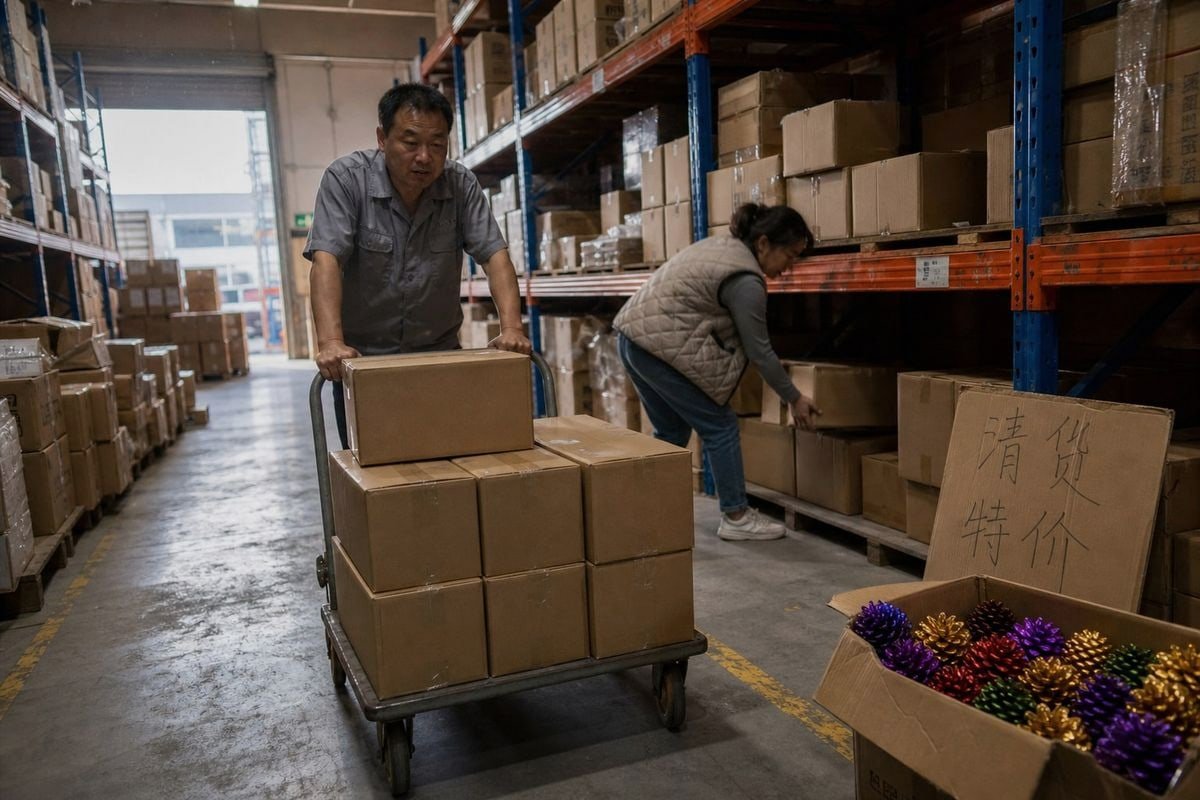
Aqui está uma árvore de decisão rápida para executar para cada lote restante:
- Manter — apenas se o stock estiver selado, os revestimentos forem certificados como estáveis e o custo de armazenamento até à próxima época for inferior à recuperação esperada.
- Redução de preço — o movimento padrão; comece com 40–50% de desconto e aprofunde a cada duas a três semanas.
- Empacotar — emparelhe cones com acendedores de fogo encerados, tochas ou ferramentas de lareira para proteger o valor percebido.
- Repropor — reposicionar como produtos de fogueira ou decoração para todo o ano.
- Doar ou descartar — quando o custo de manuseamento excede o valor residual.
Reposicionar Supera Descontar
A tática mais forte é muitas vezes mudar a história, não apenas o preço. Os cones de lareira são também cones de fogueira. A nossa própria linha de produtos abrange ambos os mundos — os mesmos cones de chama colorida vendem-se em embalagens aconchegantes para lareira para o inverno e em bolsas rústicas de lona para campismo para o verão. Alguns dos nossos clientes de marca visam nichos como fornecedores de glamping de luxo ou comerciantes de presentes ao ar livre, onde os cones de chama colorida são renomeados como acessórios de fogo premium com margens saudáveis em vez de preços de liquidação. Cones sem pintura ou neutros podem até ser transformados em decoração inspirada na natureza: enchimentos de taças, componentes de coroas de flores ou expositores perfumados.
Mantenha a Liquidação Local
Devido ao peso dimensional, enviar um saco de $4 de liquidação através do país pode custar $8. Isso torna os movimentos a granel locais — vendas pop-up, consignação em lojas de lareira, liquidatários regionais — a única saída lucrativa para a liquidação de stock morto profundo. Ao vender para qualquer canal secundário, mantenha os seus documentos de conformidade prontos. Os nossos produtos com marcação CE e testados pela SGS mantêm as etiquetas de aviso e a documentação de segurança intactas, o que permite que o stock com desconto permaneça legalmente pronto para prateleira. O stock não certificado, pelo contrário, pode não ser revendido através de canais de retalho formais a qualquer preço.
Finalmente, transmita a lição. O que quer que tenha sido liquidado lentamente este ano deve moldar a ordem de compra do próximo ano. Encomendar no tamanho certo com um parceiro de fábrica responsivo é mais barato do que o melhor plano de liquidação.
Conclusão
Estime o valor líquido recuperável, não o preço de etiqueta. Classifique o estoque, faça os cálculos de desconto, dimensione seu espaço de descarte e aja rapidamente — então peça de forma mais inteligente com um parceiro de fábrica confiável e em conformidade.
Notas de rodapé
Conceito financeiro fundamental usado para determinar a lucratividade de uma única unidade de produto. ↩︎
Página de destino oficial atualizada da SGS para bens de consumo e serviços de teste de varejo. ↩︎
Explicação do líder da indústria sobre como os custos de envio são calculados com base no volume do pacote. ↩︎
Conceito contábil para avaliar o estoque pelo preço de venda esperado menos os custos. ↩︎
Explicação de ambientes de armazenamento projetados para manter os níveis de temperatura e umidade. ↩︎
Definição de valor residual como o valor estimado de um ativo no final de sua vida útil. ↩︎
Entrada autoritativa da Wikipedia para o princípio contábil, substituindo o link quebrado da Investopedia. ↩︎



 English
  Spanish
  German
  French
  Arabic
  Portuguese
Participe da conversa