






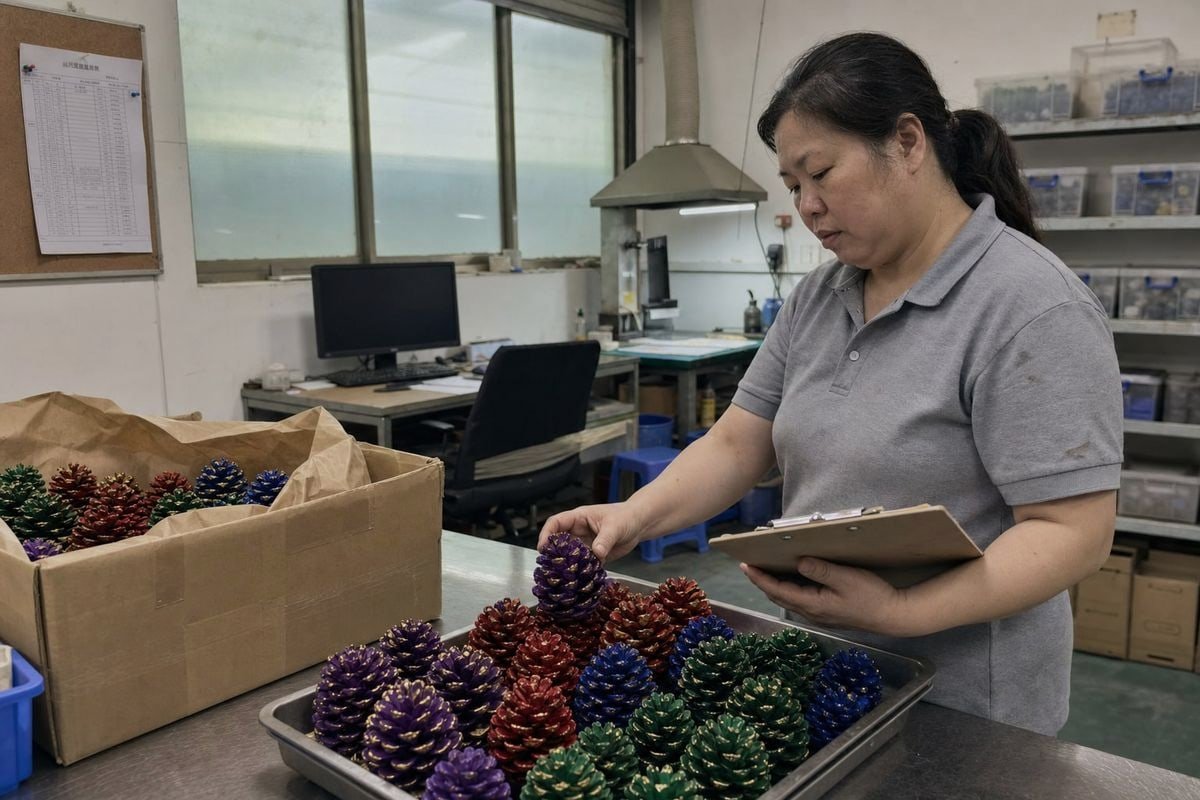
Fireplace colored pine cones look magical, but one bad batch can ruin a stove — and a brand's reputation. I've watched buyers learn this the hard way before they found our factory.
Fireplace colored pine cones are safe for wood-burning stoves only when the supplier provides third-party certifications like SGS or Intertek reports, full ingredient disclosure of the metal-salt colorants, indoor-use ratings, and burn-test documentation confirming no toxic fumes or corrosive residues.
That sounds simple. In practice, most sellers cannot provide even half of those documents. This guide walks you through exactly what to ask for, and why each item matters.
What certifications should I request to confirm these colored pine cones are safe for wood-burning stoves?
A buyer from Germany once opened a call with us by asking for our test reports before he even asked for pricing. In our 17+ years exporting fire products, that order of questions is the right one.
Request SGS or Intertek combustion and toxicity test reports, ISO 9001 quality-system certification, CE compliance documentation for the EU, and BSCI social-compliance audits. Together, these confirm the colored pine cones were tested for safe indoor burning and produced under controlled, repeatable conditions.

Certifications answer two different questions, and you need both answered. First: is the product itself safe to burn indoors? Second: can the factory make it safely, batch after batch? A lab report only covers the sample that was tested. A quality-system certificate covers the process behind every future carton you import.
Product-level vs. factory-level documents
At Sunrich, we keep both sets current because our buyers in the US, Germany, and the UK treat them as a hard requirement, not a nice-to-have. Here is how the documents split:
| Documento | O que prova | Quem o emite |
|---|---|---|
| Relatório de teste SGS / Intertek | Emissions, heavy metal content, burn behavior | Laboratório independente de terceiros |
| Documentação CE | Atende às diretivas de segurança da UE | Manufacturer + notified body |
| ISO 9001 1 | Sistema de gestão de qualidade consistente | Organismo de certificação credenciado |
| Auditoria BSCI | Local de produção ético e auditado | Auditores Amfori |
Ask for the actual PDF reports, not just logos on a website. Check the report date, the tested product name, and the lab's reference number. If the supplier sends a report for a different SKU — say, a color-flame packet instead of the pine cones — push back. We issue product-specific reports for exactly this reason.
Also confirm the report addresses indoor use. Many colored cones are only rated for outdoor fire pits, and Fogões a lenha com certificação EPA 2 are a much stricter environment than an open campfire. A supplier who understands stove manufacturer guidelines will say so in writing.
How do I verify the chemical formula won't release harmful fumes in an enclosed stove?
There is a real trade-off we weigh in our R&D lab: brighter flame colors are easy to achieve with aggressive chemicals, but a closed firebox forgives nothing. We formulate for the stove, not the photo.
Ask the supplier to disclose every colorant by name — such as copper sulfate for green or other mineral salts — then cross-check them against toxicity data. Reject formulas containing lead, arsenic, chlorinated compounds, or undisclosed dyes, and demand emissions test results from an enclosed-combustion scenario.
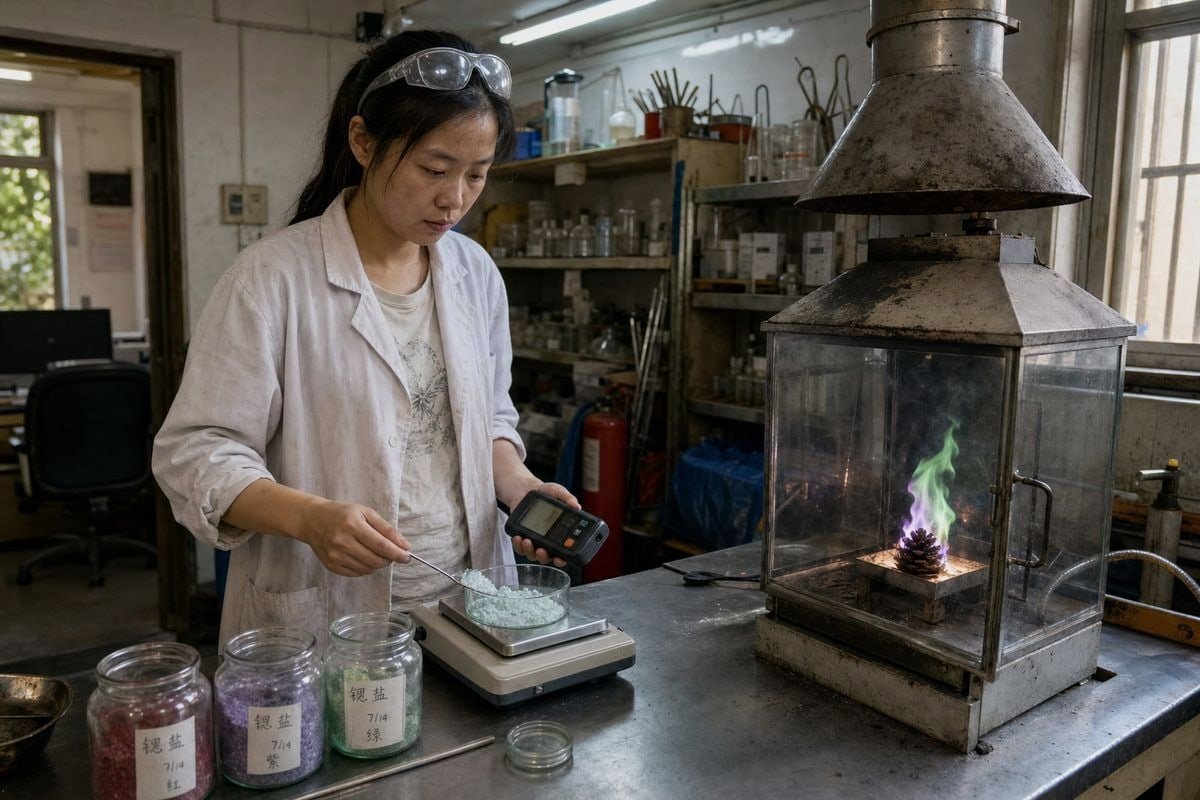
An open fireplace dilutes fumes with room air and a wide flue. A wood stove concentrates everything. Combustion gases pass through a sealed firebox, often across secondary combustion tubes 3 or a catalytic combustor, before exiting a narrow flue pipe. Anything harmful in the formula gets concentrated, not dispersed. That is why qualidade do ar interior 4 is the first thing our chemists consider when we develop a color-flame recipe.
Know your colorants
Flame colors come from metal salts. Some are widely used and well understood. Others have no place indoors:
| Tipo de corante | Typical flame color | Enclosed-stove concern |
|---|---|---|
| Sulfato de cobre | Green / blue-green | Acceptable in controlled doses; verify concentration |
| Compostos de estrôncio | Vermelho | Generally low risk when properly formulated |
| Sais de potássio | Purple / violet | Low risk; common in disclosed recipes |
| Chlorinated compounds | Vivid but unstable colors | High risk — can form corrosive, toxic fumes |
| Undisclosed dyes / coatings | Unknown | Automatic rejection |
Red flags in the formula conversation
If a supplier says the recipe is "proprietary" and refuses all disclosure, walk away. We protect our exact ratios too, but we always disclose the ingredient identities and provide heavy metal emissions data 5 from third-party labs. There is a difference between protecting a recipe and hiding a hazard.
Also ask two enclosed-stove questions specifically. First: can residues damage a catalytic combustor? Metal ions can permanently deactivate a catalyst, so catalytic combustor damage is a legitimate warranty concern for your end customers. Second: do the salts accelerate flue pipe corrosion 6? Chloride-heavy formulas attack steel liners over time. A supplier who has never heard these questions has never seriously tested for stove use.
What test reports or lab documentation should my supplier provide before I place a bulk order?
Last year a US distributor asked us for our full documentation pack before a container order. We sent seven files the same day. His comment: two previous suppliers had taken three weeks and delivered two.
Before bulk ordering, require a current SGS or Intertek emissions report, a heavy metals analysis, a material safety data sheet, burn-time and flame-behavior test records, batch quality-control documentation, and written confirmation of indoor solid-fuel suitability. Reports should be under two years old.
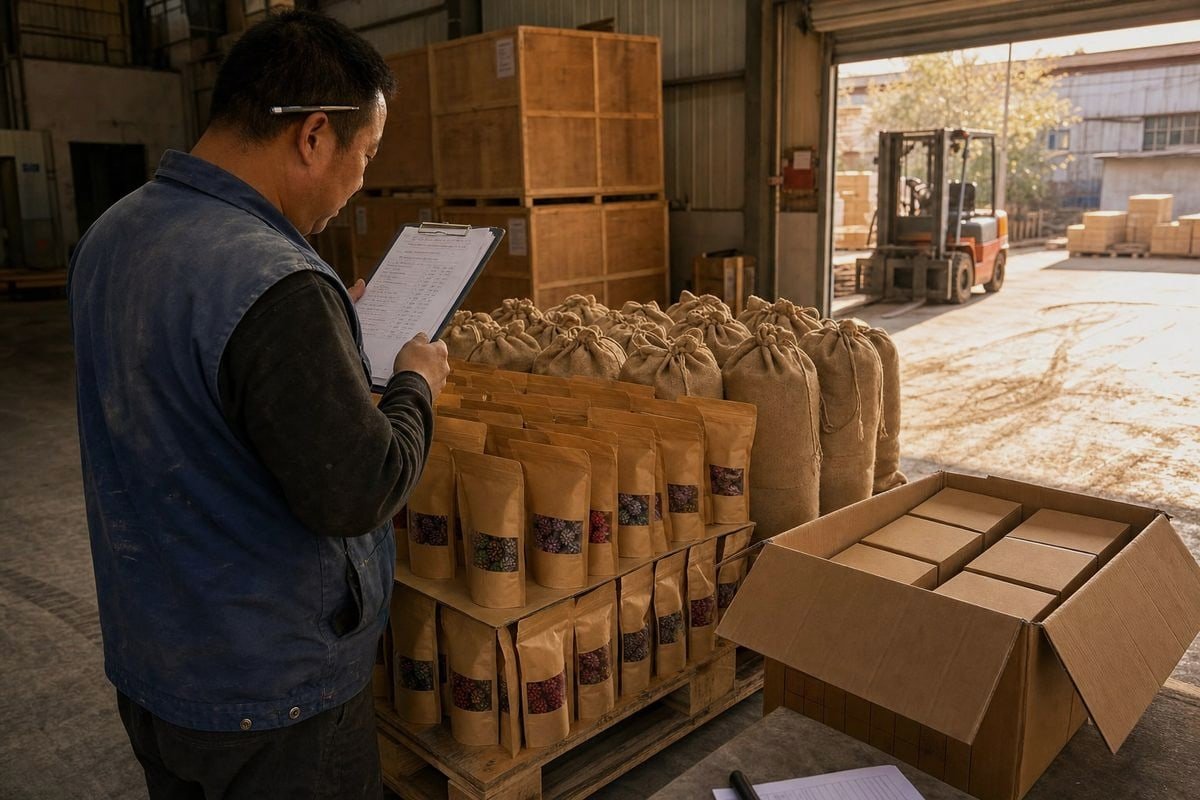
Documentation is where serious factories separate from trading companies. A trader forwards whatever the upstream workshop gives them. A real factory generates its own records at every production stage. Our production lines in Ningbo log batch data precisely so the paperwork we hand a buyer matches the goods in the container.
The complete documentation checklist
Here is the pack I recommend every purchasing manager demand, in order of importance:
| Prioridade | Documento | Why it matters for stoves |
|---|---|---|
| 1 | Third-party emissions report | Confirms no toxic fumes in enclosed combustion |
| 2 | Heavy metals analysis | Rules out lead, cadmium, arsenic contamination |
| 3 | Ficha de dados de segurança (SDS) | Required for customs, retail, and liability insurance |
| 4 | Burn behavior test record | Documents sparking, popping, and residue levels |
| 5 | Registros de CQ de lote | Proves consistency between sample and mass production |
| 6 | Indoor-use statement | Written suitability for solid-fuel stoves, on letterhead |
| 7 | Moisture content record | Wet cones drive smoke and acúmulo de creosoto 7 |
Reading the reports critically
Do not just file the PDFs. Check three things. First, the tested sample description must match your SKU, including the colorant version. Second, the test scope must include combustion products, not just the raw material. Third, the report date matters — formulas change, and a five-year-old report may describe a product that no longer exists.
One more practical point: warranty exposure. Most stove brands void coverage if anything other than seasoned cordwood or approved fire starters is burned. Your documentation pack is what lets you label the product honestly — as a kindling-style fire starter used sparingly, not a primary fuel — and that labeling protects you from returns and complaints downstream.
Can I request samples to check burn consistency and safety before committing to mass production?
The lesson that shaped our sampling policy came early in our export history: a buyer's trial batch performed differently from the catalog sample he had received from another vendor. He never ordered from that vendor again. We built our QC system so that never happens with us.
Yes — reputable manufacturers always provide pre-production samples. Test them in an actual wood stove: burn a small quantity first, then observe smoke color, popping, glass clouding, ash residue, and flame color duration. Compare at least two batches to confirm consistency before mass production.
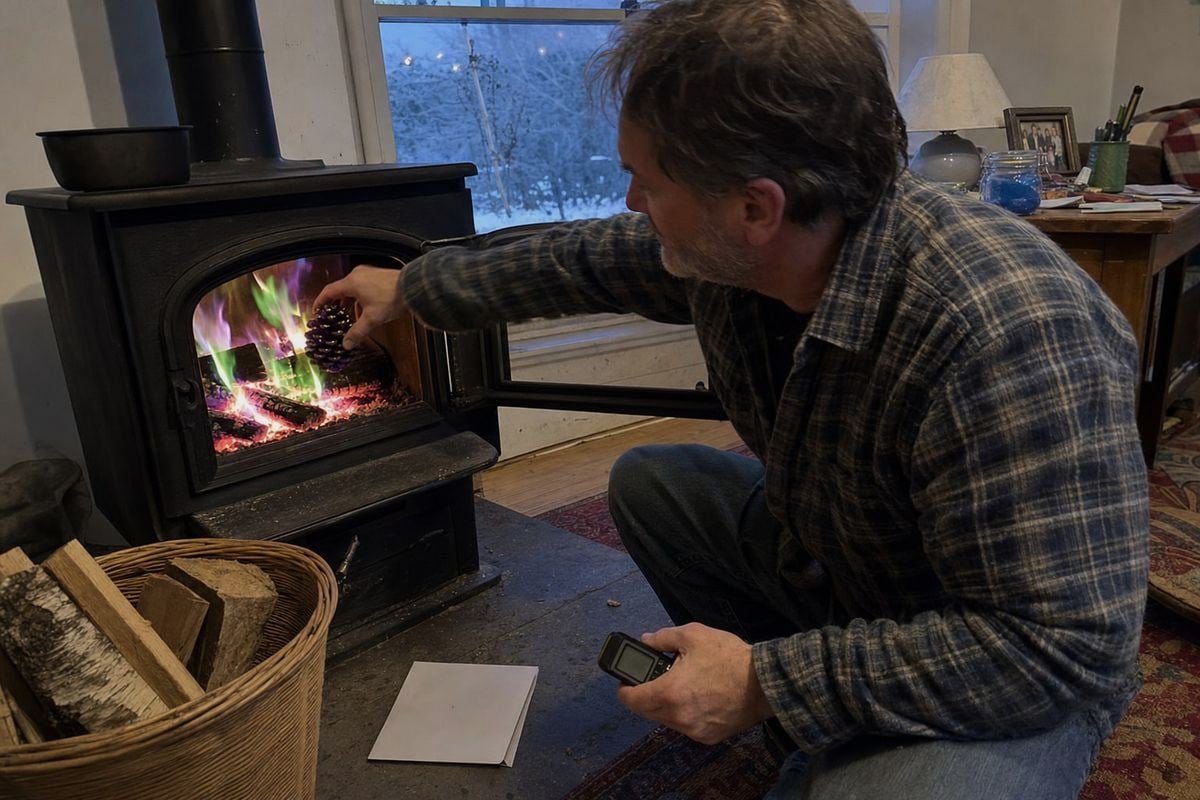
Sampling is not a favor a supplier grants you. It is a standard step, and any hesitation to send samples tells you something. At Sunrich we support flexible MOQs and trial orders precisely because purchasing managers need proof before commitment. What matters more is knowing how to test the samples properly once they arrive.
A structured burn test protocol
Run your evaluation in a controlled, repeatable way:
- Weigh and photograph each sample cone before burning. Note the coating texture — sticky, oily, or plastic-like finishes are red flags.
- Smell test. A strong solvent or perfume odor suggests coatings never meant for combustion.
- Burn one cone in an established, hot fire in a real wood stove — ideally the same EPA-certified wood stoves your end customers own.
- Observe for 15 minutes. Watch for excessive smoke, aggressive sparking, or dark deposits forming on the glass. Chemical salts can cause permanent clouding on ceramic stove glass, so this check protects your customer reviews.
- Inspect after cooldown. Check the firebox for unusual colored ash or film, and look at secondary combustion tubes for mineral deposits that could clog air holes.
- Repeat with a second batch shipped weeks later. Consistency between batches is the single best predictor of mass-production quality.
What consistent samples tell you
Uneven color duration, varying moisture, or different residue levels between two samples means the factory lacks batch controls. That inconsistency also raises chimney fire risk for end users, because sap-heavy or poorly dried cones feed creosote buildup in the flue. Our first sample reliably reflects mass-production quality because every batch runs through the same drying, treatment, and inspection stations — and that is exactly the standard you should hold any supplier to.
Conclusão
Colored pine cones sell fast, but unverified ones can damage stoves, harm indoor air quality, and sink a brand. Demand certifications, full formulas, lab reports, and multi-batch samples — then buy with confidence.
Notas de rodapé
1. Official ISO reference explaining what quality management certification actually covers versus product safety. ↩︎
2. EPA's Burn Wise program explains certified wood stove standards referenced for indoor safety testing. ↩︎
3. Wikipedia's wood stove overview explains combustion components referenced for enclosed-stove safety testing. ↩︎
4. EPA resource on indoor air quality supports the article's concern about enclosed combustion fumes. ↩︎
5. CDC/ATSDR provides authoritative toxicity data on heavy metal exposure referenced in colorant testing. ↩︎
6. General corrosion background clarifies how chloride-he



 English
  Spanish
  German
  French
  Arabic
  Portuguese
Participe da conversa