







Equilibrar os custos de inspeção de amostra versus inspeção completa para pinhas coloridas é uma questão que nossa equipe de produção em Ningbo ouve constantemente ANSI/ASQ Z1.4 Nível II 1. Adivinhe errado, e você gastará demais em controle de qualidade ou enviará defeitos visíveis que geram devoluções e avaliações ruins.
Equilibre os custos de amostragem vs. inspeção completa, combinando a intensidade da inspeção com a visibilidade e o custo do defeito. Use amostragem AQL para lotes grandes e estáveis, inspeção completa para tiragens pequenas ou premium e um modelo híbrido: verificações de 100% em defeitos críticos, amostragem em variações cosméticas menores.
Essa é a resposta curta. O restante deste guia detalha números reais de orçamento, confiabilidade de amostras, relatórios de terceiros e quando o controle de processo de uma fábrica permite reduzir a inspeção com segurança.
Quanto devo orçar para inspeção de amostra versus controle de qualidade de contêiner completo em pinhas coloridas?
Um comprador da Alemanha nos pediu para orçar ambas as opções em um pedido de 20.000 pinhas. A diferença de custo o surpreendeu — e mudou a forma como ele planejou todos os pedidos depois disso.
Orçamento de aproximadamente USD 100–500 por lote para inspeção de amostra AQL, tipicamente um inspetor homem-dia a cerca de USD 299. A inspeção de contêiner completo escala com o tamanho do lote e pode levar vários homens-dias, muitas vezes custando de três a cinco vezes mais para grandes pedidos de pinhas coloridas.

O principal fator de custo é o tempo. A inspeção é cobrada por homem-dia, portanto, qualquer coisa que estenda as horas do inspetor estende sua fatura. Uma inspeção de amostra sob ANSI/ASQ Z1.4 2 Nível II em AQL de 2,5 geralmente termina em poucas horas. Uma verificação completa de cada pinha em um contêiner de 40 pés pode levar de dois a quatro dias.
Estrutura de custo típica comparada
| Item de custo | Inspeção de amostra (AQL) | Inspeção completa |
|---|---|---|
| Tempo do inspetor | Poucas horas a 1 homem-dia | 2–4+ homens-dias para cargas de contêineres |
| Faixa de taxa típica | USD 100–500 por lote | Escala diretamente com a contagem de unidades |
| Custo fixo de configuração / viagem | ~USD 100 fixo | Mesmo piso fixo, mais mão de obra diária |
| Melhor ajuste | Lotes grandes e estáveis | Lotes pequenos, premium ou de alto risco |
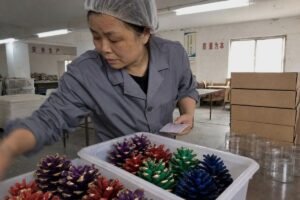
Observe o custo fixo. Quer você inspecione por amostragem ou completamente, alguém ainda viaja para a fábrica e se instala. É por isso que, em pequenas tiragens sazonais de cores de edição limitada, a inspeção completa pode acabar custando quase o mesmo que a amostragem — um ponto que destacamos aos compradores que pedem quantidades de teste de nossas pinhas coloridas flamejantes.
Não se esqueça do custo de escape
A equação orçamentária real é o custo da inspeção mais o custo esperado de defeitos que passam despercebidos. Pinhas coloridas são artigos de decoração de consumo sensíveis à aparência. Uma pinha com tingimento irregular ou corpo rachado é barata de fazer, mas cara de vender: reembolsos, frete de substituição e avaliações negativas custam mais do que a própria unidade. Em nossa experiência exportando para os EUA e Europa, o plano de inspeção "mais barato" raramente é o resultado total mais barato. Orce também separadamente para testes de laboratório de conformidade — verificações de toxicidade de corantes para metais pesados sob CPSC ou EN71 3 exigem amostragem de laboratório, independentemente do método de inspeção visual que você escolher.
Uma primeira amostra forte pode realmente prever a qualidade da produção em massa e reduzir os meus custos de inspeção posteriormente?
Aqui está um dilema que pondero com cada novo cliente: quanto uma amostra dourada aprovada realmente reduz o risco do pedido em massa? A resposta honesta depende inteiramente da fábrica por trás da amostra.
Sim — mas apenas se a fábrica usar a mesma linha de produção, receita de corante e materiais para amostras e produção em massa. Com controles documentados de lote para lote, uma forte primeira amostra prevê bem a qualidade em massa e justifica a redução de inspeções posteriores de verificações completas para amostragem AQL.

Amostras falham como preditoras quando são feitas por um técnico de amostras habilidoso, enquanto os produtos em massa vêm de uma linha apressada — ou pior, quando uma empresa comercial obtém a amostra de uma oficina e o contêiner de outra. Essa lacuna é exatamente o motivo pelo qual executamos amostras em nossas linhas de produção regulares em Ningbo, usando os mesmos lotes de corante e processo de revestimento dos pedidos completos. Após mais de 17 anos fabricando produtos coloridos flamejantes, tratamos a primeira amostra como um contrato, não como uma peça de exibição.
O que torna uma amostra preditiva
- Mesma linha, mesmo processo. A amostra deve passar pelas mesmas etapas de tingimento, secagem e revestimento da produção em massa.
- Padrões de cores bloqueados. Pastilhas de cores aprovadas ou leituras de espectrofotômetro 4 devem ser registradas, para que os produtos em massa sejam medidos em relação a números, não à memória.
- Tolerâncias documentadas. Concorde por escrito o que conta como variação de tonalidade aceitável antes do início da produção.
- Contra-amostras retidas. Ambos os lados mantêm amostras seladas para resolução de disputas.
Materiais naturais adicionam uma reviravolta. Pinhas variam em tamanho, densidade de escamas e porosidade, então a absorção de corante nunca é perfeitamente uniforme. Tabelas AQL padrão foram criadas para bens manufaturados uniformes e podem subestimar o risco em produtos orgânicos. Uma amostra preditiva, portanto, não deve prometer pinhas idênticas — deve demonstrar o intervalo de variação aceitável. Quando nós desenvolvemos uma nova cor para um cliente de marca própria, enviamos um pequeno conjunto mostrando as extremidades clara e escura da dispersão esperada. Essa honestidade antecipada evita disputas posteriores e permite que os compradores reduzam confiantemente a inspeção completa para amostragem a partir do segundo ou terceiro pedido, cortando seus gastos com controle de qualidade significativamente sem aumentar seu risco.
Que relatórios de inspeção de terceiros devo solicitar para evitar pagar por inspeções completas todas as vezes?
Um comprador de uma marca de camping dos EUA me disse uma vez sua regra: sem relatório, sem transferência bancária. Justo - mas ele estava solicitando os relatórios errados e ainda pagando por inspeções completas de que não precisava.
Solicite um relatório de inspeção pré-embarque AQL com classificação de defeitos, registros de controle de processo da fábrica, um relatório de teste de laboratório para segurança de corantes sob CPSC ou EN71 e os certificados de auditoria ISO 9001 ou BSCI do fornecedor. Juntos, eles substituem a maioria das inspeções completas de rotina.

O truque é sobrepor documentos para que cada um cubra um risco diferente. Um relatório nunca faz tudo. Aqui está a pilha que recomendamos aos compradores de nossas pinhas de chama colorida, com base no que SGS e Intertek 5 emitimos rotineiramente para nossos próprios embarques.
A pilha de relatórios que substitui a inspeção completa de rotina
| Tipo de relatório | O que cobre | Com que frequência solicitar |
|---|---|---|
| Relatório de pré-embarque AQL (Nível II, AQL 2.5) | Defeitos visuais, consistência de cor, embalagem, rótulos, códigos de barras | Cada remessa |
| Folha de classificação de defeitos | Crítico (mofo, danos por pragas), principal (sangramento de cor, cones rachados), secundário (leve variação de tonalidade) | Anexado a cada relatório AQL |
| Relatório de teste de laboratório (SGS 6/Intertek) | Toxicidade do corante, metais pesados, teor de chumbo sob CPSC/EN71 | Por alteração de fórmula ou anualmente |
| Auditoria de fábrica (ISO 9001 / BSCI 7) | Estabilidade do processo, conformidade social, sistema de CQ | Anualmente |
| Registros de verificação em processo | Verificações escalonadas antes do tingimento, após a secagem, antes da embalagem | Por tiragem de produção |
Por que as verificações escalonadas são as mais importantes
Os registros em processo merecem atenção especial. Pegar um problema de tingimento após a secagem custa um retrabalho. Pegá-lo após a embalagem custa uma reembalagem completa. Pegá-lo no cliente custa o relacionamento. Fábricas que inspecionam em três estágios - triagem de material pré-tingimento, verificação de cor pós-secagem, verificação final pré-embalagem - removem a maior parte da razão para uma inspeção final exaustiva. Em nossas linhas, também verificamos pontualmente a precisão da cor em relação aos padrões registrados, o que é mais rápido e objetivo do que uma verificação completa puramente visual. Quando um comprador vê esses registros escalonados remessa após remessa, reduzir a inspeção de amostra deixa de parecer uma aposta e começa a parecer matemática simples. Insista que a classificação de defeitos seja acordada antes da produção, para que "principal" e "secundário" signifiquem o mesmo para você, a fábrica e o inspetor terceirizado.
Como decido quando o controle de qualidade lote a lote de uma fábrica me permite pular a inspeção completa com segurança?
A lição mais difícil dos meus primeiros anos neste comércio: consistência, não um ótimo primeiro embarque, é o que garante inspeção reduzida. Um bom contêiner diz pouco. Cinco consecutivos dizem muito.
Pular inspeção completa somente após três a cinco remessas consecutivas passarem na amostragem AQL com zero defeitos críticos, a fábrica compartilhar registros de CQ em processo e a fórmula do produto permanecer inalterada. Retornar à inspeção completa sempre que o desempenho do fornecedor cair ou as reclamações aumentarem.

Pense nisso como uma escada de confiança graduada, não um interruptor liga/desliga. Compradores que pulam diretamente da inspeção completa para nenhuma inspeção geralmente se dão mal; compradores que nunca reduzem a inspeção desperdiçam orçamento em um fornecedor estável. O caminho do meio é um plano escrito de escalonamento e desescalonamento.
Uma escada de decisão prática
| Etapa | Gatilho | Nível de inspeção |
|---|---|---|
| Novo fornecedor ou nova cor | Primeiros 1-2 pedidos | Inspeção completa, mais teste de laboratório |
| Construindo confiança | 3-5 resultados limpos de AQL em sequência | Híbrido: 100% em defeitos críticos, amostra o restante |
| Parceria estável | Histórico consistente, registros de CQ compartilhados | Apenas amostragem AQL, auditorias periódicas |
| Sinais de alerta | Lote falho, pico de reclamações, alteração de fórmula ou estação | Escalar de volta para completo ou híbrido |
Sinais que justificam a permanência na amostragem
A fábrica deve mostrar, não apenas alegar, estabilidade. Procure fórmulas de corante bloqueadas, amostras de lote retidas, verificações em processo escalonadas e certificações que são re-auditadas - nossas próprias auditorias ISO 9001 e BSCI acontecem em um ciclo fixo precisamente porque os compradores dependem delas para reduzir seus gastos com inspeção. A sazonalidade também importa. Decorações de feriado são executadas em janelas de venda apertadas; uma cor premium de edição limitada sem chance de reposição merece uma inspeção mais rigorosa do que uma corrida em massa de cores mistas onde a variação menor se mistura.
Sinais que forçam a escalada
Re-escalar imediatamente se um embarque falhar no AQL, se a fábrica mudar de fornecedores de corante ou mover a produção, ou se as reclamações dos clientes finais aumentarem. Um modelo híbrido lida com a maioria das zonas cinzentas: mantenha verificações 100% em mofo, quebra, cor ausente, precisão de rótulo e avisos de segurança contra incêndio - os defeitos que mais prejudicam - enquanto amostra pequenas diferenças de tonalidade. Para um produto de uso em fogo como pinhas de chama colorida, precisão do rótulo de aviso nunca deve ser delegada à amostragem, pois um erro de rotulagem acarreta risco regulatório, não apenas risco cosmético.
Conclusão
Gastar demais em CQ drena a margem; gastar de menos envia defeitos para os clientes. A solução é igualar a intensidade da inspeção ao risco - amostrar corridas em massa estáveis, inspecionar completamente lotes premium e sempre proteger verificações críticas de segurança.
Notas de rodapé
Explica o padrão de amostragem AQL referenciado para decisões de inspeção de aprovação/reprovação. ↩︎
Antecedentes sobre o padrão de amostragem AQL referenciado para níveis de inspeção. ↩︎
Norma europeia de segurança de brinquedos/produtos referenciada para requisitos de testes de laboratório. ↩︎
Explica o instrumento de medição de cor usado para padrões de cores bloqueados. ↩︎
Links para um importante órgão de inspeção terceirizado que emite os relatórios AQL e de laboratório discutidos. ↩︎
Site oficial da empresa de inspeção e testes terceirizada mencionada pelo nome. ↩︎
Antecedentes sobre o esquema de auditoria de conformidade social referenciado ao lado da ISO 9001. ↩︎
 English
  Spanish
  German
  French
  Arabic
  Portuguese
Participe da conversa