






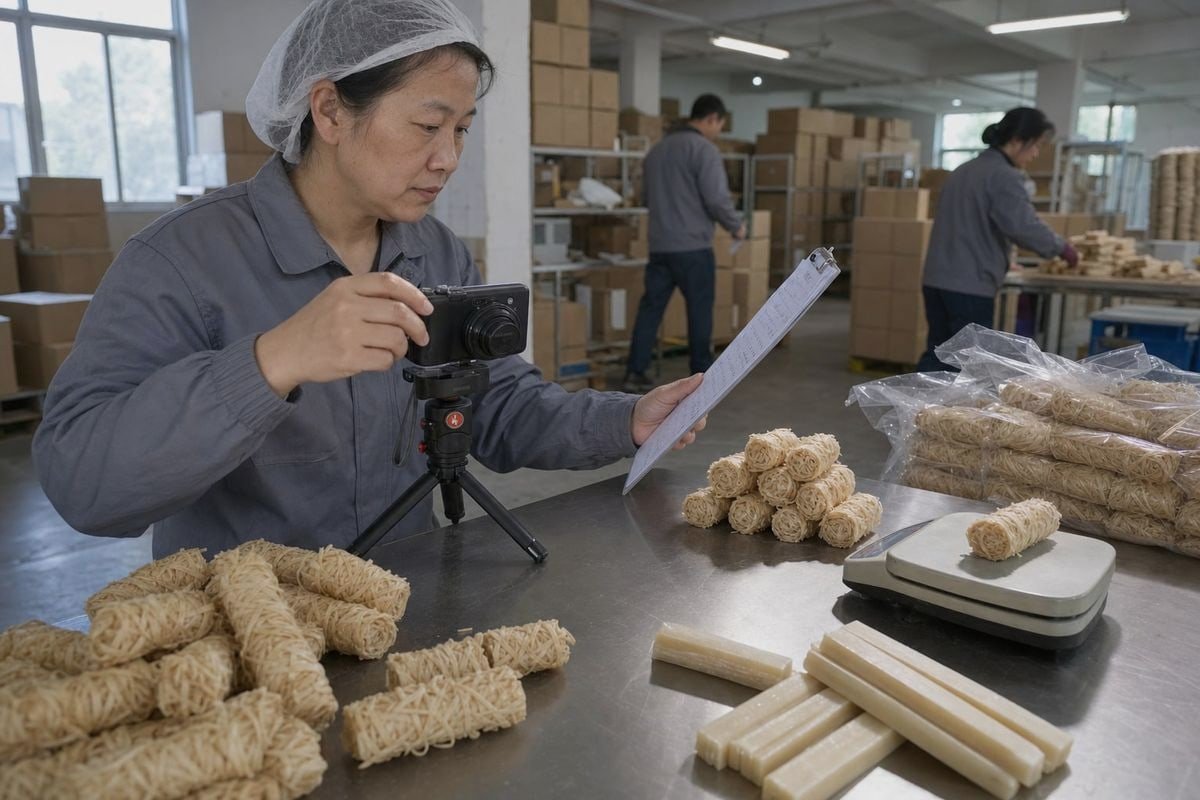
Sample fee disputes when sourcing wood fire starters can wreck a launch before it starts. I've watched buyers lose weeks arguing over a $60 courier bill from our factory floor in Ningbo.
To avoid sample fee disputes when sourcing wood fire starters for FBA, get all sample terms in writing before paying, request a Proforma Invoice separating product and shipping costs, confirm whether fees are credited toward bulk orders, and document dimensions, weight, and quality with photos and signed specifications.
That answer sounds simple. In practice, most disputes happen because one of those steps got skipped. Let me walk through each stage of the sample process, based on what actually goes wrong.
What should I clarify with my supplier before paying for wood fire starter samples?
A German distributor once emailed us, furious. He thought our sample was free. His previous supplier had said the same thing — then billed him $180 for "express handling" after shipment. We now put every term in writing first.
Before paying for wood fire starter samples, clarify the exact sample fee, whether shipping is included, how many variants the fee covers, revision charges, lead time, refundability, and which specific SKU the sample represents. Request written confirmation of every term before sending any payment.
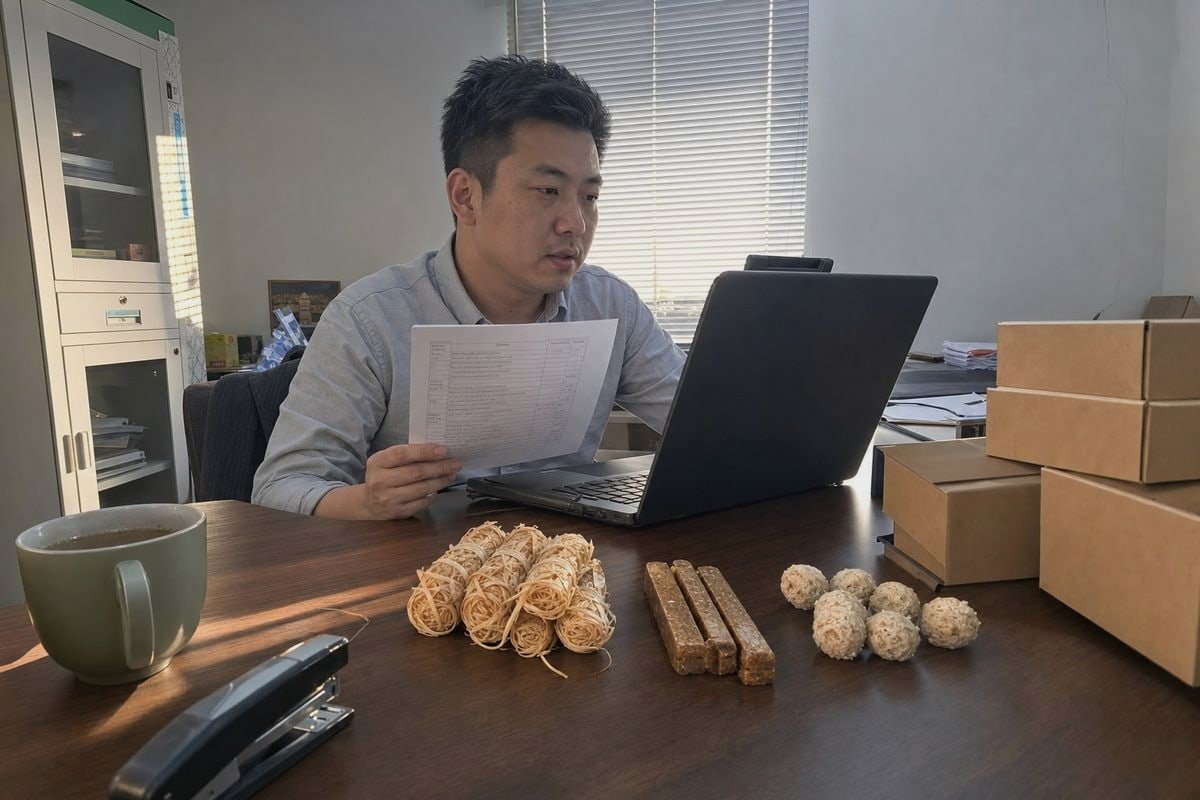
The single biggest cause of sample fee disputes is verbal or vague agreements. When a supplier says "sample is free," that often means the product unit is free — but international courier charges, which can run $40–$120 for a small parcel of wax-dipped wood rolls, are not. If you never asked, you have no ground to argue later.
Here is the exact question list I recommend every buyer sends before payment. We answer these for our own customers before they even ask, because it saves everyone time.
The pre-payment question checklist
| Pergunta a fazer | Por que importa |
|---|---|
| Is the sample unit free, or is there a fee? | Prevents the classic "surprise invoice" after shipment |
| Is courier shipping included in the quoted fee? | Freight is the most common hidden charge |
| Does the fee cover one unit or multiple variants? | Fire starters often come in rolls, pucks, and sticks |
| Are revisions or second-round samples charged separately? | Re-sampling is where costs quietly stack up |
| Will the sample fee be credited toward my first bulk order? | Sets up the Bulk Order Credit conversation early |
| Which exact SKU, size, and packaging does this sample represent? | Avoids "that's not what I approved" arguments later |
| Are tooling, mold, or setup charges separate from the sample fee? | Personalizado Embalagem de Marca Própria 1 can trigger separate costs |
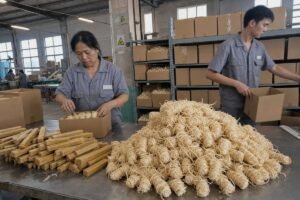
Wood fire starters are especially prone to multi-variant confusion. In our own catalog, a buyer might want to compare wax-dipped wood rolls, compressed stick formats, and ball-shaped firelighters in one sample shipment. Each format has a different weight, and weight drives Shipping and Freight Costs. If your supplier quotes one flat fee, confirm in writing exactly what that fee includes — how many pieces, which formats, and which packaging.
One more point. Ask for a Product Specifications Sheet with the quote. It should list material composition (for example, wood fiber and paraffin ratio), unit dimensions, burn time, and moisture content. A supplier who cannot produce a spec sheet before sampling will struggle to produce consistency after it.
How can I make sure my sample costs will be credited toward my bulk order?
The trade-off we weigh with every trial-order buyer is this: charge nothing and attract tire-kickers, or charge a fair fee and refund it against the first purchase order. After 17 years exporting fire products, we settled firmly on the second model.
Negotiate a written agreement stating that 100% of sample and courier fees will be deducted from your first bulk purchase order invoice. Get this confirmed on the Proforma Invoice itself, with the credit amount, currency, and any minimum order condition clearly stated.

A Bulk Order Credit is standard practice in our industry, but it only protects you if it exists on paper. An email saying "we can discuss discount later" is not a credit. A line item on the Proforma Invoice 2 reading "Sample fee USD 85 — deductible from first PO of 500+ units" is.
How to structure the credit in writing
Follow this sequence and you close every loophole:
- Ask the supplier to state the sample fee and courier fee as separate line items on a detailed Proforma Invoice. Combined lump sums hide markups.
- Solicitar an explicit deduction clause: the full sample amount credits against the first bulk order, with any minimum quantity condition spelled out.
- Confirm the credit's expiry, if any. Some suppliers limit the credit to orders placed within 90 or 180 days.
- Pay through a traceable channel. If you source on a platform, use Garantia Comercial 3 or an escrow service so payment records match the invoice.
- When you place the bulk order, reference the sample invoice number on your purchase order so the deduction cannot be "forgotten."
Payment protection options compared
| Método | Protection level | Melhor para |
|---|---|---|
| Trade Assurance / platform escrow | High — refund path if sample never ships | First contact with a new supplier |
| Bank transfer with Proforma Invoice | Medium — paper trail, no automatic refund | Established suppliers with references |
| PayPal or card payment | Medium — chargeback possible | Small sample fees under $200 |
| Informal payment, no invoice | Nenhum | Never recommended |
One honest note from our side of the table. We credit sample fees because a serious buyer who tests our product almost always orders. Suppliers who resist a written credit clause are often trading companies marking up someone else's samples — they cannot afford to refund what they never controlled. Verifying the supplier's business license 4 and factory status protects you from paying "consulting fees" to a middleman.
What documentation should I request to avoid disputes over sample quality later?
During a Quality Control Inspection last winter, our team pulled a batch of wax-dipped rolls because the moisture reading crept above our internal limit. That check exists because sample-versus-production gaps are where quality disputes are born — and documentation is the only cure.
Request a signed Product Specifications Sheet, high-resolution photos of the packaged sample with the courier waybill, a Golden Sample retained by the supplier, material and compliance test reports, and a recorded ignition test. These documents make the approved sample the enforceable production standard.
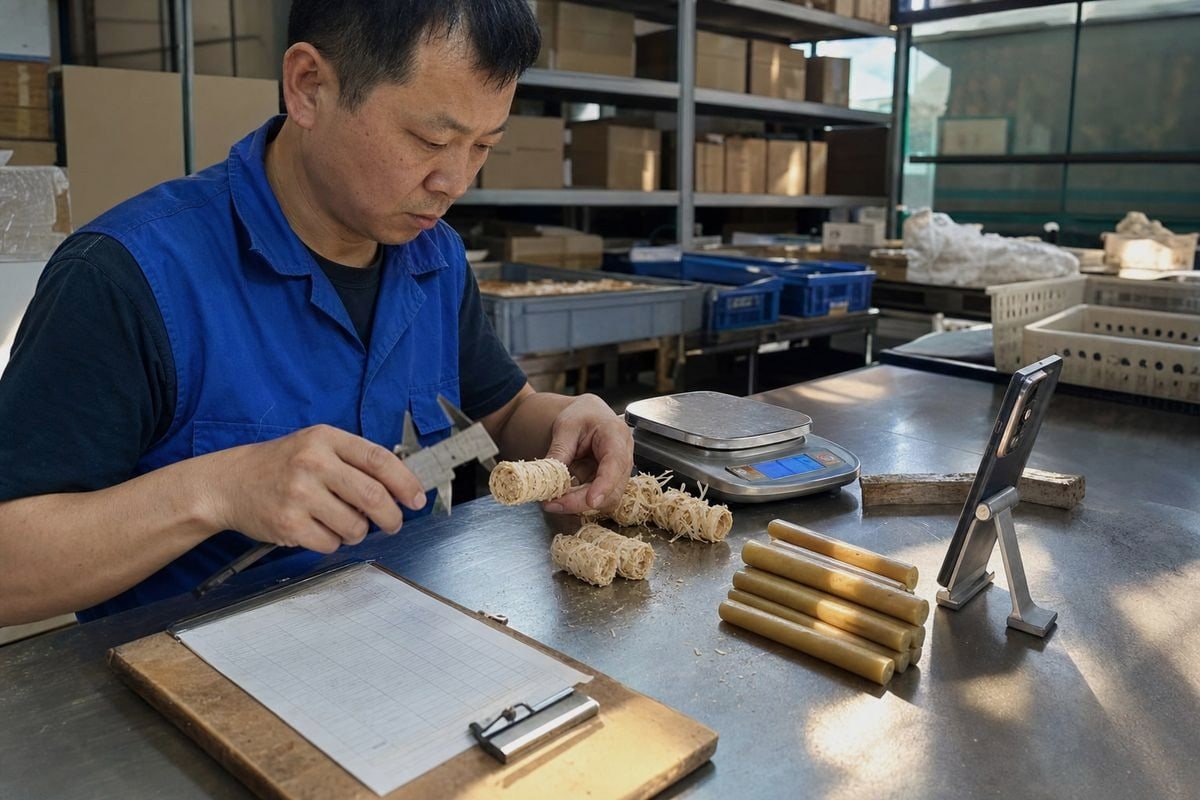
The core problem is simple. A sample proves what a supplier can make once. Your documentation must prove what they agreed to make every time. For wood fire starters headed to FBA, that documentation also feeds directly into your Amazon listing data — dimensions, weight, and hazmat classification all trace back to the sample stage.
The Golden Sample protocol
Ask the supplier to retain one identical unit, signed and dated by both parties, as the legal reference point. If a production batch arrives with looser winding, paler wax coating, or weaker ignition, the Golden Sample settles the argument without opinion or emotion. We keep Golden Samples for every OEM customer in our Ningbo facility, and they have ended more than one disagreement in five minutes flat.
The documents that matter, in order of priority
| Documento | O que ele previne |
|---|---|
| Signed Product Specifications Sheet | Disputes over size, weight, composition, and burn time |
| Golden Sample (retained by both sides) | "The bulk order doesn't match the sample" arguments |
| MSDS review before payment | FBA hazmat classification surprises from paraffin binders |
| Kiln-Dried Certification 5 / moisture report | Weight surcharges and mold issues from unseasoned wood |
| FSC Certified Wood documentation (if claimed) | Marketplace compliance and eco-claim challenges |
| Recorded ignition test video | Performance disputes — e.g., failure to ignite within 30 seconds |
| Photos of packaged sample with ruler and scale | FBA dimension and fee-tier errors later |
Two of these deserve extra emphasis for fire starters specifically. First, moisture content: specify a maximum (typically under 10%) in the sample order. Green or unseasoned wood weighs more, burns worse, and inflates freight — a triple source of friction. A Kiln-Dried Certification closes that door. Second, the MSDS. Paraffin-based fire starters must be reviewed against Amazon's hazmat storage rules 6 before you commit. Discovering a classification problem after inventory lands at a fulfillment center is an expensive lesson.
Finally, photograph everything. Shoot the sample next to a ruler and on a scale, in its retail packaging. Those photos become your evidence if Amazon mismeasures the product and you need to file a remeasurement request.
A UK fireplace distributor once told me why he switched to us: his previous "factory" turned out to be a trading office that added a margin to every sample, every revision, and every courier bill. The pattern is common, and it is detectable early.
Choose a manufacturer with verified factory status, international certifications like ISO 9001 and BSCI, a transparent written sample policy, itemized Proforma Invoices, and willingness to sign a Manufacturing Agreement. Transparent suppliers publish their sample terms; evasive suppliers reveal fees only after you commit.
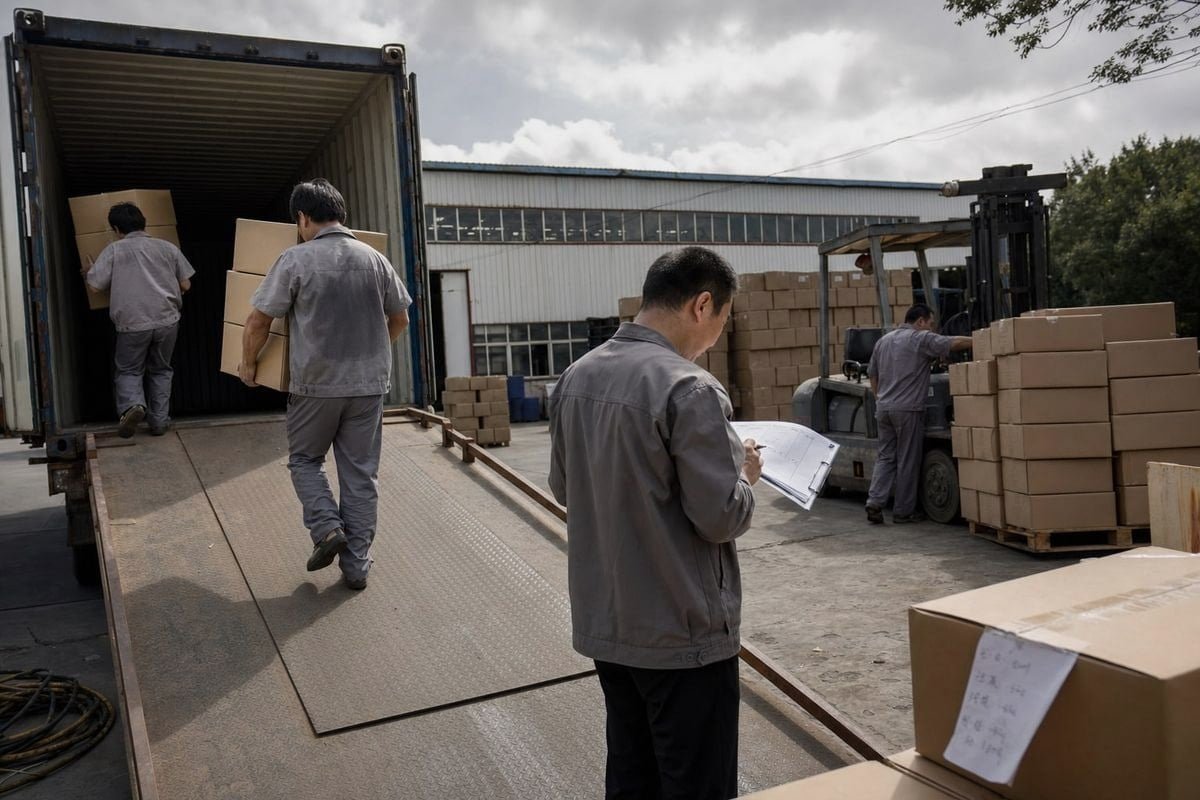
Hidden sample fees are rarely an accident. They are a business model. Middlemen and weak factories use low headline prices to win contact, then recover margin through freight markups, revision charges, and setup fees. Real manufacturers with genuine production depth do the opposite — they publish terms, because their economics do not depend on surprise charges.
Bandeiras vermelhas versus bandeiras verdes
Watch for these signals during your first two or three emails:
- Green flag: The supplier sends an itemized Proforma Invoice without being asked, separating product, packaging, and freight.
- Green flag: They can produce relatórios de teste SGS ou Intertek 7, CE documentation, and Resultados da auditoria BSCI 8 on request — for compliance-driven buyers in the US and EU, this is a hard requirement, not decoration.
- Green flag: They discuss Private Label Packaging, warning labels, and barcode requirements proactively, because they have done shelf-ready OEM work before.
- Red flag: Vague answers like "sample cost depends" with no written policy.
- Red flag: Reluctance to video-call from the production floor or share their business license.
- Red flag: Sample photos that look inconsistent across requests — a sign they are sourcing from multiple mills rather than making the product.
Practical verification steps
Cross-reference the supplier's verified or gold status on sourcing platforms against their registered business license. Ask where production actually happens and request a live factory video. If you are sampling from several mills at once, a third-party sample consolidation service in China can bundle shipments and cut the individual courier fees that so often trigger friction.
Then formalize the relationship. A short Manufacturing Agreement covering sample terms, the Golden Sample standard, credit conditions, and quality tolerances costs almost nothing to draft and prevents nearly every dispute described in this article. In our experience exporting to 30+ countries, the buyers who ask for this agreement upfront are the ones we end up working with for years — clarity attracts clarity.
Conclusão
Sample disputes start with unwritten expectations and end with lost time. Put terms on paper, document the Golden Sample, verify your factory — and every sample fee becomes a controlled cost, not a fight.
Notas de rodapé
1. Background concept explaining the OEM packaging and branding work suppliers are expected to handle. ↩︎
2. Defines the standard trade document repeatedly referenced for itemizing sample and shipping costs. ↩︎
3. Explains buyer payment protection program directly referenced for securing sample fee transactions. ↩︎
4. Background on business licensing helps buyers understand what supplier verification actually confirms. ↩︎
5. USDA Forest Products Laboratory is an authoritative source on wood drying and moisture standards. ↩︎
6. OSHA hazard communication standards underpin the hazmat classification concerns raised for paraffin-based products. ↩︎
7. SGS is a leading global testing and certification body validating product compliance claims cited. ↩︎
8. amfori BSCI is the official body issuing the social compliance audits mentioned as a green flag. ↩︎


 English
  Spanish
  German
  French
  Arabic
  Portuguese
Participe da conversa