






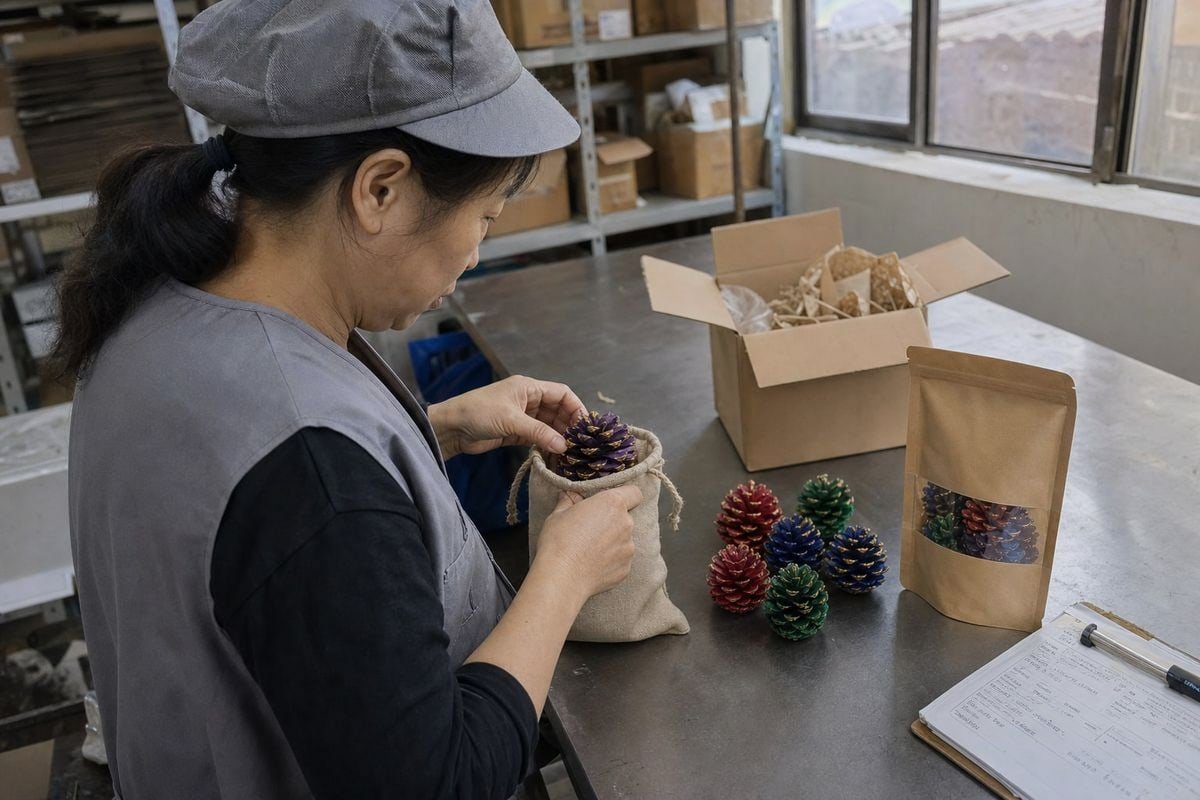
Solicitar amostras de demonstração em pacotes pequenos de pinhas coloridas parece simples, mas nossa fábrica recebe consultas vagas todas as semanas. Pedidos vagos recebem respostas lentas e genéricas — e atrasam seu cronograma de fornecimento.
Para solicitar amostras de demonstração em embalagens pequenas de pinhas coloridas, envie uma consulta curta e específica indicando o tipo de produto, as cores de chama ou as cores de corante necessárias, a quantidade, o formato da embalagem, o mercado pretendido e o endereço de envio. Ofereça-se para cobrir os custos do correio e mencione o seu volume de pedido em massa projetado.
Essa é a resposta curta. Abaixo, vou guiá-lo exatamente sobre o que pedir, quantas unidades você precisa, quais documentos exigir e qual será o custo do frete.
Que Certificações Devo Solicitar Junto com Amostras de Demonstração de Pequenos Pacotes de Pinhas Coloridas?
Um comprador da Alemanha me disse uma vez que seu envio ficou retido na alfândega por três semanas porque seu fornecedor anterior não tinha relatórios de teste. Essa conversa moldou como lidamos com cada solicitação de amostra hoje.
Solicitar certificados de fábrica ISO 9001 e BSCI, documentação de marcação CE e relatórios de teste de terceiros da SGS ou Intertek cobrindo segurança contra chamas e conteúdo químico. Para cones decorativos tingidos, também solicite conformidade com corantes ecológicos, como documentação REACH para o mercado da UE.
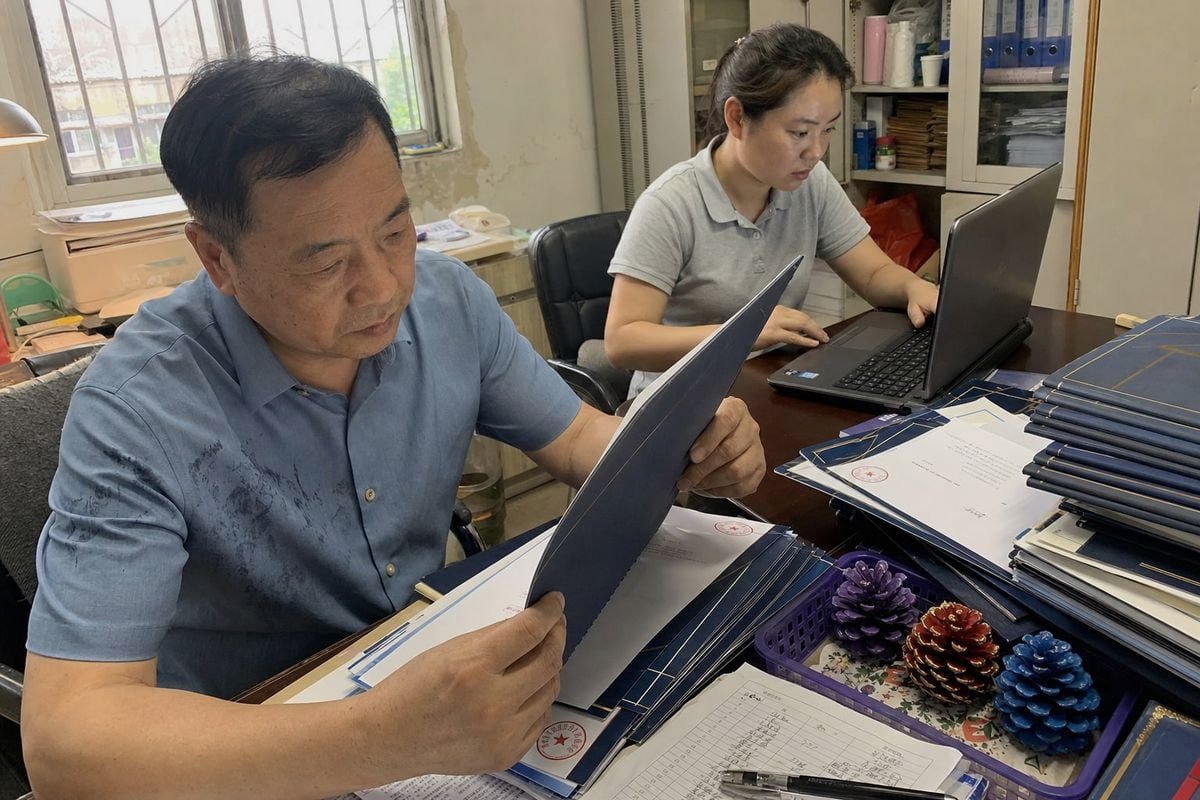
Certificações não são burocracia por si só. Elas são a diferença entre uma importação tranquila e uma apreensão alfandegária. Quando enviamos pinhas com chama colorida para os EUA, Alemanha ou Reino Unido, nossos compradores tratam a conformidade como um requisito essencial, não como algo bom de se ter. Você deve fazer o mesmo — mesmo na fase de amostra.
Aqui está a razão prática. Uma amostra que chega sem documentação não diz nada sobre se o pedido em massa será liberado em sua fronteira. Inspeção de qualidade do produto 1 começa com a documentação, não com o produto em si. Peça os documentos junto com o pacote de demonstração e verifique se o nome do titular do certificado corresponde à fábrica com a qual você está falando. Empresas de comércio às vezes pegam emprestado certificados de fábricas que não controlam.
Qual Documento Cobre o Quê
| Documento | O que Comprova | Quem Precisa Mais |
|---|---|---|
| ISO 9001 2 | Sistema de gestão de qualidade consistente | Todos os compradores B2B |
| BSCI | Fábrica ética e conformidade social | Varejistas da UE, grandes redes |
| Marcação CE 3 | Conformidade de segurança do produto da UE | Importadores da UE |
| Relatórios SGS / Intertek 4 | Segurança contra chamas e segurança química testadas em laboratório independente | Distribuidores dos EUA e da UE |
| Documentação de corantes relacionada ao REACH | Corantes não tóxicos e ecológicos Documentação de conformidade com o REACH 5 | Varejistas de decoração e artesanato |
Combine o Certificado com o Tipo de Produto
Há uma distinção importante a ser feita em sua solicitação. Pinhas decorativas tingidas para fabricação de decoração de feriados precisam de documentação de segurança de corantes. Pinhas com coloração de fogo — o tipo que produz chamas azuis, verdes e roxas em uma lareira ou fogueira — precisam de relatórios de teste de segurança de queima e emissões. Nomeie o tipo de produto claramente para que o fornecedor envie o conjunto de arquivos correto. Em nossa experiência exportando para mais de 30 países, compradores que verificam documentos na fase de amostra quase nunca enfrentam surpresas de conformidade na fase de contêiner.
Quantas Unidades de Amostra São Necessárias para Avaliar Cor da Chama e Qualidade de Queima Adequadamente?
Quando calibramos uma nova fórmula de chama colorida em nossa linha de produção de Ningbo, nunca a julgamos por uma única queima. Uma pinha pode mentir. Uma dúzia de pinhas conta a verdade.
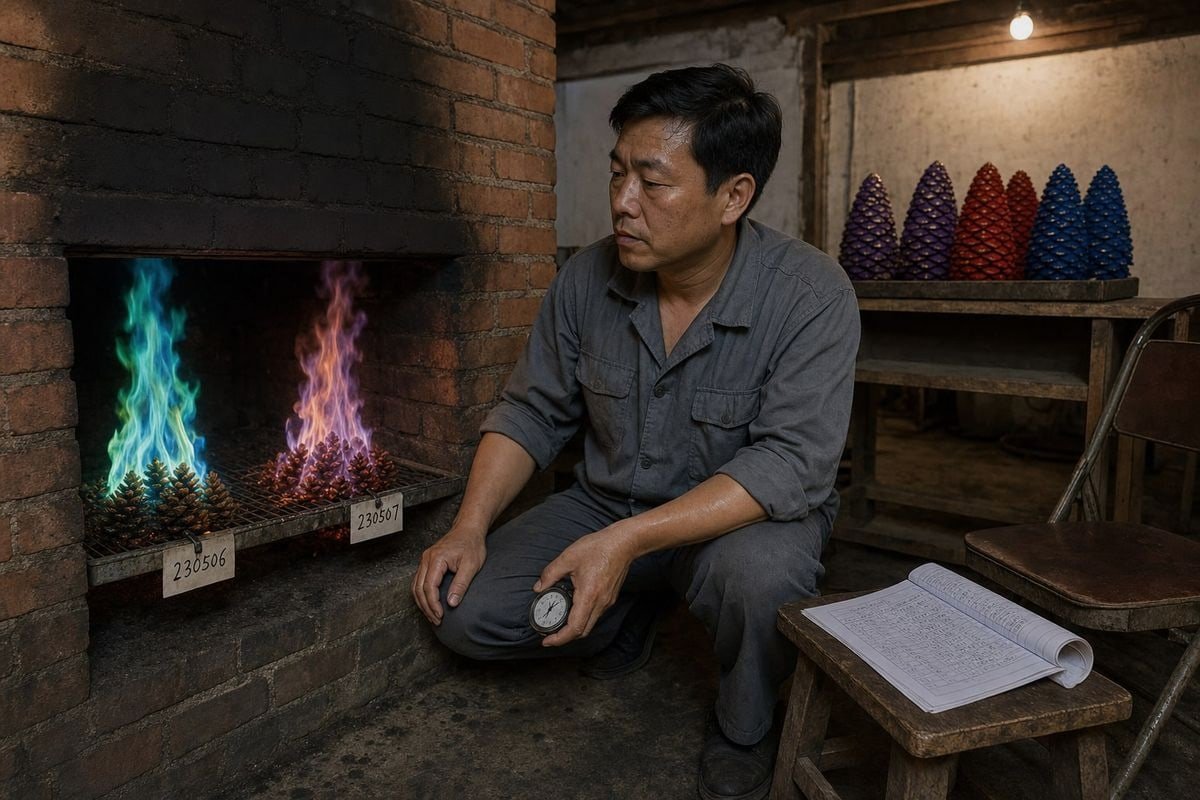
Solicite de 10 a 15 pinhas por cor de chama, retiradas de pelo menos dois lotes de produção. Isso permite que você execute três a quatro testes de queima separados por cor, verifique a consistência lote a lote e mantenha algumas unidades intocadas como referência de amostra dourada para pedidos futuros.
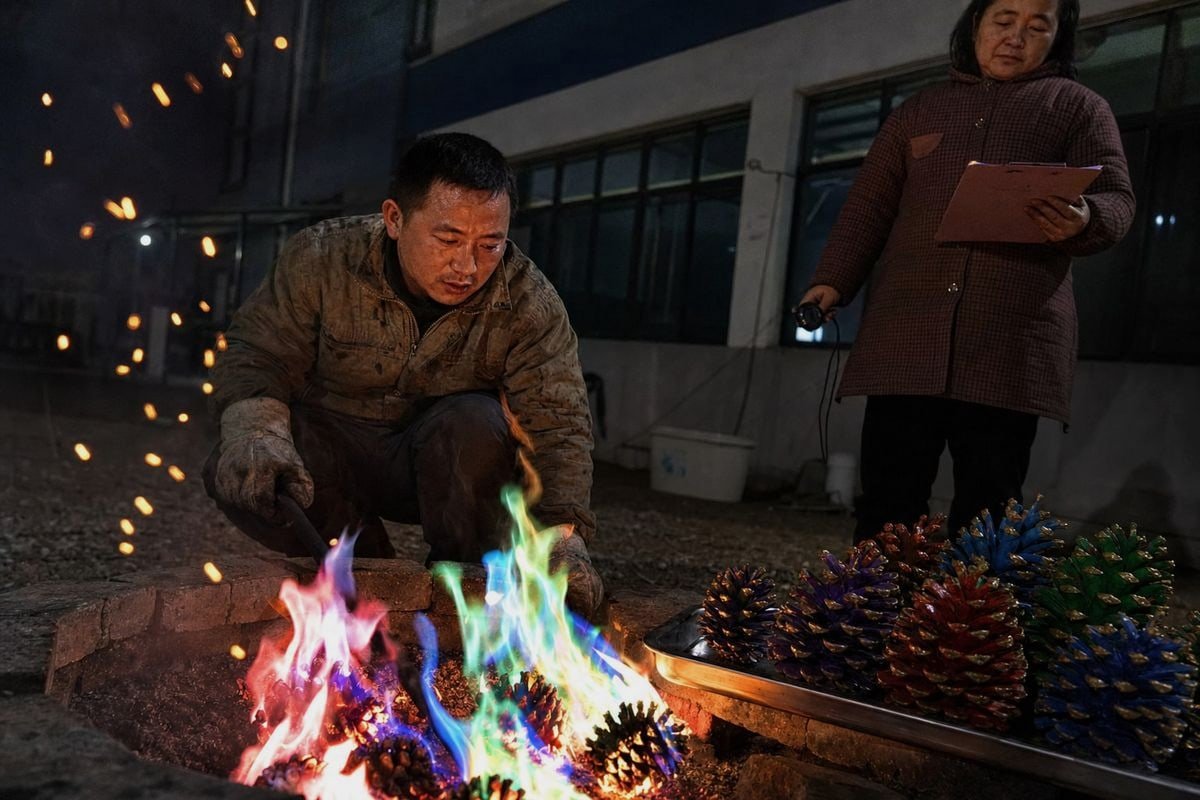
A cor da chama é uma característica de desempenho químico, não visual. Você não pode avaliá-la olhando para a pinha. Você tem que queimá-la — e queimar é destrutivo, então a quantidade importa mais do que a maioria dos compradores de primeira viagem espera. Uma amostra de peça única força você a um único teste. Se esse teste ocorrer em clima úmido, ou em um fogo muito quente ou muito frio, você não aprenderá nada confiável.
Um Plano Simples de Teste de Queima
Recomendo estruturar sua avaliação assim:
- Primeira queima — lareira interna controlada. Observe o tempo de ignição, a rapidez com que a cor aparece e o quão vívida ela é.
- Segunda queima — fogueira externa ou acampamento. Vento e ar aberto afetam a visibilidade da cor. Isso importa se você vende para marcas de camping.
- Terceira queima — teste de duração. Cronometre quanto tempo o efeito colorido dura. Compare-o com o tempo de queima declarado pelo fornecedor.
- Quarta queima — comparação de lotes. Queime pinhas de diferentes lotes lado a lado. A consistência aqui prevê a consistência em seu envio de Quantidade Mínima de Pedido.
Por que Pedir Múltiplos Lotes
Alguns compradores experientes em SERP agora solicitam o que equivale a um kit de estresse multi-lote — pinhas de diferentes ciclos de colheita — para confirmar que o revestimento de cor adere uniformemente em diferentes densidades de pinhas. Essa é uma solicitação inteligente. Pinhas naturais variam em tamanho, umidade e estrutura de escamas. Uma fábrica séria com rigoroso controle de qualidade lote a lote pode fornecer isso sem hesitação. Em nossa fábrica, a primeira amostra é retirada das mesmas linhas que executam a produção em massa, então o que você queima em seu pedido de teste é o que chega em seu contêiner.
Mantenha duas ou três unidades sem queimar. Fotografe-as, sele-as e rotule-as como sua amostra de referência. Cada envio futuro será comparado a esse padrão.
Posso Obter Embalagens Personalizadas ou Mockups de Marca Própria Incluídos Com Meu Pedido de Demonstração?
Um dos projetos mais gratificantes em que trabalhei envolveu um distribuidor canadense de lareiras que pediu uma maquete de saco de serapilheira com sua marca junto com seu kit de amostra. Seu comprador de varejo aprovou o produto apenas pela apelo na prateleira.
Sim, a maioria das fábricas OEM/ODM pode incluir maquetes de marca própria com um pedido de demonstração. Solicite primeiro uma prova digital da embalagem, depois um protótipo físico pronto para varejo — como um saco de papel kraft impresso, saco de serapilheira ou caixa de exibição — geralmente por uma pequena taxa creditada em seu primeiro pedido em massa.
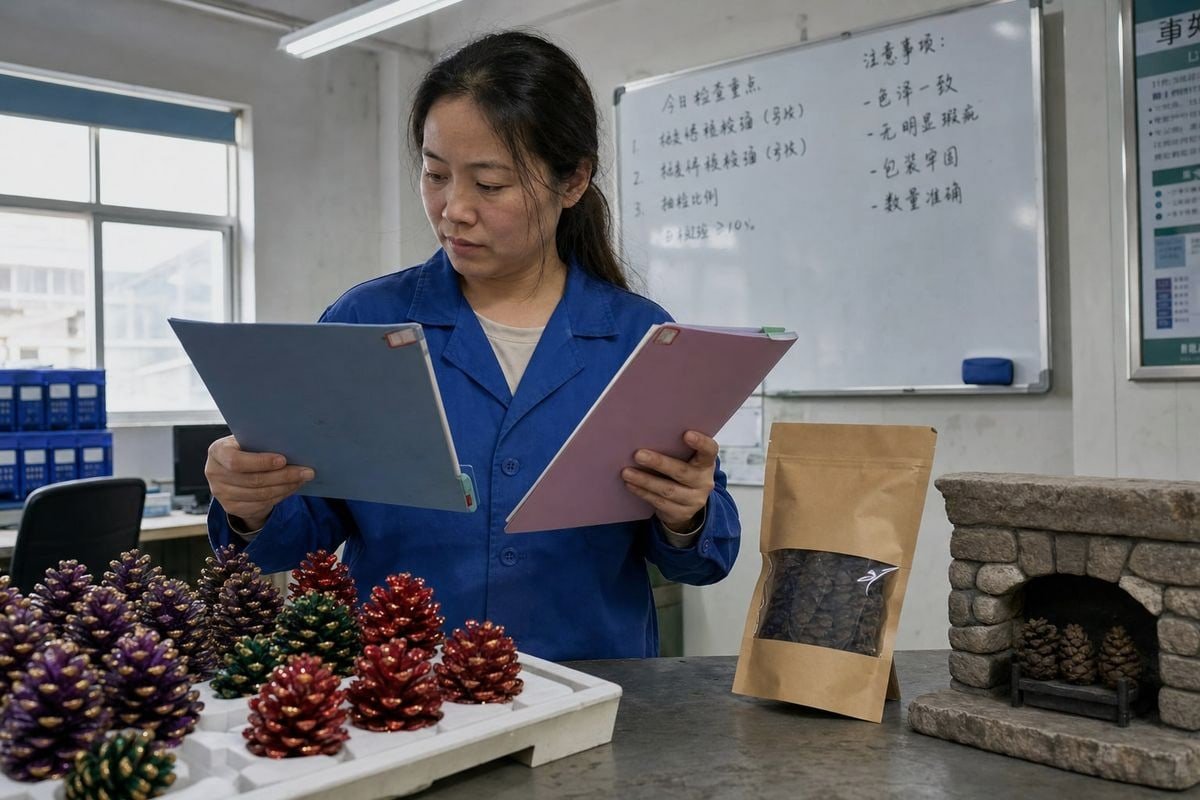
A embalagem vende este produto. Uma pinha colorida em um saco plástico simples parece um sobro de artesanato. A mesma pinha em um saco de papel kraft autônomo impresso com uma janela transparente, ou um saco rústico de serapilheira com cordão e seu logotipo, parece um item de presente para varejo. Se você vende para varejo de camping, canais de churrasco ou fabricação de decoração sazonal de feriados, a avaliação da embalagem é tão importante quanto o teste de queima.
Veja como geralmente organizamos isso em nossa fábrica e como você deve formular a solicitação:
O Processo de Mockup em Duas Etapas
A primeira etapa é digital. Envie seus arquivos de logotipo e cores da marca. O fornecedor retorna uma prova renderizada mostrando sua arte em seus formatos de embalagem padrão. Isso não custa nada e leva alguns dias.
A segunda etapa é física. A fábrica produz um pequeno lote de protótipos prontos para varejo — seu saco, bolsa ou pote real com rótulos impressos, texto de aviso e códigos de barras. Isso geralmente acarreta uma taxa modesta porque envolve chapas e materiais. Pergunte diretamente se essa taxa é creditada contra seu primeiro pedido no atacado de pinhas decorativas. A maioria das fábricas sérias concorda, porque uma maquete paga sinaliza um comprador sério.
O que especificar em seu pedido
| Detalhe | Exemplo |
|---|---|
| Formato da embalagem | Bolsa Kraft tipo stand-up, saco de juta, pote de plástico, caixa de presente |
| Especificação de impressão | Códigos de cores Pantone, acabamento fosco ou brilhante |
| Conteúdo da etiqueta | Etiquetas de aviso, códigos de barras, instruções de uso no seu idioma |
| Contagem de unidades por embalagem | 6, 10 ou 12 cones por unidade de varejo |
| Texto regulatório | Redação de segurança específica do mercado para EUA ou UE |
Especificar Códigos Pantone 6 em vez de descrever cores em palavras. "Roxo escuro" significa cinco coisas diferentes para cinco impressoras. Um número Pantone significa uma coisa em todos os lugares.
Qual o Prazo de Entrega e Custos de Envio Esperados para um Pedido de Amostra de Teste Pequeno?
O compromisso que mais pondero com novos compradores é velocidade versus custo. O correio expresso leva sua caixa de demonstração através do oceano em dias, mas ninguém gosta da conta de frete de uma encomenda de dois quilos.
Espere 2 a 5 dias úteis para preparação de amostras de itens em estoque e 7 a 14 dias se a embalagem personalizada estiver incluída. O frete internacional pela DHL, FedEx ou UPS geralmente custa de R$30 a R$80 para um pequeno pacote e leva de 3 a 7 dias para os EUA ou Europa.
Deixe-me detalhar a estrutura de custos honestamente, porque é aqui que as expectativas do comprador e a realidade do fornecedor muitas vezes colidem. Muitos compradores esperam amostras totalmente gratuitas. Muitos fornecedores oferecem produtos gratuitos, mas não frete gratuito. Ambas as posições são razoáveis. Produzir um punhado de cones custa pouco à fábrica; os custos de envio internacional são dinheiro real que alguém tem que pagar. O arranjo justo e padrão neste nicho é: o fornecedor cobre o produto, o comprador cobre o correio — ou fornece um número de conta de envio.
Cronograma Típico da Consulta à Amostra Entregue
| Etapa | Amostra em Estoque | Amostra Personalizada / Private-Label |
|---|---|---|
| Resposta do fornecedor | Em até 24 horas | Em até 24 horas |
| Preparação | 2–5 dias úteis | 7–14 dias úteis |
| Trânsito de correio (EUA/UE) | 3–7 dias | 3–7 dias |
| Total | Aproximadamente 1–2 semanas | Aproximadamente 2–3,5 semanas |
Três Maneiras de Lidar com o Custo de Forma Justa
- Amostra para crédito. Pergunte se as taxas de amostra e envio podem ser deduzidas de seu primeiro pedido de teste. A maioria das fábricas estabelecidas, incluindo a nossa, concorda prontamente porque converte o custo da amostra em um depósito em negócios reais.
- Sua própria conta de correio. Se sua empresa envia regularmente, forneça seu número de conta DHL ou FedEx. A encomenda é cobrada às suas taxas negociadas, e o fornecedor não tem risco de frete.
- Termos DDP para kits de amostra maiores. Se seu pedido de demonstração incluir vários formatos de embalagem ou suprimentos de artesanato a granel para um teste completo de varejo, solicite Entregue com Impostos Pagos 7 para que o fornecedor cuide do desembaraço aduaneiro e dos impostos. Custa um pouco mais, mas remove dores de cabeça de importação.
Mais uma dica de anos de cotação: inclua seu ID fiscal comercial ou detalhes de revendedor na primeira mensagem. Alguns fornecedores reservam amostras de avaliação gratuitas apenas para compradores empresariais verificados. Estabelecer que você opera um negócio de importação real — um negócio de artesanato, um distribuidor, uma equipe de sourcing de varejo — move sua solicitação da pilha de "caçador de brindes" para a pilha de "comprador sério" imediatamente. Mencionar seu volume anual projetado, mesmo uma faixa aproximada, faz o mesmo.
Conclusão
Pedidos de amostra vagos desperdiçam semanas. Pedidos específicos — com quantidades, certificações, detalhes de embalagem e termos de envio declarados antecipadamente — fornecem amostras de demonstração precisas rapidamente e sinalizam que você é um comprador sério.
Notas de rodapé
Conceito de fundo explicando por que documentação e inspeção precedem a avaliação do produto. ↩︎
Referência oficial do padrão para a certificação de gerenciamento de qualidade que os compradores devem verificar. ↩︎
Fonte oficial da UE explicando os requisitos de conformidade CE referenciados para remessas destinadas à UE. ↩︎
O site oficial do órgão de testes apoia a credibilidade da verificação de laboratório de terceiros. ↩︎
Recurso oficial da Comissão Europeia explicando os requisitos de segurança química e conformidade REACH. ↩︎
Explica o sistema de cores padronizado referenciado para especificações precisas de embalagem. ↩︎
Define este termo de envio usado para lidar com o desembaraço aduaneiro em kits de amostra maiores. ↩︎
 English
  Spanish
  German
  French
  Arabic
  Portuguese
Participe da conversa